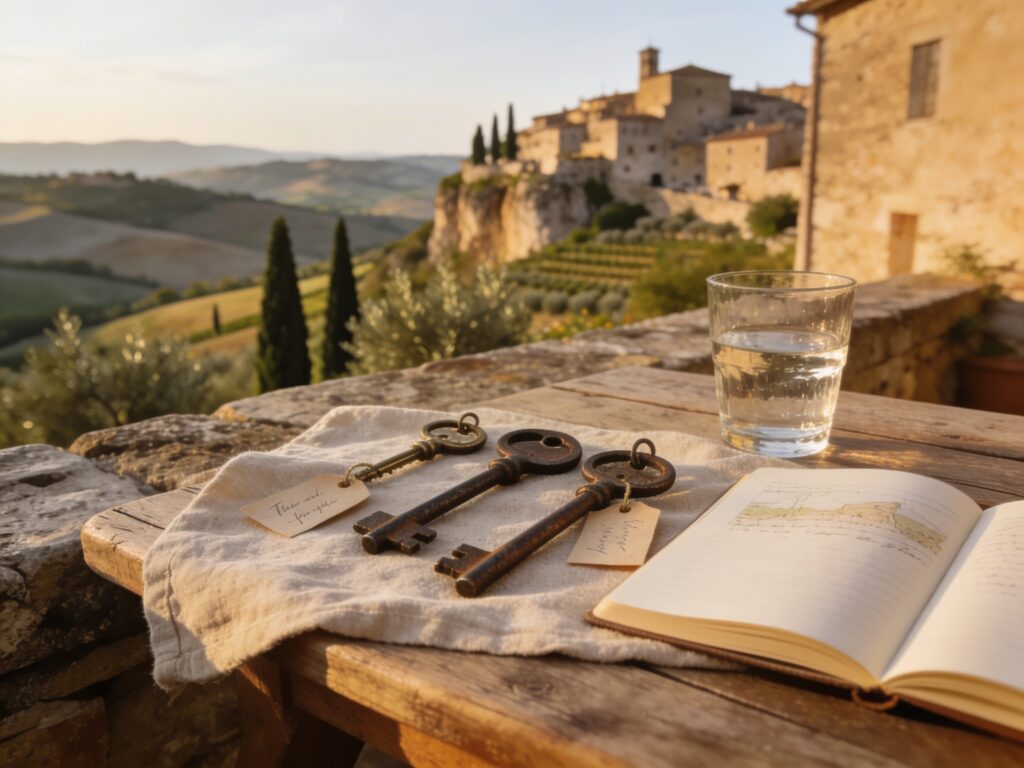
Village
Stay in the Maremma

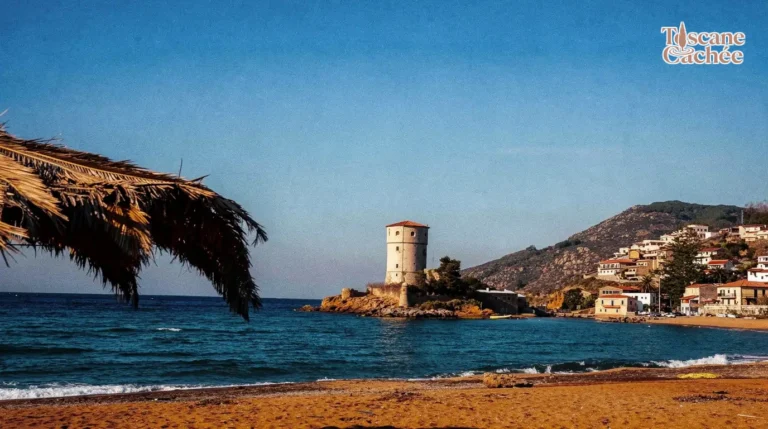
Tosco's wordOh, you've come to the right place! Isola del Giglio is a quiet island where the alleys of Giglio Castello smell of thyme and warm stone, and where the sea is never far away. My tip: walk up to Giglio Castello late in the day, then head back down to admire the Faraglione di Campese at sunset. You'll thank me!
Weather this week
Data: MET Norway (CC BY 4.0). A forecast can change: check the day before.
Stay22 map: if you book through it, we earn a commission, at no extra cost to you.
To visit
Within 8 km, highest rated first.
Around Isola del Giglio
Discover the price of diving and snorkeling in Maremma in 2026: from €40 for snorkeling and…
Discover where to go snorkeling in Maremma: explore the seabed of Giannutri or the Buca delle Fate. Slip on…
The island of Giglio, accessible by ferry from Porto Santo Stefano (30 min), brings together three distinct villages…
The island of Giglio is accessible only by ferry from Porto Santo Stefano (Argentario) via the companies…
Explore the Torre di Capo d'Uomo on the Argentario. Climb up to these 16th-century ruins to…
Where to stay
Hotels, agriturismos, houses: today's availability and prices, compared across several booking sites. Change the dates in the widget.
The widget isn't loading? Open prices in a new tab · If you book through this widget, we earn a small commission, at no extra cost to you.
The guide
Staying on Giglio island means accepting that the boat sets the rhythm before you've even unpacked your bag. The pink houses of the port come into view, and you understand that this island wasn't designed for everyone. It rewards those who love small things: a coffee at the edge of the quay, an empty trail, a quiet evening. This guide answers three questions nobody addresses for Giglio: where to sleep, how many nights, and in which season. You'll find the sights and hikes elsewhere.
Giglio suits people who love walking, swimming in coves without any gear, and going to bed early. It is a poor fit for anyone wanting a nightlife, a choice of restaurants, or a day free of schedule constraints.
If you're torn between sleeping on the island and doing it as a day trip, ask yourself a simple question: do you want to see the port after the day visitors have left? Someone who leaves in the evening only knows the Giglio of daytime, with its crowded quays and terraces facing arrivals. Someone who stays discovers the other island, silent, where you can hear the rigging clanging against the masts.
I advise you to avoid the island if you hate depending on a boat. Here, the weather and the timetable come before your wishes.
The crossing departs from Porto Santo Stefano, on the Argentario promontory. That's where you leave the car, and you won't see it again until the return. Arrival day is for settling in, not for rushing through sights. On departure day, stay close to the port: a missed boat means an extra night, and not necessarily where you had planned it.
On site, the island is explored on foot and by shuttle. No car is needed: you walk on roads that smell of hot maquis, and you forget about parking.
The island offers three accommodation hubs, and each one makes you give up something. You won't find a perfect base, only the one whose drawback you accept.
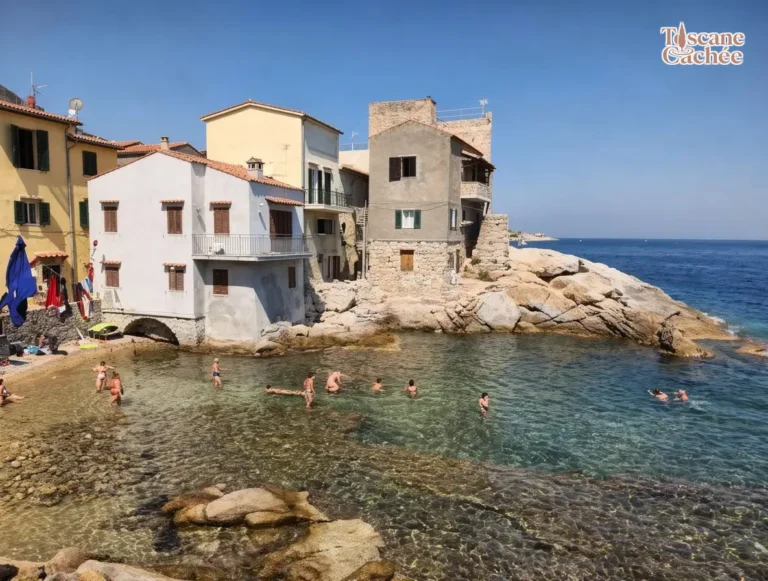
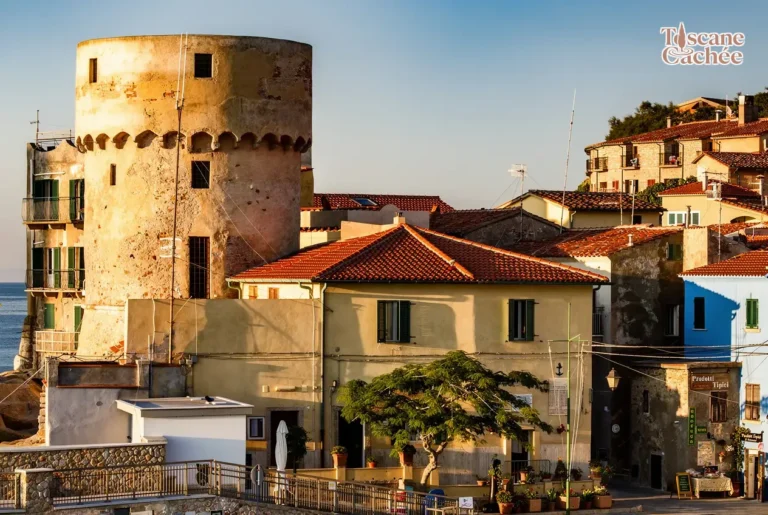
It's the simplest choice: the landing stage is within walking distance, and you have no shuttle to catch with your luggage. The price of this convenience is a setting that faces those arriving and leaving. From this base, you keep a few services open later: a counter, a table still lit, a stroll along the quay.
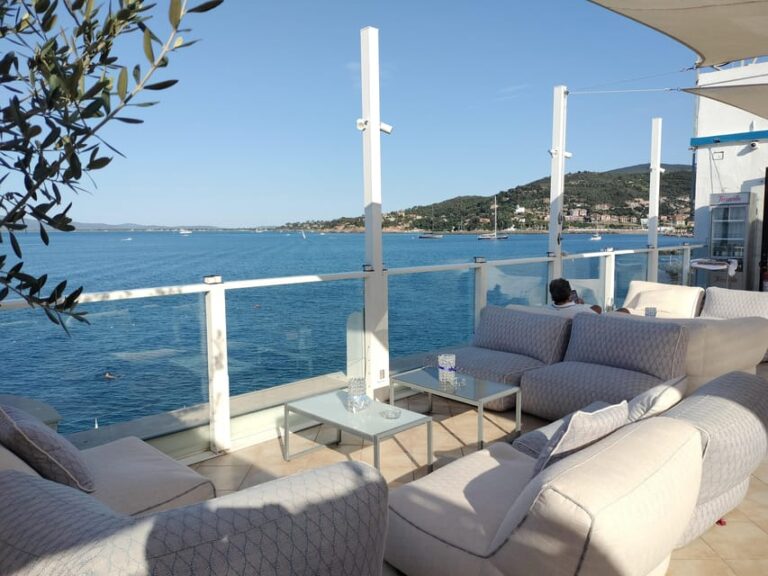
Terrazza La Guardia is the address of this harbor base, a stone's throw from the boarding point.
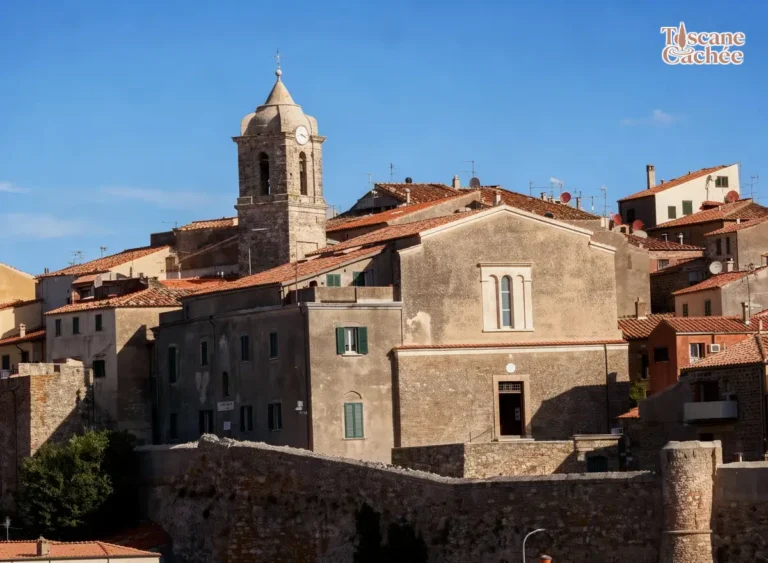
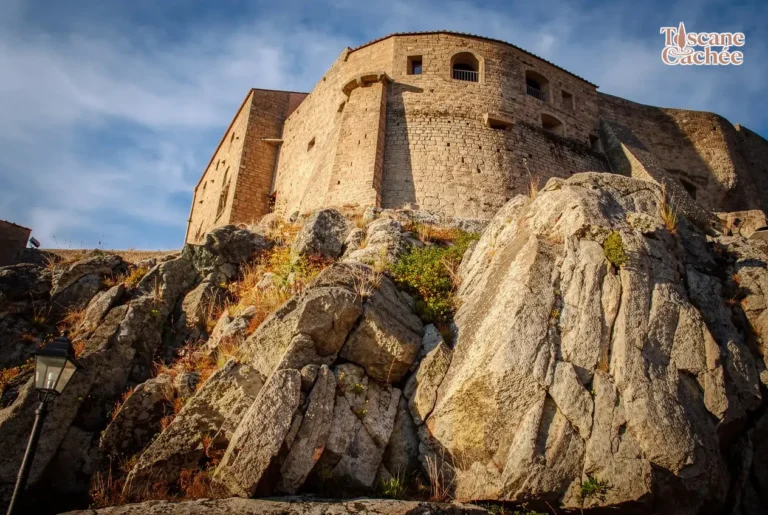
Giglio Castello is a fortified medieval village perched up high. In the evening the alleys empty and calm settles in, stone upon stone. It's the base for people who want atmosphere before convenience.
You pay for this charm in trips: to reach the sea or the port, the shuttle is essential, and coming back down after dinner is a matter of the shuttle, not impulse. L'Archetto suits those who want to sleep in the village and blend into it.
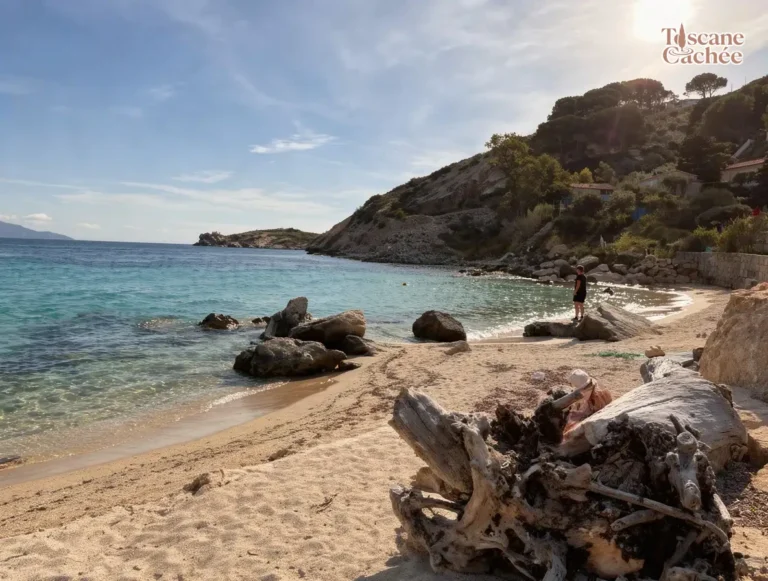
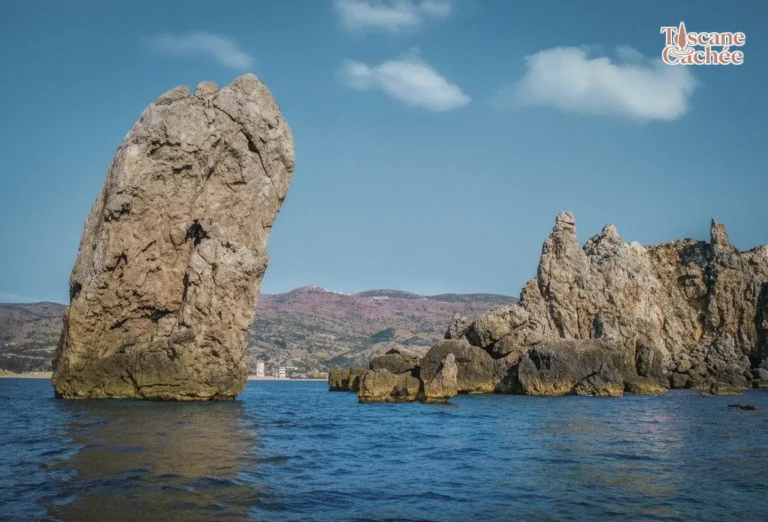
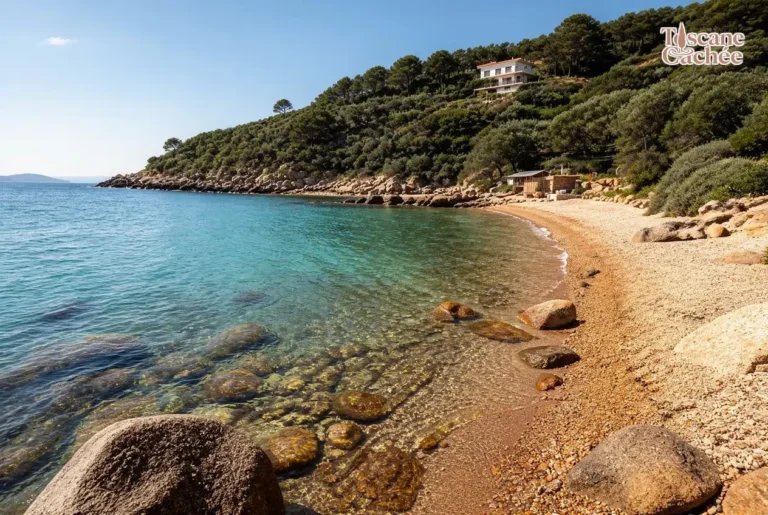
Campese opens onto a bay facing the beach. The Faraglione di Campese serves as a landmark: you see it from the sand, and you find it again on every walk. You gain the sea when you wake up, but you move away from the port and its services.
On an island where everything is done on foot, access matters more than the view or the budget. A room with a terrace over the sea loses its charm if you have to climb a steep staircase with two suitcases under the midday sun.
So ask these two questions of every address: how far is the walk from the shuttle stop or the quay, and is there transport from the port? The island has few beds compared to the mainland, which is why the good addresses go fast: in summer, book early. Out of season, some close, so confirm they are open before you build your stay around a specific place to sleep.
Two to three nights is the right format. You have time to walk, swim, watch the island change light between morning and evening, without going in circles.
One night is a compromise: you arrive, have dinner, and leave, and the crossing eats up half your stay. It's better than a day trip, but not by much. A week, on the other hand, is for those seeking to disconnect: people who read, swim, and ask for nothing else.
Here is a breakdown that works for three nights:
July and August gather everything you're trying to escape: heavy crowds, tight accommodation, packed beaches. I recommend May-June or September: the sea is there, the quays breathe, and you hear the cicadas rather than the loudspeakers.
At the port, tables are set for boat times. To dine better, move a little away from the quay, where the regulars fill them. In the village, people dine early, and the shutters close. In Campese, you eat facing the bay with a limited choice.
The coves offer almost nothing: bring water, more than you think you need, and a piece of fruit, bread, and cheese bought at the grocery store or bakery. The outbound trip is carefree, the return much less so if the bag is empty.
Sleep near Argentario the night before: you park the car and board without rushing. On the way back, Maremma awaits with its farms, hills, and tufa villages: extend your stay there rather than heading straight home.
To decide tonight, start by choosing your base, then fix two or three nights in May, June, or September. Book your accommodation first, and then fit the crossing around it. The rest comes down to one question: practical port or sleepy village?
For a first stay of two nights on Giglio island, Giglio Porto is the simplest choice if you want to avoid complications on arrival and departure. The landing stage is very close, you can walk to your accommodation, and you do not have to organize a shuttle with your luggage. This is especially practical if you arrive with a suitcase, plan to leave early, or do not yet know how transport works on the island. On the downside, the port lives to the rhythm of boats and visitors; to find calm, you need to move a little away from the quay. Terrazza La Guardia is an address mentioned in the article for this harbor base.
Choose Giglio Castello if you favor medieval alleys, the quiet evening atmosphere, and the pleasure of sleeping in a hilltop village. The drawback is concrete: to reach the sea or return after dinner, you depend on the shuttle. Campese suits you better if your idea of the stay is to wake up near the bay and enjoy the beach, with Faraglione di Campese as a reference point. In two nights, it is better to choose a single base rather than change accommodation: you lose less time with luggage and enjoy the island more. For a short car-free stay, compare above all the walk to the quay or shuttle stop, not just the view from the room.
Two nights are enough to discover Giglio island at a pleasant pace, provided you do not want to multiply trips and you consider arrival day a settling-in time. After the crossing from Porto Santo Stefanogo to your accommodation, drop your things, and take time to explore the surroundings of your base. A stroll to the port, through the alleys of Giglio Castello or along the bay of Campese is a better way to begin than an overloaded program impossible to keep, depending on your arrival time.
With two full days, you can devote one day to swimming at Spiaggia dell'Arenella , or Caletta del Saracenothen keep the next for a quiet morning and a last moment near your accommodation. On departure day, stay close to the port and allow a margin before boarding: the crossing imposes its rhythm, and missing the boat can upset the return. Three nights are more comfortable if you want to alternate swimming, walking, and breaks without watching the clock. A single night is much more constraining, since arrival and departure take up part of the stay. For a traveler who mainly wants to disconnect, read, swim, and not rush, a week may suit; for most visitors, two or three nights make a good compromise.
To stay on Giglio without the crowds of peak summer, aim for May, June or September. The article recommends these periods because the quays breathe more and the beaches are less crowded than in July and August. It's an appealing choice if you want to enjoy the island's peaceful character, walk between your base and the sea, or linger in the evening without being constantly surrounded by day-trippers. May and June suit those who want to go before the heart of the summer season; September lets you extend the feeling of vacation after the busiest weeks.
The season alone, however, does not guarantee that everything will be open. Outside peak periods, some accommodations close: before booking the crossing or building your stay around a particular address, ask for confirmation that it is open on your dates. Small lodging capacities also make reservations important, especially if you have already chosen between Giglio Porto, Giglio Castello and Campese. Book your accommodation first, then organize the crossing according to your arrival and departure. If you travel in July or August despite the crowds, plan further ahead and accept that beaches, docks, and availability will be tighter. For a quiet stay in Tuscany, the best compromise is often two or three nights in May, June, or September, with a base chosen according to your wish for convenience, village life, or sea.
The crossing to Giglio departs from Porto Santo Stefano, on the Argentario promontory: that is where you leave your car before boarding. The island is then explored on foot and by shuttle, and the article advises against planning to drive your vehicle there. So organize your arrival at the port with enough time to park the car, reach the boarding area, and board without rushing. If you are coming from the Maremma, sleeping in the Argentario area the night before can make departure more relaxed, especially if you do not want to depend on a long drive the morning of the crossing.
On the island, a car is not necessary to follow the stay described in the article, but luggage matters: choose accommodation whose access from the quay or shuttle stop remains reasonable. A room perched up high or far away may seem appealing in photos, but can become painful with two suitcases and a climb in the sun. On the return, avoid moving away from the port before the boat: a missed departure could force you to extend the night. After your stay, you can resume the road toward the villages and landscapes of the Maremma rather than going straight home. If you want to extend your trip in the region, compare the options for an agriturismo stay around Orbetello and the Argentario before fixing your itinerary, checking opening dates and booking conditions.
On Giglio, the right accommodation is not necessarily the one with the most beautiful terrace: it is the one whose access remains comfortable with your luggage. Before booking, ask precisely how long it takes to walk from the quay or shuttle stop, whether the route includes a climb or stairs, and whether transport from the port can be arranged. These details matter especially on arrival, when you discover the island, and on departure, when you must reach the ferry on time. A distant room may suit you with a light bag and a quiet stay, but be much less practical with a large suitcase or an arrival in the midday heat.
The choice of area helps anticipate these constraints. Giglio Porto simplifies arrival thanks to its proximity to the boarding area; Giglio Castello offers the calm of a hilltop village, but means depending on the shuttle to reach the sea or return after dinner; Campese places you near the bay, at the cost of being farther from the port and its services. Accommodations are few on the scale of the island, so book in advance if you travel in summer and confirm opening outside the season. To avoid an unpleasant surprise, also ask what is included and read the booking conditions. If you are comparing with accommodation on the mainland, this guide on pitfalls to avoid when booking an agriturismo in the Maremma can help you examine deposits and cancellation terms.
A day trip lets you glimpse Giglio, but it does not give the same experience as a night on site. Visitors leave while the island returns to its calm: this is when the docks empty and you can hear the ropes clanking against the masts. If you want to experience this atmosphere, have a coffee by the harbor without the bustle of arrivals, or enjoy a quiet evening after a swim, sleeping on the island is worth it. The article recommends two to three nights for walking, swimming, and seeing the places change in the light without turning each day into a race against the boat schedule.
A single night is a compromise: you can have dinner on the island and get a taste of its evening calm, but the crossing takes up a large share of the stay. For a brief visit, sleeping at Giglio Porto makes departures and arrival easier; choosing Castello or Campese responds more to a particular wish for a village or beach, with travel to plan. The stay requires accepting that weather and boat timetables structure your days. On the day of return, stay near the port and do not schedule an activity far from the boarding area. If you have several days, you can combine the island with a stop on the mainland, toward the Argentario or the Maremma. To prepare this second part of the trip, theindex of agriturismi in Maremma Tuscany helps you consider a more rural accommodation after nights on the island.
Podere Riparbella is an organic agriturismo in Massa Marittima, in the Maremma: a farm…
Maremma: for luxury that stays quiet, opt for a secluded villa in…
In Tuscany, pools are generally open from May to September, but you have to…
Book your agriturismo in Maremma at the best price. Choose May or October, favor the hinterland…
Choose between an authentic agriturismo and a hotel in Maremma. Find out which accommodation suits your...
Discover the ideal accommodation in Maremma for 2026. Agriturismo, glamping or hotel: choose your…
Discover why the Maremma beats the Chianti. Choose raw authenticity, prices 30% lower…
Find your ideal agriturismo in Maremma for 2026. Choose between an XXL pool, calm without…
Car-free
Pick a day: where the bus takes you, how long it takes, and what time the last return leaves. Timetables recalculated every week. All Maremma buses →
On site, without a car
Tap a place on the map or in the list: today's timetables, routes and last return.
No stop right near Isola del Giglio: the closest is Porto Santo Stefano, 27 km away. Without a car, plan on a local taxi for that stretch of road.
Source: Regione Toscana, public transport timetables (CC BY). Timetables collected for 24/11 (weekday), 21/11 (Saturday) and 22/11 (Sunday). Check the day before on at-bus.it: school buses and summer timetables change. Buses from each commune, weekdays and Sundays, in the Maremma Observatory →
Frequently asked questions
Answers drawn from our rated addresses around Isola del Giglio, figures updated daily.
No, a car isn't essential: on Isola del Giglio, the key sites connect on foot or by shuttle. Giglio Castello village, Campese, and the Arenella can be reached without a car, provided you plan for some walking and check bus schedules before setting out.
A car remains useful if you want to visit several beaches in one day, reach a remote cove, or transport diving and snorkeling gear. For a first discovery, you can organize your time around sea activities, such as Underwater adventure on Isola del Giglio, which can be done without a vehicle once you're there.
The honest limit: I don't have the precise details of shuttle schedules or rental rates on the island, so check them on site before relying on either. Also consult the map of Isola del Giglio to locate each site relative to your accommodation.
To decide, choose Spiaggia dell'Arenella if you want a sandy beach, easy to reach and a stone's throw from the village, Caletta del Saraceno if you're looking for the calm of a smaller, more secluded cove, and Campese if you want a wide stretch of sand and a livelier atmosphere with the Faraglione in the background. These are three genuinely different coves, and the right choice depends mainly on what you want to do with your day.
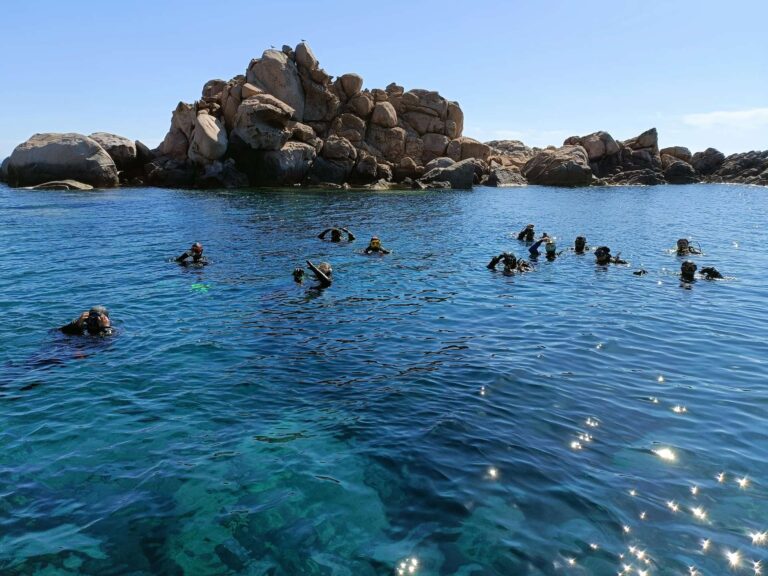
The deciding factor is access: ask yourself whether you want to walk or take the car, and whether you plan to spend the whole day at the beach or combine it with an outing at sea. For a first discovery, our selection also offers the activity F1 (snorkeling and sea baptism), which pairs well with a half-day at a cove.
An honest limit: beach access and crowd levels vary by season, and I can't guarantee conditions on any given day. Check schedules and crowd levels before heading out.
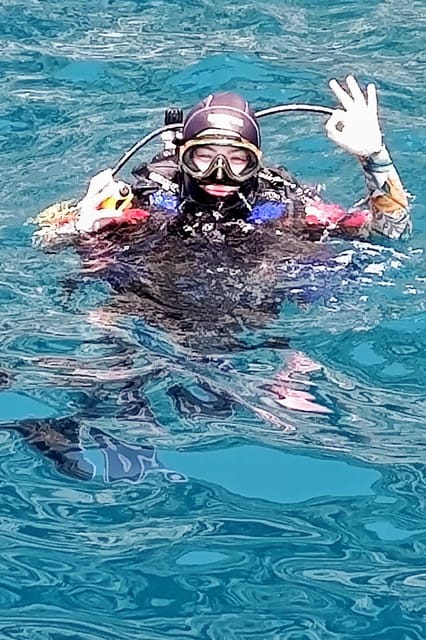
Pour une première fois en mer, choisis l'aventure sous-marine : snorkeling et baptême de la mer, avec une note de 6.5 sur la fiche de l'adresse. C'est une option accessible, qui ne demande pas de savoir nager longtemps ni de matériel spécifique, et qui te laisse découvrir les fonds marins sans t'engager sur une sortie longue.
What makes the difference is checking before booking what's included (mask, snorkel, wetsuit) and the length of the outing, since the activity takes place near the coast. If the water is cool early in the season, bring a wetsuit, and choose a morning outing, when the sea is often calmer.
An honest limit: our ratings come from analyzing reviews and available information, not from on-site trials. Consult the list of activities on Isola del Giglio to compare options before deciding.
Account 2 to 3 days to enjoy the island without hurrying: two days are enough to see the villages and a beach, three if you also want a boat outing and time to do nothing at all.
If you're mainly coming for swimming, two days let you alternate between beaches and bathing, and an extra day becomes useful as soon as you add Giglio Castello, the walk to the Faraglione di Campese, and the port. For a sea activity, like snorkeling and the sea baptism with Underwater adventure on Isola del Giglio, plan a half-day for it: the island is small, but boat departures and return times set the rhythm of the day. Choose the duration based on what you want to do first.
Distances on the island are short, so you don't need to multiply stops. If you only have a few hours, Giglio Castello and the port are the best compromise. For the rest of your choices, check the list of activities on Isola del Giglio.
Oui, pour l'aventure sous-marine, réserve à l'avance en haute saison : c'est l'activité en mer la mieux notée de l'île, avec une note de 6.5/10 pour snorkeling et baptême de la mer. Les créneaux se remplissent vite en juillet et août, et une réservation évite de perdre une demi-journée à attendre une place.
To make the most of it, choose a morning outing, when the water is calmer and visibility is better, and bring reef-safe sunscreen and a change of clothes. If you're not a strong swimmer, mention it when booking so the staff can adapt the outing.
The honest caveat: weather can cancel or postpone a sea outing, so keep a spare day in your schedule. To choose your accommodation, check the underwater adventure on Isola del Giglio and the list of activities on Isola del Giglio.
Choose L'Arenella if you want calm and clear water for swimming, Campese if you're looking for the most spectacular setting with the Faraglione di Campese, and Caletta del Saraceno if you prefer a small cove that's easy to reach and fairly quiet.
What really makes the difference is how you get around. Campese is the most practical if you want to combine swimming, walking and restaurants on site; L'Arenella requires a bit more walking but is the most peaceful; Caletta is a middle-ground option for those who want to escape the crowds on the other beaches. The Faraglione can be seen from several points on the island, so there's no need to treat it as a single destination.
An honest caveat: crowding varies a lot by season and time of day, and I can't guarantee the shade or the exact condition of each beach on the day you visit. For a first visit, check the list of activities on the island and see the map of Isola del Giglio to see how to plan around your choice.
For the simplest option, choose Giglio Porto if you want the energy of the port, the boats coming and going and the restaurants by the water; choose Giglio Castello if you want the medieval setting, quiet alleys and sea views, and don't mind walking uphill. Campese is a good fit if your priority is the beach and swimming right from your room.
The deciding factor is your pace: for the beach, Campese is the most practical in the morning; for evenings, Porto is the liveliest; for historic atmosphere and quiet, Castello wins. There are no night buses on the island, so if you plan to come back late, stay close to where you have dinner. For the list of addresses in the selection, see the map of Isola del Giglio.
If you want to discover the island from the sea as soon as you arrive, check the activity Underwater adventure on Isola del Giglio, highly rated for snorkeling and sea baptism, and book it in advance if you're visiting in high season.
In the FAQ
Travelers have asked us these: each answer has its own page, with its addresses.
 ?Transport & accessWhere does the boat to the Isola del Giglio leave from?Read the answer
 ?Transport & accessHow far is Monte Argentario from the island of Giglio?Read the answer
 ?Weather & seasonWhat is the best time to go to the island of Giglio?Read the answer
 ?GeneralHow many inhabitants does the island of Giglio have?Read the answer ?Nature & beachesWhat is the most beautiful spot on the island of Giglio?Read the answer
 ?Gastronomy & wineWhat is a typical dish from the island of Giglio?Read the answer
To go further
All our village addresses, family by family, with their filters and map.
Very close
 Français Français
 Italiano
 English
 Polski
 Português do Brasil
 Nederlands
 Español
 Deutsch