










On the forecourt of Duomo in Florence, guides hold up umbrellas of every colour and travellers stare at their phones looking for the right meeting point. That is where the question of this TUI Musement review lies: is the platform reliable when you pay in advance for an outing in Tuscany? My answer comes down to one nuance. The site's name guarantees nothing; the specific listing tells you whether you can go in with your eyes closed or not. Here is how to read it, what the catalogue really covers, and when it's better to use another door.
Reliable, yes, but listing by listing
TUI Musement is a usable intermediary for the classic Tuscan sights: Florence, Siena, Pisa. You can book there without fear of a scam, because the company is serious and well established. But the seriousness of the storefront says nothing about the quality of the guide who will be waiting for you in the square.
My verdict is therefore conditional. For a very classic itinerary with simple logistics, I say yes. As soon as the experience depends on one person, a small group or a little-visited place, I read the listing like a contract before taking out my card.

The partner of this article
TUI Musement
TUI Musement offers excursions, guided tours, attraction tickets and local experiences in more than 100 countries, with simple online booking.
Musement is not tui.fr: what you're really buying
Confusion is common, so let's settle it. Musement is a catalogue attached to the TUI group, which claims a presence in more than 90 countries. It is not the agency that sells package holidays.
The figure of 99% to 100% satisfied customers you come across on tui.fr refers to those holidays, not to Musement offers. It says nothing about your upcoming morning at the Uffizi.
Above all, the platform doesn't organise the outing: it acts as an intermediary. The local provider delivers the serviceand it changes from one listing to the next. Two tours of Florence booked in the same place may therefore be run by two different companies, with two levels of care. The guide holding the umbrella on the forecourt is not an employee of the platform.
Reading reviews without getting caught out
Musement has 4 stars on Trustpilot across 32,324 reviews. That volume reassures on one point: the platform exists, really sells and has been responding for a long time. It tells you nothing about the two-hour walk in Siena you have in mind.
When you type the brand into Google, the snippets mostly surface negative reviews. They don't reflect the average. An unhappy customer writes faster than a happy one, and search engines like stories that creak.
My method comes down to three moves. Go to the listing, not the homepage. Sort the reviews by date and keep only the recent ones, those that talk about your destination. Then look for the details that repeat: a guide who leaves early, a meeting point that can't be found, a group that's too big. A single complaint is noise; the same complaint five times is information.
What you can book in Tuscany, and what's missing
The offer revolves around guided tours, skip-the-line tickets and day excursions around Florence, Siena and Pisa. That makes sense: these are cities where a two-hour queue in the sun ruins a morning.
The skip-the-line ticket deserves a clarification. It spares you part of the queue, but it guarantees neither entry at a fixed time everywhere nor access to the whole site. You save time, not a universal pass.
For day excursions from Florence, you are expected at a set time, on a set pavement, with a bus that won't wait. The comfort is real, the flexibility much less: you follow the group's pace.
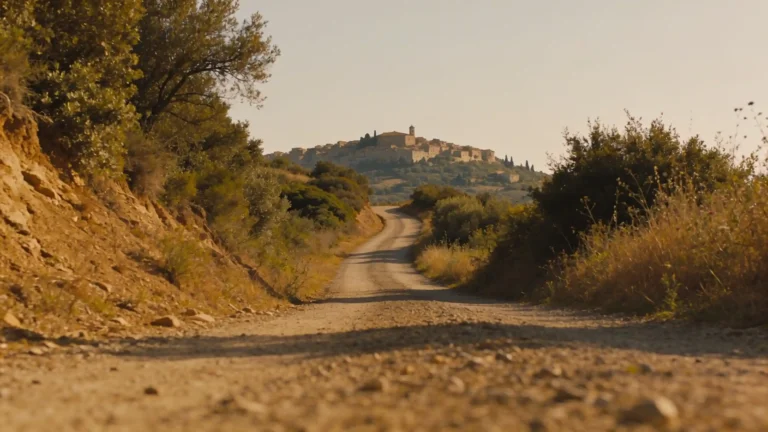
If you dream of the south, forget the catalogue. The MaremmaMaremma, the Etruscan land and the tuff villages are barely covered there. Out there, a town of yellow stone at dusk is discovered with a local guide, contacted directly, who shows you the necropolis that nobody puts in the shop window.
Three checks before paying
Before confirming, I always go through the same short checklist.
- Cancellation ): how late you can cancel and get a refund, and under what circumstances. Each outing has its own rule, so don't assume anything from one listing to the next.
- Language ): a service in French is not guaranteed at every time slot. Check the language of the exact slot you're booking, not the general description.
- The event : exact location, time, duration.
Once the booking is made, download your e-tickets to keep them offline. As soon as you leave the city, the network becomes unreliable, and a QR code that won't load at a ticket desk is a very avoidable bad surprise.
When the guide doesn't show up
That's the weak point that comes up most often: customer service when something goes wrong, and the quality of local providers, which varies. An intermediary is judged when things get stuck, not when everything goes smoothly. A missing guide, a cancelled flight, a bus that leaves without you: that's when you find out whether someone answers.
Build in a margin. Don't schedule an outing thirty minutes before your return train or your flight. Note the provider's contact listed on the booking page, in addition to the platform's. On a sidewalk, at the set time, with nobody in sight, you'll need a number to call right away rather than a form to fill out in the evening.
Who it's for, and who it isn't
The platform suits someone on a first city stay in Tuscany who wants simple logistics: a ticket, a time slot, a guide. It also suits someone who prefers to bring everything together in one app rather than juggling ten museum websites.
It suits you less if you're looking for intimate experiences, a guide whose name you know, or a single contact who answers for everything. In that case, booking directly gives you someone in front of you when something changes. That's the price of peace of mind, and it's sometimes worth a little time spent writing a message.
Musement, its competitors, or a guide directly
Among several platforms, I don't name a winner: the choice depends on the specific outing. Compare it across catalogs: announced provider, recent reviews, cancellation terms. The best-written listing with the best rating for your date wins out.
For a local guide or a small operator, booking directly is often preferable: you talk to the actual person in charge, you adjust the time, you ask your questions. For a major classic in Florence or Pisa, going through a catalog remains comfortable.
If you're hesitating, write to the provider before paying: the speed and precision of their reply will tell you more than any rating.
For a skip-the-line ticket to the Uffizi or a visit to the Florence Duomo, TUI Musement works correctly as an intermediary, provided you read the activity listing before paying. The skip-the-line ticket spares you part of the queue, which can exceed two hours in high season, but it does not guarantee entry at a fixed time to the entire site or access to all the rooms. So check the time slot shown, the estimated duration of the visit and what is actually included, for example an audio guide or a guided tour.
Keep in mind that the ticket is sold by the platform but entry follows the museum’s rules. Present yourself at the access point indicated on your e-ticket, at the time of your slot, and keep an offline copy of your QR code. If you are travelling in midsummer, plan to arrive a few minutes before your slot, since security checks can slow entry. For a first visit to Florence, it is a practical option with no particular risk.
This is one of the scenarios that reveals the real quality of an intermediary. If the guide does not show up at the time and place indicated on the listing, the first thing to do is to contact immediately the local provider whose number appears on your confirmation, and not only the platform’s customer service. On site, at the Piazza del Campo or in front of the Siena Cathedral, wait about ten minutes keeping your phone within reach and take a screenshot of your booking confirmation.
Then write or call the platform to report the incident in writing, with the time of your arrival and your attempts to make contact. Request a refund or compensation as soon as possible and keep all the evidence. To avoid this kind of situation, never schedule a Siena visit less than a few hours before your return train to Florence. A safety margin of at least two hours gives you time to handle an unexpected problem without panic.
The answer depends entirely on the exact option you purchased, and it is a check to make before paying. A day trip from Florence to Pisa is generally organised by bus with a fixed departure point, often near the Santa Maria Novella station station, and an imposed return time. If the listing indicates transport included, that ticket does not cover a train journey, even if the train is faster and often cheaper. Never assume that a substitution is accepted.
If you prefer the train, it is often simpler to book a Trenitalia or Italo ticket directly and visit Pisa on your own, taking the time to go to the Piazza dei Miracoli to see the leaning tower. The Florence-Pisa journey takes about an hour and a half depending on the connection. If you absolutely want the organised excursion, stay on the bus and plan your return trip according to the schedule guaranteed by the provider.
Language is a point that many travellers overlook, because the general description of the activity may mention several languages without specifying which one applies to each time slot. Open the listing for the Pisa tour you are interested in, then select the date and time before looking at the details. Some platforms display the language directly beside each available time, others mention it only in the practical information at the bottom of the page. If you cannot find it, do not assume there is a French-speaking guide.
The safest option is to write to the local provider before paying, explicitly asking which slot is guaranteed in French and whether a French version exists on the date you are targeting. Keep a written record of their reply. If the tour is offered only in English or Italian, consider an audio guide in French or a self-guided visit with a detailed map of the Piazza dei Miracoli, which will already give you a good overview.
Yes, this is a very useful precaution. As soon as you leave the big cities for the Maremma or the hills of southern Tuscany, network coverage becomes patchy, especially in hilltop villages and rural areas where masts are scarcer. A QR code that fails to load at a ticket desk or at the entrance to a site is a bad surprise that is very easy to avoid. Before leaving, open each e-ticket, take a good-quality screenshot or save the PDF on your phone, and also keep a printed copy if you can.
Also remember to save the map offline in your navigation app, particularly for trips to villages such as Pitigliano or the Etruscan sites of the region. If you plan a day excursion from the coast, check the departure time of the bus or the meeting time and write the provider’s number down on paper, in case your phone stops working at the crucial moment. These simple steps avoid most logistical surprises.
The difference lies mainly in the person you deal with when something changes. Through a platform like Musement, you buy a standardised product: a tour, a time, a price, with a local provider who delivers the service without you always being able to speak to the actual person in charge. For a great classic such as a visit to Florence or the Duomo, this formula is practical and carries no particular risk. For an excursion in the south, such as a discovery of the Etruscan necropolis of Sovana or a walk through the tuff villages, the catalogue often covers the offer poorly.
By contacting a local guide directly, you speak to the person who really knows the terrain, you adjust the timing according to light or weather, you ask about the walking level, and you can negotiate a tailor-made itinerary. The trade-off is that you handle the payment, the written confirmation and any cancellation yourself, so always ask for a detailed quote and clear terms in writing before paying a deposit. For a confidential or specific route, this is most often the best choice, as our review of Tourradar for booking a tour in Tuscany also shows if you are comparing organised tour options.
Around this article









Want to go further? Tours of Tuscany in the same spirit as this article.

Florence, Siena and Montepulciano in a guided group

Florence, Chianti and Siena: guided Tuscany

Live map & prices
Where to stay around Florence?
Our recommended addresses nearby, then today's prices for your dates.
Cars · live prices
Your rental car from Florence airport
The nearest car rental companies are at Florence airport. Here are the best current deals, compared and rated.
Searching for available cars…
See all cars and choose my dates
Booking and payment through Discovercars: the link earns us a commission, without changing your price.
Around Florence
You will also like
Tourradar reviews in 2026: is it reliable for booking a tour in Tuscany?
Tourradar only offers classic group tours in Tuscany (Florence, Siena, Chianti),…

The most beautiful Christmas markets in Tuscany 2026: dates and tips
Siena is the only stop whose 2026 dates are official (4, 5 and…

Florence vs Siena: which one to choose for your 2026 trip?
Siena is the simplest choice for a first short trip to Tuscany…

Bagni San Filippo in 2026: access, parking and tips for the Fosso Bianco
Bagni San Filippo is a free natural site, open all year round: the…