









The road climbing toward Gavorrano crosses bare hills, cork oaks and fields the sun has already turned straw-colored. Nothing prepares you for what rises out of the earth at a bend in the road: a red tower, a bare forecourt, a cellar that looks more like a village square than a winery. The Rocca of Frassinello, I had filed it under "beautiful Maremma estate, good reds". I was wrong. On the pages that sell it, you read a product sheet: a tasting, a duration, a price. On site, you experience something else, a route that descends from contemporary concrete to the Etruscan tombs, passing through the wooden barrel hall. That is the route I'm describing here, not the catalog. And at the end, you'll know which option to take and how to fit it into your day without rushing.
You climb up for the wine, you come back down talking about architecture
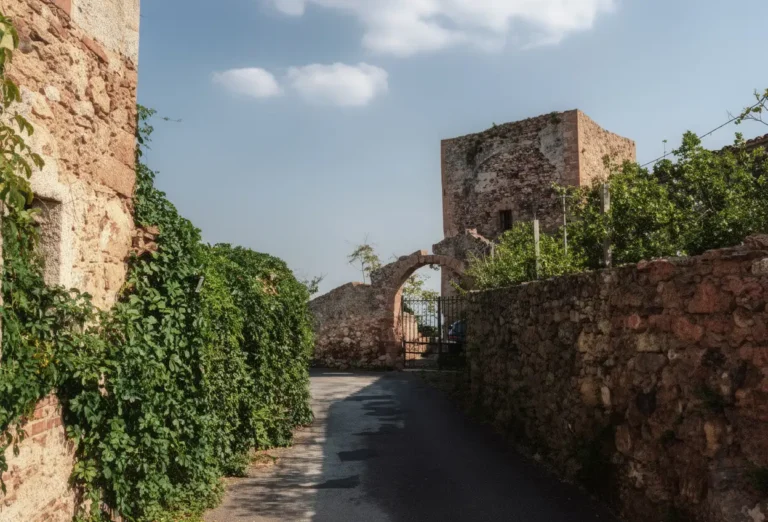
It is a little after ten in the morning when I park the car. The light is already hitting the forecourt hard, and the first thing that strikes you is the silence. No garish shop, no flags, no "wine shop" signs in English. Just that brick esplanade and the tower dominating it.
The cellar was designed by Renzo Pianothe architect of the Centre Pompidou. You see it immediately, and yet it doesn't shout. The building sits in the hillside as if it wanted to be forgotten, and the tower plays the role of the bell tower you spot from afar. Here, architecture doesn't show off. It works.
The estate was born from an Italian-French marriage: Castellare, Paolo Panerai's house in Castellina in Chianti, partnered with Domaines Barons de Rothschild. You might expect a somewhat cold temple of luxury. It isn't. The guide who greets me has dusty shoes and talks about the vines before talking about the building. A good sign.
Wine cellar
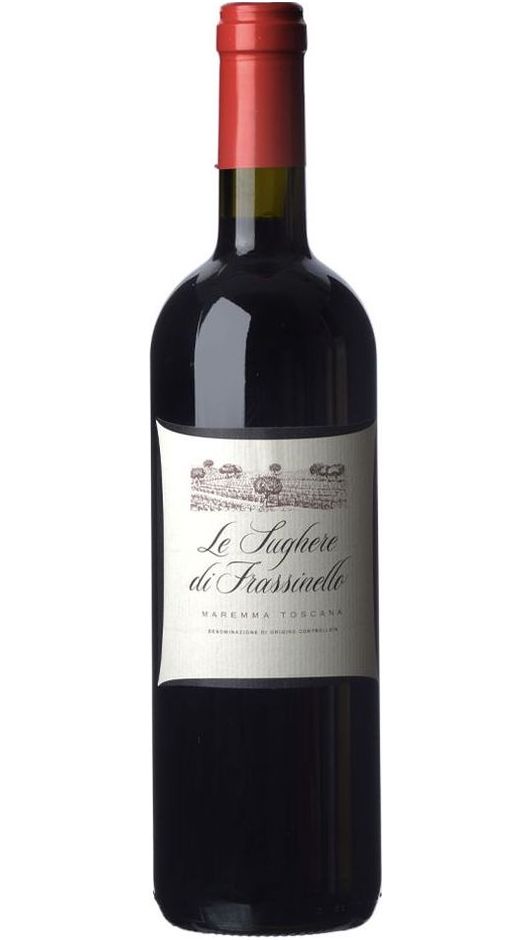
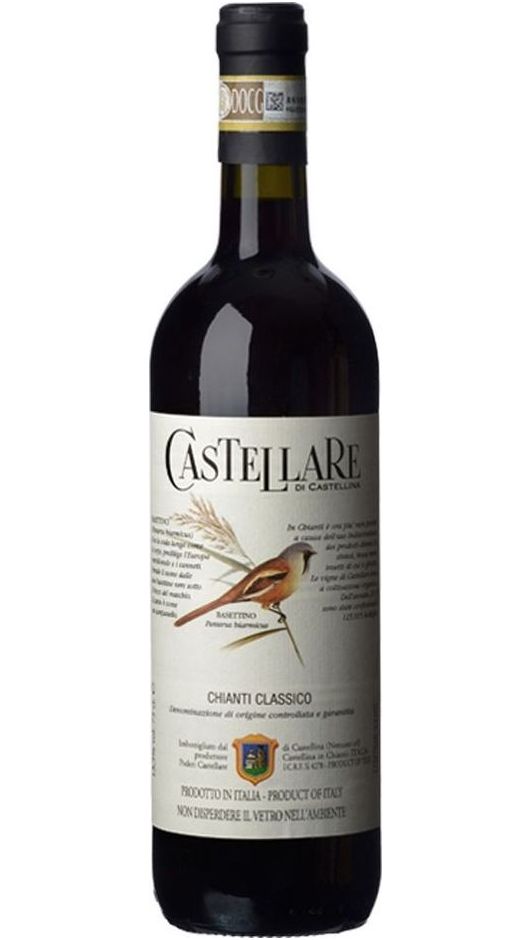
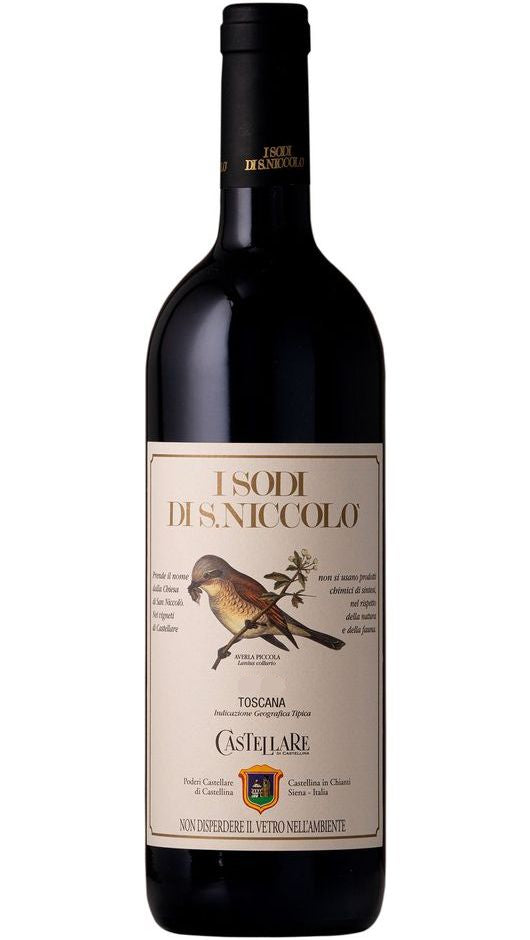
The wines of Castellare in our cellar
Excessive alcohol consumption is dangerous for health, drink in moderation.
The barriccaia: going down into a wooden cathedral
You pass through a door, go down, and the temperature drops at once. The smell changes too: oak, wine resting, a hint of damp cellar. Then the space opens up, and I let out a stupid "ah" that the guide must have heard a thousand times.
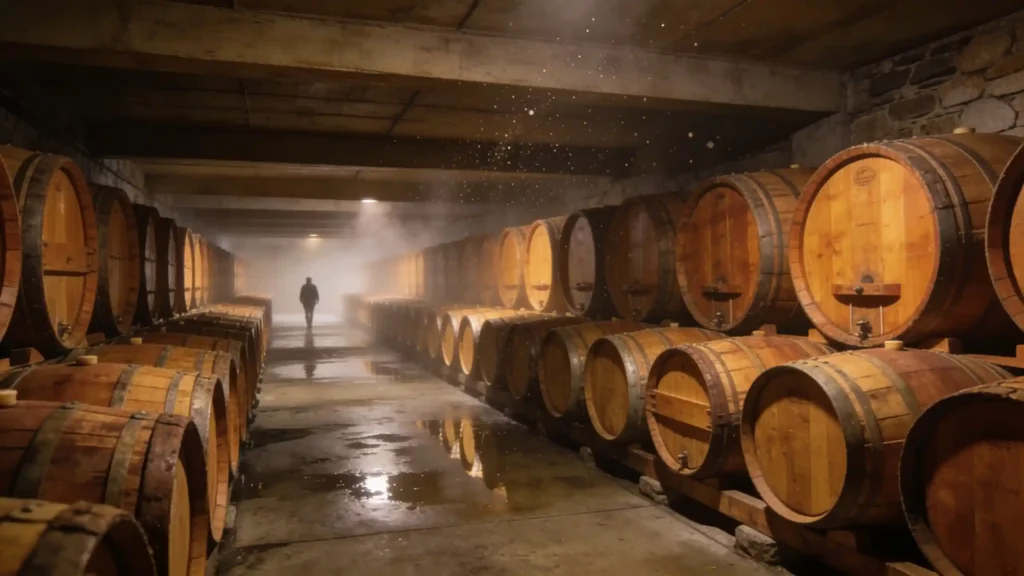
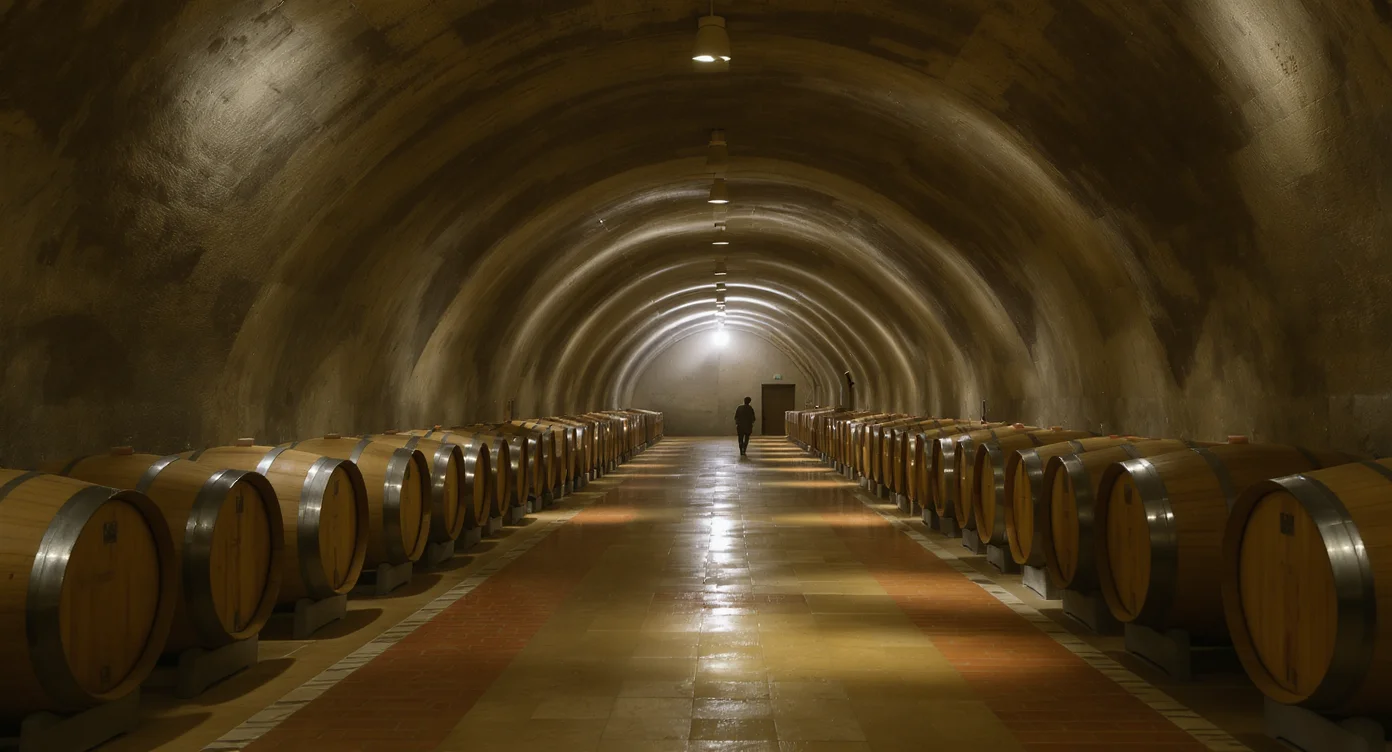
The barriccaia is a perfect square of 40 meters by 40, with a ceiling that holds up without a single pillar in the middle. Rows of barrels as far as the eye can see, lit by low light, and nothing to break the perspective. You feel small. It's deliberate, and it works terribly well.
The clever part is what you don't see: not a single pump. All the wine moves by gravity. The grapes arrive from above, the vats are placed right under the openings in the roof, and the must slides down without being roughed up. The grapes aren't shaken. They're let fall, gently.
In Italian, sagrato means the forecourt of a church. Here, it is the name given to the roof openings through which the harvest falls directly into the vats, with no pump.
If you wonder whether the cellar is worth the detour when you know nothing about wine, the answer is yes, without hesitation. My group neighbor, a woman from Lyon who only drank white, spent ten minutes photographing the ceiling. She discovered the wine afterward. The place had already won her over.
The San Germano hill, where the Etruscans were already drinking
If you think the Etruscan section is a backdrop stuck there for show, you're mistaken. It is even what gives meaning to the whole visit. Beneath the same San Germano hill where the estate's vines grow, a necropolis ofabout thirty Etruscan tombshas been uncovered, dating from the 7th to the 4th century BCE.
The documentation center is housed in the cellar itself. The exhibition is called "Gli Etruschi e il vino a Rocca di Frassinello", and Italo Rota was its curator. Vases, fragments, objects linked to wine and banqueting, presented soberly, under light that gives you time to look. No overcrowded display cases. You can breathe.
What hooked me was the continuity. Vines have been cultivated on this hill for roughly three thousand years. The people buried there drank a wine born of the same earth as the one you're about to taste one floor up. I leaned over a drinking cup and thought of my own, waiting for me. It puts things back in their place.
That is what sets the visit apart from most tastings in Maremma. Elsewhere, you're shown vats and handed a glass. Here, you're shown why that glass exists. The museum isn't a bonus. It is the heart.
Our addresses · Vetulonia
Our favorite addresses around Vetulonia
Excessive alcohol consumption is dangerous for health, drink in moderation.
One hour in a visitor's shoes: the concrete run-through
The classic visit lasts about an hourand it has a good rhythm. We begin outside, at the estate: the guide shows you the rows of vines, the exposure of the plots, the way the hill absorbs the heat and the wind rising from the sea. It is hot, the cicadas are screaming, and you quickly understand why everything else happens underground.
Then the descent to the cellar and the barriccaia, the one I described above. Then the passage through the Etruscan documentation centre. Everything flows together without dead time, and without a memorized speech either. The guide answered questions, even the naïve ones, without sighing.
We end with the tasting, seated, in the cool. It's the moment when the body relaxes after the walk and the emotion of the place. My only regret: we would have liked to stay a little longer in front of the tombs. If you're the type who reads every placard, keep that in mind when choosing your option.
Outside, the hill bakes; in the barriccaia, it's cool. A light jacket in your bag, and you can enjoy the cellar without shivering between barrels.
In the glass: local Sangiovese and Bordeaux varieties
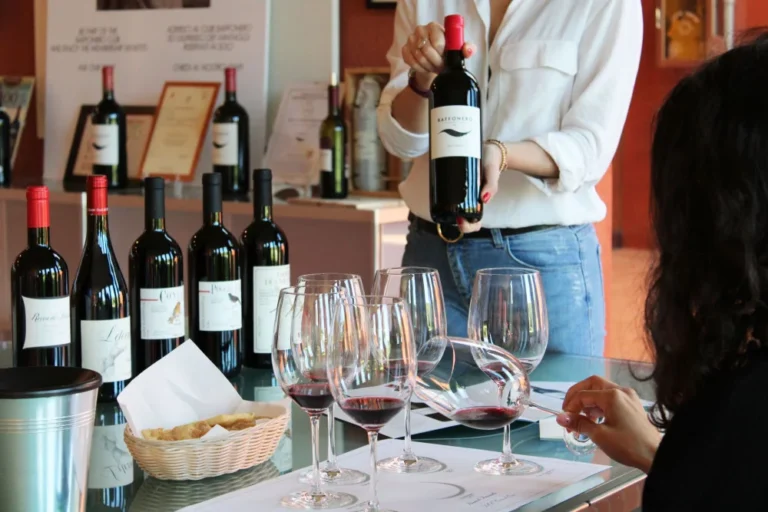
The Italian-French marriage is tasted. On one side, the grape varieties from home: the Sangioveto, the local name for Sangiovese, and the Vermentino for the whites. On the other, the neighbors who came from Bordeaux and the Rhône: Merlot, Cabernet Sauvignon, Syrah. The estate plays with both, and that's where the tasting becomes interesting.
The Vermentino smells of the coast: salt, dry herbs, a slightly bitter finish that makes you thirsty. On the reds, the Sangioveto brings that lively acidity and red fruit that lightly tingles the tongue. The Merlot and the Cabernet round things out, thicken them, add chew. You can feel both schools in the mouth.
I'm not going to tell you which grape is the best. That would be silly, and it's not the point. The game is to taste the Sangioveto alone in your head, then look for what the Cabernet does to it. If you drink without thinking, you miss it. Take your time, damn it.
Classic, light lunch or premium: which one to choose at the Rocca di Frassinello
Three options, three ways to experience the place. And the price isn't the right criterion. The real question is how much time you have and what you're looking for.
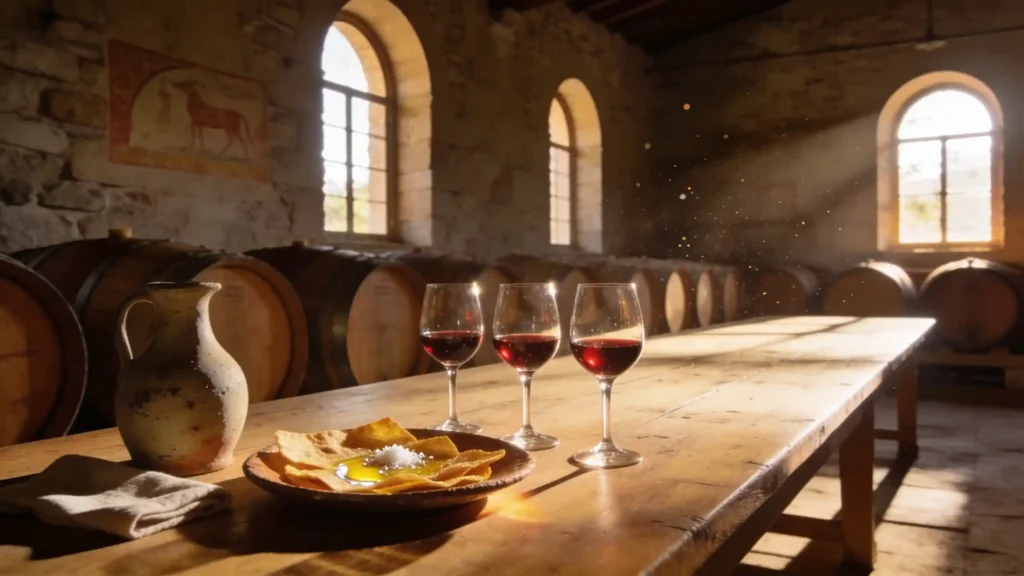
The classic visit
It's the one I did, and for most people it's enough. You see everything that matters: the vineyard, the cellar, the Etruscans, then you taste. If you're passing through between two stops or wine isn't your religion, don't look any further.
The light lunch
Account three hours on site. It's the option for those who want to sit down, eat with the wine, and let the day slow down. It makes sense if you make the Rocca your main stop of the day, not if you have a beach waiting for you at three in the afternoon.
The premium option
It lines up five wines served with a schiacciatina, that thin, crispy, salted, oiled flatbread that cleanses the palate between glasses. It's for you if you like comparing, putting two reds side by side and looking for the differences. For a beginner, it's too much. For a curious taster, this is where the estate really opens up.
My verdict is simple: classic if you're passing through, premium if you want to taste seriously, lunch if you want to make the cellar your day. Don't automatically choose the most expensive. You don't pay to feel important, you pay for what you experience.
The verdict, and how to plan your day around it
The estate's reputation is well deserved, and not for the reasons you'd think. The wines hold up, but what stays with you is the journey: the esplanade under the sun, the coolness of the barrels, the Etruscan cup behind the glass. Product sheets sell you a tasting. You leave with a story.
For the day, two clear options. The first: continue with Vetuloniathe other great Etruscan city nearby, perched on its hill. You extend the thread begun under San Germano, you see the tombs and walls in the open air, and the cellar visit gains even more depth. It's a day for the curious, coherent from start to finish.

The second: do the cellar in the morning, then head to the sea early in the afternoon. The coast isn't far from Gavorrano, and nothing beats a swim after a Vermentino that already smelled of salt. Just avoid doing it the other way around: arriving at the tasting with sand in your shoes and a head full of wine is a waste of the place.
Start by booking the classic visit in the morning, when the hill is still bearable and groups are rare. For the rest of the day, Vetulonia or the sea will decide itself once you've seen that ceiling.
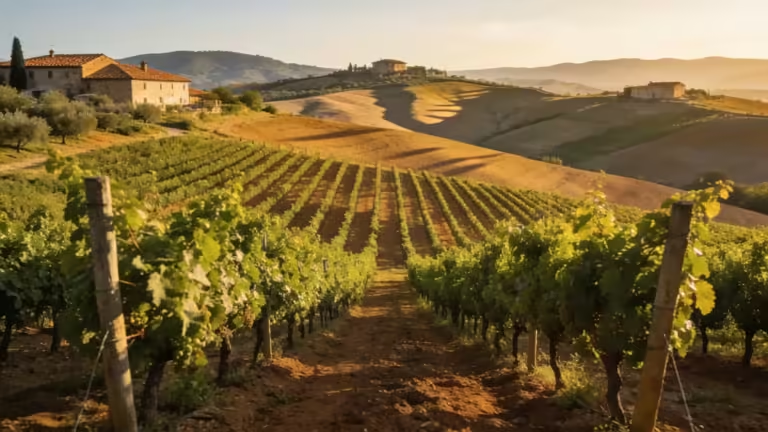
For the classic visit of the Rocca di Frassinello, plan about one hour on site. This is enough time to walk the outdoor esplanade, go down into the cellar and the barriccaia, pass through the Etruscan documentation centre and finish with a seated tasting. The route flows without downtime, but if you are the type who reads every caption or lingers in front of the museum display cases, allow extra margin, because you would like to stay longer in front of the objects from the tombs of the San Germano hill.
The best time to book remains the morning. The heat of the Maremma rises quickly over the bare hills of Gavorrano, and groups are generally smaller before noon. Arriving early lets you enjoy the silence of the forecourt and the coolness of the cellar before the hill bakes. If you opt for the lunch formula, which changes everything, plan about three hours on site, which only makes sense if the Rocca is your main stop of the day and not a transit stop.
Yes, I recommend booking in advance, especially in the summer high season, because the cellar receives visitors throughout the day and the morning slots go quickly. A reservation guarantees you a place at the time that suits you and spares you from waiting on the forecourt in the blazing sun with a long queue at the door. Check the opening hours directly with the estate before planning your route to Gavorrano, as they may vary according to the season.
To choose the formula, ask yourself how much time you have and what you are looking for. The classic visit is enough for most travellers: it covers the vineyard, the cellar, the Etruscan museum and a tasting. The light lunch is for those who want to sit down, eat with the wine and let the day slow down. The premium formula, with five wines accompanied by a schiacciatina, is for curious people who enjoy comparing two reds side by side. For a novice, it can be too dense. Do not choose the most expensive one out of reflex: you pay for what you experience, not to feel important.
The barriccaia is the architectural heart of the estate. It is a square space of about 40 metres by 40, whose ceiling holds up without any pillar in the centre. Rows of barrels stretch as far as the eye can see under low light, and nothing interrupts the perspective. Going down from the forecourt, the temperature drops suddenly and the smell changes: oak, wine at rest and a hint of cellar humidity. It is a moment that surprises even the most jaded visitors, and that is what it is made for.
What you do not see is just as interesting. There is no pump in the installation. The wine moves only by gravity: the grapes arrive from the top, the vats are placed just under the roof openings called sagrato, and the must slides downward without being roughly handled. The principle is simple: you do not shake the grape, you let it fall gently. If you are interested in winemaking, this detail alone is worth the trip.
Yes, and without hesitation. Many visitors arrive here with no oenological knowledge at all and leave won over, because the place tells a story that requires no technical vocabulary. Renzo Piano’s architecture, the descent into the cellar, the light of the barriccaia and the Etruscan museum are understood instantly. You do not need to know how to tell a Sangiovese from a Merlot to be moved by the space or by the vases displayed under the San Germano hill.
The guide, who wears dusty shoes and talks about the vine before talking about the building, answers the most naive questions without sighing. For the tasting, you can simply taste while asking yourself what you like, without looking for the right answer. The Vermentino smells of the coast, with salt and dried herbs, while the reds offer lively acidity or a rounder chew depending on the grape varieties. Take your time, that is where the pleasure comes from, and do not feel obliged to understand everything in order to appreciate it.
Two options are open to you once you leave the cellar, and they fit very well with the logic of the place. The first is to continue with Vetulonia, the other great Etruscan city of the region, perched on its hill. There you discover the walls and tombs in the open air, which naturally extends the thread begun under San Germano. After seeing the objects linked to wine and the banquet in the Rocca museum, finding these traces on the ground gives a new depth to your day. It is the ideal formula for curious people who want to follow the Etruscan thread from beginning to end.
The second option is to head to the sea in early afternoon. The coast is not far from Gavorrano, and a swim after a Vermentino that already smelled of salt is a very nice way to close the morning. There is, however, one rule to respect: do the cellar in the morning, then the sea, and never the reverse. Arriving at the tasting with sand in your shoes and a overheated head spoils the place. For the heat, do not forget a light jacket in your bag, because the barriccaia stays cool even when the hill is burning outside.
Around this article
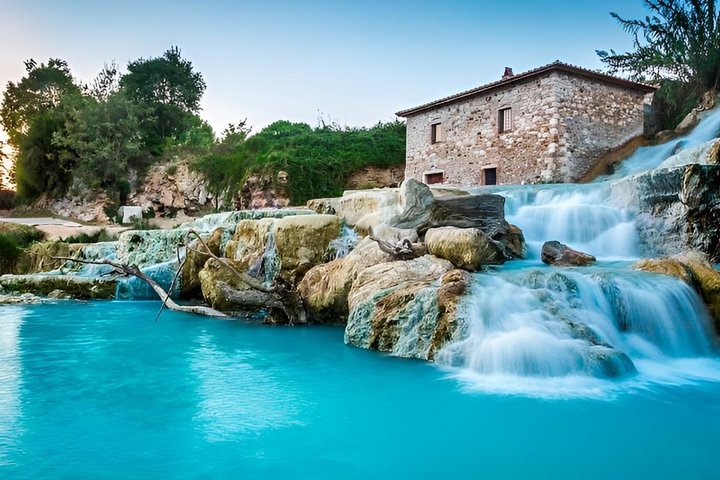
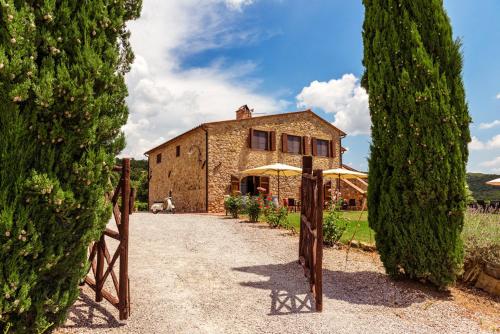
Agriturismo & Winery Tenuta Casteani
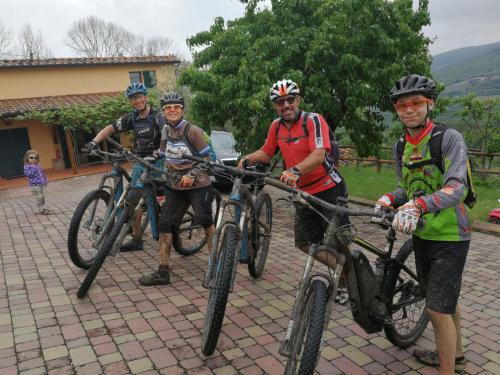
Agriturismo Bike Hotel Podere Giarlinga
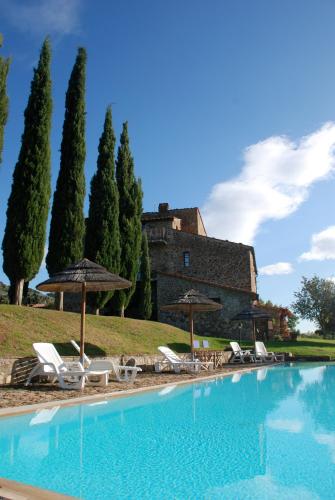
Want to go further? Tours of Tuscany in the same spirit as this article.


Live map & prices
Where to stay around Vetulonia?
Our recommended addresses nearby, then today's prices for your dates.
Cars · live prices
Your rental car from Grosseto airport
No rental company operates in the villages: the closest agencies to Vetulonia are in Grosseto. Here are the best current deals, compared and rated.
Searching for available cars…
See all cars and choose my dates
Booking and payment through Discovercars: the link earns us a commission, without changing your price.
Around Vetulonia
You will also like
The Focarazza of Santa Caterina, November 24, 2026: Maremma's great fire
The focarazza of Santa Caterina is lit on Tuesday, November 24, 2026 at dusk, on…
Volterra in 2026: what to see in one day in the Etruscan city of Tuscany
Volterra, the ancient Velathri, can be discovered in a day by linking Porta all'Arco, the…
Festa della Cinta Senese DOP: where to taste Siena's black pig in Murlo and Sovicille
The Festa della Cinta Senese DOP usually takes place in late November or early December in…

5 days in authentic Maremma: hot springs, tuff villages and peasant fare
Maremma combines three authentic pillars in 5 days — the thermal waterfalls of…
