









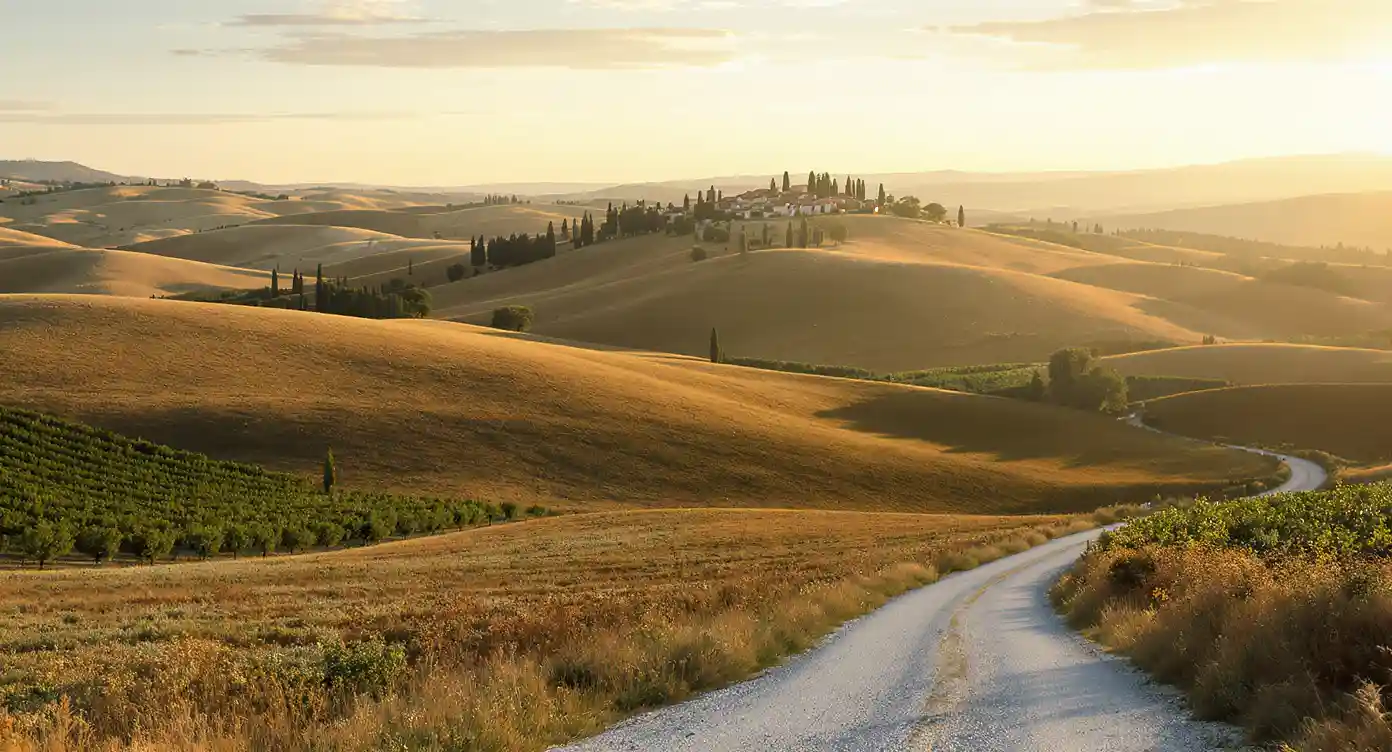
Two days in Val d'Orcia come down to a single decision: arrive before the coaches unload their groups, and don't chase every hill. The rolling hills, the white roads and the villages perched on their ridges ask for slowness, not a list of boxes to tick. I defend here a loop without zigzags, designed for those who take the wheel early and accept leaving things aside. You gain calm mornings, low-angle light over the fields and an evening in hot water.
Val d'Orcia in 2 days: one loop, one car
Val d'Orcia has been a UNESCO site since 2004 and covers roughly 611 km² in the province of Siena. It is vast, and above all scattered: the hilltop villages answer one another across the ridges, with nothing convenient between them. Two days are enough for the essentials, provided you choose.
Do you need a car? Yes, almost. Buses serve the hilltop villages poorly, and you would lose in waiting what you gain in tranquility. At the wheel, you stop when a light pleases you, at the edge of a white road, with no schedule to keep.
The plan fits in one sentence: day one from Pienza to Montalcino via Monticchiello, day two on the cypress road to Bagno Vignoni. This route avoids back-and-forth trips, and that is what saves your driving time.
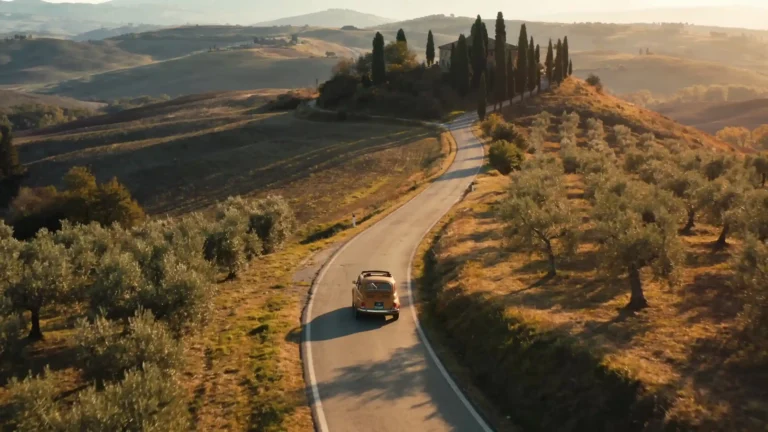
Arrive before the coaches, and park without a fine
Pienza is visited early in the morning, Bagno Vignoni at the end of the day. Everything else adjusts around these two points. At the hour when coffee still steams at the counters, the cobblestones are empty and the pale stone takes on a honey hue. An hour later, the groups occupy the square.
Pienza's center is a ZTL: don't drive in. Park on Via degli Archi or Via Mario Mencattelli, then finish on foot. It is the kind of fine that arrives by mail three months after your return.
Day 1: Pienza, Monticchiello, Montalcino
Pienza before 9 a.m.
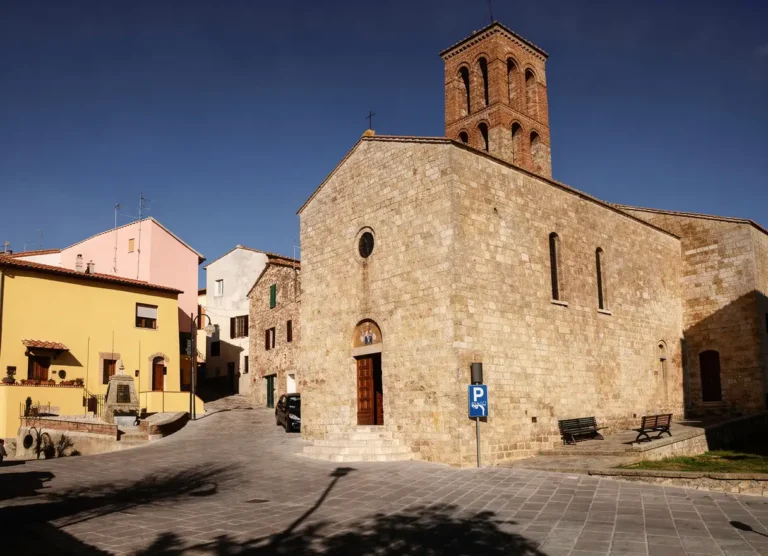
Pienza is an ideal town, commissioned by Pope Pius II (Piccolomini) and designed by Bernardo Rossellino. You sense it from the Piazza Pio II: everything is to scale, the façades face one another with the rigor of a stage set. Your gaze then runs between two palaces toward the valley, and the emptiness suddenly reminds you where you are.
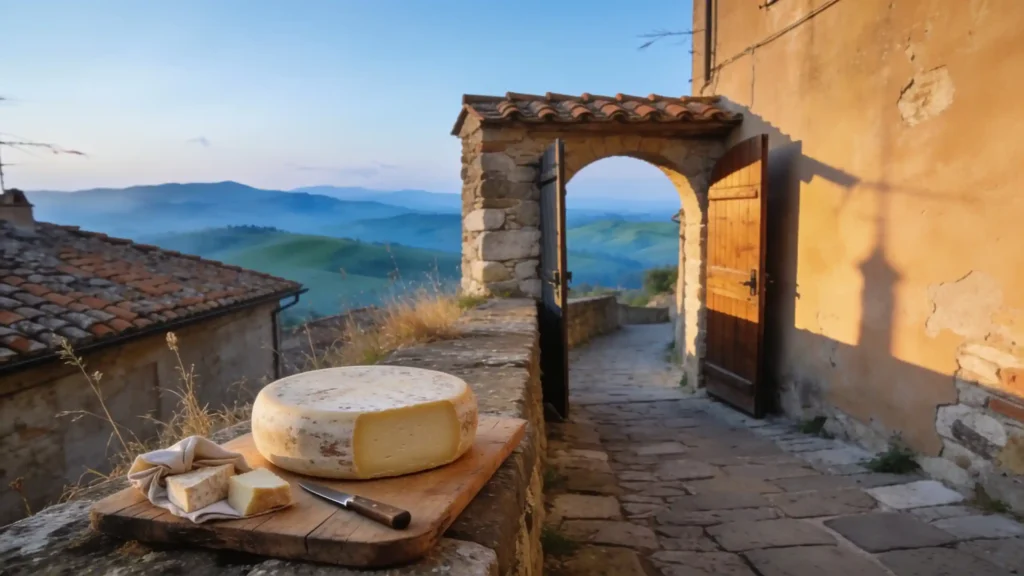
Go through the lanes where people sell pecorinothe rubbed crust whose smell reaches you before the shop. Taste, buy a small piece, don't carry it around all day in the sun in the car.
Monticchiello, away from the crowds
From Pienza, count 6 to 9 km via the SP88. Monticchiello is a fortified village with 14th-century frescoes, away from the coach traffic. Walk around the walls: the silence there is sharp, broken only by a door slamming or a shutter.
Montalcino and the evening at Sant'Antimo
Montalcino is about 30 minutes from Pienza. The village of the Brunello climbs toward its fortress and then toward Piazza del Popolo, where you drink in the shade of the loggia. Better one well-chosen glass than four: the return road is winding and checkpoints exist.
Save the end of the day for theAbbazia di Sant'Antimo, a few kilometers away, a Romanesque abbey surrounded by olive trees. The low-angle light warms the stone and the olive trees turn silver.
Day 2: San Quirico, cypress road, Bagno Vignoni
Beyond the Montalcino ridge, the second day stretches along lower, slower roads. San Quirico d'Orcia can be covered quickly, on foot, between old gates and enclosed gardens.
The cypresses, from the fields
The secondary roads SP146 and SP88 serve the cypress road and the Vitaleta chapel. The chapel is photographed in the morning or at the end of the day, when the wheat is golden or green and the shadows are long. The cypresses of Poggio Covili are photographed from the field side: from the road, you only get asphalt and wires. Park properly in a widening, without blocking the way, because tractors pass.
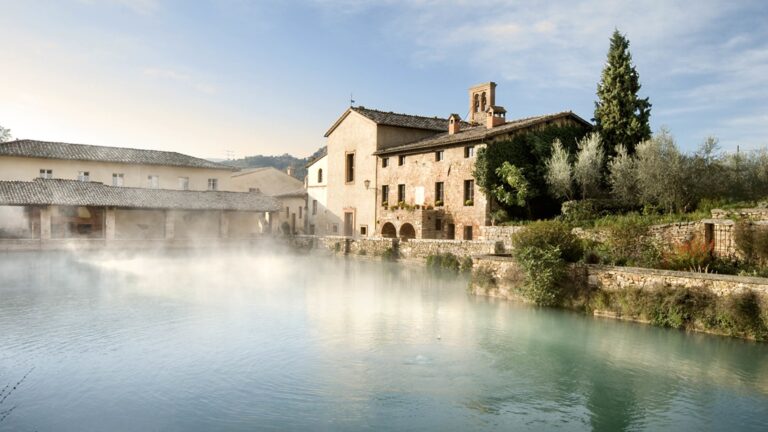
Bagno Vignoni, to look at
San Quirico to Bagno Vignoni is 5 to 6 km. The large stone basin dates from the 16th century, and steam rises above the water as in an old painting, with a spring between 38 and 52 °C depending on the spot. But swimming is forbidden in the basin of Piazza delle Sorgenti, which is a monument. You look at it, you sit on the edge, that's all. It is beautiful, disorienting, and it disappoints those who arrived in swimwear.
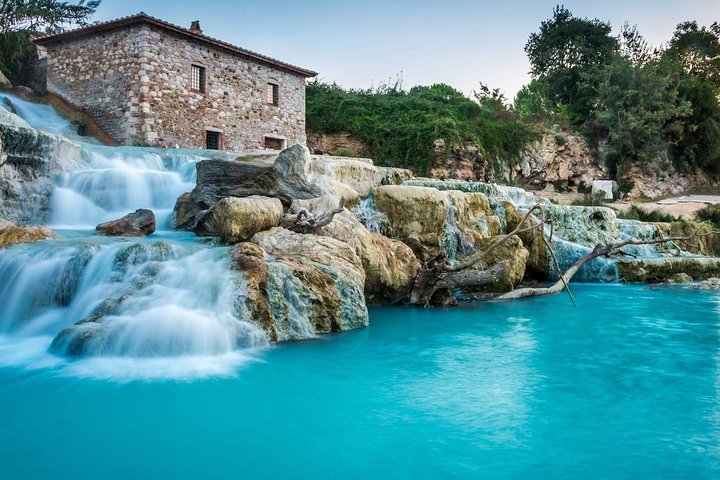
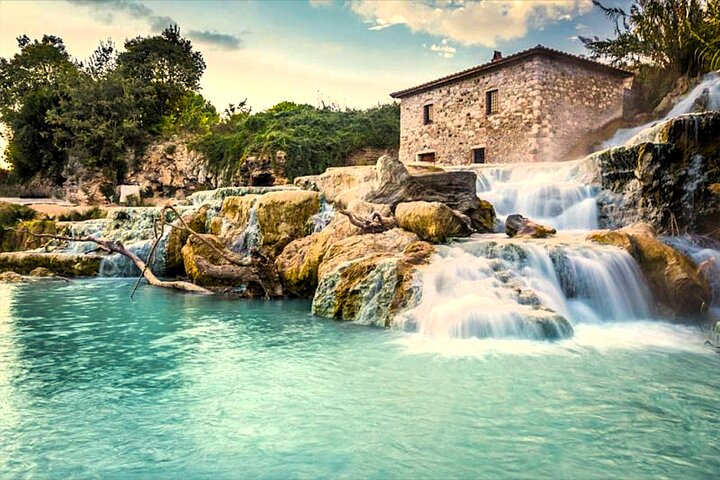
To soak your feet, go down to Parco dei Mulini, below, with its old mills. The waterfall, as tall as a person, serves as a hydromassage: stand beneath it and let the warm water pound your shoulders.
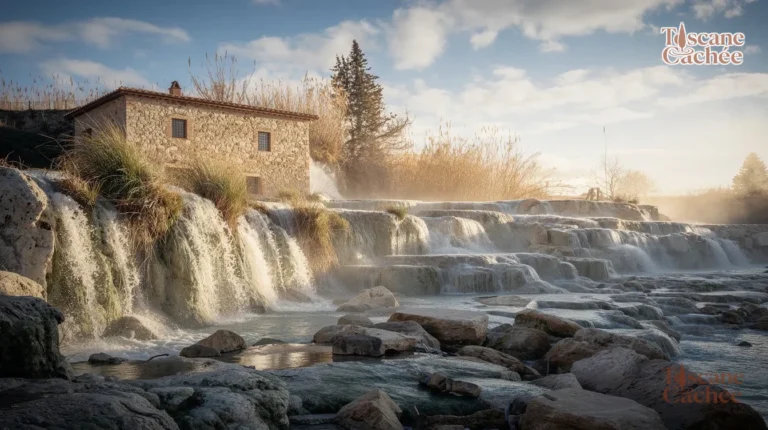
Cascate del Mulino
Travertine pools fed at 37.5 °C by the Gorello, freely accessible 24/7 near the old mill: a rare natural thermal bath in Tuscany

Tosco Come at dawn or in the middle of the night to have the pools all to yourself, but bring an old swimsuit: the sulfur smell doesn't forgive!
If you really want to swim, the Piscina Val di Sole offers a paid bath, with an entry ticket of about €15 that opens the warm water for good. Stay until evening: the air cools and the steam shows better.
Restaurants · Bagno Vignoni
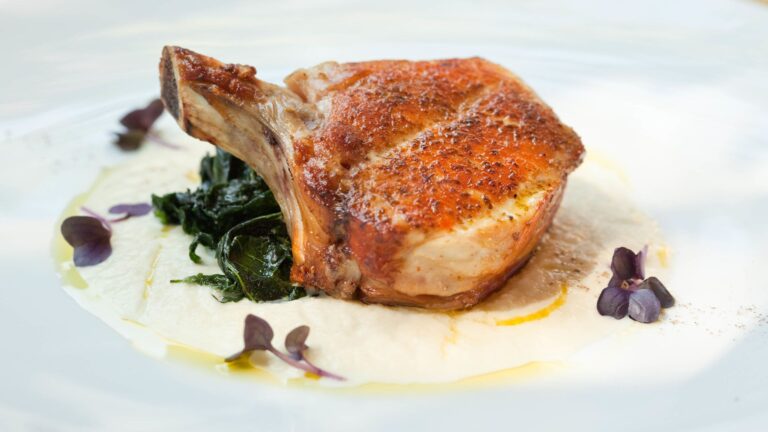
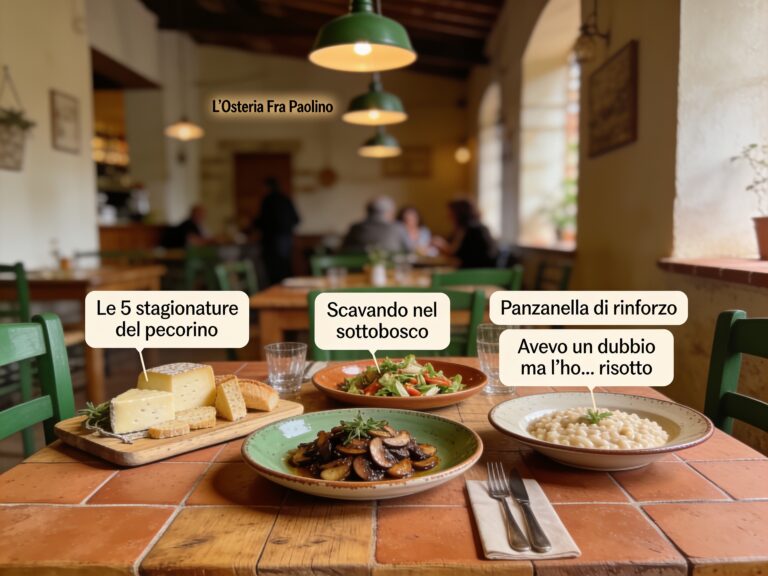
Our favorite tables around Bagno Vignoni
Bridge toward Maremma: hot waters and Monte Amiata
If you have one extra day, don't redo the valley, climb instead toward Monte Amiata. It is a volcanic massif peaking at 1,738 m, between Maremma and Val d'Orcia. From San Quirico, take the SR2 then the SP61 toward Abbadia San Salvatore; the summit is about 12 km from Abbadia.


Mount Amiata
Former Tuscan volcano covered by the largest beech forest in Europe, with thermal springs, forest bathing and hikes through the seasons
Tosco If you want the perfect combo, come in autumn to pick IGP chestnuts in the giant beech forest before heading off to relax in the steaming pools of Bagni di San Filippo!
At the foot of the mountain, Bagni San Filippo offers sulfurous hot springs in limestone basins. They are free, sometimes with a 2 € fee in high season, and you recognize the spot by the smell of eggs and the white concretions. Parking is limited: arrive early and budget between 3 and 5 € to park. No light-colored towel, the sulfur stains.
From there, the Maremma is not very far away. The 4-day itinerary between Montalcino and the Maremma takes over: it heads down toward the tuff, Saturnia and the coast, with the same taste for silence.
Adjusting the plan: what to sacrifice, when to come
If you fall behind, sacrifice Monticchiello or Sant'Antimo, depending on the weather. On gray days, the Vitaleta chapel loses all its appeal: prefer the hot water then.
Which season to choose? Spring for the green fields, September for the golden light and fewer tour buses. In the height of summer, driving in the afternoon becomes unpleasant, and the steam of Bagno Vignoni has nothing appealing left. Sleep near Montalcino or San Quirico to limit the morning kilometers.
With three days, you can add Castiglione d'Orcia, Rocca d'Orcia and Radicofani without changing the logic: same valley, same slow roads.
Checklist
- Offline map downloaded: the network drops out in the hollows of the valley.
- Swimsuit and sandals in the trunk for the Parco dei Mulini.
- A bag for the clothes that will smell of sulfur.
The rest of the loop will unfold on its own, all the way to the evening pool.
The historic centre of Pienza is a limited traffic zone (ZTL) and the checks there are real: don’t try to drive in, even to drop off your luggage. The wisest option is to park in the car parks outside the walls, such as those on Via degli Archi or Via Mario Mencattelli, then finish on foot through the gently sloping lanes. Allow about ten minutes of walking, which is more than made up for by the pleasure of discovering the town without a car.
If you arrive early, before 9 a.m., you will easily find a space and enjoy streets that are almost deserted. ZTL fines often arrive by post several months after the trip, with administrative fees that are really not worth it. Mark the location of your parking on your offline map before setting off, as the network can be unreliable in the valley hollows.
Once you’ve parked, take your time strolling to the Piazza Pio II, where the austerity of the facades will surprise you. Then buy your pecorino from a shop, but don’t keep it in the car all day in the sun: the cheese does not tolerate the heat of the cabin well.
This is the question that disappoints the most travellers: the large basin of the Piazza delle Sorgenti in Bagno Vignoni is a protected monument, and swimming is forbidden there. You can sit on the edge and admire the steam rising from the water at between 38 and 52 °C depending on the spot, but you cannot go in. If you came with your swimsuit intending to swim in the heart of the village, prepare for a small change of plans.
There is, however, a way to dip your feet or relax in the warm water. Go down to the Parco dei Mulini, below the village, where the old mills have been turned into a relaxation area. Foot baths are tolerated there, and the waterfall, about the height of a person, is used for hydromassage: stand under it and let the warm water pound your shoulders. Remember to bring a towel and non-slip sandals, as the slabs become slippery.
For a real swim, the Piscina Val di Sole offers a paid bath, with an entrance ticket of about 15 €. It is the best choice if you want to swim without compromise, and you can stay until evening, when the air cools and the steam is more visible above the water. Check the opening hours before setting off, as they vary with the season.
The Vitaleta chapel, perched in the middle of the fields between San Quirico d’Orcia and Pienza, is ideally photographed in the morning or at the end of the day. It is at those times that the light is low and warm, the shadows lengthen, and the wheat takes on a golden hue in spring or early autumn. On grey days, however, the scene loses much of its appeal: if the weather turns, it is better to spend your afternoon on something else.
For the cypress road, the finest views are on the field side, along the secondary roads SP146 and SP88. The cypresses of Poggio Covili can be seen from widened sections of the road, but park properly, without blocking the way, as tractors regularly travel through the valley. Avoid stopping in the middle of a narrow road and watch out for the verges, which are often soft.
If you want to avoid other photographers and crowds, arrive before sunrise or stay until nightfall. September offers particularly generous golden light, with far fewer coaches than in summer. Also bring a light tripod if you plan to capture the colours in the blue hour.
Yes, it is practically essential. The Val d’Orcia, listed as a UNESCO World Heritage Site since 2004, covers about 611 km² in the province of Siena, and its hilltop villages are very spread out. Public transport serves these small localities poorly, with rare connections and timetables that leave no room for improvisation. You would spend much of your time waiting rather than discovering the landscapes.
A car, on the other hand, gives you the freedom to stop wherever the light pleases you, on the edge of a white road or in front of a field of sunflowers, without worrying about a timetable. The two-day plan is moreover based on a logical loop: the first day from Pienza to Montalcino via Monticchiello, the second along the cypress road to Bagno Vignoni. This route avoids backtracking and saves you precious time at the wheel.
A few practical driving tips: the secondary roads are narrow and winding, and mountain bends call for caution. Download your offline map before leaving, as mobile coverage often disappears at the bottom of the valleys. And bear in mind that breath-alcohol checks exist, which is a reason to limit the glasses of Brunello you sip in Montalcino.
Montalcino deserves a full half-day, ideally in the afternoon, to enjoy the fortress, the lanes and the Piazza del Popolo, where you can sit down at a table in the shade of the loggia. The village is famous for its Brunello, and it is tempting to taste several wines. But one well-chosen glass is worth more than four, especially as the road back is winding and roadside checks are not rare in the region.
Sleeping in Montalcino is an excellent option if you want to discover the village in peace, once the day’s excursions are over. The evenings are calm, the streets empty out, and the view over the valley from the ramparts becomes magnificent at sunset. You also gain a morning’s head start to reach Pienza early, before the groups arrive. The authentic accommodations of the region, often restored farms or small agriturismi, offer a pleasant setting and a local breakfast.
If you prefer to keep your accommodation near Pienza or San Quirico, make Montalcino a stop of a few hours in late afternoon, then head to the Abbazia di Sant'Antimo, a few kilometres away, to see the low light warm the Romanesque stone and turn the olive trees silver. That moment alone is worth the detour.
Around this article


Want to go further? Tours of Tuscany in the same spirit as this article.

Cortona to Siena by bike, via Montepulciano and Pienza

Val d'Orcia by bike: from Cortona to Siena

Tuscany by bike: Val d'Orcia, Pienza, Montepulciano
Live map & prices
Where to stay around Saturnia?
Our recommended addresses nearby, then today's prices for your dates.
Cars · live prices
Your rental car from Grosseto airport
No rental agency sets up in the villages: the closest agencies to Saturnia are in Grosseto. Here are the best current offers, compared and rated.
Searching for available cars…
See all cars and choose my dates
Booking and payment through Discovercars: the link earns us a commission, without changing your price.
Around Saturnia
You will also like
TUI Musement reviews in 2026: reliable for booking tours and activities in Tuscany?
To book a classic visit to Florence, Siena or Pisa, TUI Musement is a…
Florence vs Siena: which one to choose for your 2026 trip?
Siena is the simplest choice for a first short trip to Tuscany…
My review of the Simbye eSIM for your trip to Italy in 2026
The essentials to remember: for your getaways in the Maremma, the Simbye eSIM offers you a connection…
The most beautiful Christmas markets in Tuscany 2026: dates and tips
Siena is the only stop whose 2026 dates are official (4, 5 and…