
Museum
The place
A distinctive stop in Maremma, combining Renzo Piano's architecture, Etruscan remains and great wines: the guided visit and tasting make the detour worthwhile.
👥 Who it's for: Wine lovers and fans of contemporary architecture who enjoy combining tasting, Etruscan history and Maremma landscapes.
In Gavorrano, in Maremma, Rocca di Frassinello is a stop worth slowing down for. You come for the wines, of course, but also for a fairly rare meeting of landscape, contemporary architecture and Etruscan memory. From Vetulonia, it fits naturally into a day devoted to the history and hills of the area, as long as you book your visit and don't try to do everything at a rush.
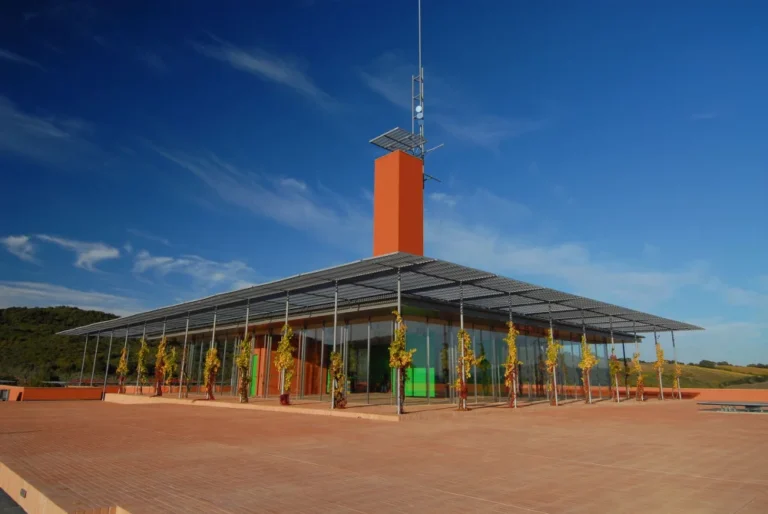
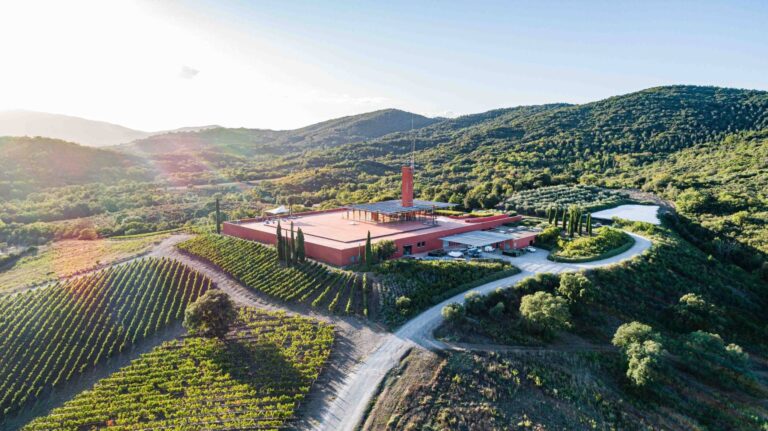
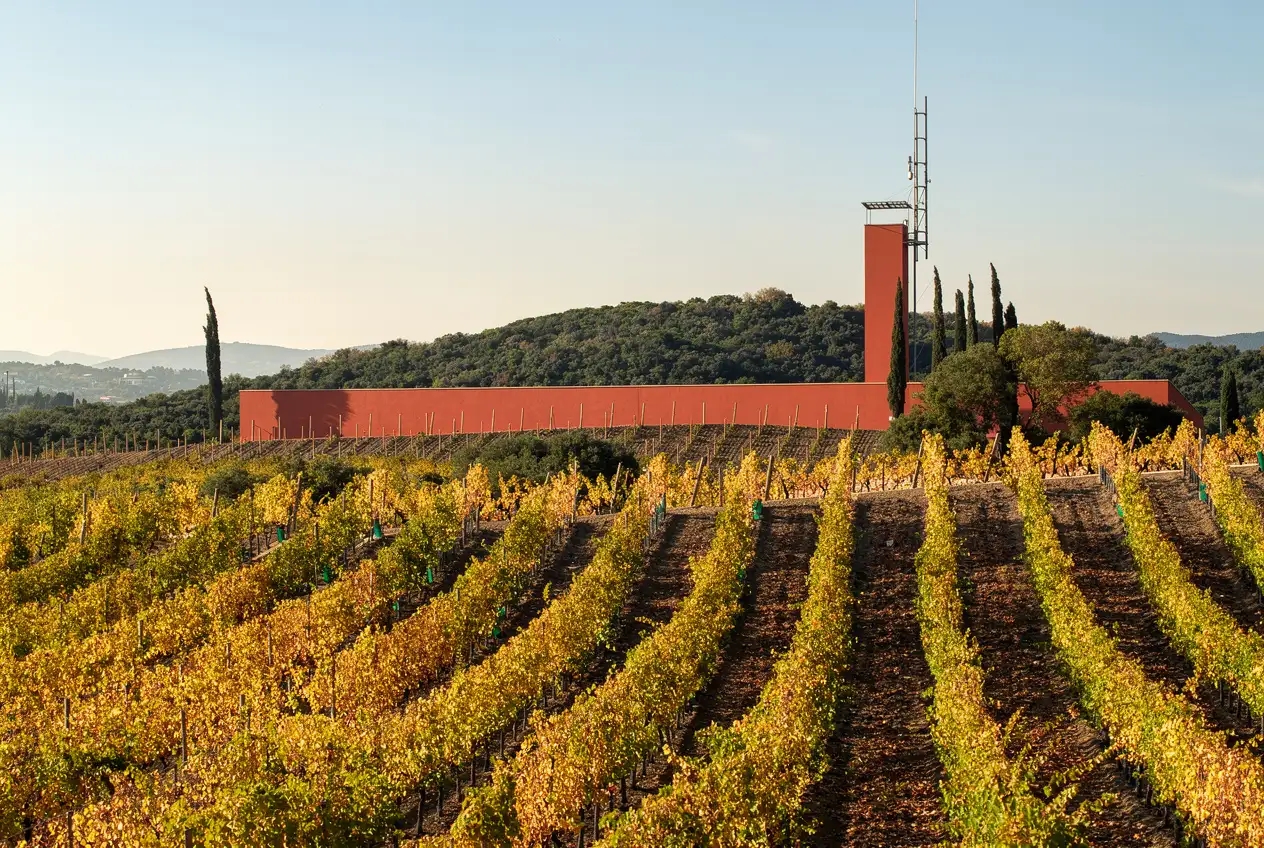
The building was designed by Renzo Piano between 2001 and 2007. The winery sits on a hill near Giuncarico, in the municipality of Gavorrano. You spot it by its red tower, while the lower lines seem to settle into the terrain rather than steal the spotlight. The project was not conceived as a spectacular set placed over the vineyards: its form responds to the work of winemaking. For an overview of Maremma and its landscapes, you can also read our feature on Maremma red wines, which places these estates in their context.
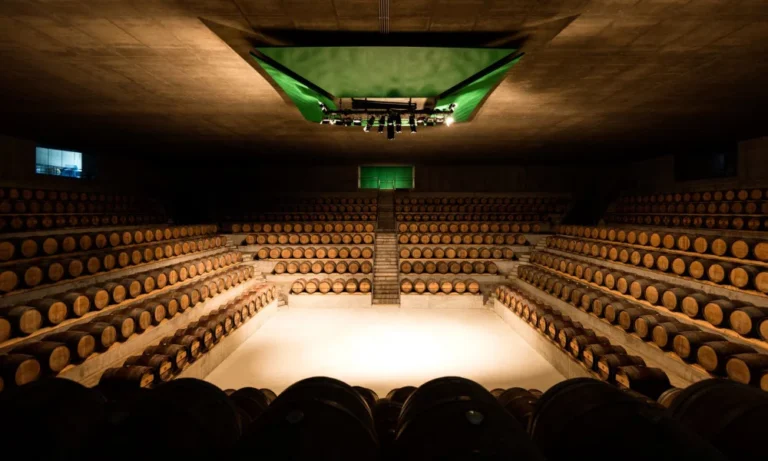
The most distinctive part is hidden beneath the large esplanade: the barrel cellar is set at the centre, in a vast underground space where temperature and humidity remain naturally more stable. Around it, the production stages are organised along the perimeter. The grapes, hand-harvested depending on the estate, are carried to the vats through openings from the upper level, limiting the use of pumps. An architecture that is not merely photogenic: it tells the story of a way of working.
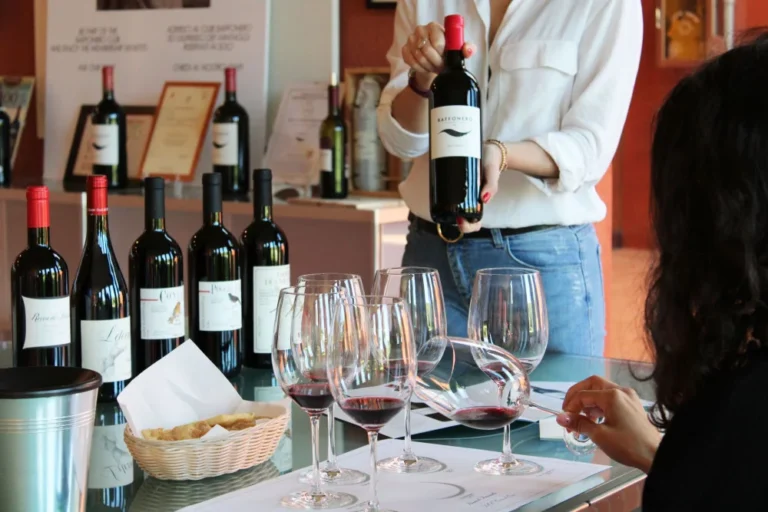
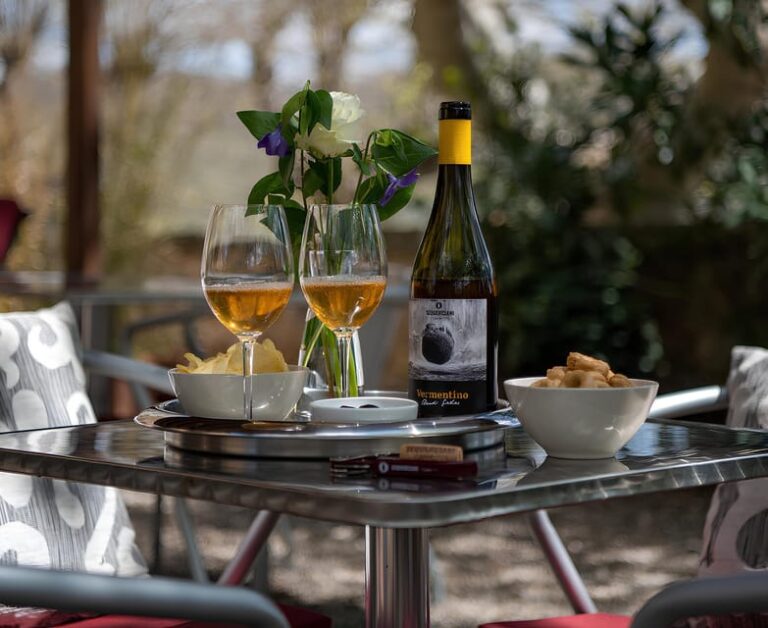
The estate was born from a partnership between the Tuscan house Castellare di Castellina and the Domaines Barons de Rothschild (Château Lafite). The first official harvest dates to 2004; the winery designed by Piano was inaugurated in 2007. In the vineyards, Sangioveto — a selection of Sangiovese — grows alongside Merlot, Cabernet Sauvignon, Syrah and Vermentino, among others. The blends thus mix Italian and French grape varieties, while Baffonero is made from pure Merlot.
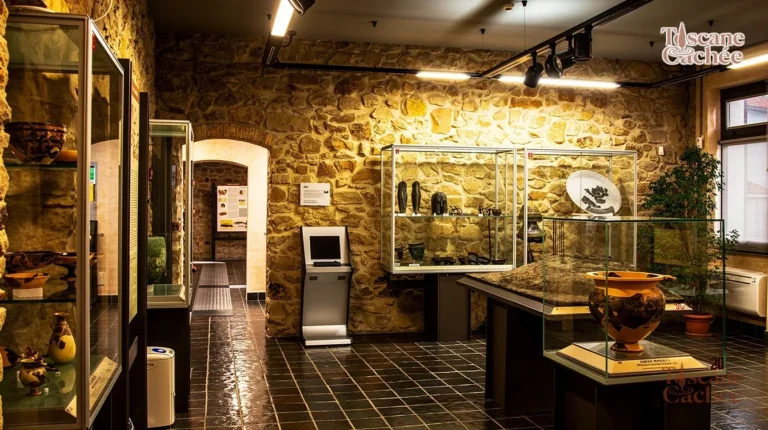
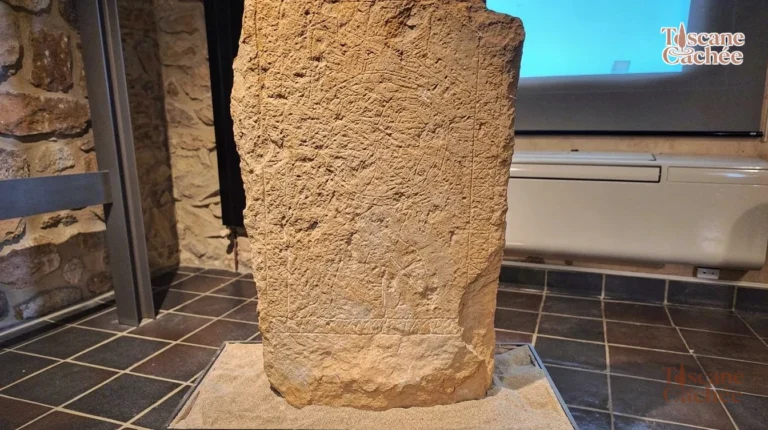
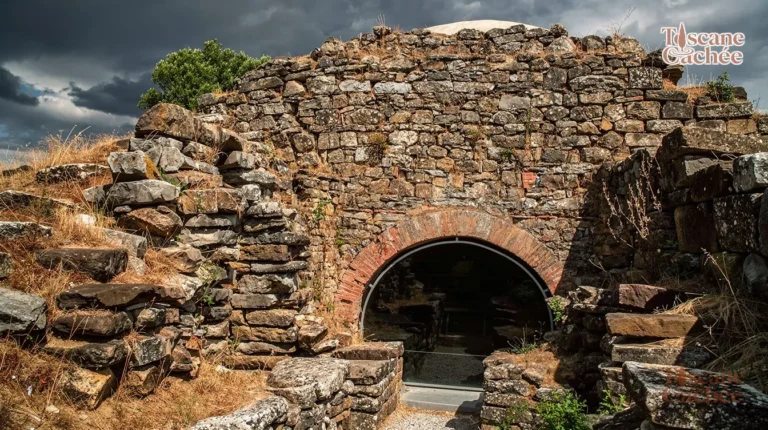
But the past does not stop at the old stones of the landscape. The visits include the Etruscan Documentation Center, which displays objects linked to the nearby necropolis of San Germano. In this region, wine was already well established more than 2,500 years ago: the vessels found in the tombs bear witness to its place in trade and social practices. Here, tasting therefore takes a small detour through archaeology. To extend the journey south, the guide to transport options to Maremma details the access routes from Rome, Florence or Pisa.
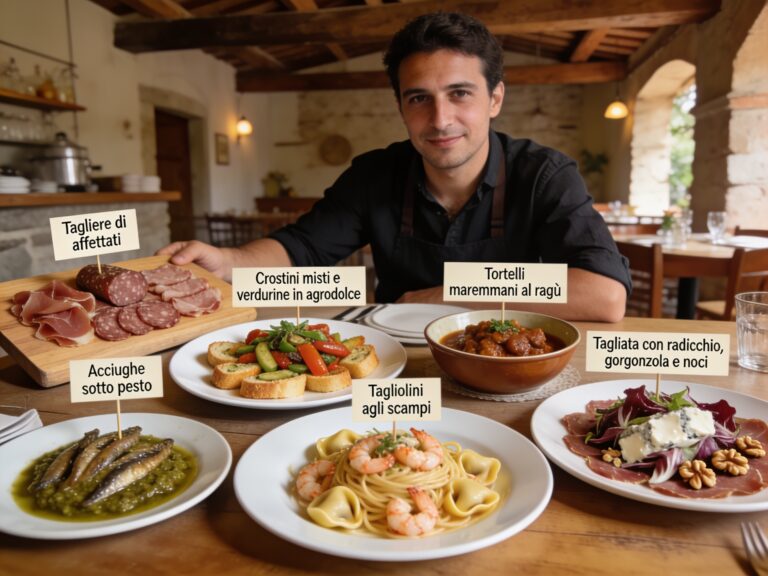
The itinerary lets you discover the production areas and the barrel cellar, then the exhibition devoted to the Etruscans and wine. The tasting takes place in the pavilion, where Rapture of the Grape, a work by David LaChapelle inspired by the estate, is also on display. Depending on the option chosen, you can opt for a classic or premium tasting, a vertical tasting, or an experience with light lunch. This light lunch must be booked in advance: it's best not to count on improvised food service on arrival.
In my view, this is the ideal pace: take the time to observe the building's details, ask a few questions about the wines, then sit down to eat without watching the clock. The experience is more complete than a quick stop at the shop, and the Etruscan center gives it real depth. For lunch, check at the time of booking what is included in the option and which wines are offered.
Les horaires publiés par le domaine varient selon la saison : en automne-hiver, sa page d’information indique une ouverture tous les jours de 10 h à 13 h et de 14 h à 18 h. Une autre page officielle affiche une plage plus large, jusqu’à 19 h. Comme ces informations ne concordent pas tout à fait, confirme l’horaire au moment de réserver — d’autant que la visite guidée de la cave est uniquement sur réservation. Le domaine propose aussi, le lundi, la visite gratuite du Centre de documentation étrusque, sur réservation ; elle n’inclut pas la visite de la cave.
The address to enter in your GPS is Località Poggio alla Guardia, Giuncarico Scalo, Gavorrano (GR). By car from the SS1 Aurelia, the estate recommends taking the Giuncarico exit, then about 6 km following the signs. From Florence, the suggested route runs via the SS223/E78, the Civitella Marittima exit, then Roccastrada and Ribolla; allow about 8 km from that area. The estate advises following its signage, especially when coming from the north. To book or check opening hours, contact it at +39 0566 88400 , or visite@roccadifrassinello.it. If you rent a car for this circuit, our review of car rental in Tuscany can help you choose.
Plan on a quiet half-day, especially if you add a light lunch to the visit. The photogenic rating is well deserved, but don't come just for the photo of the red tower: the best memory may be found in the contrast between the calm of the underground cellar, the light of the pavilion, and the traces of a civilization that was already drinking the wine of these hills. From Vetulonia, it's a lovely detour for anyone who loves the terroir as much as the stories it keeps beneath the surface.
Evaluation criteria
Is the map not displaying? See accommodations on Stay22
Map and prices provided by Stay22: Toscane Cachée may receive a commission on bookings.
To read
 Français Français
 Italiano
 English
 Polski
 Português do Brasil
 Nederlands
 Español
 Deutsch