









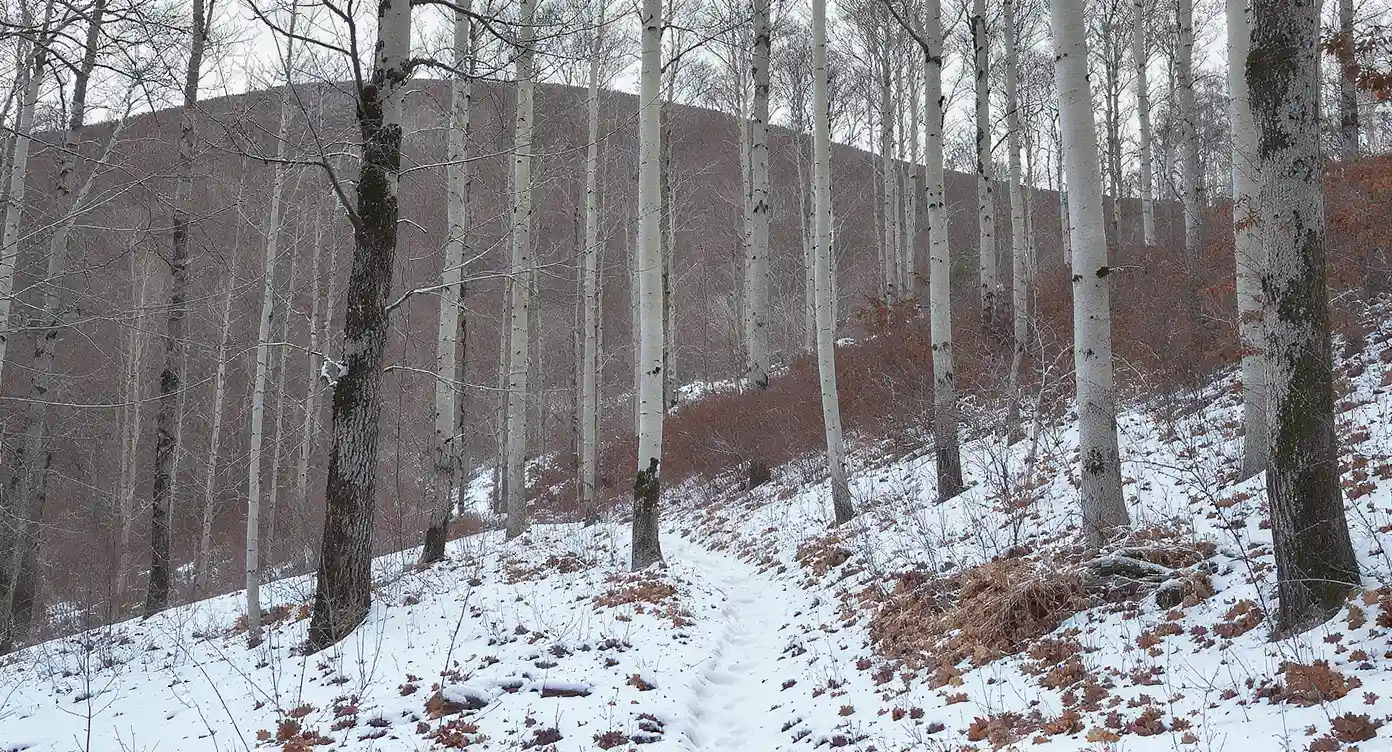
The mountain, Amiatathe highest point in southern Tuscany at 1,738 metres, offers snow only when the weather allows, and this reality shapes everything people come here for. The massif is worth the trip for its forest, its dark stone villages and its hot waters at the foot of the mountain, never for guaranteed snow. From one season to the next, snow cover changes completely, and the lifts do not run on a simple promise.
If you come only to ski, don't tie your weekend to a hope. If you come to build a day that holds up with or without snow, the Amiata is a very good choice. It has nothing of the postcard Val d'Orcia: here you walk in the fog, eat something hot, then go back down to soak.
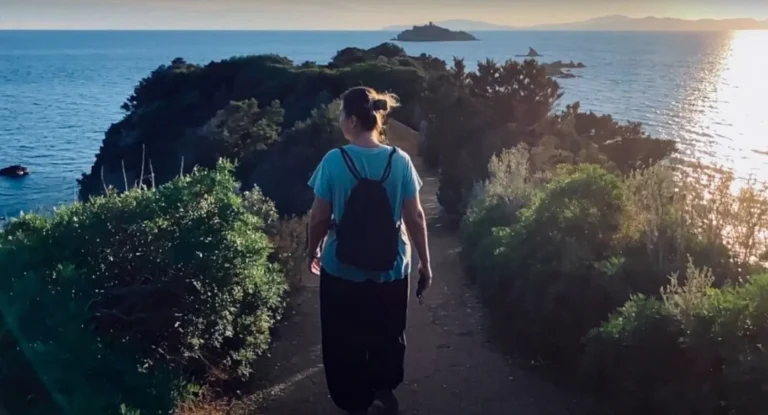
Mount Amiata in winter: who it is worth the trip for
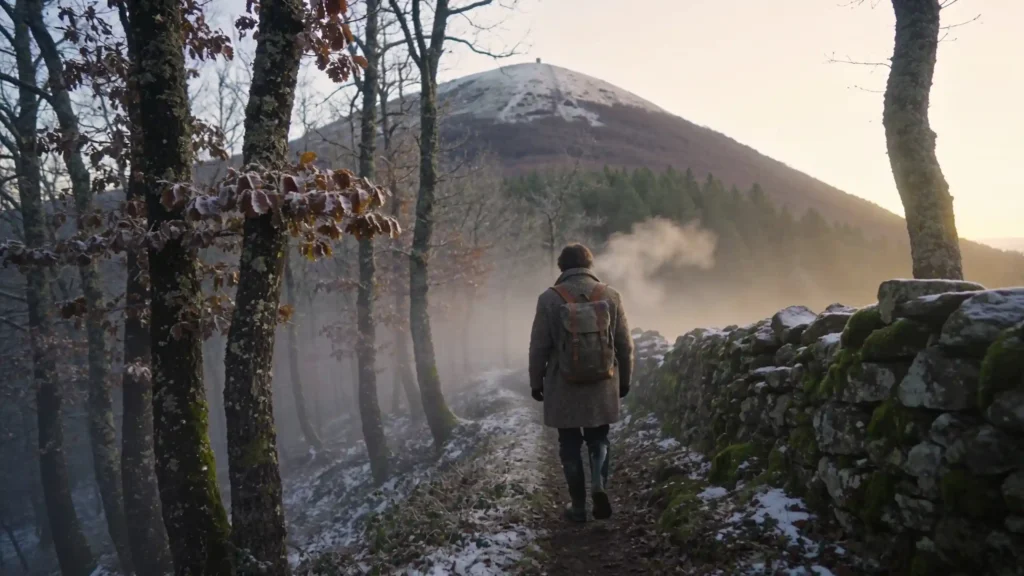
The massif is the second-highest volcano in Italy, after Etna. It went extinct about 180,000 years ago, and what remains is a large round mountain, covered in forest, which holds the clouds when the plain of Maremma is clear. It is the highest point in the whole region.
It's worth it if you like walking in the cold, if you accept changing your plans at eight in the morning, and if the villages tempt you as much as the slopes. It's not worth it if you have booked a ski pass and a single day of skiing is your only goal.
The right measure is the useful day: a backup idea for each scenario. That is the winter Amiata.

Mount Amiata
Former Tuscan volcano covered by the largest beech forest in Europe, with thermal springs, forest bathing and hikes through the seasons

Tosco If you want the perfect combo, come in autumn to pick IGP chestnuts in the giant beech forest before heading off to relax in the basins steaming pools of Bagni di San Filippo!
Five areas on the map, how many open on the day?
The ski area is divided into five zones: Vetta, Cantore, Macinaie, Marsiliana and Contessa. On paper, it is a genuinely equipped massif. In reality, a zone shown on the map is not a zone that is open, and it is the lift that decides, not the plan.
The Cantore chairlift experienced interruptions at the start of 2026, and the operation of the lifts remains unstable. It is better to know this than to be sold a ski area that runs all the time.
On the Macinaie side, there is a ski school with qualified instructors, which is reassuring if you are a beginner or are coming with children. A cross-country ski trail links Marsiliana and Macinaie: it is the option for those who want to glide without depending on a chairlift. The crisp sound of skis on packed snow, the breath, nothing else: it is a different pleasure from downhill.
The ski area you're interested in may be closed on the day you go: check its actual status with the lift operator the morning of, not the week before. If Macinaie stays closed, the ski school and the Marsiliana-Macinaie cross-country trail give you other options.
Snowshoeing in the beech forest: the safest bet with a little snow
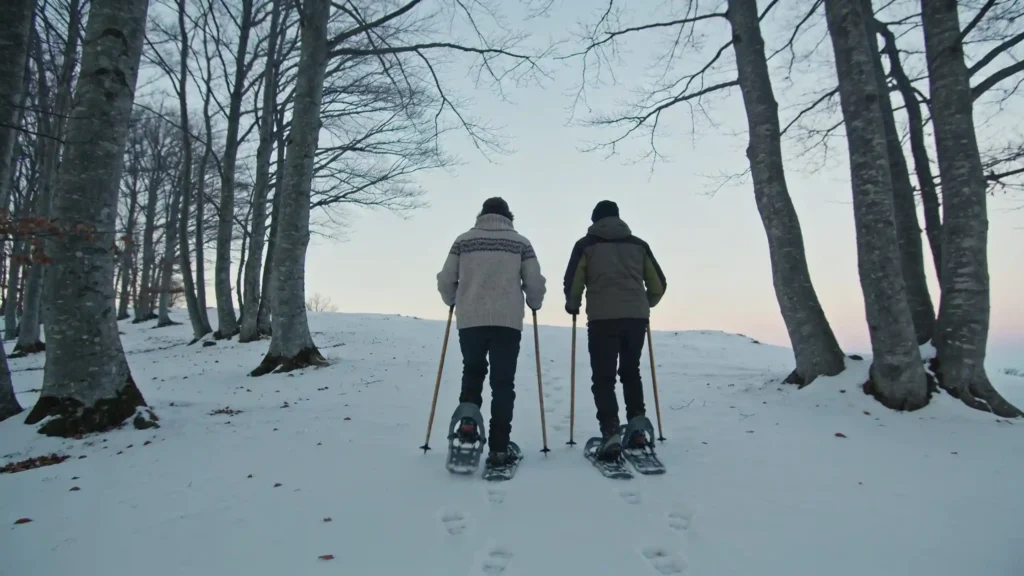
The beech forest of Amiata is said to be the largest in Europe. In winter, the grey trunks rise out of the white, the bare branches clatter when the wind picks up, and the silence is thick enough that you can hear your own footsteps sinking in. That scenery alone is reason enough to climb up.
Snowshoes don't depend on the lifts, and that's their great advantage. They still need snow, though: without enough cover, you're walking over frozen mud and dead leaves, and it's no longer worth putting them on. Some outings are led by a local guide, by day or by night, by reservation. At night, the headlamp and the snow give a bluish light that the daytime never does.
Some refuges serve hot chocolate and something to eat after the walk. Plan your break there: hands around the cup, damp socks near the stove, that's the part you'll tell stories about later.
When you book, ask the guide frankly about the snow cover and trust his answer, not a photo you saw online.
No snow: the villages make the day
When there's no snow, go down a level and walk among the stone. Three villages are enough to fill a day, each with its own distinct story.
Abbadia San Salvatore: the abbey and the mine
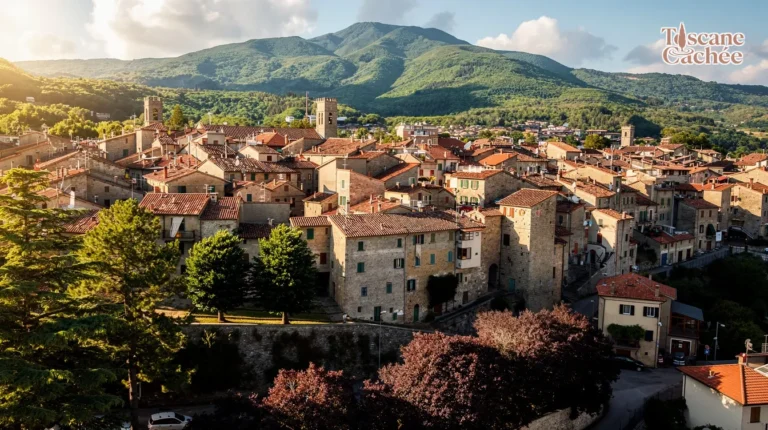
Abbadia San Salvatore
Abbadia San Salvatore, a village on Amiata, brings together a thousand-year-old abbey, medieval lanes, a mining heritage and the Ricciolina

Tosco Whatever you do, don't miss the Lombard crypt: with its 34 columns, each with a different capital, it's a true forest of carved stone hidden beneath the abbey!
The Abbazia di San Salvatore was annexed to Florence in 1559, which gives you the key to reading the bourg : a religious power absorbed by a neighboring one. You walk through the medieval quarter with its narrow lanes, the dark stone wet with mist. The Mine of Abbadia, a museum tied to the past of cinnabar, tells the other face of the mountain: underground work.
If you spend Christmas Eve here, the Fiaccole della Notte di Natale are worth the trip: 30 stacks of wood, 5 meters tall, burn in the streets, and a procession winds through the village. The smell of wood smoke clings to your coat until the next day.
Santa Fiora: water above all
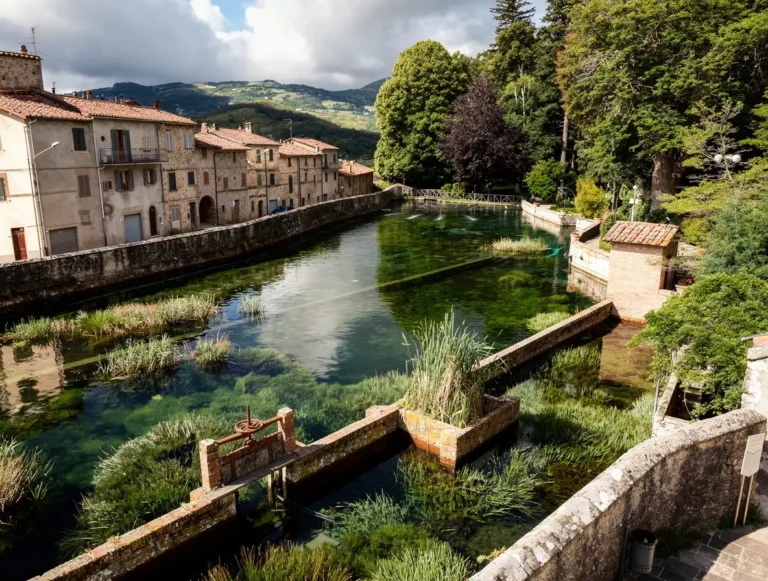
Santa Fiora is home to the source of the Fiora river, a clear basin of water in the middle of the village that doesn't freeze the way the air around it does. The Castello San Flore dates from 1082, and the Museo delle miniere extends the mining history of the massif. It's a quiet stop where you can spend an hour watching the water without anyone rushing you.
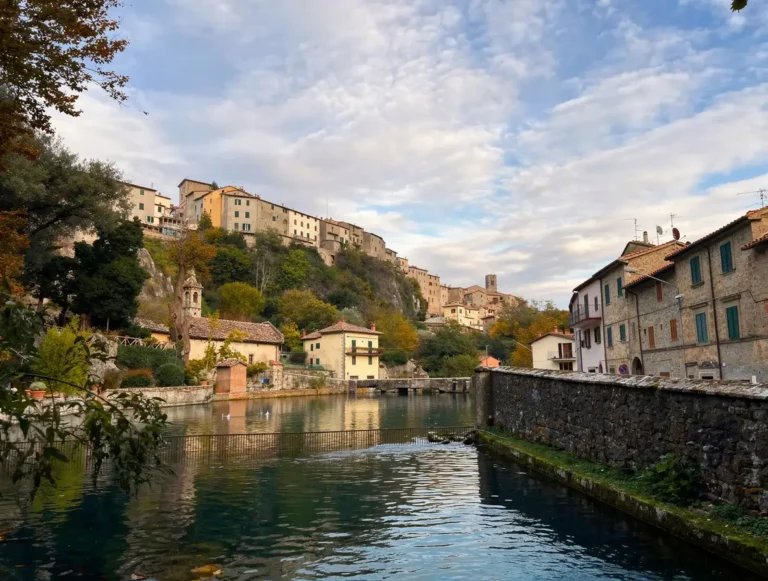
Santa Fiora
Santa Fiora stands out for its listed medieval centre and its water sources visible beneath the church, a unique setting
Tosco Honestly, if you only remember one thing about Santa Fiora, make it walking down via Carolina on foot and stopping in front of the glass floor of the Madonna delle Nevi: hearing the spring gurgle under your feet is a moment I hope you get to experience.

Arcidosso: the fortress on the hill
Arcidosso sits at 679 metres, high enough to feel the crisp air but not high enough to depend on snow. The Castello Aldobrandesco, around the year 1000, overlooks the rooftops. Climb up for the view over the forested slopes, then head back down through the steep streets.
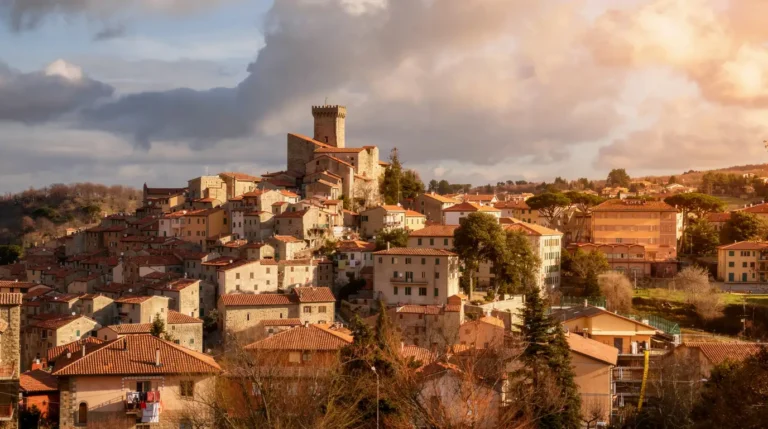
Arcidosso
Medieval village on Monte Amiata, first mentioned in 860, where you climb from lane to lane up to the Rocca overlooking the rooftops
Tosco In Arcidosso, climb up to the Rocca Aldobrandesca and then let the alleys guide you on the way down: the slopes are part of the visit. Just check the opening hours of the museum spaces before you leave, as they vary by season.
One thing to know: Daniel Spoerri's Giardino in Seggiano is open until 3 November 2026, so it's closed in winter. Don't count it in your plans.
Our addresses · Abbadia San Salvatore
Our favourite addresses around Abbadia San Salvatore

Morning at altitude, afternoon in warm water
The best combination pairs the mountain with the thermal baths. You walk in the morning, through the dry cold of the beech forest or on cross-country skis, then head down to the warm water. The contrast, steam on your skin and icy air on your face, lasts through the day better than any slope.
Bagni San Filippo is a medieval thermal resort visited by the Medici. Other springs are mentioned in the region: Bagno Vignoni, Petriolo, Saturnia. Choose the one that fits your route, not the one with the biggest reputation.

If you have time, a detour to Roccalbegna for a tasting of organic wines in a medieval village makes a fine way to close the day. It's outside the massif, but it's the kind of break that matters when the snow is absent.
No single stop is required: just see which one fits best between your morning at altitude and your evening drive. Call or check the website of the place you're aiming for, since opening hours and access conditions differ from one site to another. Better to know the day before than to stand in front of a closed gate, hair still damp with snow.
Good habits before you set off: two steps
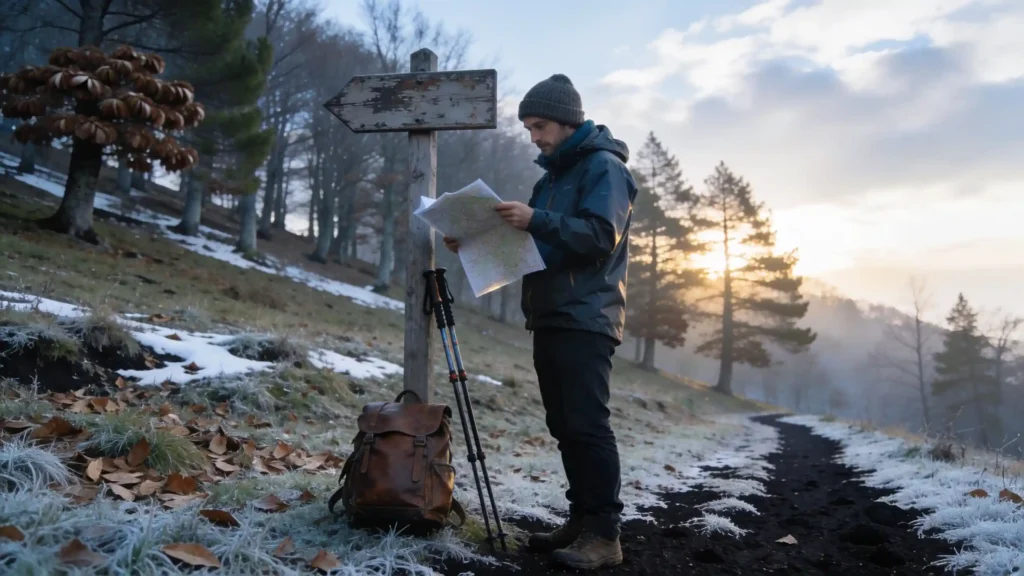
To avoid climbing for nothing, there's a simple two-step method. First, the evening before, check whether the lifts at your ski area announce they'll open. Then, the morning of, check again before leaving the valley: a day can flip within a few hours, in either direction.
Next, choose your plan. Snow present: snowshoes or cross-country skiing, with a warm break at the refuge. Snow absent: a village in the morning, the baths in the afternoon. Either way, your day is planned before you've even driven off.
Start by opening the list of the five ski areas the night before, and decide from there.
The Mount Amiata is worth the trip in winter if skiing is only part of your stay, but it is a risky bet if you come only for the slopes. At 1,738 meters, the massif receives snow when the weather allows it, without any guarantee of snow cover from one season to another. Even if a ski area appears on the map, that does not mean its lifts are running on the day of your visit. The Cantore chairlift, for example, experienced interruptions in early 2026; so it is better to check the actual situation rather than booking your weekend on the sole promise of skiing.
The right reflex is to check the status of the pole you are interested in the evening before, then check again the same morning, before leaving the valley. If the facilities are open, you can organize your day around skiing. If they are not running, the villages of the massif and the thermal baths can save the outing: visit Abbadia San Salvatore, Santa Fiora or Arcidosso, then head down to a hot spring suited to your route. This flexibility is what makes a winter stay in Amiata so appealing. If your itinerary is also hesitating between mountains and coast, this guide on the choice between the Val d’Orcia and the Maremma can help you build a more balanced trip.
When snow is lacking, the best plan is not to persist at altitude: head down to the villages, where winter remains interesting even without open slopes. In Abbadia San Salvatore, plan a walk in the medieval quarter and a visit to the Abbazia di San Salvatore or the Miniera di Abbadia, dedicated to mining history and cinnabar. The dark stone, narrow alleys, and mist give the town an atmosphere very different from the postcard landscapes of the Val d’Orcia. If you travel for Christmas, the Fiaccole della Notte di Natale are a special tradition of the village, but do not confuse them with an event offered all winter.
You can then head to Santa Fiora to see the clear basin linked to the source of the Fiora river, then finish with Arcidosso and its Castello Aldobrandesco, perched above the rooftops. Depending on the pace you want, choose a single village rather than spending the day in the car: a morning of sightseeing followed by a thermal afternoon works well. Bagni San Filippo is one option, but check access conditions and opening hours with the establishment you are targeting, as they vary by location. To extend your discovery of southern Tuscany, you can also consult this guide to the Etruscan heritage in the Maremma.
The beech forest of Mount Amiata is one of the most attractive settings of the massif in winter: its large gray trunks, bare branches, and the calm of the forest offer a real mountain experience, even far from the atmosphere of a resort. Snowshoes also have a practical advantage: unlike alpine skiing, they do not depend on the opening of a ski lift. However, they require a sufficient layer of snow. If only a little snow mixed with frozen mud and dead leaves remains, the walk may be uncomfortable and unrewarding.
Before booking, ask a local guide directly whether the snow cover actually allows snowshoeing on the planned day. Guided outings are offered by day or night, by reservation; for a night outing, also ask about the necessary equipment and plan for a headlamp. Trust the guide’s recent assessment rather than a photograph published several days earlier, because conditions can change quickly at altitude. After the walk, a break in a mountain hut with a hot chocolate or a simple meal is a good way to warm up. If the snow is too thin, keep your hiking boots and replace snowshoes with a village visit: the alleys of Santa Fiora or Abbadia San Salvatore remain an interesting alternative, without depending on the state of snowy trails.
The Mount Amiata ski area is spread across five poles: Vetta, Cantore, Macinaie, Marsiliana and Contessa. To prepare an outing, do not just check that a pole exists or that it is indicated on a map: ask whether its lifts are actually running on the planned day. Openings can vary, and the situation of one installation does not allow you to deduce that of the whole massif. The Cantore chairlift experienced interruptions in early 2026, which reminds us of the importance of a recent check before leaving the valley.
Check the status of the lifts at your chosen pole the evening before, then check a second time the same morning. If you are a beginner or traveling with children, ask about the options around Macinaie, where a ski school with qualified instructors is mentioned. If the lifts are not suitable, the cross-country ski trail linking Marsiliana and Macinaie can offer another way to enjoy the snow, provided conditions are appropriate. Avoid building your whole day around a single chairlift: instead, plan a village visit or a thermal bath as a backup. The five poles are not a guarantee that the entire area is running; it is the actual state of the facilities, confirmed just before departure, that should guide your schedule.
To combine mountains and hot water, first choose the area where you end your morning, then see which option falls most naturally on your route. Bagni San Filippo is a medieval thermal spa mentioned in the region and can suit after an outing in the surroundings of the massif. Other possibilities mentioned for a broader itinerary are Bagno Vignoni, Petriolo and Saturnia. There is no source to choose systematically: the point is mainly not to turn the end of the day into a long detour after a morning spent in the cold.
Access conditions and opening hours differ by location and can change. Before leaving, check directly the practical information of the spa or thermal establishment you choose, especially opening hours and access arrangements. Do not assume either that all sources have the same facilities or the same operation. The simplest sequence is to walk in the beech forest or do a snow activity in the morning if conditions allow, then head down to the thermal baths in the afternoon. If snow is absent, you can first visit Abbadia San Salvatore, Santa Fiora or Arcidosso. This formula makes the day pleasant even when the slopes remain closed: a village, a reasonable drive, and a moment in hot water rather than an uncertain wait at the foot of the lifts.
For a winter stay that must remain interesting even without snow, choose your accommodation based on the visits you want to make, rather than on a promise of skiing. Abbadia San Salvatore suits if you want to spend time in the medieval quarter, the abbey, and the Miniera di Abbadia. Santa Fiora is a quieter stop, marked by the basin of the Fiora spring and its mining history. Arcidosso, perched at 679 meters, offers another base to discover the Castello Aldobrandesco and the sloping streets. In all three cases, you can build a day of sightseeing without the opening of the lifts deciding your entire program.
To find authentic accommodation, check availability and booking conditions directly for the dates you are targeting, then verify the actual distance between the lodging, the villages you wish to visit, and your access to the massif. In winter, also ask about arrival and parking arrangements, especially if you plan to go up early to check snow conditions. Avoid booking a place just because it seems close to a slope: a change in weather can make that proximity less useful than a village where you can dine and stroll. Finally, keep a flexible day, with a morning at altitude and a backup plan in the towns or at the thermal baths. Amiata lends itself better to a stay that mixes forest, heritage, and hot water than to a trip entirely dependent on skiing.
Around this article

Want to go further? Tours of Tuscany in the same spirit as this article.

Guided hike: Florence, Chianti, San Gimignano, Volterra

Guided hike in Chianti, from Greve to Gaiole in 5 days

Live map & prices
Where to stay around Monte Amiata?
Compare accommodations and their prices on the map, then book in just a few clicks.
Is the map not displaying? See accommodations on Stay22
Map and prices provided by Stay22: Toscane Cachée may receive a commission on bookings.
Cars · live prices
Your rental car from Grosseto airport
No rental company operates in the villages: the closest agencies to Monte Amiata are in Grosseto. Here are the best current deals, compared and rated.
Searching for available cars…
See all cars and choose my dates
Booking and payment through Discovercars: the link earns us a commission, without changing your price.
Around Monte Amiata
You will also like
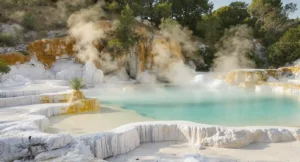
Bagni San Filippo in 2026: access, parking and tips for the Fosso Bianco
Bagni San Filippo is a free natural site, open all year round: the…
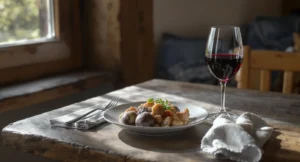
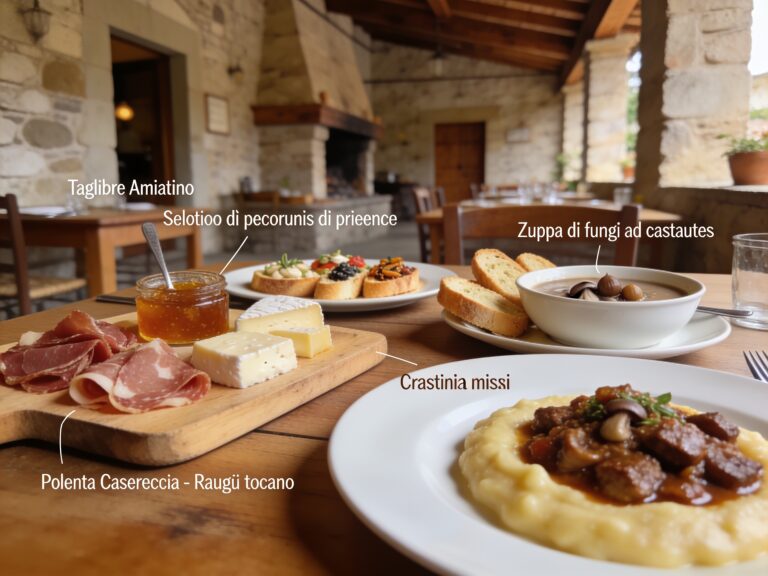
Eating on Mont Amiata in 2026: chestnuts, porcini and mountain tables
The Mont Amiata IGP chestnut is harvested from mid-September to mid-November,…
Volterra in 2026: what to see in one day in the Etruscan city of Tuscany
Volterra, the ancient Velathri, can be discovered in a day by linking Porta all'Arco, the…
What to do in Maremma in December 2026: Christmas, sagre and winter thermal baths
In December, the Cascate del Mulino at Saturnia remain free and accessible all year round,…
