Village
The place
This historic basin where the Fiora is born, surrounded by centuries-old trees, deserves a stop for its clear water and unique atmosphere.
👥 Who it's for: The stroller who loves peaceful gardens, flowing water and short calm visits.
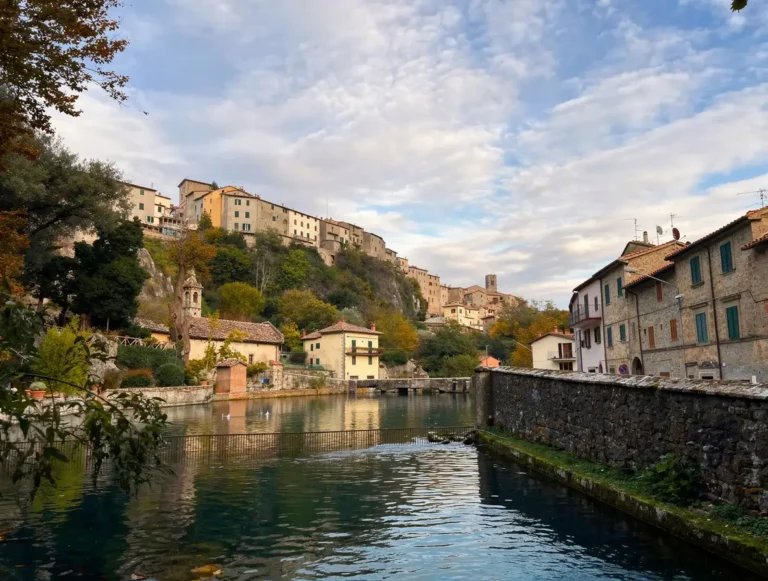
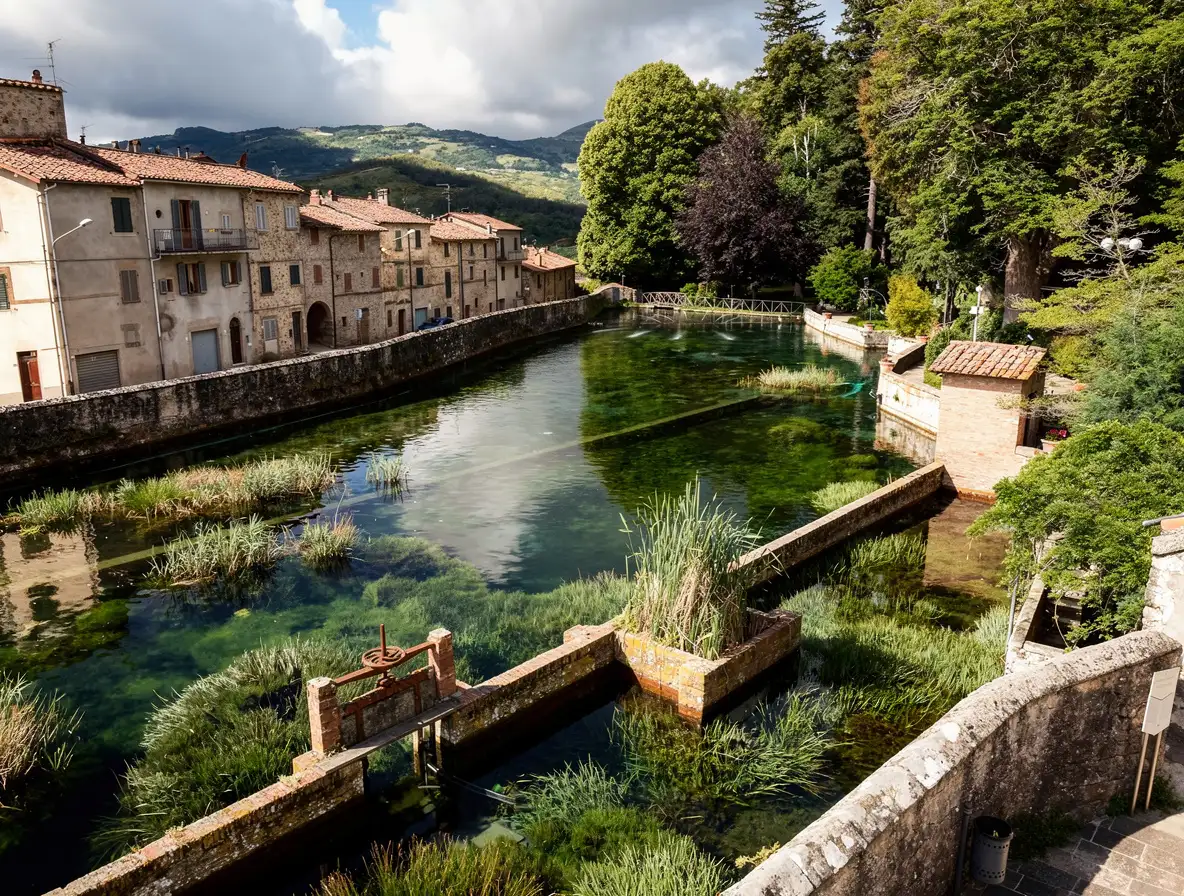
In Santa Fiora, the murmur of water arrives before the great basin. In the old Montecatino district, at the foot of the village and on the slopes of Monte Amiata, the Peschiera gathers the clear waters of the Fiora springs. You don't come here for a spectacular attraction, but for a place to slow down: a shaded path, shifting reflections, the current flowing between the trees. Authenticity is right there, in this living garden that belongs as much to the landscape as to the history of the town.
In brief: authenticity 8.2/10 · accessibility 7.8/10 · value for money 7.6/10 · photogenic 8.4/10 · experience 7.8/10. The walk is short and peaceful; it gains more depth if you extend it with a visit to the nearby church and a stroll through Santa Fiora.
The name peschiera suggests a fish pond, and that's no coincidence: the basin was once used to raise fish, especially trout. In the Middle Ages, spring waters were also precious for daily activities and for the workshops that used their force. During the Renaissance, the Sforza transformed the site into a noble garden around this vast water reserve. After a period of neglect, the park and basin were restored in 1851 by Count Lorenzo Sforza. The garden then took on the look of a landscape park, with tall trees and alleys suited to strolling.
The large basin is bordered by a wall of trachyte, a dark volcanic stone that recalls the landscapes of the Amiata. At the center, look at the sculpture of two dolphins with intertwined tails and a trident: a surprising detail in this mountain setting, and a lovely landmark for photos. The park combines holm oaks, cypresses, linden trees, magnolias and chestnut trees. Some of the trees bring welcome coolness to the visit when the sun beats down on the village lanes.
Take your time walking along the water without rushing. The basin is large enough to offer several viewpoints, but the walk remains quiet. Depending on the light, the green of the trees reflects on the surface, while the stone bottom appears beneath the clear water. Listen: the steady sound of the current accompanies almost the entire walk. You may also spot fish and waterbirds, which still frequent the basin.
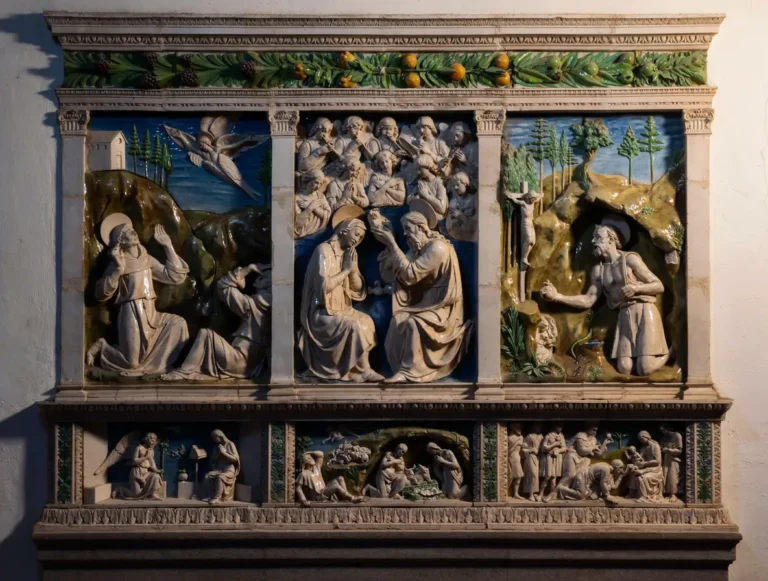
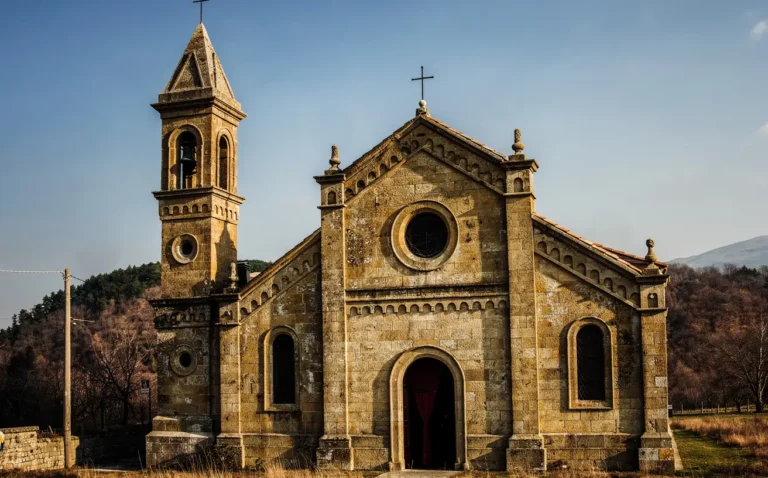
Right next door is the small church of the Madonna della Neve, also called the church of the Piscina. If it is open, go in: glass panels in the floor let you look at the remains of a medieval street and the spring water flowing beneath the building. The 2001 excavations revealed a 14the -century paved road, lined with buildings and crossed by a stream that still flows into the Peschiera today. The presence of water is therefore not only felt at the basin: it literally runs under your feet.
A useful clarification: the Fiora is born in this area, but the basin and the church do not tell exactly the same story. The Peschiera collects the waters of the former springs; the river's source is also visible under the church floor. Nearby, the village has also organized guided visits of the spring gallery: this underground route, separate from the park walk, is visited on specific dates and under specific conditions. Check with the tourist office before planning it.
Come in the morning, when the shadow of the trees is still cast on the water, or in the late afternoon for softer light. Don't plan a picnic by the basin without checking the rules posted on site, and keep children close to the protective barriers: the charm of the place also comes from the real presence of the water, not from a landscaped setup like a playground.
The Peschiera is best enjoyed by connecting it to the rest of the town: wander through the lanes of Montecatino, then climb toward the medieval heart of Santa Fiora. It's a simple visit with no big detour, but it reveals a less expected Tuscany: cool, mineral, crossed by water that shaped local life long before visitors arrived.
Evaluation criteria
Is the map not displaying? See accommodations on Stay22
Map and prices provided by Stay22: Toscane Cachée may receive a commission on bookings.
To read
 Français Français
 Italiano
 English
 Polski
 Português do Brasil
 Nederlands
 Español
 Deutsch