











A trip to Tuscany, does it really come down to the hills of Chianti and the queues in front of the Duomo of Florence?
There exists another Tuscany, rougher and more silent. It's where you hike on thousand-year-old Etruscan trails and where you dine at farms that still produce their own oil. This 5-day itinerary in Maremma is designed for those who want to live that, not for collecting photos of monuments.
Here, luxury is not in a five-star spa, but in bathing for free in the 37°C thermal waterfalls of Saturnia. You will discover the necropolis of Sovana in the early morning without another visitor. You will sleep in an agriturismo where dinner is prepared with the farm's products.
We will travel through the tufa triangle – Pitigliano, Sorano, Sovana – and the Maremma Nature Park. We will stop for dishes with a history, such as acquacotta or tortelli maremmani.
This program works perfectly from May to June and from September to October. In mid-summer, the heat can make hikes difficult and the crowds at Saturnia are much bigger.
Get ready to drive on winding country roads and to walk on dirt paths. The pace is deliberately slow, to leave time to soak up the places.
And above all, don't forget to book your agriturismo well in advance, especially if you are traveling in high season.
Day 1: Arrival in Saturnia and thermal immersion
 Thermal Baths & Wellness
Saturnia
Saturnia, Manciano, Provincia di Grosseto (GR)
This first day lays down the three pillars of your stay in Maremma: raw thermal water, tuff architecture and the farmhouse table. You start strong with the free cascades of Saturnia, then continue with a loop of villages to soak up the landscape.
Plan to arrive in Saturnia by 10 a.m. at the latest. Later, you risk struggling to park near the waterfalls. The road from the E80 takes 1h30, but check your GPS — some secondary routes are shorter but much windier.
Park in the small free dirt parking lot along the road. It is often full after 11 a.m. If that's the case, continue 300 meters and park on the roadside, but never in the curves.
Morning: check-in and the Mill waterfalls
The Cascate del Mulino is your thermal baptism in Maremma. No infrastructure, no entrance fee, just natural pools carved into the travertine by water at 37.5°C that smells of sulfur.
The water cascades over several natural terraces. Choose your level — higher up to be alone, lower down for more space. The idea is to stay at least 45 minutes so the healing properties really take effect.
Bring plastic sandals for walking on the slippery rocks. And an old swimsuit — the sulfurous water can stain light fabrics. Crowds are minimal outside July-August, but still avoid the weekend.
The waterfall water contains sulfur, recognized since Roman antiquity for its effects on skin problems and joint pain. The characteristic smell disappears after a few minutes in the water.
If you're looking for a more developed spa experience, check out the paid options at Saturnia. But here, you come for the authentic.
Afternoon: tuff villages loop
After the bath, head to Montemerano — 30 minutes of driving max. This heart-shaped village sums up everything you'll find in the days ahead: sloping alleyways, tufa houses, and a central square perfect for watching local life.
 Etruscan Tuscany
Montemerano
Montemerano

Tosco Look carefully for the *Madonna della Gattaiola* in the church of San Giorgio: you'll see the hole cut right into the painting by a priest to let his cat through! It's the most unusual story in the area to discover right after a bath at the Saturnia thermal springs.
Park below and walk up to the Piazza del Castello. The fortress is worth the detour, but the main thing is to get lost in the winding alleys between the stone houses.
Then, take the road to Manciano. The route is winding and crosses the Mediterranean scrubland — a landscape of heather, broom and holm oaks. Allow 20 minutes for 15 km, no less.
In Manciano, you can walk around the ramparts or simply stop for a coffee on the main square. It's a gentle introduction to tufa architecture before tackling the major Etruscan sites tomorrow.
 8,1
For dinner, look for an agriturismo around Saturnia that serves acquacotta — the Maremma peasant soup — or tortelli with wild herbs. Book in advance, especially on weekdays when few establishments open without a reservation.
The roads between these villages are narrow and poorly lit. Plan to return before nightfall if you're not comfortable driving at night on this type of route.
This loop gives you a taste of the local medieval heritage without wearing you out. Tomorrow, you get serious with the Etruscan necropolises.
Day 2: Pitigliano, the Little Jerusalem of tuff
 Etruscan Tuscany
Pitigliano
Pitigliano, Grosseto (GR)

Tosco Make sure to stop at the viewpoint on the road when arriving from Manciano at sunset: seeing this village carved into the tuff suddenly glow is one of the most breathtaking panoramas in all of Tuscany!
After the Saturnia thermal springs, the day shifts to history and rock. Pitigliano is not just another village; it's a mineral statement, a tufa spur rising out of the wooded valleys. The approach from Saturnia, an hour's drive on country roads, sets up the spectacle: the town suddenly appears, clinging to its cliff, like a natural extension of the rock.
You are here in the heart of the Etruscan triangle, the zone of maximum archaeological density in the Maremma. But today, the angle of attack is different: we explore the striking contrast between Renaissance feudal power and the quiet survival of a Jewish community established here since the 15th century. It is this layering of histories that gives Pitigliano its deep authenticity, well beyond its spectacular silhouette alone.
Morning: exploring the Ghetto and medieval heritage
Start early, before 9:30 am, to have the alleys of the historic center to yourself. Park in one of the paid parking lots below (P1 or P2 are well signposted) and walk up to the Porta della Cittadella. This climb puts you right in the mood.
Your first target is the Jewish Ghetto, accessible via Via Zuccarelli. Don't expect a sanitized museum, but rather a maze of narrow, dark alleys, an urban fabric shaped by centuries of constrained community life. The restored synagogue and the small museum tell a story of resilience rarely highlighted in generic tours. It is the absolute antithesis of the splendor of the palaces that dominate the town.
To grasp this contrast, head back up to the Piazza della Repubblica. Here, the Orsini Palace, a medieval and Renaissance fortress, asserts temporal power. Its massive facade and tower dominate the space. Right next to it, the Cathedral of Saints Peter and Paul, more recent (baroque), imposes its Catholic spirituality. In one hour, you will have covered the three fundamental layers of local history: the persecuted minority, the warrior nobility, and the triumphant Church.
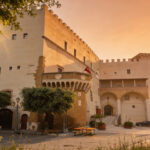 8,3
Pitigliano's nickname comes from the vitality of its Jewish community, which was once so significant that in the 17th century it made up nearly 20% of the town's population, with its own Hebrew printing press and workshops.
Afternoon: viewpoints and the Medici aqueduct
 Etruscan Tuscany
Medici Aqueduct of Pitigliano
Pitigliano (GR)

Tosco Pass under the arcades of Via Cavour right at golden hour: the light piercing through the tufa sets the whole cliff ablaze — far more spectacular than the view from the classic viewpoint!
After lunch (a trattoria on the main square or in an adjacent street will do), the afternoon is devoted to viewpoints and engineering. Head to Via San Michele, on the western side of the promontory. It is here, far from the dense crowd of the central square, that you will find the most striking lookouts over the tufa gorges and the houses suspended in mid-air.
For the ultimate viewpoint, climb up to the Sanctuary of Madonna delle Grazie, at the southern end of the village. The panoramic view over the entire rocky spur and the endless countryside is worth every step. On the way back to the center, you will walk along the Medici Aqueduct. This imposing 16th-century structure, with its sixteen arches, is not just scenery. It was the solution to a vital problem: bringing water onto this arid rock, proof that Pitigliano's splendor also rested on pragmatic engineering genius.
 7,2
Before leaving the center, take a look at the Church of San Rocco, more modest, often closed but whose simple façade marks a more authentic neighborhood, far from the obligatory tourist routes. For dinner, look for a farmhouse-style table that focuses on local produce: wild boar pasta (*pici al cinghiale*), local sheep's cheeses (*pecorini*), and a glass of Morellino di Scansano, the powerful red from the nearby hills, are the perfect conclusion. If you're looking for a more in-depth wine experience, the region offers tastings in historic cellars.
For the iconic photo of Pitigliano rising out of the tuff, don't settle for the town's belvederes. Take the car and head toward Sorano for a few hundred meters: a viewpoint area on the right offers the classic perspective you have seen in every guidebook.
This day in Pitigliano will have offered you much more than a picturesque village: a history lesson in three dimensions, carved in stone and lived in its narrow streets. Tomorrow, the journey dives into the bowels of this land with the Etruscan necropolises of Sovana.
Day 3: Etruscan triangle Sovana-Sorano-Vie Cave
After the vertical introduction to Pitigliano, the third day dives horizontally into the bowels of this land. The aim is to explore the maximum archaeological density of the Etruscan triangle, combining necropolises, paths carved into the rock, and a more local thermal spa experience. This day requires good walking shoes and a willingness to go off the beaten track for raw archaeology, without a display case.
The program works in a logical loop from Pitigliano: Sovana in the morning, Sorano in the afternoon. Prepare a picnic or identify an agriturismo for lunch, as quick dining options are almost non-existent between the archaeological sites. In the evening, you can return to your base in Pitigliano or stay in an agriturismo between the two villages for total immersion.
Morning: Sovana and the Etruscan necropolis
Start early from Pitigliano. The road to Sovana winds through the countryside and takes about thirty minutes. Park in the large free parking lot at the entrance to the village, before the ZTL barrier. Sovana can be explored on foot in less than an hour: it is a compact medieval borgo, perched on a tuff cliff, with silent, paved alleys.
 Etruscan Tuscany
Necropolis of Sovana
Sovana, Sorano, Grosseto (GR)
Tosco If you visit the necropolis in the middle of summer, run and take shelter in the Cavone: these twenty-metre tuff walls keep an incredible coolness, but keep your eye open because the wet rock can quickly become slippery under your sneakers!
The main goal is not the village, but what lies below. From the main square, head down towards the Porta della Rocca and follow the signs for the «Parco Archeologico Città del Tufo». In five minutes on foot, you leave the Middle Ages and enter the world of the Etruscan dead. Entrance to the park requires a fee, but it gives you access to the entire site.
Here, there is no sanitized museum. The necropolis spreads out in the open air, integrated into a landscape of forests and gorges. The well-marked trail first leads you to the Tomba Ildebranda, the most famous, sculpted like a Greek temple into the rock face. But the magic truly happens as you explore the whole site: dozens of tombs (tombe a edicola, tombe a dado) carved directly into the tuff, some adorned with ghostly bas-reliefs.
The «Vie Cave» (hollow roads) are ancient Etruscan communication routes, literally carved by hand into the tuff to a depth of several meters. Their exact function divides archaeologists: trade routes, processional paths, or defense and drainage systems. Their humid, shaded atmosphere is unique.
Upon leaving the necropolis, don't head back up to the village right away. Take one of the «Vie Cave» that start from the park. These hollow paths, sometimes narrow and mysterious, are the most immersive experience. Walking between these ten-meter-high tuff walls, where moss and ferns grow, is literally following in the footsteps of the Etruscans. A loop of about an hour will bring you back to the parking lot.
 8,6
Afternoon: Sorano and hot springs
Get back in the car for Sorano, only 15 minutes' drive from Sovana. The approach is spectacular: the village, topped by the massive Orsini Fortress, seems to spring from the cliff. Park in the paid parking lot below (absolutely avoid venturing into the narrow alleys of the center, all of which are in the ZTL).
 Etruscan Tuscany
Sorano
Sorano, Grosseto (GR)
Tosco My insider tip: climb up to the San Rocco belvedere just across the way, that's where Sorano reveals its most vertiginous profile on its tufa spur! Just remember to wear good sneakers, the sunken ground of the *Vie Cave* remains damp and slippery.
Unlike Pitigliano, which is more open and monumental, Sorano is a maze of secret alleys, arcades, and stairways climbing towards the fortress. The atmosphere is more intimate, almost secret. You can visit the fortress for the view, but the essential thing is to get lost in this stone labyrinth before moving on to the wellness stage.
To avoid the crowds of the Cascate del Mulino in Saturnia, the thermal springs of Sorano (or «Terme di Sorano») offer a more rustic and local experience. The water is just as hot and sulfurous, but the atmosphere is that of a small municipal complex, less photogenic but more authentic. Perfect for a relaxing bath at the end of the afternoon.
Before the bath, if you have the energy, a short hike on the trails around Sorano allows you to come across other sections of Vie Cave and observe the local wildlife (foxes, roe deer at dusk). A loop of 1 to 2 hours from the village is easy to improvise with a map or a hiking app.
The day ideally ends with a farmhouse-style dinner. The agriturismos between Sovana and Sorano specialize in this formula: a hearty, slow meal, composed almost exclusively of farm products (raw milk cheeses, cinta senese charcuterie, bruschetta with vintage extra virgin olive oil, homemade pasta).
- Moving : Vehicle essential. Winding country roads between the sites.
- Sovana Parking : Large free parking lot at the entrance to the village.
- Sorano Parking Paid parking lots below, signposted. Strict ZTL in the center.
- Paid activity Entrance to the Parco Archeologico Città del Tufo in Sovana.
- Meal Opt for an agriturismo with a reservation. Few restaurants open continuously.
This day in the tuff triangle will not have shown you artifacts under glass, but will have made you touch the Etruscan presence with your own hands. You will have walked in their streets, contemplated their tombs, and ended in the warm water they also knew. Tomorrow, the journey takes a radically different direction, towards the vast horizons of the coast and its endless beaches.
Day 4: Magliano, Scansano and wine gastronomy
After the mineral intensity of the gorges and hot springs, this fourth day marks a transition toward gentler landscapes and an immersion in wine culture. It is designed as a breathing space, without long roads or tiring walks, where the medieval heritage serves as a prelude to a sensory discovery of the terroir.
Morning: Magliano and its intact medieval wall
Leave Sorano or Pitigliano after breakfast, around 9 am. Access to Magliano in Toscana is simple via the provincial road then the E80, a journey of about 45 minutes. The goal here is not effort, but the contemplation of an exceptionally preserved architectural heritage.
 Etruscan Tuscany
Magliano in Toscana
Magliano in Toscana, Provincia di Grosseto (GR)
Tosco Be sure to make a detour via the open-air ruins of San Bruzio at the exit of the village: this raw and isolated spot in the middle of the olive trees easily rivals the famous abbey of San Galgano!
What makes Magliano unique in Maremma is its complete medieval enclosure. These walls, built by the Aldobrandeschi and then reinforced by Siena in the 15th century, form an almost perfect circle around the village. You can walk around it in about twenty minutes, a route that offers changing views over the olive groves and the vine-covered hills.
These fortifications, typical of southern Tuscany, are characterized by their construction in large blocks of local stone (travertine or tufa). Those of Magliano, erected from 1358, are among the best preserved in the region.
Pass through the Porta di San Martino to enter the historic center. Corso Garibaldi, the main street, is a fine example of a stone village that has resisted folklorization. You will not find generic souvenir shops there, but rather a bakery, a small bar and the tranquil atmosphere of a place living out of time.
Take the time to see the church of San Giovanni Battista on the Piazza della Repubblica, recognizable by its Renaissance portal, and the more modest church of San Martino, whose construction dates back to the 11th century. If you travel between mid-June and mid-September, the Archaeological Documentation Center opens in the afternoon and presents local Etruscan and Roman finds.
Afternoon: Scansano, Morellino and cellars
For lunch, head to Scansano, only 20 minutes away by road through hill landscapes. This is where the journey fully shifts to oenology. Scansano is not a museum village, but the beating heart of Morellino di Scansano DOCG production.
 Stay & Terroir
Scansano
Scansano, Province of Grosseto (GR)
Tosco Forget the beaten paths of Chianti for a bit: in Scansano, Morellino offers you a much wilder Sangiovese, filled with the sun of Maremma! Don't leave without taking a detour to the Etruscan ruins of Ghiaccio Forte just outside the village.
The approach here is direct and unpretentious. Rather than visiting a wine museum, the ideal is to contact a cellar (cantine) directly for a tasting in the afternoon. Many small family producers offer visits by reservation, often for a modest price compared to more touristy areas. The atmosphere is rustic, and you have a good chance of tasting with the winemaker himself.
Favor cellars that offer an abbinement (food and wine pairing) with local products. Tasting the Morellino, a frank and sincere wine, accompanied by aged pecorino and artisanal charcuterie, means understanding the sensory geography of Maremma, that unique blend of flavors from the nearby sea and the hinterland.
This experience is an immersion in the terroir. The varied soils (sandstone, clay, volcanic influences) and the sea breeze give the wines a particular character. The products that accompany the tasting – the pecorino with saline notes, the wild boar charcuterie – are the direct expression of this landscape. To extend this immersion, a winemaker's brunch a Sunday morning is an excellent option if your stay allows it.

Winegrower's brunch at Purovino, between vines and sea
Magliano in Toscana
Tosco Taste wine with no added sulfites with a view over the wild hills of Maremma — it's the ultimate anti-classic-Chianti: just remember to book your spot on the panoramic terrace to make the most of the sea breeze!
1 review

The village of Scansano deserves a short stroll after the tasting. Climb to the top of the borough to enjoy the panoramic view over the valleys covered with vines. If your timing coincides with late September, find out about the Festa dell'Uvathe grape harvest festival that brings the village to life.
For dinner, look for an agriturismo in the hills around Scansano. Many are linked to wine estates and offer a farm-to-table meal with their own products. It's the chance to taste dishes like acquacotta (peasant soup) or scottiglia di cinghiale (wild boar stew), in a totally authentic atmosphere. Don't forget to book your agriturismo in advance, especially if you are traveling in high season.
 €€€€ 10,0/10 · 2 reviews
 Wine tasting
Morellino di Scansano tasting at two estates
Scansano
Tosco Forget Chianti for a moment: here in Maremma, the sea spray and sun give Sangiovese that wild, fruity character unique to Morellino. It's the perfect getaway to taste characterful reds without the stuffiness of the big northern appellations!
 €€€ Wine tasting
Tasting of five Tuscan wines in Scansano
Scansano
Tosco Tasting a Carmignano and a Morellino side by side in the very heart of Scansano is the perfect shortcut to grasp the full diversity of Tuscan terroirs in just one hour!
 €€ 9,4/10
 Wine tasting
Morellino di Scansano tasting and EVO olive oils
Scansano
Tosco Morellino is the sunny, wild version of Sangiovese, much rounder and fruitier than a classic Chianti! A tip from the wild boar: don't skip the estate's olive oil, on these volcanic lands of Scansano it has an incredible vegetal spiciness.
Day 5: Coast and Roman archaeology (Cosa) or Maremma Park depending on profile

This last day is not a single itinerary. It is a strategic choice that must match your main curiosity after four days of immersion. One path leads to the Roman roots of the Maremma, the other deepens the experience of its wild nature. Each makes a logical conclusion and avoids overloading the last day.
You must decide. Either you are the type to prefer an little-known archaeological site off the beaten track, or you want one last great breath of sea air and trails. The two options are incompatible in a single day, but each is legitimate. Here is how to make your choice.
Morning: Cosa (Roman archaeology) OR Maremma Park (nature)
If the Etruscan ruins of Sovana thrilled you and you want to explore another facet of ancient history, choose Cosa. These are the remains of a Roman colony founded in 273 BC, perched on a promontory facing the sea. The atmosphere is radically different: more solitary, more austere, with imposing ramparts and the foundations of the forum, the basilica and the temple of Concord.
 Maremma & Nature
Ruines de Cosa
Ansedonia
Tosco If you climb to the very top of the Arce near the Capitolium, aim for late afternoon: the golden light on the Orbetello lagoon and Monte Argentario is a thousand times more spectacular than at midday!
Allow about an hour's drive from Scansano. The site is far less crowded than the tuff villages. Plan a good two hours on site to wander the ruins and enjoy the panorama over the coast and the Burano lagoon. It is an archaeological dive for curious visitors who like to imagine a city from its stones.
 8,5
If, on the contrary, your priority is a final immersion in the Maremma's signature landscape, head for the Maremma Regional Park. With its 18,000 hectares, it is Tuscany's first regional natural park. Access is from the visitor centers of Alberese or Talamone, about 45 minutes from Scansano.
Several marked trails, suitable for all levels, wind through the pine forest, the coast and the mountain. You can opt for a 2 to 3 hour hike to observe wildlife (wild boar, roe deer, birds) and reach a wild beach. The canoe option on the Ombrone is also possible if you want a more dynamic activity. It is the marine and wild breath before heading back.
At Cosa, the experience is freer and less structured than in a nature park. There is no strict marked route, which enhances the feeling of discovering a place by yourself, but requires a little more autonomy.
Afternoon: WWF Oasis Lagoon of Orbetello or gradual return
Whatever your morning choice, the afternoon takes place on the coast, around the Orbetello lagoon and Monte Argentario. If you come from Cosa, you are already nearby. If you come from the Maremma Park, you naturally head down towards the sea.
For a contemplative end to the trip, the WWF Oasis of the Orbetello Lagoon is ideal. This 870-hectare reserve is a crucial RAMSAR site for migratory birds. From autumn to spring, you can observe flamingos, black-winged stilts and glossy ibises from the nine observatories along the birdwatching trail.
 Maremma & Nature
Orbetello lagoons
Orbetello
Tosco Hop on a bike to ride through the shaded pine forest of the Feniglia in the late afternoon: it's the best way to approach the lagoon quietly to observe the flamingos without scaring them!
In summer, visits are by reservation. The atmosphere is calm, broken only by the cries of the birds. It is a gentle sensory pause before the return.
If you prefer a more active ending, head for Monte Argentario. This mountainous peninsula offers isolated coves for a last swim, or water activities such as sailing or diving. The coastline is jagged and spectacular, especially in the late afternoon when the light is beautiful.
The last meal should be a celebration of the Maremma's marine flavors. Look for a small fish trattoria in Orbetello or on the coast. It's the chance to taste bottarga (salted mullet roe) or a dish of fresh fish from the lagoon. To find an authentic farm table, check out our guide to the flavors of the Orbetello lagoon.
Then, drive off at a leisurely pace. If your flight is from Rome, allow at least 2.5 hours of travel from the coast. If you return via Pisa, it's about 1 hour 45. This last day, chosen according to your mood at the moment, is the perfect final touch for these five days in the authentic Maremma.
- Opening period: From September 1st to May 1st.
- Self-guided visit hours: Saturday and Sunday, 9:30am-1:30pm (closing at 3:30pm).
- Summer (July-August): Guided tour only, Tuesday and Sunday at 5:30pm, by reservation.
What these 5 days in Maremma will have truly given you
Five days is the right pace to grasp the essence of this Maremma. You will have touched the triple balance that defines it: the thermal water that flows freely from the earth, the Etruscan heritage emerging from the gorges, and a peasant table that doesn't cheat. You didn't skim over it; you truly dove into the heart of the region.
You will leave with the feeling of having avoided the postcard Tuscany for a region that lives to its own tempo. The memories that remain? The warmth of sulfur on your skin in the early morning, the cool shade of the Vie Cave, and the taste of cacio on crostini eaten on a bench, facing the ramparts of a tuff village.
And after? How to extend the experience
If one detail of this trip particularly struck you, dig into it. The Saturnia thermal baths deserve an article of their own to know when to go to be alone, just like Pitigliano and its secrets.
To find this authenticity at the table, our hub on agriturismos guides you in choosing the one that matches your trip, between total agricultural immersion and a simple guest table.

For a similar experience without the crowds, repeat this itinerary in June or September. The light is beautiful there, the thermal water is pleasant, and the villages regain their calm. Absolutely avoid August, where the heat and crowds spoil the serenity of the place.
Maremma must be earned. It does not reveal itself to those in a hurry. It rewards those who take the time to get lost on its country roads, to talk to the producer who prunes his vines, and to return at a different hour to see the light change on the tuff stone.
Now, it's your turn.
To experience an authentic and serene time at the Cascate del Mulino, the famous free thermal springs of Saturnia, the secret lies in timing. The ideal is to arrive very early in the morning, at dawn, or late in the evening. At these hours, you will have the chance to enjoy the natural pools almost to yourself. Imagine the water vapor rising under the first light of day or under the stars, creating a mystical and unforgettable atmosphere, far from the daytime hustle and bustle. The water flows constantly at a constant temperature of about 37°C, offering a warm and relaxing bath all year round. The benefits of this sulfurous water are real, especially for the skin and joints, despite a sulfur smell that can be intense at first but which you quickly get used to.
Regarding practical specifics, it is strongly recommended to bring plastic sandals or water shoes to move around on the rocks, which can be slippery. Also think about an old swimsuit, as sulfur can alter the light colors of fabrics. Being a natural and free site, there are no facilities such as changing rooms or showers. You will therefore need to plan accordingly. For parking, a small free dirt parking lot is available along the road, but it fills up quickly, especially after 11 am. If you arrive later, you can park on the roadside a little further away, but absolutely avoid the curves. The Cascate del Mulino are open 24/7, all year round, which gives you great flexibility to choose the most suitable moment for a wild and unadorned immersion, as suggested by our guide on Maremma: guide to the tuff towns and Saturnia springs.
Absolutely! The tuff villages, true gems of Maremma, are designed to be explored on foot, which will allow you to fully soak up their unique atmosphere. In Pitigliano, nicknamed the « Little Jerusalem », you can park in one of the paid parking lots below (P1 or P2) and walk up to the 10. Porta della Cittadella. This will put you right in the medieval atmosphere. To avoid the crowds, start your visit early in the morning, before 9:30 am, especially if you want to explore the Jewish Ghetto et la synagogue without too many people. For lesser-known corners, do not hesitate to get lost in the narrow, dark alleys, away from the main routes. For the iconic photo of Pitigliano rising out of the tuff, do not settle for the viewpoints in town; take the car towards Sorano for a few hundred meters, a viewpoint area on the right offers the classic and spectacular perspective that you have certainly already seen.
For Sovana, the village is compact and is also discovered on foot. You can park in the large free parking lot at the entrance to the village, before the ZTL barrier. The main objective here is not so much the village itself as its archaeological surroundings. From the main square, go down towards the Porta della Rocca and follow the signs for the « Parco Archeologico Città del Tufo ». Entrance to the park is paid, but it gives you access to Etruscan wonders such as the Tomba Ildebranda. For Sorano, which climbs up like a medieval fortress, parking is generally done below the historic center, and you will have to walk up to explore its narrow alleys and walls. These villages are often less frequented than the big Tuscan cities, but a visit in the low season (May-June or September-October) will ensure you even greater tranquility, allowing you to explore the Vie Cave (Etruscan hollowed-out paths) in complete serenity. You can find more information about these villages in our article on Maremma: guide to the tuff towns and Saturnia springs.
Absolutely! Maremma is the ideal region for a stay in an agriturismo, the very embodiment of Tuscan rural hospitality and the « zero kilometer » philosophy. These agritourism farms guarantee you a total immersion in local life, with products served directly from the vegetable garden or from neighboring producers. For a unique and authentic experience, I highly recommend the Agriturismo Biologico Sassotondo. Located in an exceptional volcanic setting, this establishment will allow you not only to feast on local and organic products, but also to explore a fascinating natural environment. It is the kind of place where breakfast is homemade, with a view of the vineyards and the silence of the countryside.
Another excellent option for a rural immersion is the Fattoria di Collemuccio. This agriturismo is recognized for its commitment to showcasing local terroir products and offering an authentic experience of farm life. You will often find meals prepared with passion, using seasonal ingredients and traditional Maremman recipes. Whether it is acquacotta, the peasant soup, or tortelli maremmani, you will have the opportunity to taste the true local cuisine. Do not hesitate to ask the owners for addresses of small hidden osterias or advice for buying products directly such as pecorino di Manciano PDO or Morellino di Scansano, the powerful red wine of the region. These agriturismos should be booked well in advance, especially if you are traveling in high season, as they are very sought after for their authenticity and exceptional setting, as mentioned in our guide 30 questions about a trip to Maremma.
Absolutely! Maremma is a true paradise for lovers of hiking and Etruscan history, and yes, it is entirely possible to walk the Vie Cave and explore the archaeological sites without a guide, for a total and authentic immersion. The Vie Cave are those spectacular hollowed-out paths, carved into the tuff rock by the Etruscans millennia ago. They often connect the necropolises to the villages and offer a unique walking experience, beneath impressive rock walls. Around Sovana, for example, the Archaeological Park of Città del Tufo offers well-marked trails that will lead you to necropolises such as the famous Tomba Ildebranda, but also to other lesser-known tombs, all integrated into a landscape of forests and gorges. It is essential to have good walking shoes, as the paths can be uneven and sometimes slippery.
For lesser-known but equally fascinating archaeological sites, Maremma is full of hidden treasures. I advise you to venture to places like Ghiaccio Forte. This site offers authentic ruins and the advantage is that there are no barriers or ticket offices, the visit is entirely free. It is a fantastic opportunity to discover the Etruscan heritage in a preserved setting and away from the crowds. As you walk around Pitigliano, Sorano and Sovana, you will discover many other Vie Cave that criss-cross the countryside, offering unique perspectives on this millennial heritage. These paths are often signposted with local signs, but a good map or a GPS hiking app can be useful. The philosophy here is one of adventure and personal discovery, allowing you to connect directly with the history of this wild and authentic land.
The gastronomy of Maremma is a true ode to the land and authenticity, far from the classic tourist circuits. You are going to feast on frank and generous flavors. Among the must-try dishes, do not miss the acquacotta, the quintessential Maremman peasant soup, often prepared with seasonal vegetables, stale bread, a poached egg and pecorino. It is a simple but incredibly tasty and comforting dish. The tortelli maremmani are also a must: these large rustic ravioli, often filled with ricotta and spinach, are generally served with a butter and sage sauce, or a rich meat sauce, such as wild boar. The cinghiale in umido, or boar stew, is moreover the king dish of the region, powerful and fragrant. As for cheeses, you absolutely must taste the pecorino di Manciano PDO, a sheep’s cheese with a powerful and singular taste, delicious with local honey.
To accompany these feasts, Maremma offers wines of great character. The undisputed ambassador of the region is the Morellino di Scansano, a powerful and sunny red wine, mainly made from Sangiovese grapes. It is a wine that perfectly reflects the wild and generous character of Maremma. You will find many cellars around Scansano offering tastings, often in authentic settings. If you are looking for off-the-beaten-path experiences, do not hesitate to ask your agriturismo for recommendations of small family-run wineries. In addition to Morellino, you might discover fresh white wines or other powerful reds produced in the metalliferous hills or around Capalbio. The idea is to favor establishments that follow the « zero kilometer » philosophy, where products come directly from the farm or from neighboring producers, thus guaranteeing unmatched freshness and authenticity. Our guide on Maremma: guide to the tuff towns and Saturnia springs will give you more addresses selected for their commitment to local products.
For a trip to Maremma focused on slowness and authenticity, far from mass tourism, the best periods are without contest late spring (May to June) and early autumn (September to October). During these months, the climate is ideal: temperatures are pleasant for hiking and exploring, without the stifling summer heat which can make outdoor activities difficult. In addition, the tourist influx is significantly lower compared to the high summer season, which will allow you to enjoy sites such as the Cascate del Mulino in Saturnia, the tuff villages such as Pitigliano, Sorano and Sovana, and the Vie Cave with far more appreciable tranquility. You will feel as if you have these magical places almost to yourself, especially if you go there early in the morning or at the end of the day.
To adopt a slow travel pace, my main advice is not to try to see everything in record time. Maremma is to be savored. Allow enough time for each stage, at least a full day for villages like Pitigliano and half a day for Sovana and Sorano, not to mention the time spent at the thermal springs. The country roads are winding and invite contemplation, so do not rush. A personal vehicle is essential to explore the region at your own pace, as public transport is limited. Do not hesitate to stop in the small villages, to have a coffee on a square, or to stroll through the alleys. Staying in an agriturismo is also an excellent way to slow down, allowing you to wake up in the heart of nature, enjoy meals prepared with local products and soak up Maremman hospitality. Book your accommodation well in advance, especially if you are traveling in the low season, as authentic agriturismos are highly sought after. By following this advice, you will experience a memorable and deeply authentic Maremma experience, as suggested by our article What to see in Maremma in 5 days: complete itinerary.
Around this article
 GastronomyCiaffagnone: the ancestral Tuscan crêpe from MancianoA very simple peasant dish that on its own tells the culinary history of the…★ 8.0View the listing →
 ActivitySaturnia: wellness day at the Maremma thermal bathsEnjoy a unique and well-supervised thermal experience, with access to facilities…★ 7.8View the listing →
 €€€€ 9,0/10 · 4 reviews Tuscan cuisine
Da Caino
Montemerano
Tosco Seeing popular classics like tripe or lampredotto elevated to two-star level in the very heart of Montemerano is the ultimate proof that our Maremma terroir has nothing to envy anyone!
 €€ 8,7/10 · 148 reviews Italian cuisine
Bacco & Cerere 2.0
Saturnia
Tosco After lounging in the warm waters of Saturnia's waterfalls, forget the tourist traps in the area: come here instead to taste their revisited *acquacotta* with its perfect egg, it's the true comforting taste of the Maremma.
 €€ 8,5/10 · 250 reviews Tuscan cuisine
Agriristoro Il Campagnolo da Baffo
Sorano
Tosco Coming out of the tuff alleys of Sorano, this is the ideal place to settle in with genuinely rustic *pici all'aglione* without hurting your wallet!
 € 9,6/10 · 7 reviews Wine tasting
Organic red wine tasting at sunset in Saturnia
Saturnia
Tosco My wild boar's tip: combine this with a swim in the Saturnia thermal waterfalls during the day, but plan on a sweater because the wind cools down quickly in the heights as soon as the sun tips over!
 €€€€ Wine tasting
Biodynamic picnic at sunset in Saturnia
Saturnia
Tosco After splashing around in the warm, sulphurous waters of the Mulino waterfalls, there's nothing like this kind of break in the middle of the vineyards to swap the smell of sulphur for the scent of good local pecorino!
 € 5,0/10 · 3 reviews
 Wine tasting
Wine experience in Tuscan Maremma at the Mambrini cellar
Manciano
Tosco You absolutely must taste their Morellino di Scansano: the Maremma vineyards benefit from the nearby sea air, which gives the reds a much sunnier and spicier character than those of Chianti!
 €€ 10,0/10 · 15 reviews Quad & MTB
E-bike ride in Saturnia: panoramas and local flavors
Saturnia
Tosco Pedaling effortlessly on the trails of Maremma before heading off to soak in the warm waters of Saturnia is the perfect combo to earn your dip without ending up completely exhausted!
 €€€ 9,0/10 Cooking class
Maremma culinary workshop: wild herb foraging, tagliatelle class
Saturnia · Manciano
Tosco Picking your herbs in the maquis before getting your hands in the flour is a far cry from sanitized cooking classes. My tip: set aside your afternoon to dash off and splash around in the nearby Saturnia hot springs to digest your tagliatelle!
 €€€ 10,0/10 · 2 reviews Thermal Baths & Spa
Historic hike and regenerating bath at the Saturnia thermal baths
Saturnia
Tosco Walking to the Roman cistern before diving in is the best way to approach Saturnia: the 37.5°C water feels twice as good when your legs have warmed up a bit on the Maremma trails!
 €€€€
8,5/10
· 181 reviews
Agriturismo Fontenuova
Manciano
- Saturnia Thermal Baths immediate proximity
- Saturnia Golf immediate proximity
- Pitigliano 22 km

Tosco It's a superb upscale base for exploring the wild Maremma, but plan your budget carefully: breakfast isn't included in the overnight stay, so don't get caught off guard in the morning!
 Check availability
 €€
9,3/10
· 797 avis
Organic Farmhouse Il Torrione
Manciano
- Saturnia Thermal Baths 15 min
- Pitigliano 22 km
- Valle dell'Albegna on site
Tosco My little wild boar's tip: take advantage of being based in Manciano to take a dip in the Saturnia waterfalls at dawn before everyone else, then come back to enjoy their homemade organic cakes by the pool!
 8,9/10
· 81 reviews
Organic Farm Stay Le Macchie Alte
Manciano
- Saturnia Thermal Baths 15 min
- Pitigliano 22 km
- Montemerano immediate proximity
Tosco 420 hectares of organic land and no TV in the rooms, it's the perfect spot to totally switch off, especially after a trip to the Saturnia hot springs right next door!
 Hotel
7,9 · 125
Saturnia Terme Dependance
Manciano
from 205 € / night
Tosco It's the perfect spot for heading to the Saturnia thermal pools at sunrise before the crowds, but keep in mind that it's a very basic pied-à-terre, far less warm than a traditional Tuscan agriturismo.
 Hotel
8,8 · 34
Albergo Pietriccio Rosso
Capalbio
from 406 € / night
Tosco At this rate, it's the ideal high-end retreat if you're looking for absolute calm in the wild Maremma, perfect for venturing out to the Tarot Garden and Capalbio without ever encountering the crowds.
 Apartment
8,3 · 81
Acero Apartments
Manciano
from 182 € / night
Tosco If you want to explore Montemerano and the Saturnia hot springs while keeping your independence, this is a very convenient base to settle in the green and cook your local products on the barbecue in the evening.
Is the map not displaying? See accommodations on Stay22
Map and prices provided by Stay22: Toscane Cachée may receive a commission on bookings.
You will also like

This village perched on the cliff took my breath away in seconds
Sorano is a medieval village carved into the tuff, nicknamed the "Matera of the…

Etruscan sites in Tuscany: the complete tour of the necropolises and tuff villages
Explore the Etruscan sites of Tuscany in 2026. Discover the Vie Cave of Sovana...

Top 5 spectacular Etruscan sunken roads in Maremma
Explore the 5 most beautiful Etruscan sunken roads in Maremma. Discover these paths of...

Free vs paid thermal baths in Maremma: where does your money really go?
Discover the free vs paid Maremma thermal baths comparison: choose between the wild freedom of…

Tosco My tip: come at dawn or even in the middle of the night with a flashlight to splash around under the stars at 37.5°C without the daytime crowds!