









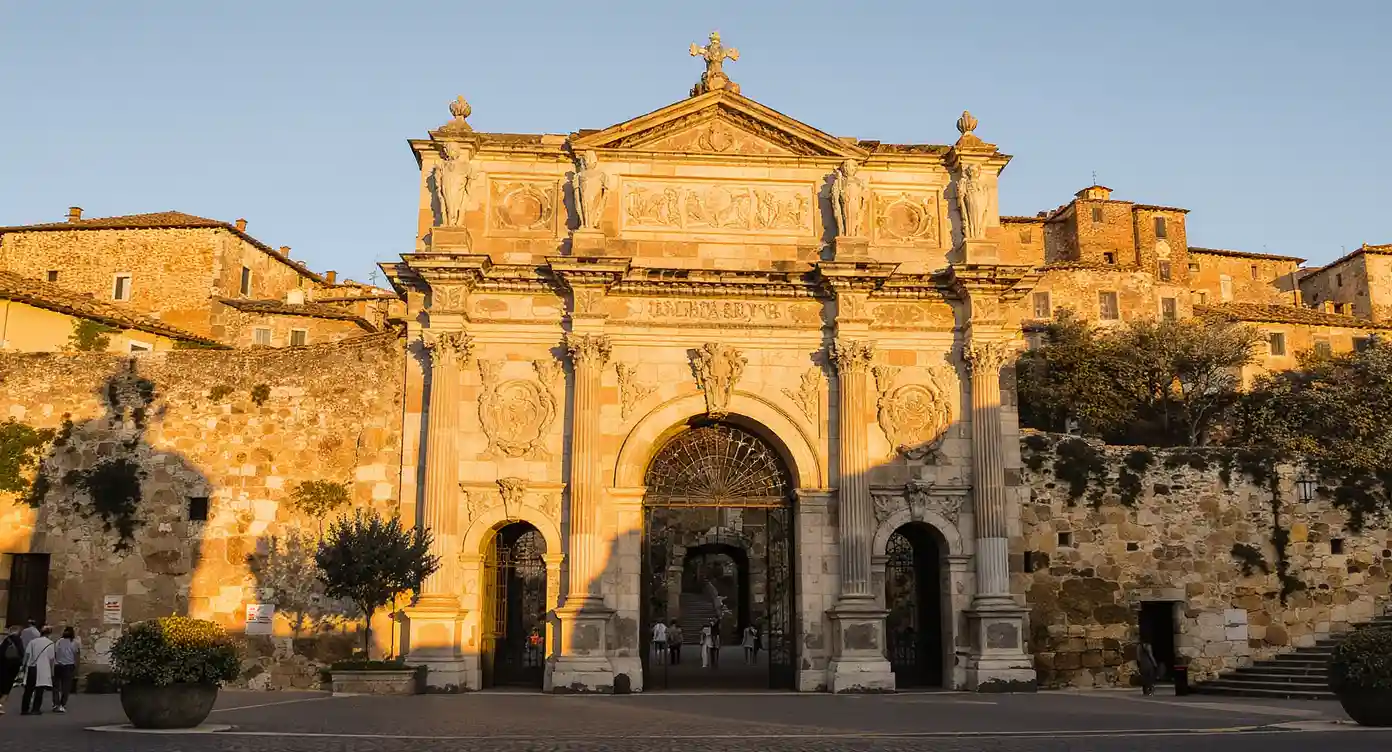
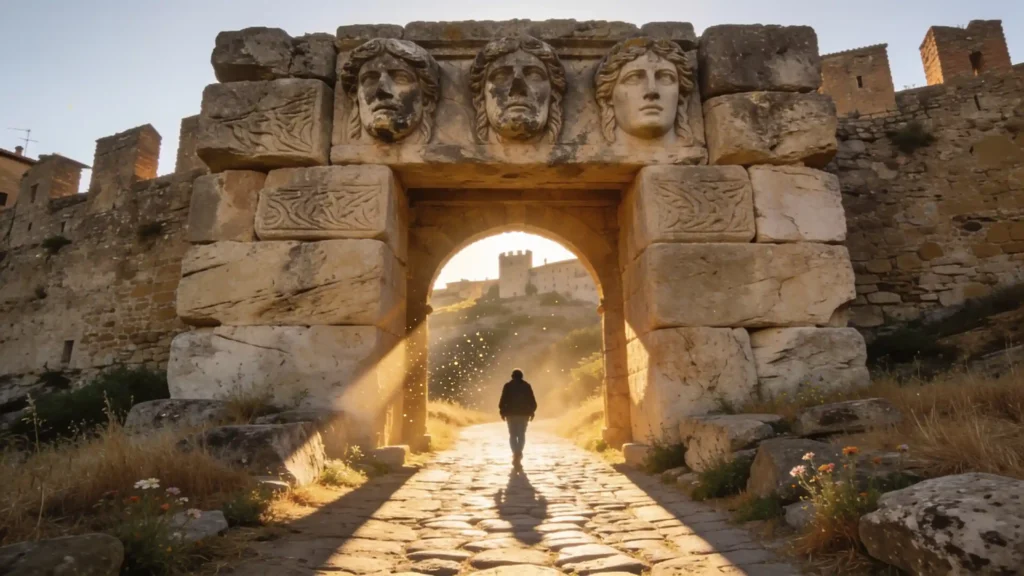
Volterra, the former Velathri, can be discovered in one day. You just need to link the Porta all'Arco, the historic center, the Museo Etrusco Guarnacci, the acropolis and the Augustan-era Roman theater. The museum houses in particular l'Ombra della Sera and l'Urna degli Sposi. If you only have half a day, it's better to sort out a few stops rather than running all over town.
The route starts at the Porta all'Arco and goes back in time: the Etruscan city first, then the medieval streets. In the historic center, the Museo Etrusco Guarnacci deserves a good stop for its iconic works. Then head to the acropolis and the Roman theater. The alabaster workshops are best saved for the end, if your schedule allows.
A full day lets you follow this itinerary without turning it into a race. With half a day, you'll have to choose. By car, locate the parking areas in advance and check access before entering the center: the ZTL requires you to read the signs carefully. For a meal, a restaurant in the center will do, depending on the menu, location and time you have. If you plan to come to Volterragusto, make sure the edition 2026 is confirmed.
Volterra and San Gimignano are two different stops: choose one depending on the route you want to give your day. If you want to extend the Etruscan discovery toward the Maremma, Vetulonia and Populonia form another thematic lead, further south in Tuscany.
Volterra or San Gimignano: which stop to choose for one day?
Rather than trying to split two almost interchangeable towns, first ask yourself what you want to follow during your day. Volterra suits you if you want your visit to have a historical thread that goes well beyond its medieval setting. San Gimignano, on the other hand, is another Tuscan stop: it has its place depending on what your itinerary includes.
Choosing Volterra to trace back to Velathri
Volterra is the former Etruscan city of Velathri. Its Etruscan traces, extended by Roman remains, shape the visit. You then read the city differently, without settling for its palaces and medieval squares.
Pick it if this historical depth is what you're looking for on your day. San Gimignano answers a different desire. These are two distinct stops, not two variations of the same visit.
Which route to follow in Volterra from morning to afternoon?
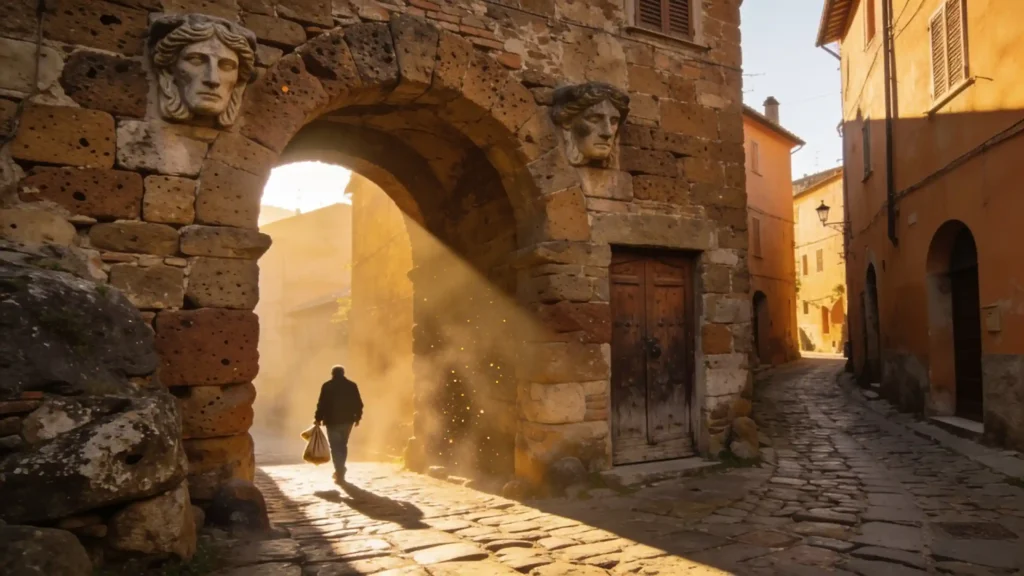
The route starts in the medieval heart, passes the Etruscan and Roman remains, and ends in the alabaster workshops. Follow this order: you link the eras without backtracking.
Start with Porta all'Arco and the medieval heart
Enter through the Porta all'Arco, an Etruscan gate that serves as the city's emblem, then head to the Piazza dei Priori. Le Palazzo dei Priori, from the medieval period, marks this first stage.
Continue toward the Duomo di Volterra, also called the Santa Maria Assunta cathedral, and the baptistery of San Giovanni, in the Piazza San GiovanniIt's from this start that several periods overlap.
Spend midday at the Museo Etrusco Guarnacci
Plan some time for the Museo Etrusco Guarnacci. Its collections give concrete context to Volterra's Etruscan identity. The abbot Mario Guarnacci (1701-1785) bequeathed his collections to the city in 1761.
The museum occupies the Palazzo Desideri Tangassi and houses in particular theOmbra della Sera and the’Urna degli Sposi. This is not a digression: it sheds light on the ancient sites along the rest of the route.
Finish with the acropolis, the Roman theater and the alabaster
Once you've visited the museum, head to the Acropoli etrusca and the Parco archeologico Enrico Fiumi, then the Teatro Romano, built in the Roman era. Ancient thermal baths are located behind the stage.
Save the alabaster workshops for the end, so you can discover this local craft. With a full day, you can cover all these stops at your own pace. In a half-day, it's better to choose a few central sites rather than rushing everywhere.
Where to park in Volterra without entering the ZTL?
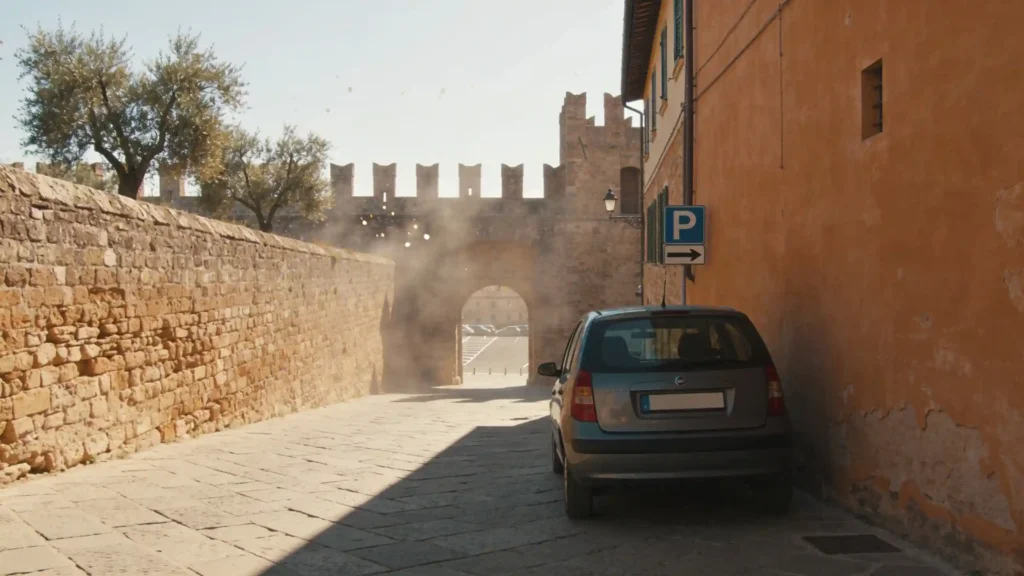
To visit the historic center, it's better to look for a spot in a signposted car park rather than driving through the old streets. In high season, spaces are scarce: allow extra time and don't count on finding a free spot when you arrive.
Aim for the signposted car parks and check access before entering the center
Follow the signs to the car parks, notably Porta Marcoli or the underground car park at Piazza Martiri della Libertà. Once the car is parked, the rest is done on foot.
Before getting back behind the wheel, check the signage and the access rules in force. Volterra has a ZTL, and not respecting it results in a fine. Don't enter the centre without reading the signs first.
When to visit Volterra to avoid the busiest hours?
The route is more pleasant outside peak hours. To start your day in Volterra, the best is to set off in the morning: you'll first discover the historic centre before heading to the various sites on your route.
Shift your visit rather than follow the crowd
Leaving early doesn't guarantee an empty town. But you'll reach the historic heart before starting the visits, which already changes a lot. Keep this landmark in mind to organize your day, without confusing it with the opening hours of the sites.
Volterragusto is scheduled for 24 and 25 Octoberand then 31 October and 1 November 2026, around the white truffle season. Nothing is set in stone yet: check these dates with the organizers. For 2026 opening hours and prices, also consult the official information before your visit.
How to have lunch without turning the break into a tourist trap?
Plan lunch around the middle of the day, between visits around the Piazza dei Priori and the afternoon stops. The break lets you head back toward theAcropoli etrusca or the Teatro Romano without disrupting your schedule.
Choose on the spot using simple criteria, without betting on an unverified name
During the visit, stop in front of the addresses you pass along the way and take a look at what's displayed. Check the menu and prices before sitting down: you'll know whether the offer suits you. No need to organize everything around a name.
Then choose according to your mood and the pace you want for the afternoon. The principle: decide based on what's visible, then head back to the planned visits.
How to extend the day on the trail of the Etruscans?
À Volterra, the day can follow a coherent route: from the Porta all'Arco to the museum, then to the acropolis and the Roman theatre. The thread is simple. To extend the Etruscan trail across your whole stay, keep the other sites for a separate stop.
Plan another stop for Vetulonia or Populonia

Populonia
The only Etruscan maritime city, Populonia features aedicule necropolises, rock-cut tombs and a Roman acropolis, with a view over the Tuscan islands

Tosco Little secret from marcassin: slip a magnet in your pocket before heading down to Baratti beach, and you will see the millennia-old iron flecks cling to it instantly!
Vetulonia and Populonia are two distinct places in Volterra. You can choose either one to continue exploring the Etruscan heritage at another point in your trip, without turning the city visit into a race against the clock.
Fitting one of the two into the same day as Volterra would overload the itinerary. It's better to devote the day to the town and save Vetulonia or Populonia for another stop on your stay.
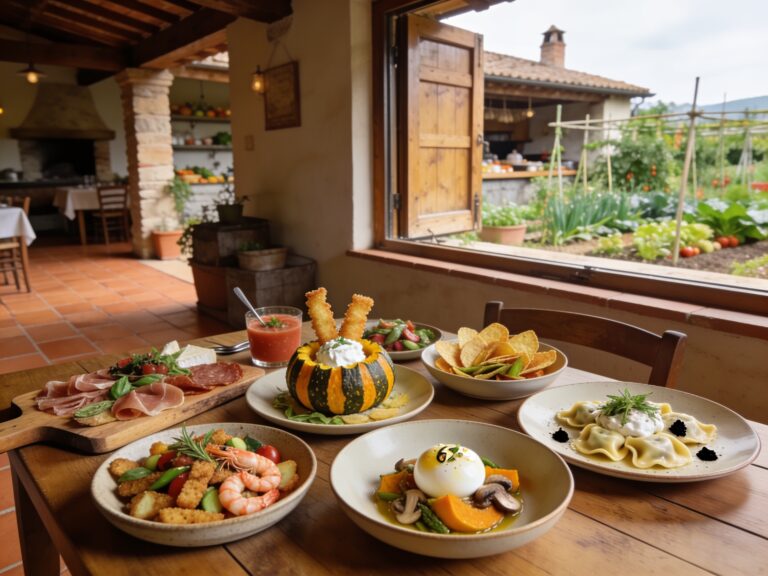
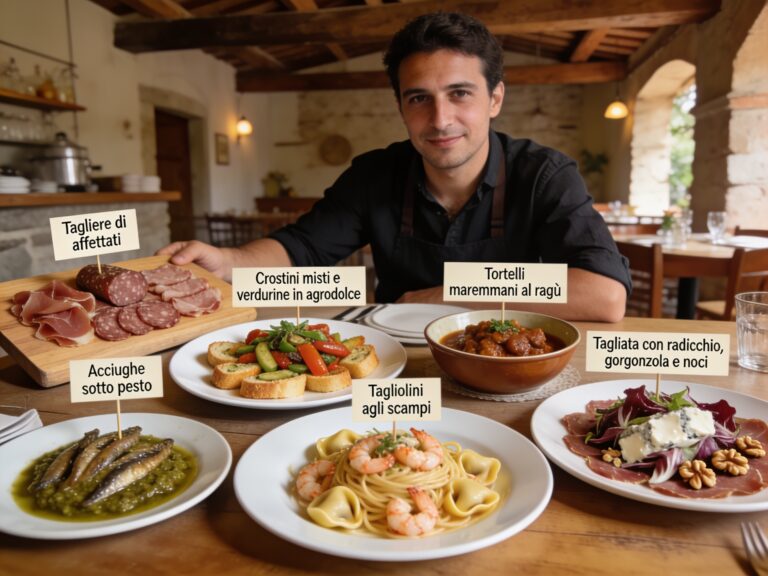
Restaurants · Vetulonia
Our favorite tables around Vetulonia
Volterra deserves its day, or a deliberate selection
To really grasp what makes Volterra, give it a full day. Its Etruscan, Roman and medieval layers fit together much better when you don't rush through the town. Short on time? Pick a few stops based on what interests you, rather than trying to tick everything off. San Gimignano is not an alternative to Volterra: the two towns are not appreciated through the same reference points.
Before setting off, check the opening hours and access conditions of the places you want to visit, as well as the parking arrangements. The Etruscan trail can be extended later toward Maremma, with Vetulonia or Populonia. Here, the principle remains simple: read the different eras within a single city, taking your time.
To discover Volterra in one day without turning the visit into a race, follow a route that connects the city’s major periods. Start at the Porta all'Arco, then reach the Piazza dei Priori and the medieval heart. Continue toward the Duomo di Volterra and the baptistery of San Giovanni, in the area of Piazza San Giovanni. This first part allows you to enjoy the alleys and squares before devoting more time to the collections and ancient sites.
Then keep a real slot for the Museo Etrusco Guarnacci, where the Ombra della Sera and Urna degli Sposi are notably found. After lunch, continue toward the Acropoli etrusca and the Enrico Fiumi archaeological park, then finish with the Teatro Romano and the remains of its thermal baths. Alabaster workshops can round out the day if you still have time and energy. Since the opening hours and access conditions of places may vary, check them before leaving and adjust the order if a visit is closed. To broaden this discovery later, you can consult the Etruscan sites circuit in Tuscany, without trying to add everything to the same day.
With a half-day in Volterra, it is better to choose a few nearby stops rather than wanting to visit every monument. If Etruscan history is your priority, start at the Porta all'Arco, then reserve the essential of your time for the Museo Etrusco Guarnacci. Its emblematic pieces, such as the Ombra della Sera et la Urna degli Sposi, provide a concrete glimpse of the city’s ancient identity. Then complete with a walk in the medieval center, around the Piazza dei Priori and Piazza San Giovanni.
If you prefer open-air remains, instead keep time for the Acropoli etrusca et la Teatro Romano, checking beforehand the opening hours and access conditions. It will be difficult to do all this calmly in a few hours, especially if you want to stop for lunch or discover an alabaster workshop. Also think about the time needed to reach the places on foot and find your car. For a short first visit, the most balanced choice is often to combine part of the historic center with a single major site or museum. If you travel by car, also anticipate parking and the ZTL before your arrival, so as not to lose part of your morning looking for where to park.
To visit the historic center, follow the signs toward the signposted parking areas and avoid entering the old alleys hoping to find a spot nearby. Among the options to identify before arriving are the Porta Marcoli area and the underground parking of the Piazza Martiri della Libertà. Once the car is parked, plan to continue the visit on foot: it is simpler to reach the Porta all’Arco, the Piazza dei Priori, and the other stops in the center.
The ZTL of Volterra requires carefully reading the signage, because access rules may depend on the zone and the period. Do not automatically follow a GPS in the center: check the signs before crossing a restricted entrance and inform yourself about the conditions applicable to your visit date. In busy periods, allow margin to find a spot and reach the start of your route on foot. If you are staying in the center, ask your accommodation how to manage arrival and luggage unloading, without assuming that a vehicle can circulate freely. To also prepare for tolls and parking during the rest of your stay, the guide dedicated to driving in Italy, ZTLs and parking can complement these reference points. Always check the local information displayed on the day itself.
Yes, the Museo Etrusco Guarnacci provides a different perspective from that of the open-air remains. The acropolis and the Roman theater allow you to discover places and architectural traces, while the museum helps place Volterra’s Etruscan history in a more concrete context. Among the works that particularly attract attention are the Ombra della Sera et la Urna degli Sposi. If you only have one day, plan a stop long enough not to cross the rooms at a run.
The museum occupies the Palazzo Desideri Tangassi and its collections are linked to the abbot Mario Guarnacci, who bequeathed his collections to the city in 1761. In a route dedicated to ancient Velathri, the visit therefore works well before reaching the Acropoli etrusca et la Enrico Fiumi archaeological park. You can then continue toward the Teatro Romano, whose remains belong to the Roman period. Opening hours and prices may change: check the practical information corresponding to your date rather than building your program on an old schedule. If you enjoy archaeological discoveries, the circuit of Etruscan sites in Tuscany can help you imagine another stop during the same stay, without trying to string everything together on the day of your visit to Volterra.
The choice depends above all on what you want to give as a common thread to your day. Volterra is suitable if you wish to go back to the Etruscan origins of the city, then follow the Roman and medieval traces. You can organize the visit around the Porta all’Arco, the Museo Etrusco Guarnacci, the acropolis and the Roman theater, with the streets of the historic center between the stops. It is a good option if you want to devote time to an archaeological museum and to several layers of history in the same city.
San Gimignano is a different stop: do not consider it as an interchangeable version of Volterra. To decide, rather look at your overall itinerary, the time you have and the type of visit you are looking for. If you choose Volterra, avoid wanting to add San Gimignano the same day without taking into account the travel and the walking time on site. It is better to fully enjoy one city than to spend the day watching the clock. In Volterra, a full day allows you to combine the center, the museum and the remains without rushing; with a half-day, select two or three priorities. To prepare a quieter stay in Tuscany and find other less hurried visit ideas, you can also browse this guide to Tuscany off the beaten path.
For an enjoyable day of visiting, it is better not to combine Volterra with Vetulonia or Populonia. These latter two sites are another stage of the journey, further south in Tuscany, and adding them to the program would make the itinerary crowded. In Volterra, there is already enough to organize a day around the Porta all’Arco, the medieval center, the Museo Etrusco Guarnacci, the acropolis and the Roman theater. The visit time counts as much as the travel: it is necessary to be able to stop at the museum, walk between places and take a break without racing against the clock.
If your stay lasts several days, choose Vetulonia or Populonia according to the planned route and the places you wish to discover, then reserve them another day or a distinct stage. This organization is particularly useful if you are staying in the Maremma or if you want to build a thematic itinerary through the Etruscan sites of Tuscany. Check travel times and access conditions before setting your program, because they depend on your departure point and the date of the trip. To reach the Maremma from the main cities, you can consult this guide to transport options to the Maremma. In Volterra, keep the historical thread of the day; the other sites will be more interesting when you have time to explore them without squeezing them between two journeys.
Around this article



E-bike adventure on Monte Argentario and Porto Ercole
Is the map not displaying? See accommodations on Stay22
Map and prices provided by Stay22: Toscane Cachée may receive a commission on bookings.