









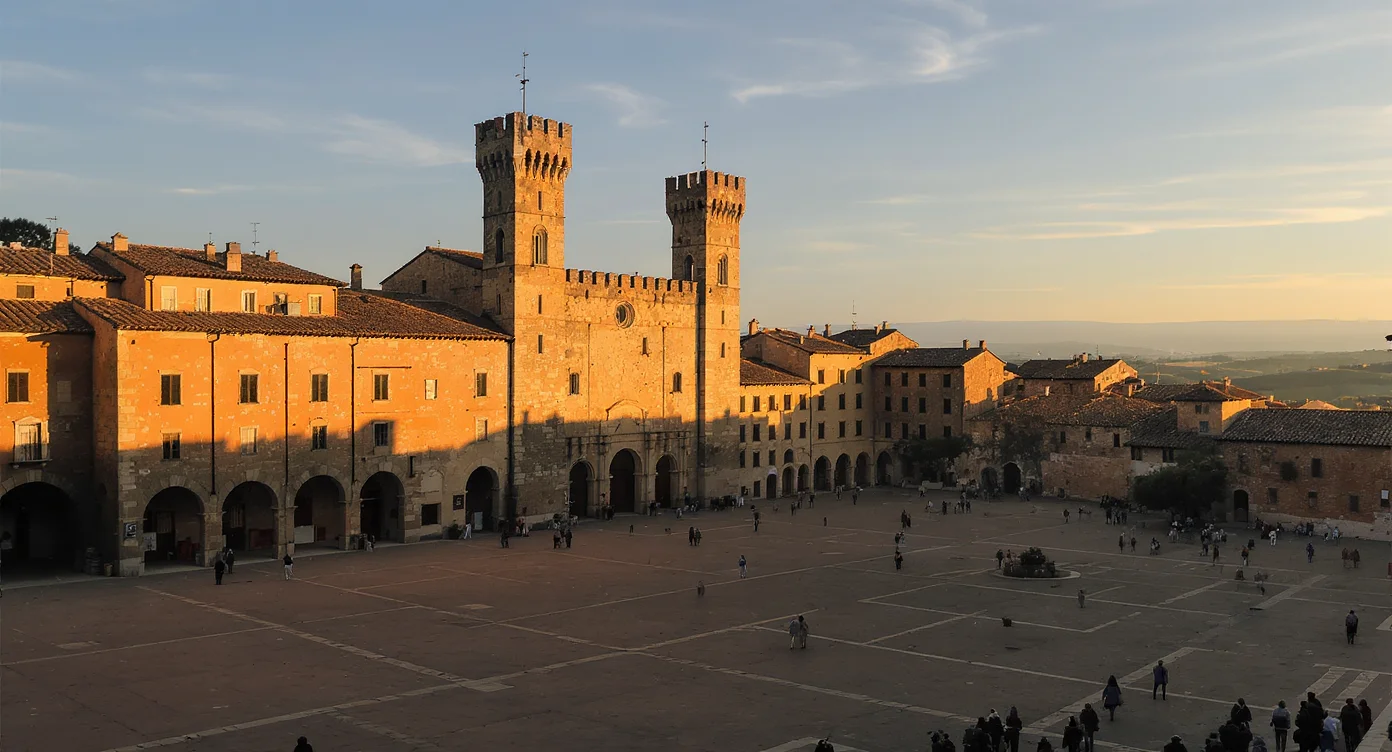
At over 600 meters altitude, Montepulciano is discovered on foot. You go up Il Corso to the Piazza Grande, between Renaissance palaces and views over the Val d’Orcia. Below, the stone and tufa cellars age the Vino Nobile di Montepulciano DOCG. At noon, you can also taste pici all’aglione and go on to San Biagio.
One day is enough, and the thread is simple: a single climb. You start from the Corso, you reach the Piazza Grande, then we reach the Palazzo Comunale and its view over the Val d'Orcia. The steep alleys, next to the shops, also lead to the historic cellars carved under the palaces.
These cellars give the city its character. Stone vaults, constant coolness, smell of old wood: it is here that the Vino Nobile di Montepulciano DOCG. The Cantina Contucci is associated with an Etruscan tomb, which shows that the soil was inhabited long before today’s vineyards.
The slopes are steep, so plan a leisurely walking visit, with breaks and stable shoes. If your legs can manage, the detour via San Biagio, the church located below the town, is worth the trip.
Before leaving, check with each cellar its visiting and tasting conditions. Access is not always decided on the spot.
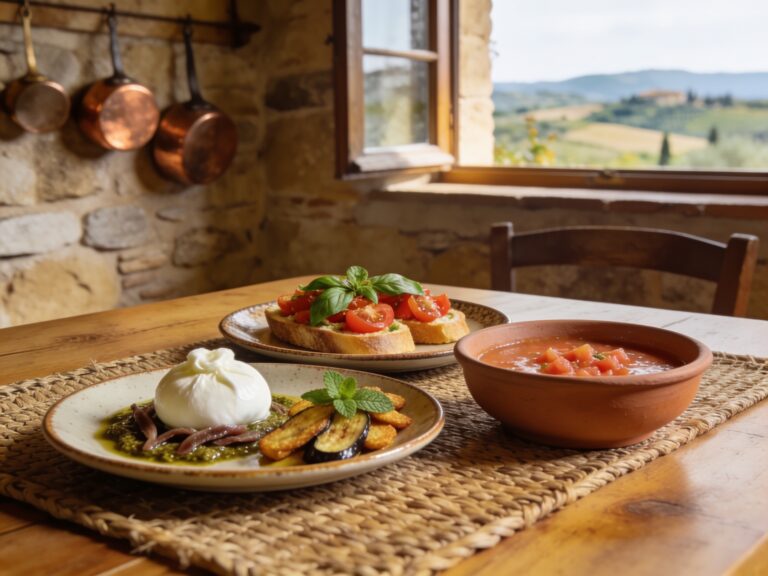
For lunch, look for a trattoria in the historic center that prepares its pici all'aglione homemade: a thick pasta topped with a garlic and tomato sauce. A short menu and daily dishes are often a good sign.
No need for a car for the center, which you explore on foot. It becomes useful to reach Pienza or the tufa villages, a short drive away.
Climb up to the high square, without hurrying the step
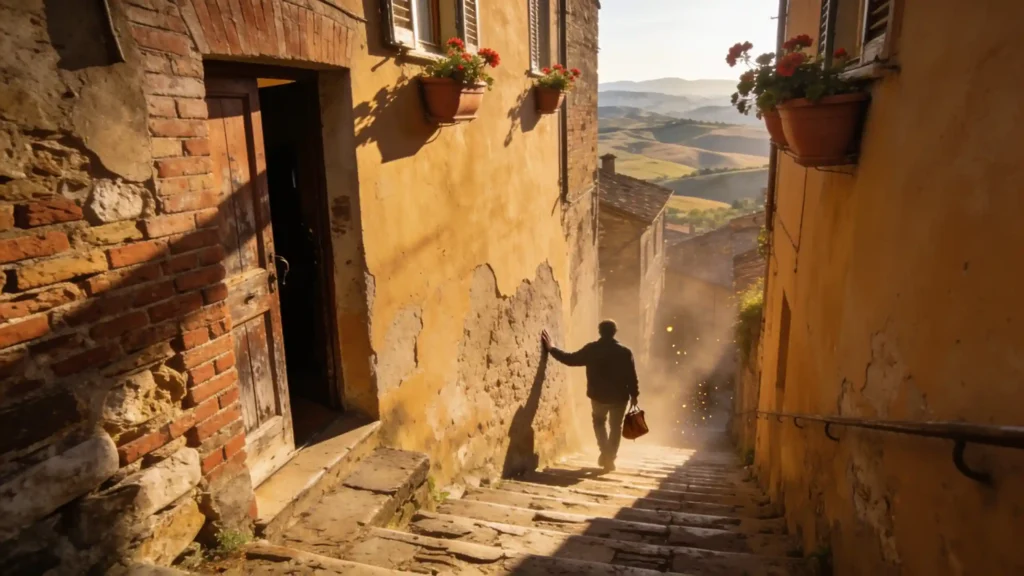
Montepulciano is visited on foot, and the terrain dictates the pace of the day. The town stands at about 605 meters, on a limestone tufa ridge between the Val d’Orcia and the Valdichiana. The alleys climb relentlessly, and each landing opens a new viewpoint. Better to accept climbing slowly.
Let the alleys give the rhythm
Start with Il Corso, the main street that crosses the town. The steep slopes of the side alleys force you to slow down. That's exactly the point: you look at the facades, the stone doors, and the small squares that open around a bend.
The path then leads to Piazza Grande, historic heart and highest point of the center. In the middle of the square, the Pozzo dei Grifi e dei Leoni, associated with Antonio da Sangallo, serves as a first landmark: it's a good place to stop before continuing.
Keep the view for the end of the afternoon
The square is lined with Renaissance palaces that deserve a slow look. Save the end of the day for the tower of the Palazzo Comunale. The climb leads to the widest viewpoint, with the Val d'Orcia which unfolds before your eyes, while the travertine facade takes on a beautiful tint at that time of day.
For a detour outside the center, go down towards San Biagio, a Renaissance temple associated with Antonio da Sangallo the Elder. It is located off the central route. So plan it as a separate stop, not as a break between two palaces.
Go down beneath the palaces, where the wine takes its time
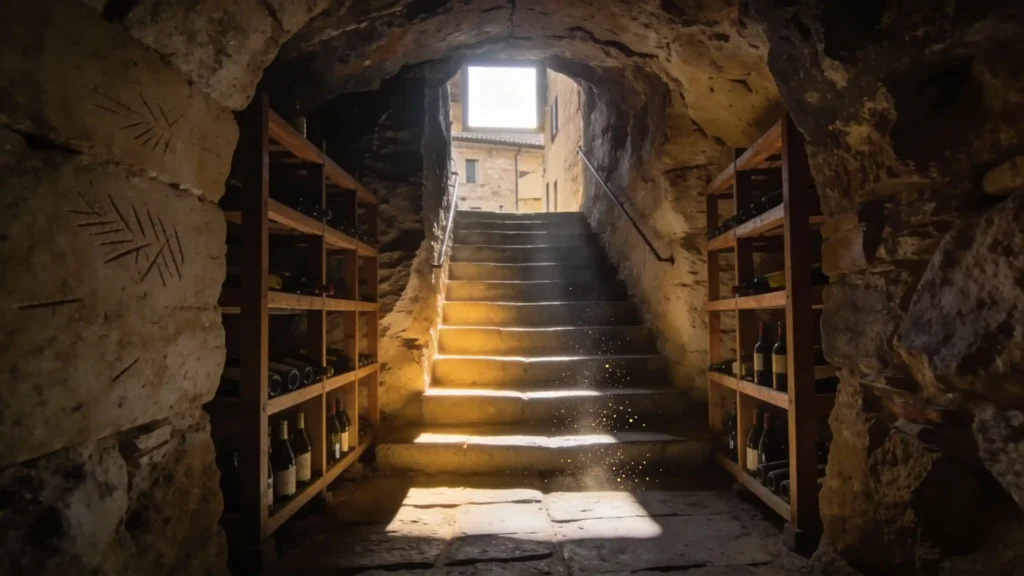
Leave the light of the square and go through a discreet door: in a few steps, the temperature drops and the street noise fades. Beneath the palaces, the cellars dug into the tufa form a network of passages and stone vaults. The wine ages there sheltered from the heat.
Pass from the facades to the stone vaults
The contrast is sharp. Up there, the facades catch the sun. Down below, the stone keeps a constant coolness, and it is your footsteps that you hear, much more than the conversations from the terraces. Tufa, a soft rock typical of the region, has been hollowed out for centuries to dig this labyrinth.
Two cellars allow you to visit these spaces: the Cantina Contucci, not far from the main square, and the Cantine De’ Ricci, in a street in the center. Each has its own character. Very quickly, you understand that the center was built above an underground world.
In the cellars of the Cantina Contucci, we found a Etruscan tomb. A reminder: these galleries were frequented long before the first bottles.
Taste the emblematic red of the place
The wine of this descent is the Vino Nobile di Montepulciano DOCG, a red wine for aging made from Sangiovese Prugnolo Gentile. Among the very first Italian wines to obtain DOCG, in 1980, it keeps well: its structure requires time, and it is better to let it age than to drink it young.
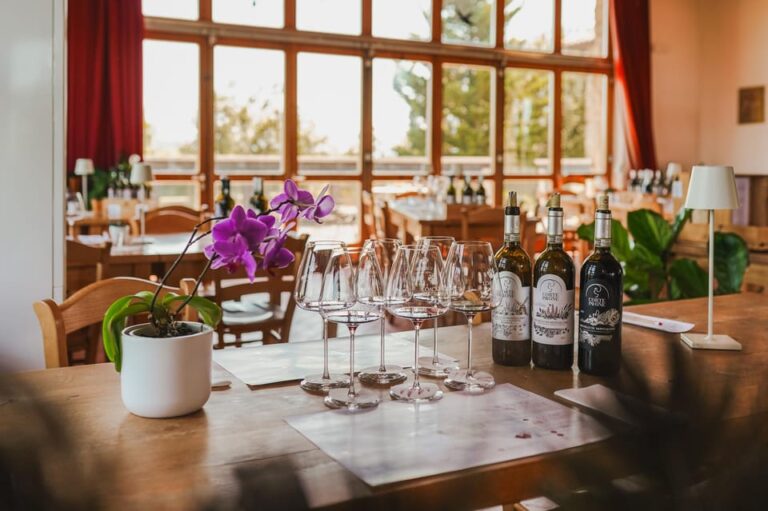
In a vaulted cellar, the red wine changes dimension. The coolness of the walls slows its evolution, and the tasting becomes a slow conversation with the place. It is here that the word 'aging' takes on its full meaning.
Opening hours and conditions for visiting or tasting vary from one cellar to another. Ask the establishment directly before coming, so as not to find the door closed.
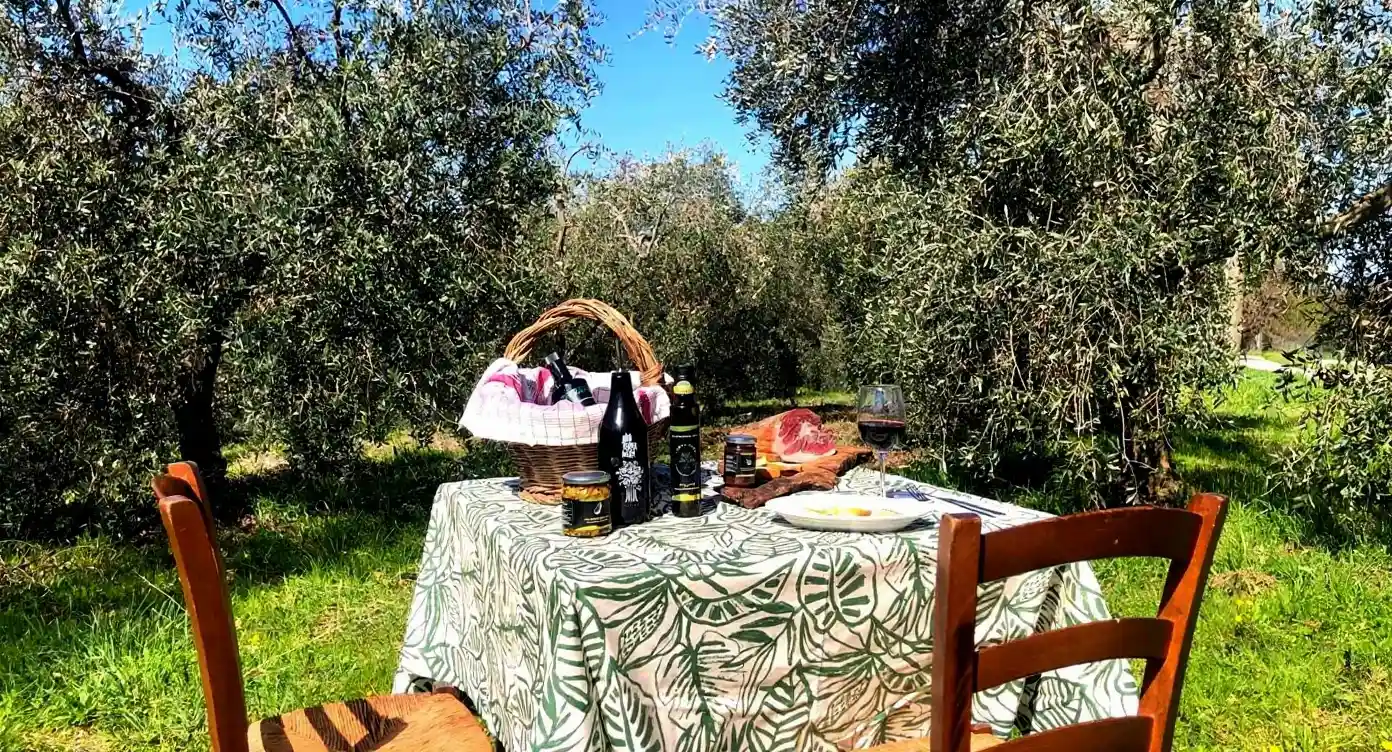
Make the day fit into one's legs — and onto one's plate
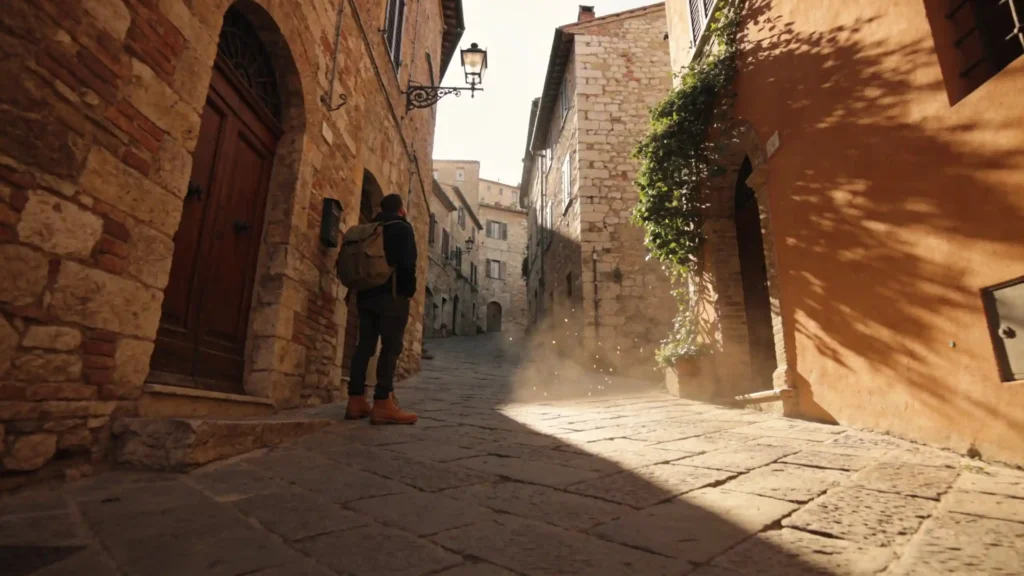
Link the stages without turning the visit into a race
The whole center of Montepulciano is done on foot, but the streets are steeply sloping. Take closed and well-gripping shoes, especially if you have to go back up several times toward the palaces.
Go up the Corso to Piazza Grande, the highest point of the historic center, where the Renaissance palaces stand. Then plan a cellar visit in the middle or towards the end of the afternoon. The cellars dug under the palaces are linked to the aging of the Vino Nobile di Montepulciano DOCG, and the tasting naturally takes the time it deserves.
Finish the loop with the tower of the Palazzo Comunale, from where the view embraces the rooftops and the surrounding countryside. The meal, for its part, is taken in a trattoria in the historic center that serves pici all'aglione : thick pasta coated with a garlic tomato sauce, very typical of the region.
Decide before taking the road
If the day stays in the city, the car is not of much use. The old heart fits entirely into walking, and it is this slow pace that pushes you to stop at every turn.
As soon as you want to venture toward the southern landscapes, the car becomes really useful. Pienza, very close, easily fits into the day and can open the road toward the tufa villages.
- On foot : closed shoes for the sloping center
- By car : only if you extend towards Pienza and the tuf villages
- Before you go : check the parking and access to the center
A complete day, between heights and cellars
The ideal day comes in three parts: you walk up to the center, you go down into the cellars, then you finish at the table. It climbs steeply in places. Yet you easily do without a car, and you gladly stop in the squares or in front of the palaces.
For the cellars, same advice: check the visit conditions before leaving. The slots and access conditions may change. Once back up, settle into a trattoria in the historic center for a last glass of local wine.
Further than the city, Pienza and San Biagio can be reached by car, like the tuf villages. You need a vehicle for these detours, but everything fits in a single day.
A full day allows you to discover the historic center of Montepulciano at a pleasant pace, provided you plan breaks: the town sits at about 605 meters above sea level and its alleys climb steeply. Start with Il Corso, the main street that crosses the center, then gradually make your way toward Piazza Grande. The shops, stone doorways, and small squares give you good reasons to slow down, rather than trying to cover everything in one go. Closed, stable, and comfortable shoes are especially useful on the cobblestones and on steep passages.
On the square, take time to look at the Pozzo dei Grifi e dei Leoni and the Renaissance palaces before climbing the tower of the Palazzo Comunale. You can save this viewpoint for late afternoon, when the light highlights the rooftops and the countryside of the Val d'Orcia. A cellar visit fits well in the middle or at the end of the day, but it’s best to check its access conditions directly before you go. If you also want to go down to San Biagio, plan this as a separate step: it lies below the center and adds extra walking. For a relaxed day, it’s better to choose between a long lunch and an extended visit, rather than multiplying detours.
The historic cellars are among the most unique visits in Montepulciano: beneath the palaces of the center, stone and tuff spaces form vaulted passages where wine ages away from the heat. To discover this facet of the city, the article notably mentions the Cantina Contucci, near Piazza Grande, and the Cantine De’ Ricci, located in the historic center. Each cellar has its own character, and the visit allows you to understand the contrast between the sunlit facades above and the coolness of the galleries below.
However, you shouldn’t count on spontaneous entry: opening hours, available slots, and visit or tasting conditions vary by establishment. The safest is to contact the chosen cellar directly before going, especially if you want a tasting, if you’re traveling in a group, or if your schedule leaves little room. No fixed price or schedule can be deduced from the article, so check this information with each cellar when preparing your day. The Cantina Contucci is also associated with the discovery of an Etruscan tomb in its cellars, a detail that reminds us that the underground spaces bear witness to a history much older than the current bottles. Plan time for the visit and keep in mind that you’ll then have to climb back up the sloping streets of the center.
The emblematic wine to ask for is the Vino Nobile di Montepulciano DOCG, a red wine for aging associated with the city and made from sangiovese prugnolo gentile. A tasting in a cellar carved under the palaces gives you the chance to discover the wine in a place directly linked to its aging: the stone and tuff vaults keep a coolness that contrasts with the sunlit streets. To better appreciate the experience, take time to listen to the cellar’s explanations about its wines and methods, rather than trying to chain several tastings in the same day.
Vino Nobile is presented as a wine that benefits from aging; if you prefer very light and fruity reds, ask for advice before choosing your tasting. You can also specify whether you want to taste only the wine or accompany it with an explanation of the historic cellars. The terms are not the same everywhere: check with the Cantina Contucci or the Cantine De’ Ricci before your visit, as access, hours, and tasting conditions can change. The article reminds that Vino Nobile obtained DOCG in 1980. It is therefore perfectly natural to devote part of the afternoon to this wine, then finish with a glass or a meal in the historic center. If you then drive to another village, organize your trip taking the tasting into account and avoid getting behind the wheel after drinking.
To enjoy Montepulciano without rushing, start by walking up Il Corso. The route follows the natural slope of the center and allows you to gradually discover the facades, shops, and small squares before arriving at Piazza Grande, at the top of the historic heart. Take a first break around the Pozzo dei Grifi e dei Leoni, then look at the Renaissance palaces that line the square. A single main climb is more pleasant than several back-and-forths: so plan your stops in an order that avoids going down and then up again unnecessarily.
Place a cellar visit in the middle or toward the end of the afternoon, after checking its access conditions with the establishment. The descent under the palaces offers a marked contrast with the light of the center and leaves time to discover the stone vaults where the Vino Nobile di Montepulciano DOCG ages. Then finish with the tower of the Palazzo Comunale, if it is accessible at the time of your visit, to enjoy the view over the rooftops and the Val d'Orcia. The tower’s access hours are not indicated in the article: check them before building your schedule around the panorama. Finally, keep time for a meal in a trattoria in the center, where you can look for homemade pici all'aglione. Stable shoes and a full day make this itinerary much more pleasant.
After exploring Il Corso, Piazza Grande, and a historic cellar, look for a trattoria in the old center that makes homemade pici all'aglione. This dish combines thick pasta with a tomato sauce flavored with garlic and lets you taste a regional specialty without leaving the heart of Montepulciano. The article does not give the name of a specific restaurant, so it’s better to choose on the spot by looking at the menu and asking if the pici are homemade and if the dish is on the daily menu. A short menu and seasonal specialties can be good clues, but they alone don’t guarantee the quality of the meal.
To organize lunch, check the availability of the dish at the time you want to sit down: menus and daily preparations can vary from one place to another. If you visit a cellar with a tasting, think about placing the meal before or after this step according to your schedule, and allow enough time so you don’t have to eat in a hurry between two visits. The streets of the center are steep, so a trattoria a few minutes from your route can be more practical than a detour that forces you to climb back up the whole town afterward. You can ask for a pairing with the Vino Nobile di Montepulciano DOCG, but clearly indicate if you’ll be driving afterward: the car becomes useful for reaching the surroundings, and you should avoid driving after consuming alcohol. Since the price and hours are not specified in the article, check this information directly with the chosen establishment.
To visit the historic center of Montepulciano, a car is not necessary: Il Corso, Piazza Grande, the Palazzo Comunale, and the cellars can be discovered on foot. Once in the center, the main challenge is not distance but the elevation gain. The alleys climb steeply, and it’s useful to wear closed, comfortable shoes, take breaks, and limit back-and-forths. Before leaving, also check information about parking and access to the center; the article does not provide a parking address or specific access rules, which can vary depending on the chosen spot.
A car becomes practical if you want to extend the day toward Pienza or the tuff villages. San Biagio, the Renaissance church located below the town, also deserves a detour, but you should plan it as a separate step from the route that connects the palaces and cellars: it involves leaving the center and managing the climb back up. The article presents these outings as trips to consider by car, but gives neither travel times nor parking conditions; check these details before leaving, especially if you have a reserved cellar time. If you only have one day, choose between exploring Montepulciano on foot with a tasting and a meal, or devoting part of the time to the surroundings. Keeping some margin avoids turning this visit into a rushed sequence of moves.
Around this article

Rosso Vivo Carne e Pesce con Brace & Pizzeria Verace anche senza Glutine


Is the map not displaying? See accommodations on Stay22
Map and prices provided by Stay22: Toscane Cachée may receive a commission on bookings.