







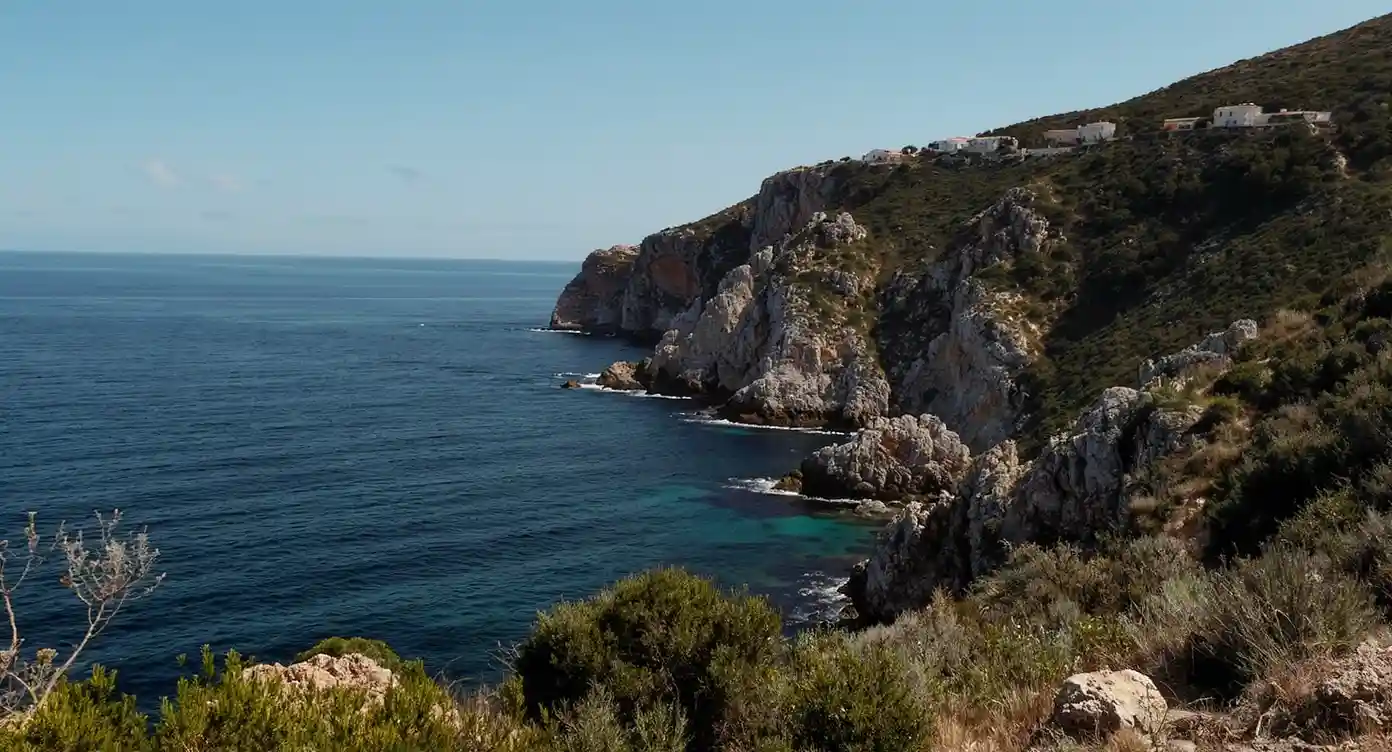
Two Tuscan islands face each other off the coasts of the Argentario and Piombino, and they have almost nothing in common. To decide between Elba and Giglio, only one question matters: do you want an island to cover or an island to live on for a few days? My verdict is clear-cut: for a Toscane Cachée reader, Giglio wins. Elba only comes out on top if you feel like moving around, hiking and changing scenery every morning. The rest comes down to ports, length of stay and timing — and that's the order in which I'll give you my benchmarks.
Elba vs Giglio: the verdict before the logistics
Elba for variety, Giglio for authenticity. If you love car-free villages, uphill alleyways and the sea at the bottom of every staircase, choose Giglio. If you want a bike, trails, a mine and three different beaches in the same day, choose Elba.
I'll tell you frankly: Elba is easier to sell, Giglio is easier to love. Elba is covered and chosen. Giglio is savored and earned, because you have to take the boat, accept that you won't see it all, and settle for a rock.
A big island with a thousand faces, a rock with three villages
Elba is the third-largest island in Italy. Its Mount Capanne rises above 3,300 ft (1,000 m), and you feel it as soon as you drive: the road climbs, winds, and drops back down toward a different bay. You rack up miles, switch from one slope to the other, and find shade or wind depending on the side.
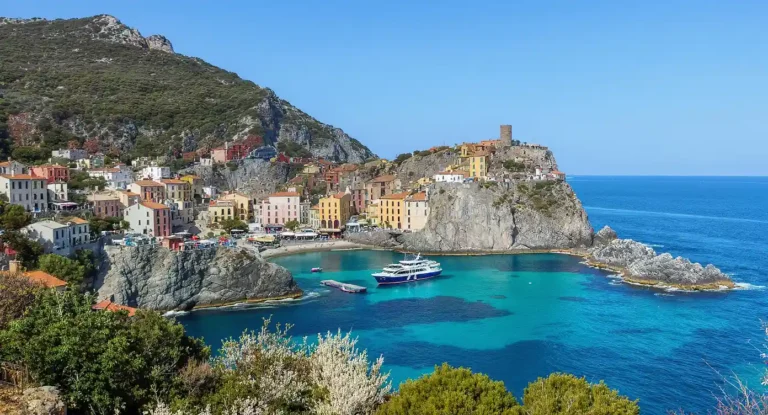
Giglio does the opposite. It boils down to three villages: Giglio Porto, Giglio Castello , and Campese. The port is the gateway, with its colorful facades and the slapping of mooring lines. Castello is the hilltop fortress, Campese the beach on the other side. You go from one to the other in a single morning, and that's precisely what gives it its charm.
The name itself sets the tone: Giglio comes from the Greek aegilion, meaning "goat island." Here, no one has ever tried to tame the terrain.
Size, scenery and atmosphere: what you'll actually see
Elba: scattered
Elba offers mountains, mines and a Napoleonic history that reads through its villages and residences. Geology buffs get their fill: the island is famous for its 150 varieties of crystals and minerals, displayed in natural science museums. For hikers, the butterfly sanctuary of Monte Perone shelters 50 species.
The downside is the scattering. Points of interest are far apart, days get spent on the move, and the island demands a real route plan so it doesn't turn into a driving marathon.
Giglio: concentrated
Giglio measures 9.3 sq mi (24.01 km²) with 17 mi (27 km) of coastline, and its highest point, the Poggio della Pagana, tops out at 1,627 ft (496 m). It's small, wild, and restfully simple. The beaches have names like friends' landmarks: Cannelle, Caldane, Arenella, Campese and the Rock of the Turtle.
In the off season, the Mediterranean climate stays mild and the island can be listened to: the wind in the maquis, the church bells, the muffled rumble of boat engines at the harbor. That's when Giglio wins, before all its terraces have opened.
Ports and crossings: the deciding factor
This is where many people go wrong, especially travelers coming from far away. The two islands don't start from the same place, and the wrong port can cost you your whole day.
For Elba: Piombino Marittima
Ferries to Elba leave from Piombino Marittima, the maritime station. Don't confuse it with downtown Piombino: these are two separate places, and a taxi from the center won't drop you at the quay. Several companies serve the route: Toremar, Moby Lines, Blu Navy and Corsica-Sardinia Ferries.
For Giglio: Porto Santo Stefano
Giglio is reached from Porto Stefano, on the Argentario. The crossing takes about 1 hour for 12 nautical miles, with Toremar and Traghetti Giglio. The ticket comes without cabins: you stay on deck or in the lounges, with salt on your skin and seagulls following in the wake.
Once there, a car is often unnecessary. Porto, Castello and Campese are connected on foot or by local shuttle. If you still want to bring one, check directly with the ferry company.
Connections between the two
A seasonal route links Porto Azzurro, on Elba, to Giglio in about 2 hours: handy if you want to combine both islands. From the Argentario, the crossing to Elba takes around 2 hours 30, a ballpark that clearly shows the gap with Giglio: one is a quick escape, the other a real journey.
When to go: with Giglio, timing is everything
Giglio gets busy in season, and summer saturates it. The harbor alleys fill up, rooms go early, and booking ahead isn't an option but a requirement. If you want the quiet version, aim for shoulder season or gentle weeks, when the air keeps its warmth without the crowds.
For your budget, three items really matter. The crossing, the lodging, and the car — which you can skip on Giglio but not always on Elba. It's on this last item that the two islands differ most sharply.
In summer especially, Giglio doesn't forgive improvisation, so it's best to lock everything in well in advance. Off season, it's a different island, where you can walk without suffering from the heat.
Booking your crossing without getting trapped
To compare routes, two tools do the job. Direct Ferries is a multilingual aggregator that covers Toremar on Porto Santo Stefano – Giglio, with an electronic ticket that's handy to keep on your phone. Its drawback: high change fees and pre-checked options that you have to uncheck one by one before paying.
Ferryscanner compares 6,000 routes and 350 companies. It guarantees the best price or refunds the difference, and offers free cancellation on most routes, which leaves you some leeway if you're torn between two dates. A chat support replies within 40 seconds, 7 days a week, and the ticket conditions are displayed during booking.
In both cases, check the departure port before confirming. It's the classic mistake, and it can't be fixed at the dock: keep it in sight until payment.
Which island for whom, and for how many days
Choose Giglio if you have 2 to 4 days, if you like walking short distances and falling asleep to the sound of the waves. You live on foot there: you arrive at the port, you climb up to Castello, you end up on the sand of Campese. It's the choice of tranquility.
Choose Elba if you have a week or more, if you want to hike, visit mineral museums and follow in Napoleon's footsteps. You'll need a vehicle or a good bus plan, and the desire to change bays every day. It's the choice of variety.
My advice: start with Giglio. Look at the schedules from the Argentario, pick a date outside the summer peak, and save Elba for a second trip. You'll come back with more time, and maybe the urge to explore.
As for the Maremmait awaits you just across the water, in Porto Santo Stefano, before or after the crossing: the same hills, without the tour buses. Do you prefer a rock with three villages or an island that changes face with every turn?
The port depends on the island chosen, and that is the first detail to check before booking. For the island of Elba, the departure is from Piombino Marittima, the maritime station. Don’t just enter « Piombino » into your route without checking the exact address: Piombino town center and Piombino Marittima are two distinct places, and ending up in the wrong place can complicate your departure. Several companies operate the crossing to Elba, notably Toremar, Moby Lines, Blu Navy, and Corsica-Sardinia Ferries.
For the island of Giglio, you need to reach Porto Santo Stefano, on the Argentario promontory. The crossing takes about 1 hour and the boat arrives at Giglio Porto. That is the most direct option if you are already staying in the Maremma or near Argentario. From Florence, remember to organize your land journey and your embarkation separately: the departure port is not the same depending on the island. Before paying, re-read the port name on your ticket and your itinerary, then allow some extra time to reach the dock. To also prepare your mobile connectivity while traveling and keep your travel information accessible, you can check this guide on the eSIM or SIM card in Italy for traveling in the Maremma.
Yes, for three days on Giglio, leaving the car on the mainland is often the simplest choice. The island is explored around three villages — Giglio Porto, Giglio Castello, and Campese — and the distances are short enough to organize a stay without driving. On arrival, you can take time to stroll around the port, then reach the fortified village of Castello and devote another part of the day to Campese and its beach. Getting around on foot or by local shuttle connects the main areas, even though the terrain sometimes requires climbs and stairs.
However, don’t leave assuming everything is flat or that every beach lies just at the foot of your accommodation. Plan for good shoes, water, and some flexibility in your schedule; the appeal of Giglio is precisely to slow down and not try to tick off every cove in a single day. The crossing departs from Porto Santo Stefano and takes about 1 hour. In summer, book the ferry and your accommodation in advance, as rooms and available spots can fill up early. If you do want to bring a car, check directly with the company before buying your ticket. For a short stay, arriving without a vehicle usually lets you enjoy the port, the alleys, and the breaks by the water more, rather than dealing with a car on a small island.
For a week or more, Elba is the best choice if you want to vary landscapes and change your program over the course of the stay. The island is vast for a traveler who wants to explore: its roads cross from one side to another, with bays, reliefs, places linked to Napoleonic history, and sites associated with minerals and former mining activities. Mount Capanne exceeds 1,000 meters, while the distances between points of interest require planning travel time. To enjoy several areas without turning your vacation into long days of transport, a vehicle is often useful; otherwise, organize your itinerary carefully around the bus options.
Giglio can also host a week, but its charm relies more on simplicity and the happy repetition of the same places: the port, the alleys of Castello, the walks, and beaches like Campese, Cannelle, or Arenella. For a stay of 2 to 4 days, that concentration is an obvious advantage; over a week, you need to enjoy taking your time rather than seeking a new activity every morning. If you want to combine hiking, landscape diversity, and visits, choose Elba. If you dream of a more compact stay, with few kilometers and an island-village atmosphere, Giglio remains appealing. In both cases, first compare the total travel time and the boarding port: Elba is reached from Piombino Marittima, Giglio from Porto Santo Stefano.
In August, it is best to organize your stay as soon as your dates are fixed, rather than waiting until you are there. The island is small, accommodations are fewer than at a large seaside destination, and summer crowds quickly fill available rooms. The crossing between Porto Santo Stefano and Giglio Porto takes about 1 hour, but a short duration does not mean you can improvise: you still need to find a space on the boat at the right time and coordinate your arrival with your accommodation. So book together, or at least within the same period, your lodging and your crossing, especially if you travel on a weekend or with precise times.
Before confirming, carefully check the departure port, the date, the time, and the ticket modification conditions. Comparators can help review options, but read the details shown at payment and spot any fees or added options. If you plan to bring a car, contact the company to learn the procedures and don’t assume it is as simple as a passenger ticket. You can also reduce constraints by leaving the vehicle on the mainland: Giglio is visited on foot and with local shuttles. To avoid the busiest atmosphere, choose a mid-season period or a less demanded week instead. You will then more easily enjoy the alleys of Giglio Porto, the walks toward Castello, and the calm of the island, while still having often pleasant Mediterranean weather.
Visiting both islands is possible, but it is not necessarily the best choice if you only have a few days. Elba and Giglio are not reached from the same port: ferries for Elba depart from Piombino Marittima, while those for Giglio depart from Porto Santo Stefano. A seasonal connection links Porto Azzurro, on Elba, to Giglio in about 2 hours. That is an interesting option if the dates and times match your itinerary, but you must check that the connection operates during the exact period of your stay and build your program around it.
For a stay of 2 to 4 days, rather choose Giglio and avoid losing a large part of your vacation to port changes and crossings. For a week or more, you can consider combining both, provided you give Elba enough time for its distances and diversity. Another connection from Argentario to Elba takes about 2 h 30, which shows the organization is different from a simple trip to Giglio. Also decide whether you keep a car: it can be useful for exploring Elba, while it is often unnecessary on Giglio. If you combine the islands, avoid planning too tight a connection on the day of a lodging change and keep a margin in case of schedule adjustments. The most pleasant approach is often to choose one island as a main base, then consider the other as an extension only if the calendar truly allows it.
To travel without a car and seek a quiet stay, Giglio is generally the most coherent option. You arrive by ferry at Giglio Porto, then you can organize your days around the island’s three villages: the port, Giglio Castello, and Campese. Getting around is on foot or by local shuttle, which reduces logistics and lets you enjoy the walks, the alleys, and the breaks by the sea. The terrain is nonetheless present: visiting Castello involves climbing, and walking routes require good shoes, especially in hot weather. Choose accommodation suited to your program and check how to reach the beaches you want to discover.
Elba can be visited without a car if you carefully plan your bus trips, but its sites are more scattered and the island requires more organization. It suits you better if you accept planning the journeys and concentrating your visits by area, rather than changing coves several times in the same day. For a first stay without a vehicle of 2 to 4 days, Giglio therefore offers a more compact and restful experience. The crossing from Porto Santo Stefano takes about 1 hour; in summer, book your accommodation and ticket in advance. On Giglio, don’t try to see everything in a rush: devote time to the port, the hilltop village, and Campese, and keep flexibility for walking and shuttles. It is this way of traveling, with few transfers and lighter days, that makes the island a good choice for an authentic stay without a car.
Around this article
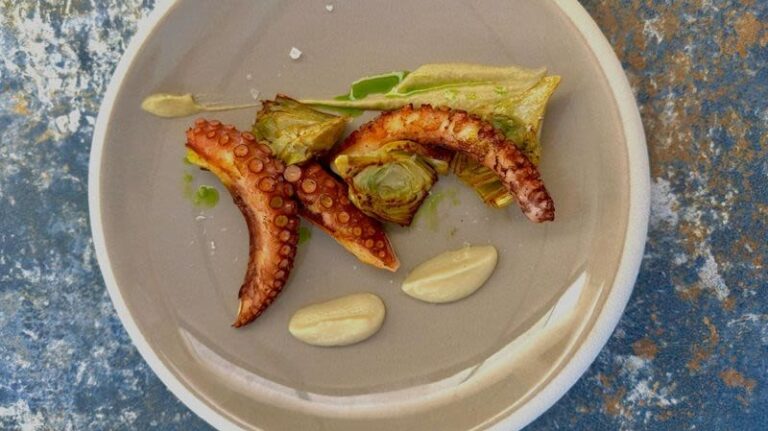
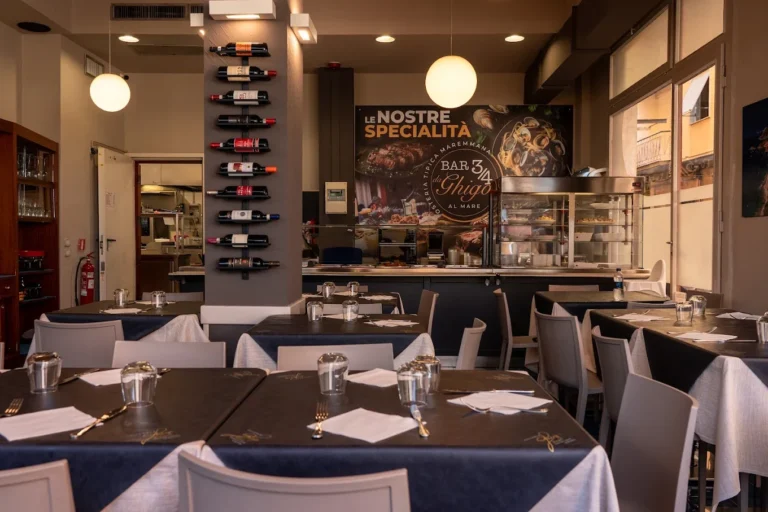
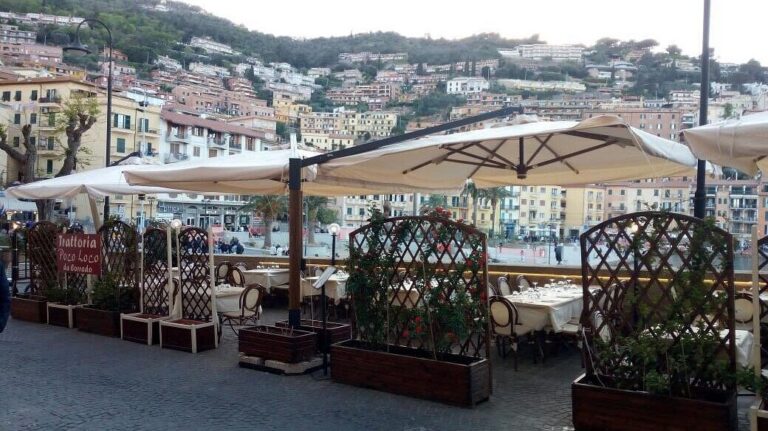
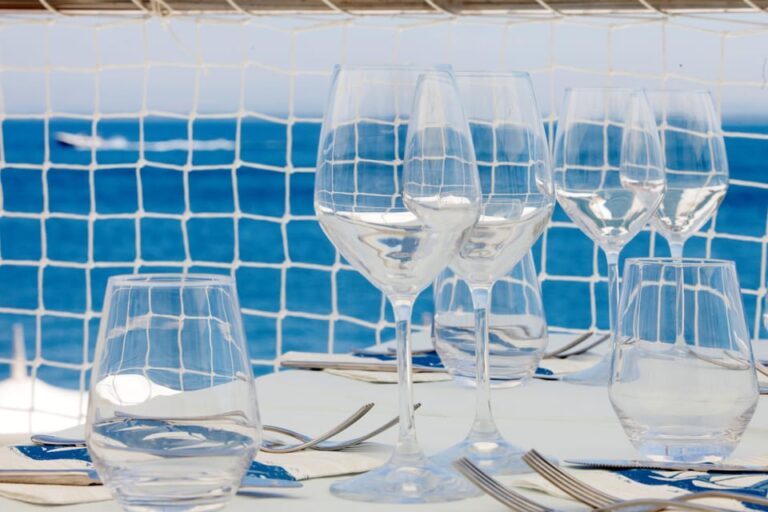
16. Wine & Waves at Argentario: wine tasting with your eyes on the water
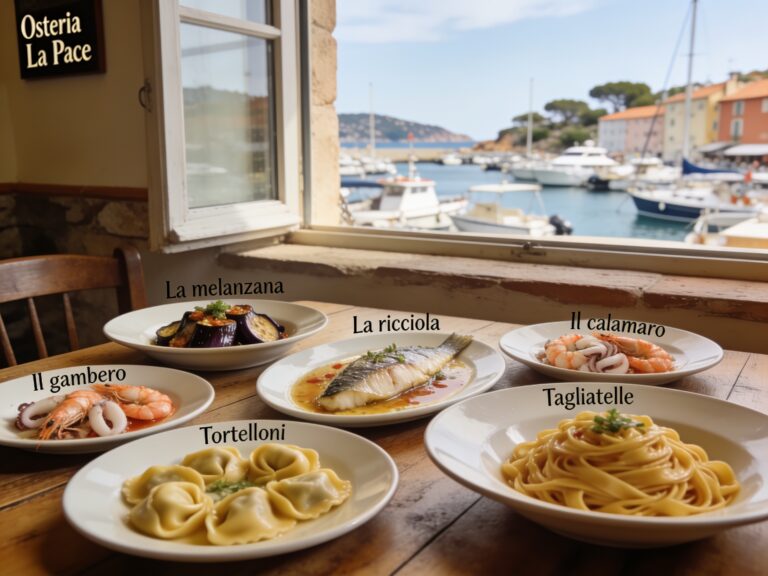
Porto Santo Stefano: tasting of a typical seafood menu

Want to go further? Tours of Tuscany in the same spirit as this article.

Guided hike: San Gimignano, Siena, Chianti, Pienza, Montepulciano

Guided hike: Florence, Chianti, San Gimignano, Volterra

Self-guided tour Florence, Pisa, Chianti and Siena in 7 days
Live map & prices
Where to stay around Porto Santo Stefano?
Our recommended addresses nearby, then today's prices for your dates.
Cars · live prices
Your rental car from Grosseto airport
No car rental agencies operate in the villages: the closest ones to Porto Santo Stefano are in Grosseto. Here are the best current deals, compared and rated.
Searching for available cars…
See all cars and choose my dates
Booking and payment through Discovercars: the link earns us a commission, without changing your price.
Around Porto Santo Stefano
