Home › FAQ › Gastronomy & wine › Cuisine

To recognize artisanal bottarga, start with the label and buy it, if possible, whole, in its pouch : appearance alone does not prove the production method. For a bottarga di muggine, look for the mention of mullet, or cefalo, and a short ingredient list — fish roe and salt. The producer's name, the place of fishing or processing, and a batch number are better clues than the mere word "artisanal", which on its own does not guarantee any particular method.
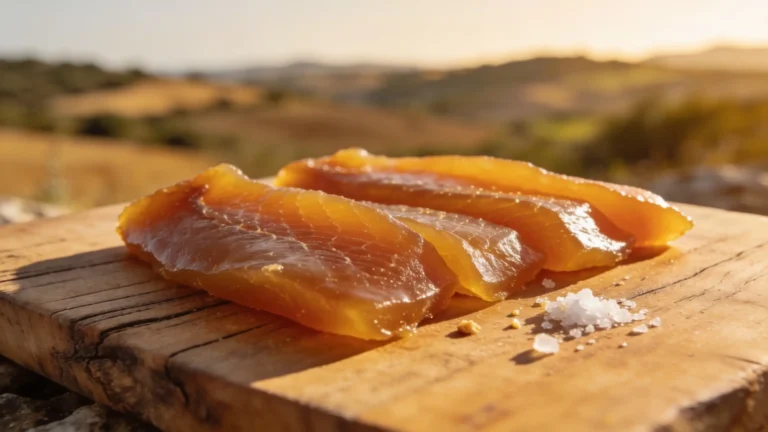
To the eye, the pouch should be intact, fairly firm and dry on the surface, with a hue ranging from amber to golden brown. When cut, the roe forms a compact flesh; a slight variation in color is normal. Above all, beware of a sour or ammonia-like smell, a damp surface, or a damaged pouch. A very uniform color or a neat presentation, however, are not enough to judge quality. Grated bottarga is harder to assess: choose a jar that clearly states the species and the manufacturer.
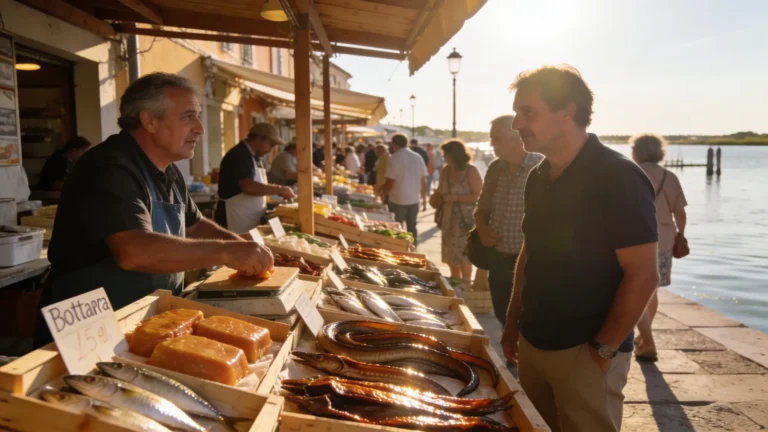
In Maremma, you can look for bottarga from Orbetello mullet and ask precisely where the fish was caught and where the pouches were processed. Bottarga produced elsewhere is not necessarily worse, but it does not come from the lagoon. Finally, the taste should be saline and marine, without aggressive bitterness: if you can, taste a thin slice before buying.
 Article
 Article
 Article
 Français Français
 Italiano
 English
 Polski
 Português do Brasil
 Nederlands
 Español
 Deutsch