Sagra / Festival
The place
This hilltop village on the Amiata deserves a detour for its medieval heritage and spectacular springs, but you'll need to look for the best food spots yourself.
👥 Who it's for: A curious traveler interested in history, nature and local produce, who enjoys strolling on foot through an authentic village off the beaten track.
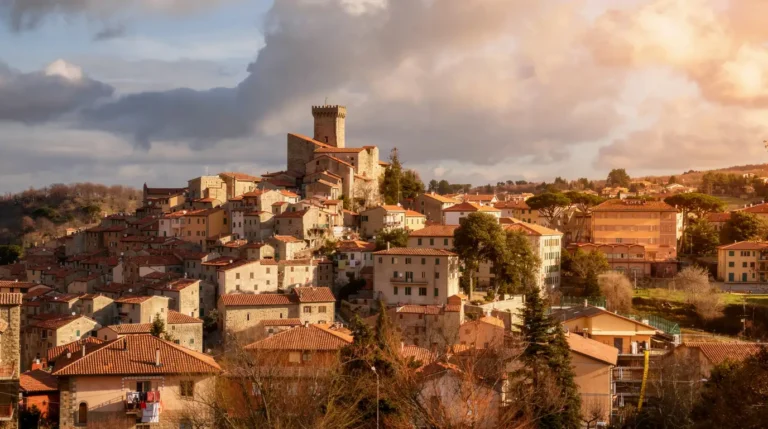
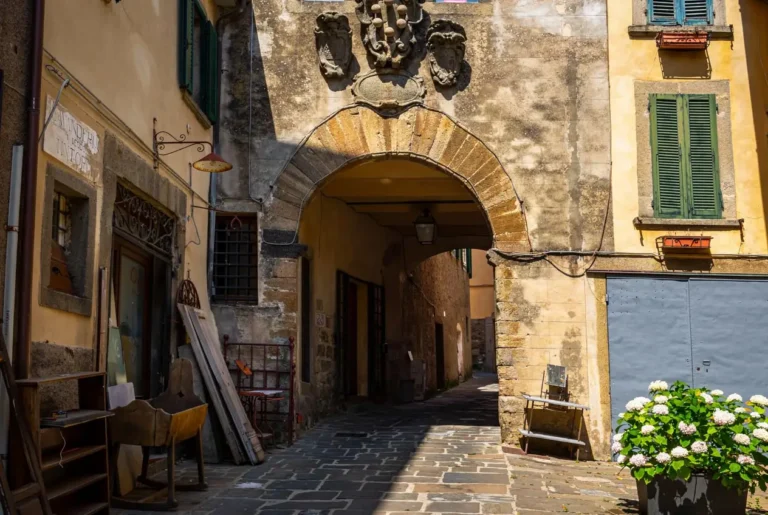
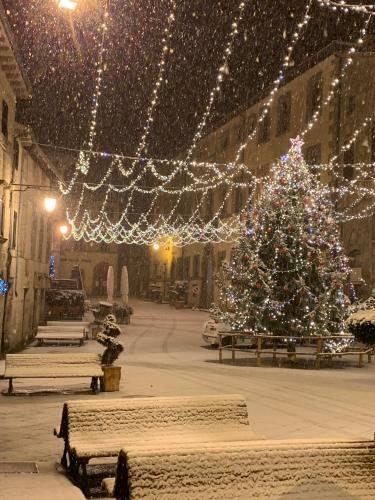
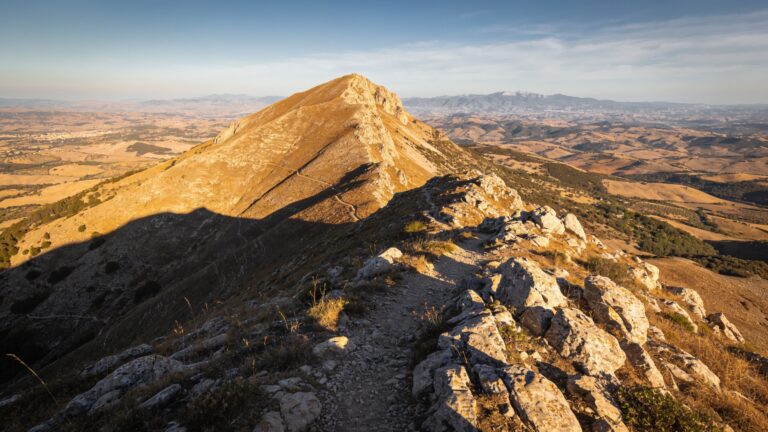
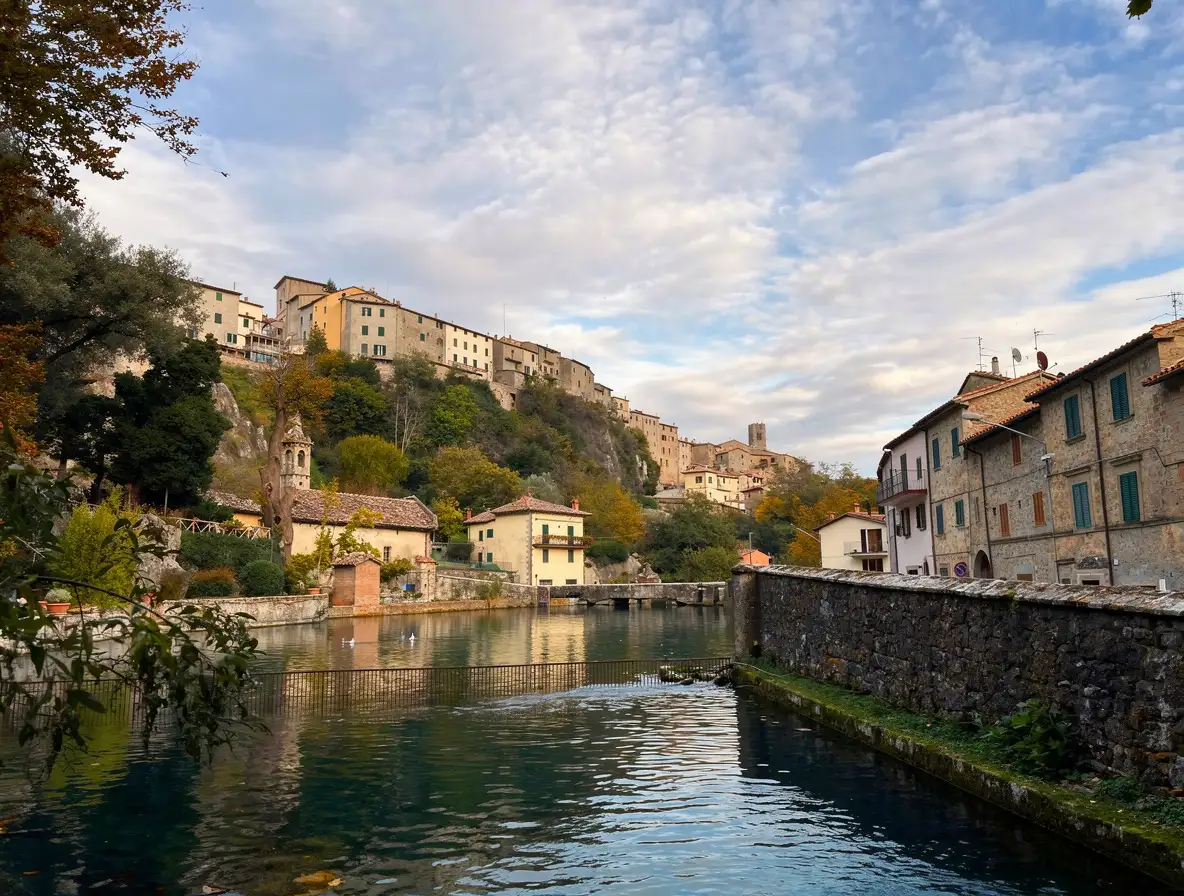
In Santa Fiora, on the southern slope of Mount Amiata, water is not just a backdrop: it is the discreet presence that accompanies your walk. You hear its murmur in the gutters, you sense it beneath the paving stones, and then you find it again in the hollow of the Peschiera. The village clings to a hill of dark trachyte, between chestnut trees and steep little streets. On grey days the stone looks almost black; after rain, it catches the light like glass.
My advice: don't try to "see everything" in an hour. Santa Fiora reveals itself on foot, going down from one district to the next, stopping in a square, pushing open the door of a church if it is open. Out of season, the calm is part of the experience: a few closed shutters, a conversation drifting out of a café, and the sound of water as a soundtrack.
The historic center is divided into three parts terzieri : Castello, the oldest part, where traces of the Aldobrandeschi remain; Borgo, reached through the Porticciola; and Montecatino, beyond the San Michele gate. Take the time to follow the via Carolina: it links the heights with the lower part of the village and lets you feel its relief, its stone thresholds and its changing atmospheres. The Borgo district was also home to the former Jewish ghetto, a reminder of a local history more complex than a simple postcard.
Santa Fiora appears in the archives as early as 890. It later became an important center of the Aldobrandeschi counts; in 1439, the marriage of Bosio Sforza to Cecilia Aldobrandeschi transferred the county to the Sforza. This succession of powers left its mark on the buildings, notably around the count's palace, today the Palazzo Sforza Cesarini and seat of the town hall. To place these sites in their context, you can also read our profile of Arcidosso, a medieval fortress at the heart of Monte Amiata, another village in the same massif.
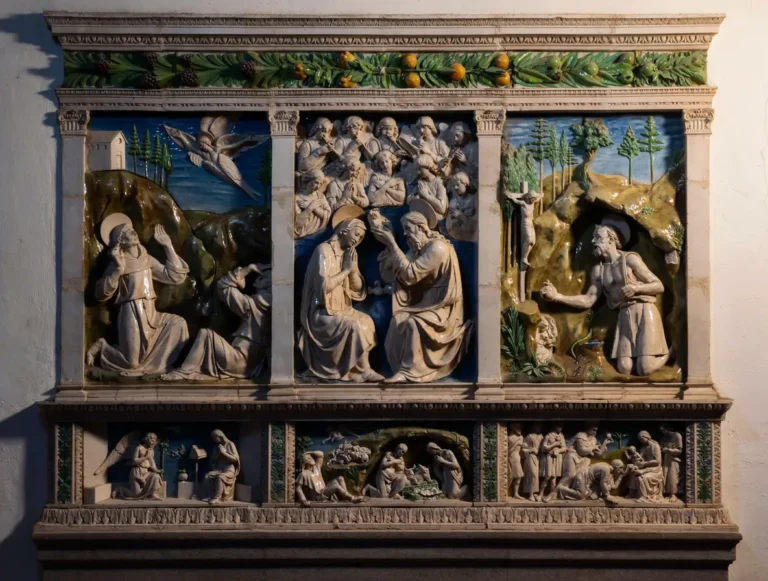
In the church of the Sante Flora e Lucilla, the glazed terracottas from the workshop of Andrea della Robbia are striking for their brilliance: deep blue, milky white, faces that seem to breathe in the half-light. The collection includes a Madonna della Cintola, a Baptism of Christ and a Last Supper. The reliquary of Saints Flora and Lucilla also tells the story of the encounter between the Aldobrandeschi and Sforza dynasties. The church is a place of worship: its visiting hours are not guaranteed, so it's best to check on site and respect services.
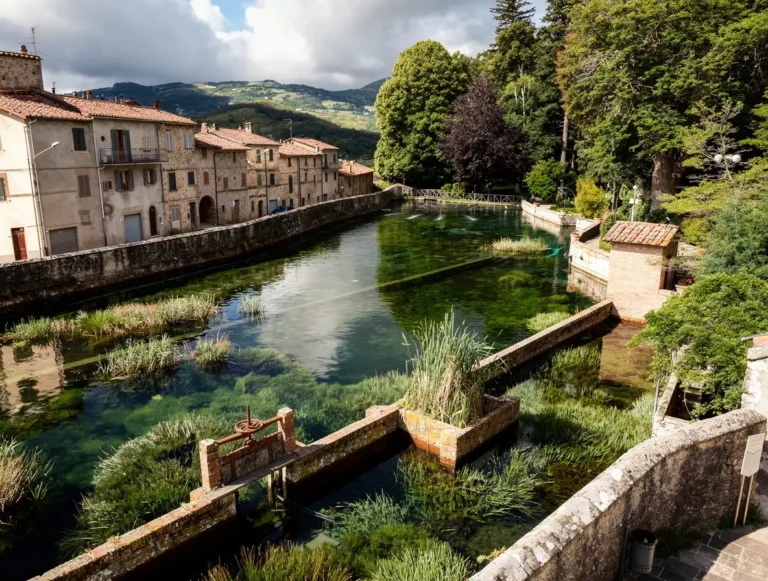
Further down, the small church of the Madonna delle Nevi offers a curious thrill: part of its glass floor lets you see the source of the Fiora and the old road that once passed there. The river is born almost under your feet. Right next to it, the Peschiera, a medieval basin first linked to trout farming, was later laid out as a garden by the Sforza, and in the 19th century took on the look of a shady park. If you need a moment of coolness, go down to the water and let the village recede for a while.
Another visit to understand mountain life: the Museo delle Miniere di Mercurio, on Piazza Garibaldi. Opened in 2003, it traces the history of the cinnabar mines and the grueling daily life of the miners, with a reconstruction of a gallery. It is not a light visit, but it sheds light on the region's industrial past and social struggles. The fee posted by the town is €2; the hours indicated by the town hall vary by month and the museum is closed on Mondays. This information dates from August 2024: call before you travel at 0564 978823.
To extend your discovery of the massif, our guide to the tables of Mount Amiata lists the addresses where you can taste the mountain products mentioned here.
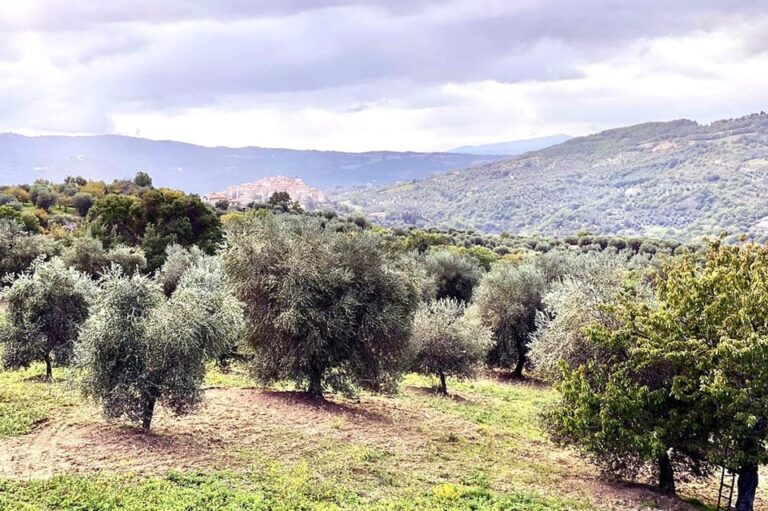
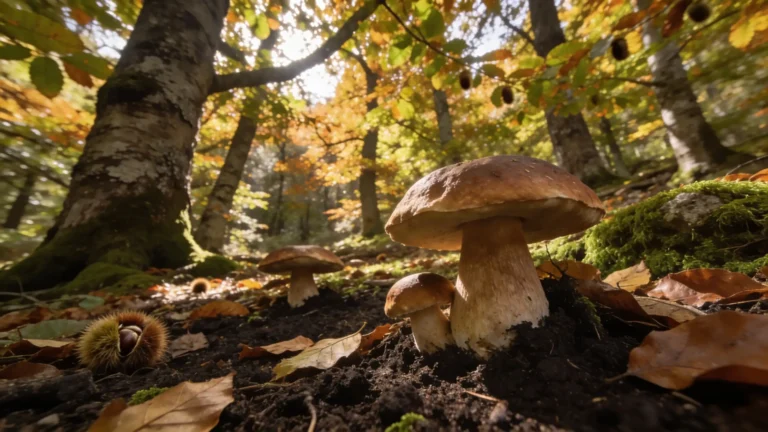
The local produce here has the scent of the seasons. In autumn, look for mushrooms and the santafiorese chestnut; summer showcases the cipolla rossa della Selva and rustic dishes such as acquacotta. In the surroundings, the Montecucco wine and Amiata flavors route links mountain products with the territory's wines, the olive oil of Seggiano and the Amiata chestnuts. The best table is not necessarily the one promising a spectacular experience: instead, ask what came into the kitchen this week.
To organize your itinerary around the massif, also see our article on Volterra in one day if you plan to head north, or the page The 7 most beautiful villages in Italy for other stops.
Evaluation criteria
Is the map not displaying? See accommodations on Stay22
Map and prices provided by Stay22: Toscane Cachée may receive a commission on bookings.
To read
 Français Français
 Italiano
 English
 Polski
 Português do Brasil
 Nederlands
 Español
 Deutsch