Home › FAQ › Culture & heritage › History

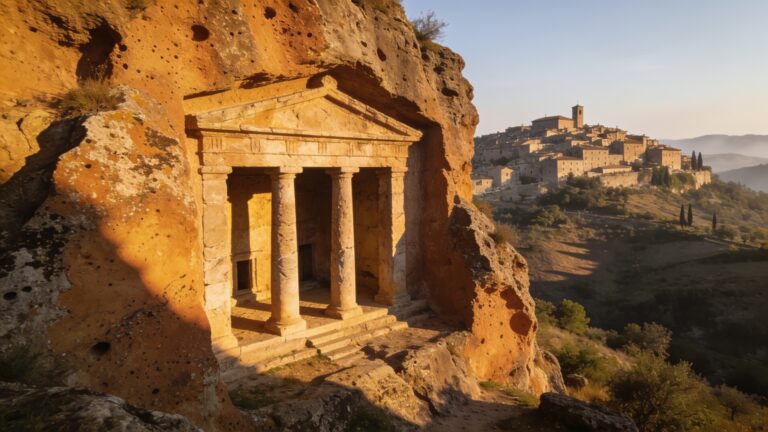
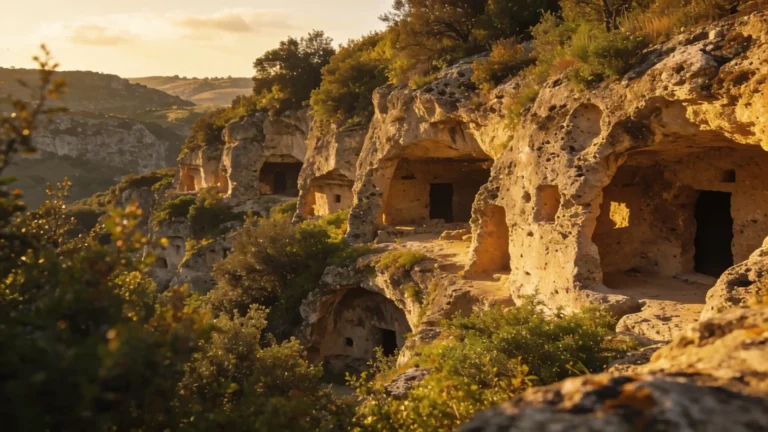
The “Etruscan triangle” of Pitigliano, Sovana and Sorano was not a state nor a known alliance: it is the name given today to a small tuff territory marked by the Etruscans, then reshaped by the Romans and the medieval lords. In Sovanaoccupied since the 7th century BCthe necropolises and the monumental tombs bear witness to an important Etruscan center. The vie cavepaths carved into the rock and sometimes linking the necropolises, are emblematic of the region; their exact function remains debated.
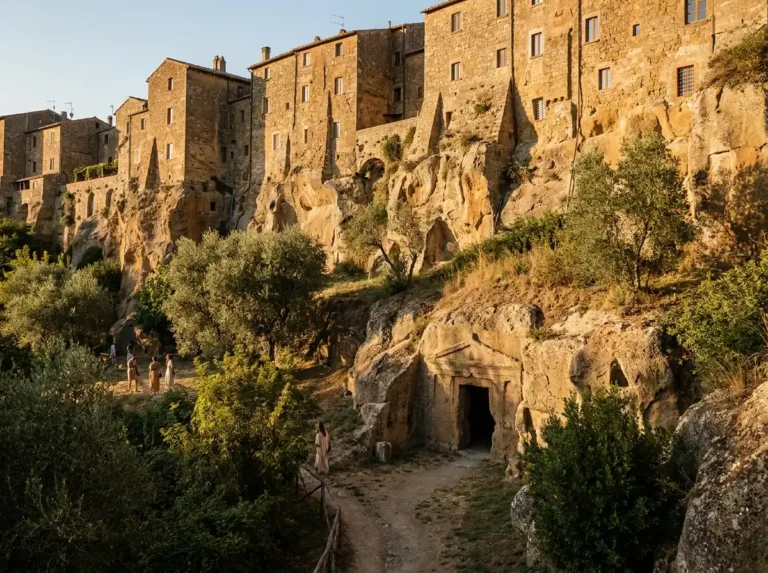
In Roman times, Sovana becomes a municipium. In the Middle Ages, power shifts to the castles and hilltop villages: the Aldobrandeschi dominate the area, then the Orsini control notably Pitigliano and Sorano. Sorano has fewer Etruscan traces than its neighbor Sovana; its current identity is mainly tied to its defensive relief and its medieval history. The three villages therefore do not tell exactly the same story, even if their tuff landscapes connect them.
To locate them, allow about 7 à 10 km between each village, generally 10 to 15 minutes by car, depending on the route. The archaeological sites and the paths are visited separately; plan several hours if you want to walk in the vie cave, because it is not just a stop between two villages.
Is the map not displaying? See accommodations on Stay22 →
Map and prices provided by Stay22: Toscane Cachée may receive a commission on bookings.
 ★ 8.7La Dimora del Borgo - Panoramic ViewPitigliano · < 1 km
 ★ 8.7Poggio del CastagnoPitigliano · < 1 km
 ★ 9.0Pian De' SomariPitigliano · 1.1 km
 ★ 9.6Agriturismo Bio Casale degli OrtiPitigliano · 1.1 km
 Casa CaraccioloPitigliano · < 1 kmfrom 239 €
 ★ 8.5Terrazza sul TufoPitigliano · < 1 kmfrom 236 €
 ★ 10.0L'Altro Sapore RoomsPitigliano · < 1 kmfrom 146 €
 ★ 8.6Casa CaraccioloPitigliano · < 1 kmfrom 229 €
 ★ 10.0Unique Ciliegiolo tasting and organic cellar visitPitigliano · < 1 km
 Historical exploration of Pitigliano, the Little JerusalemPitigliano · < 1 km
 ★ 10.0Etruscan hike and Bianco di Pitigliano tastingPitigliano · < 1 km
 ★ 9.8Pitigliano, the Little Jerusalem, fascinating and historicPitigliano · < 1 km
 Article
 Article
 Article
 Place sheet
 Place sheet
 Place sheet
 Français Français
 Italiano
 English
 Polski
 Português do Brasil
 Nederlands
 Español
 Deutsch