Home › FAQ › Culture & heritage › History

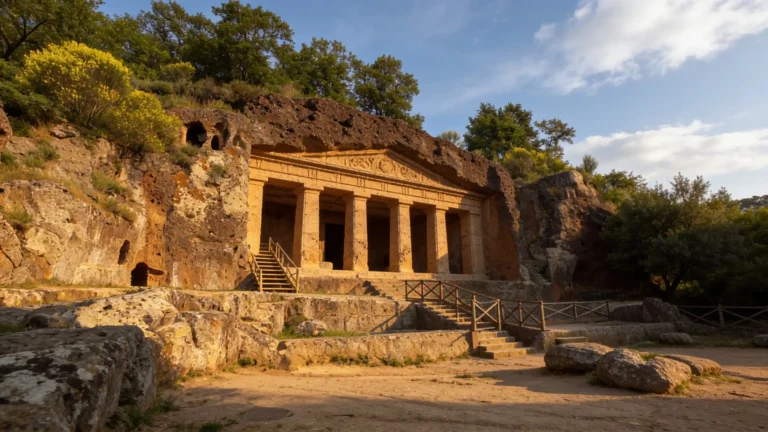
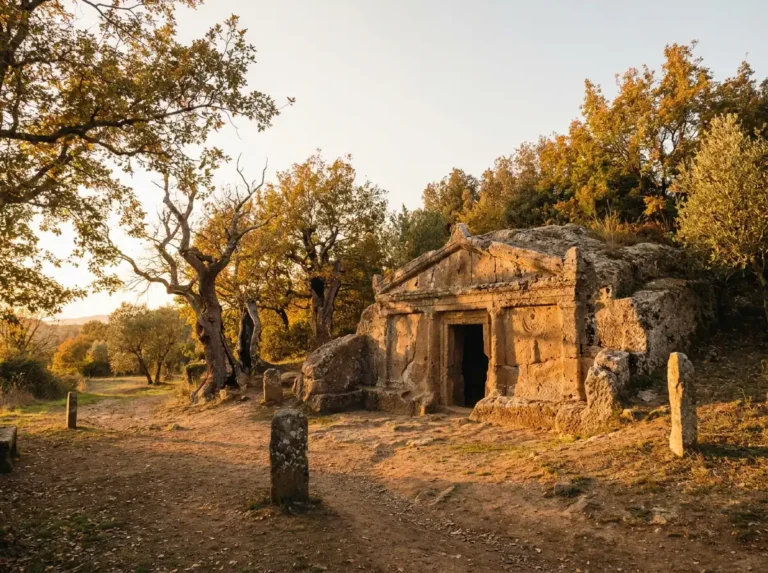
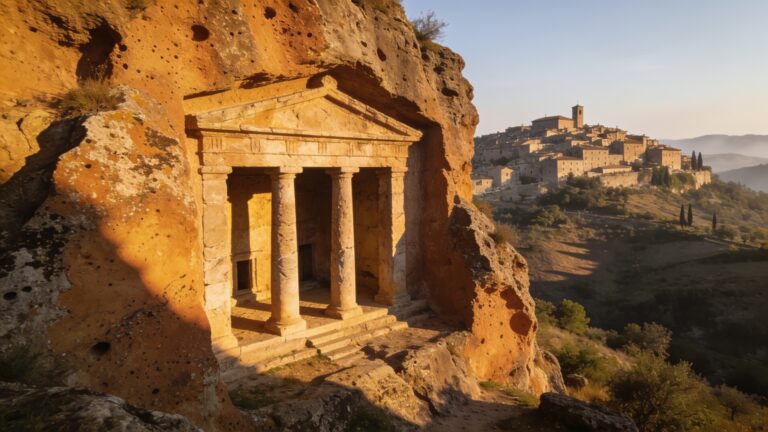
The Tomb of Ildebranda is a monumental Etruscan tomb, probably carved between the 3rd and 2nd century BCE in the necropolis of Poggio Felceto, near Sovana. Carved directly into the tuff, it imitates a temple: its high podium and the traces of a columned façade, now very eroded, can still be seen. A long descending corridor leads to the burial chamber, also carved into the rock. The tomb was unearthed during excavations led by Gino Rosi in 1924, then studied by the archaeologist Ranuccio Bianchi Bandinelli from the late 1920s onwards.
Its name is confusing: it pays tribute to Ildebrando of Sovana, who became pope under the name of Gregory VII in the 11th century. However, there is no connection between this pope and the tomb, which predates him by more than a millennium; the identity of the person buried remains unknown. The chamber was found empty, probably after an ancient looting. What is most striking is the choice of carving the appearance of a building into the tuff rather than building a temple with imported materials: even damaged, the tomb gives an idea of the important rank the person laid to rest there must have had.
 Article
 Article
 Article
 Français Français
 Italiano
 English
 Polski
 Português do Brasil
 Nederlands
 Español
 Deutsch