

Have you ever felt the absolute silence that reigns between two tufa walls twenty meters high? That's what awaits you at the Cavone, one of the most spectacular passages carved by the Etruscans into the volcanic rock of Maremma.
To enter the Sovana necropolis is to walk in the footsteps of a vanished civilization through dizzying paths and monumental tombs. I guide you through this stone labyrinth to discover the secrets of the Ildebranda and organize your visit away from the crowds.
The Sovana necropolis in the heart of the Città del Tufo park
The necropolis of Sovana, cornerstone of the Parco della Città del Tufo, is home to monumental tombs such as the Ildebranda. This major site is explored via spectacular Vie Cave carved into the volcanic rock.
Leaving the village, you quickly feel the ground change. It is this rock that defines everything here.

Necropolis of Sovana
Sovana combines a 2,500-year-old Etruscan necropolis, Vie Cave carved into the tuff and a borgo medieval village perched with 399 inhabitants

Tosco If you visit the necropolis in the height of summer, run and take shelter in the Cavone: these twenty-metre tuff walls retain an incredible coolness, but keep your eyes open because the wet rock can quickly become slippery under your sneakers!
An Etruscan heritage carved into volcanic rock
Tufa is a porous and malleable volcanic rock. Its porosity allows for direct sculpting into the cliff. The walls absorb moisture and time.
The builders used subtractive carving. They removed material from the rock face without laying stones. Everything is monolithic.
Yet, the massive funerary architecture proves a unique technical mastery. It is a work of raw precision.
The evolution of the city from antiquity to the Middle Ages
Etruscan power gave way to the Romans and then the Aldobrandeschi. The medieval influence then transformed the local landscape.
Traces of late occupation can be seen everywhere. Some tombs served as shelters or stables over the centuries.
So, to understand this link, visit Sovana: The Secret Etruscan Village of Tuscany. History is still alive there.

Sovana
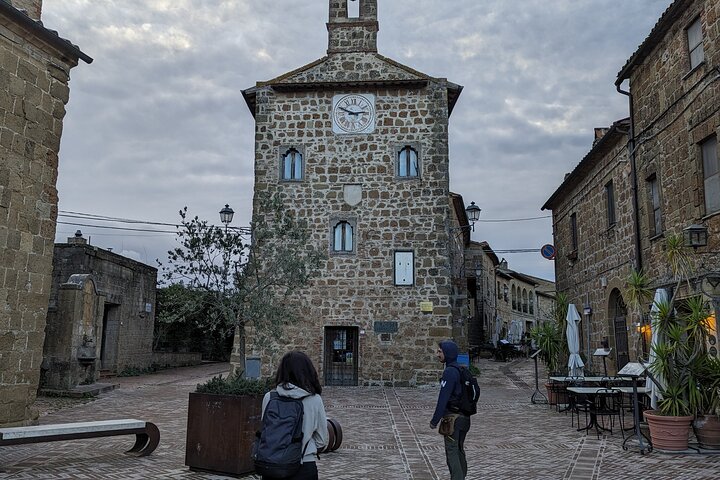
Sovana, a small medieval tuff town, is home to an Etruscan necropolis as well as the vie cave of Cavone and San Sebastiano, linked to the Città del Tufo park

Tosco Many go straight to Pitigliano, but Sovana hides the most spectacular and calm *Vie Cave* in the whole region: walking at the bottom of these millennial tuff faults is a real mystical slap!
3 monumental tombs not to be missed under the oaks
Having understood the geological setting, it is time to approach the sculpted masterpieces that make this wooded valley world-famous.
The majesty of the Ildebranda Tomb and its stone columns
The Ildebranda Tomb is the undisputed jewel of Sovana. It is an entire temple carved directly into the tuff. The column bases and side stairways are still visible. It is a breathtaking sight amid the trees.

Tombs of Ildebranda
In Sovana, the Tomb of Ildebranda is a temple-tomb carved into the tuff, integrated into the rock-cut necropolis and the Vie Cave of the Città del Tufo park
Tosco Don't just admire this fake Greek temple carved into the rock: head straight to the neighboring *Via Cava di San Sebastiano*, it's the perfect combo to feel all the magic of the tuff!
The Hellenistic influence on the capitals is obvious. Despite erosion, the plant motifs recall Greek art. This cultural fusion shows the wealth of the local aristocracy of the time.
You should check the list of the 5 must-see Etruscan archaeological sites in Maremma. This helps to situate the importance of this unique tomb. Its structure dominates the entire surrounding valley.
The reliefs of the Tomb of the Siren and the Grotta Pola
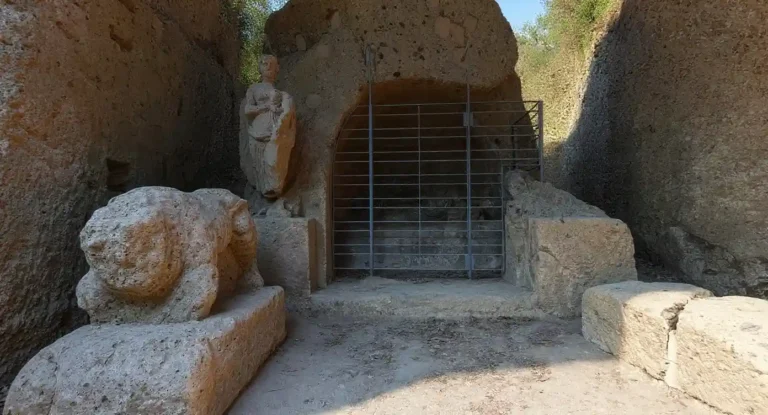
The Tomb of the Siren surprises with its sculpted pediment. One can make out a marine deity protecting the deceased. It is a rare example of open-air figurative art in the region.
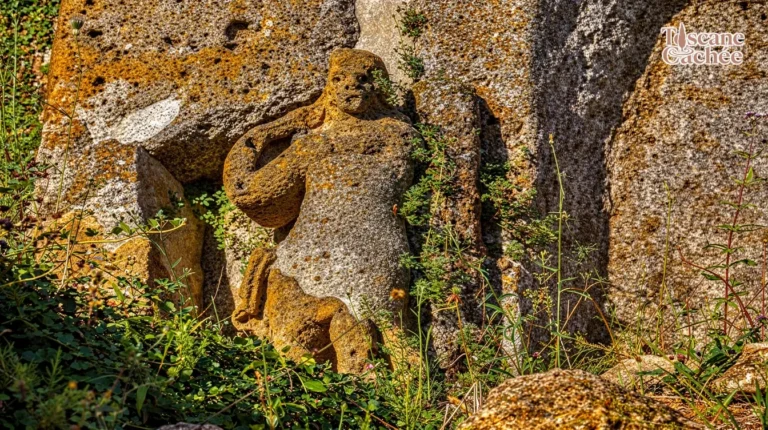
Tomba della Sirena
The Tomba della Sirena is an aedicula Etruscan tomb whose figured pediment is the only preserved one comparable to that of the Demoni alati, in the rock-cut necropolis of Sovana
Tosco Mythical siren or sea monster? Take a close look at the details of the pediment before moving on to the spectacular *Tomba Ildebranda* right next door: it's the perfect combo to grasp all of Sovana's rock-cut genius!
The Grotta Pola impresses with its dimensions. Its size suggests a high-ranking family burial. The walls retain traces of ancient polychromy. Moreover, research on the colors confirms the use of vivid pigments.
The current state of preservation remains precarious but moving. . Moss and lichen add a romantic patina to the facades. The contrast between the worked stone and the forest is total.
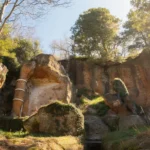
Walking through the Vie Cave, those vertiginous tuff corridors
Beyond the burials, the site hides carved arteries that seem to lead to another world, the famous Etruscan roads.
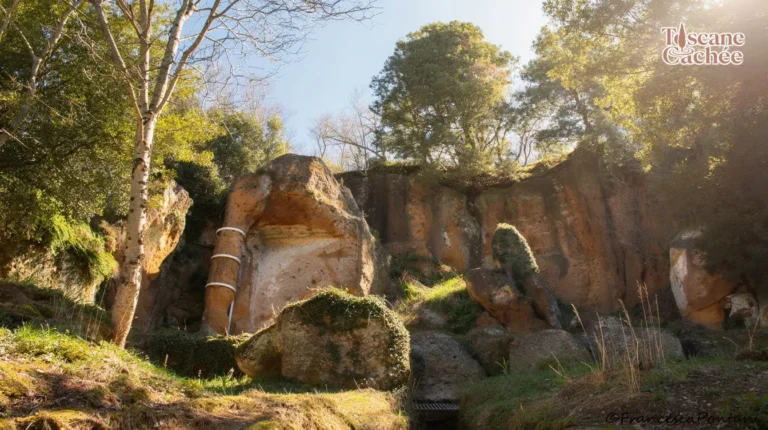
Entering the Cavone is immediately striking. The tuff walls rise abruptly on each side of the narrow path. You feel tiny in this trench of raw stone.
The silence there is profound, only disturbed by the cry of birds. The light filters through with difficulty. Vegetation hangs from the tops like long green, damp curtains.
To understand the technicality of these paths, check out this guide on the Tuscan via cava: pro guide to the Etruscan roads. These passages bear witness to a unique craftsmanship.
Theories about their exact function still diverge. Were they sacred ways or mere logistical shortcuts? The question still divides archaeologists today.
Yet the drainage system is very ingenious. Carved channels evacuated rainwater to prevent erosion. It is proof of a rational use of space.
- Communication route between villages
- Ritual path to the necropolises
- Military defense system
- Channeling of runoff water
How to organize your visit independently without the crowds?
To fully experience this mystical experience, a few logistics tips help avoid the inconveniences of classic tourism.
Choosing the right season and the ideal time for silence
Favor spring for wild blooming. Autumn also offers magnificent light on the golden stone. Avoid summer, as heat stagnates in the Vie Cave.
Arriving right at opening of the gates. You will have the site to yourself for an hour. It is the best moment to feel the soul of the place.
Equipment and duration: what to plan for the trails
Wear shoes with good grip. Tuff can be slippery when wet. Plan for’water, there is no supply point.
Allow at least two hours of walking. Do not rush in the narrow passages. Take the time to’observe the details of the walls.
- Hiking shoes
- Water bottle
- Mosquito repellent (wooded area)
- Headlamp for exploring the dark nooks
- Choose spring or autumn for the weather.
- Arrive right at opening for calm.
- Equip yourself with hiking shoes with good grip.
- Plan for somewater and mosquito repellent.
- Allow at least 2 hours for the tour.
Our addresses · Sovana
Our favorite addresses around Sovana
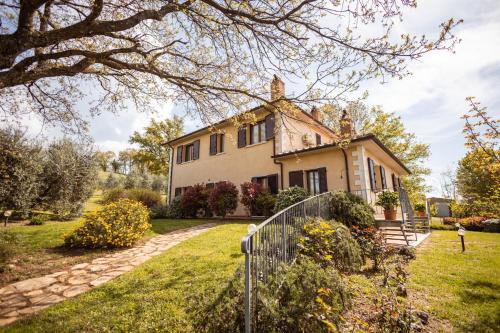
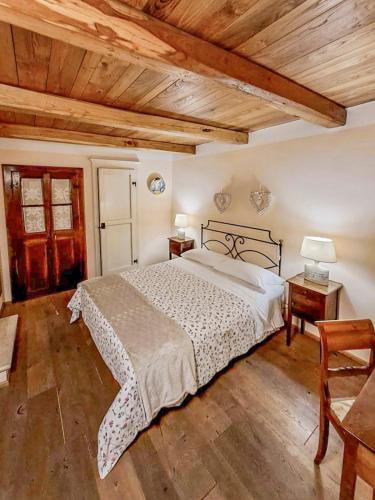
The best agriturismos in the area to extend the experience
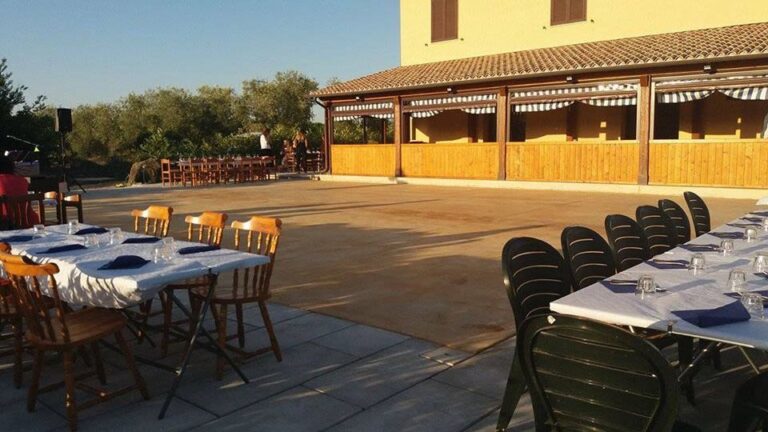
After such a historical immersion, nothing beats the comfort of a Tuscan farmhouse to debrief your discoveries.
A selection of authentic accommodations from the local registry
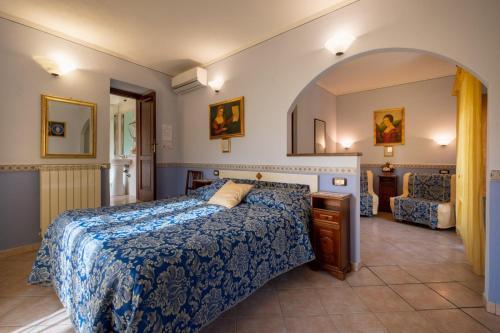
Check the Hidden Tuscany registry to find a reliable address. Favor establishments close to Sovana or Sorano. The welcome there is often family-oriented and warm.
Choose a structure that respects the local stone architecture.
| Establishment | Location | Strong point | Atmosphere |
|---|---|---|---|
| San Giacomo | Sovana | Close to the necropolis | Rustique |
| Terra Nera | Sovana | Panoramic view | Authentic |
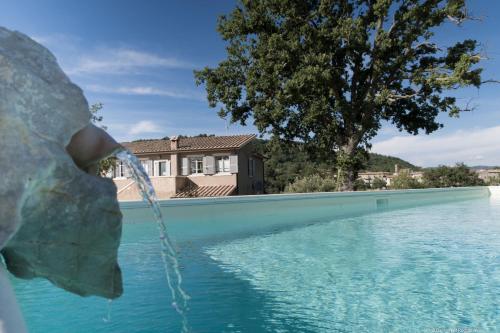
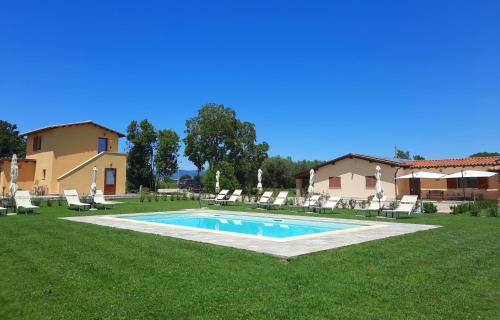
| Pian dei Frati | Sorano | Pool and tranquility | Family-friendly |
Why favor the south of the province of Grosseto
Southern Maremma remains wild and preserved. This is where the heart of the Etruscan civilization beats. Staying on site makes it easy to explore Pitigliano and the surrounding area.
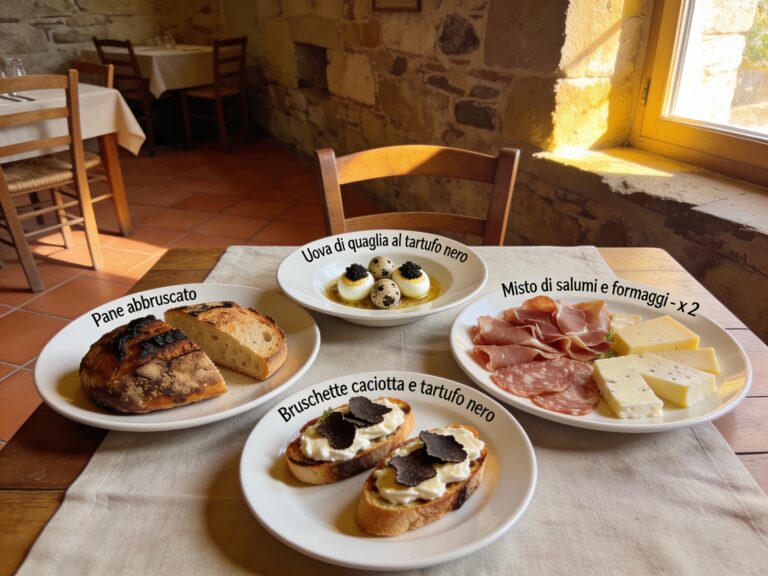
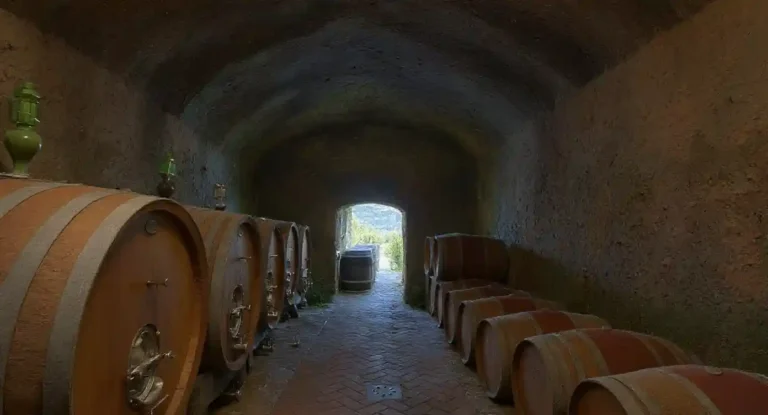
Enjoy the local gastronomy at the farm table. Taste the Bianco di Pitigliano wine and the new olive oil. It's a complete sensory journey.


What nobody tells you about accessing the site
Finally, here are the little practical details that make the difference between a successful visit and a needless hassle.
The main parking lot is often full in the middle of the day. Park a little further along the San Martino road. The access trail is poorly marked at the beginning. Follow the park's wooden signs carefully.
Mobile network is almost non-existent in the Vie Cave. Download your maps or guides before entering. It's a forced but saving disconnection for the atmosphere.
Beware of closing times that change depending on the season. In winter, the site closes very early due to darkness in the ravines. Plan to leave before dusk. Visibility drops quickly between the walls.
You've got it: exploring the Sovana necropolis takes time and good shoes to appreciate the silence of the Vie Cave. Between the tuff walls and the monumental tombs, this raw immersion in Etruscan history remains a striking experience. Are you ready to get lost in these stone corridors?
To experience an authentic and peaceful visit to the Sovana necropolis and its fascinating Vie Cave, I strongly recommend choosing spring or autumn. During these seasons, nature is at its best: in spring, the vegetation comes back to life and wild flowers brighten up the landscape, while in autumn, the foliage takes on golden and orange hues, offering magnificent light on the tuff stone. Temperatures are mild and pleasant for walking, which is essential as the trails can be demanding. Summer should absolutely be avoided because the heat can be stifling, especially in the narrow, enclosed passages of the Vie Cave where air barely circulates. Winter, on the other hand, makes the trails slippery and muddy due to frequent rains, and darkness falls very quickly in the ravines, considerably reducing visiting time.
To ensure maximum tranquility and have the site almost to yourself, the ideal is to arrive right at opening time. Opening hours vary by season, but generally, the site opens its doors around 10:00 am. By arriving early, you will have at least an hour to soak up the mystical atmosphere of the place before the first groups arrive. It is the perfect moment to feel the deep silence of the Cavone and admire the majestic Tomba Ildebranda undisturbed. Keep in mind that closing times change with the season; in winter, the site closes earlier, so it is crucial to plan your exit before dusk. For precise information on opening hours, I recommend checking the official website of the Musei di Maremma or the Parco Archeologico Città del Tufo before your visit.
For a successful and safe exploration of the Sovana necropolis and its impressive Vie Cave, proper equipment is essential. The first indispensable item is a good pair of hiking shoes with excellent grip. Tuff, being a porous volcanic rock, can become extremely slippery, especially after rain or in the shaded, damp areas of the Vie Cave. High-top shoes will also protect your ankles on the sometimes uneven trails. Also bring a light backpack containing a sufficiently filled water bottle, as there is absolutely no refreshment point on the site. The exploration can last at least two hours, and the physical effort, even moderate, requires good hydration.
Next, since you will be moving through a wooded and humid area, mosquito repellent is strongly recommended, especially in spring and summer. A headlamp can be very useful for exploring the dark corners of the tombs or some of the more enclosed passages of the Vie Cave, even if daylight is sufficient for most of the route. Finally, remember that the mobile network is almost non-existent in the Vie Cave. I therefore advise you to download your maps or guides in advance on your phone or bring a paper map. This forced disconnection actually contributes to the mystical atmosphere of the place. Keep your entrance ticket safe, as it is often combined with other sites of the Parco Archeologico Città del Tufo, such as the rock-cut settlements of Sorano or Vitozza, allowing you to extend your immersion in the Etruscan history of the Maremma.
The Sovana necropolis is a true open-air museum of Etruscan funerary engineering, and three monumental tombs stand out particularly for their architecture and history. The most famous and most impressive is without doubt the Tomba Ildebranda. Named in honor of Pope Gregory VII, born Ildebrando of Sovana, this tomb is an architectural feat. It is carved directly into the volcanic tuff, imitating an Etruscan-Italic temple with a high podium, side staircases and remains of columns. Its Hellenistic influence is visible in the capitals and plant motifs, testifying to the wealth and refinement of the local aristocracy of the time. Its structure dominates the entire surrounding valley, offering a striking sight amid the trees and immediately immersing you in the grandeur of the Etruscan civilization.
A few steps away, you will discover the Tomb of the Siren, which stands out for its sculpted pediment. Although erosion has taken its toll, you can still make out the figure of a marine deity, probably a siren or a winged demon such as Scylla or Triton, protecting the deceased. It is a rare and moving example of open-air figurative art in the region, offering a glimpse of Etruscan beliefs related to the afterlife. Finally, the Grotta Pola impresses with its massive dimensions. Its size suggests it was intended for a high-ranking family burial. The walls of this tomb retain traces of ancient polychromy, indicating that these structures were once painted in bright colors, adding to their majesty. Although their state of preservation is fragile, these tombs, with the moss and lichen covering them, offer a striking contrast between human work and the surrounding nature, making the visit all the more moving and memorable.
The Vie Cave, these ancestral paths carved into the volcanic tuff, are one of the most fascinating features of the Sovana necropolis and the Maremma. Their construction represents a feat of ancient engineering. They were literally cut by hand into the tuff hills by the Etruscans, using the technique of « subtractive carving ». Tuff, being a porous and relatively malleable volcanic rock, allowed the builders to remove material directly from the cliff face without needing to lay stones, thus creating monolithic structures. These dizzying corridors can reach impressive heights, sometimes up to 25 meters, , with widths varying from two to four meters. The work of raw precision and the technical mastery demonstrated by the Etruscans are still visible today, despite erosion.
As for their main function, archaeological theories differ and continue to be debated. It is likely that the Vie Cave had several functions. The most obvious is that of communication routes, linking the Etruscan villages such as Sovana, Pitigliano and Sorano, thus facilitating trade and travel. However, their monumental character and their orientation towards the necropolises also suggest a ritual function, serving as sacred paths leading to burial sites. Some archaeologists believe they could also have had a military defensive function, creating passages difficult to access for potential invaders. Finally, an often underestimated aspect is their role in channeling runoff water. Grooves carved into the tuff testify to an ingenious drainage system, designed to evacuate rainwater and prevent erosion. This unique know-how, which you can explore further in the pro guide to the Etruscan roads, makes the experience of walking through these stone corridors all the more fascinating.
Access to the Sovana necropolis is relatively well organized, but a few tips can save you a lot of hassle, especially during busy periods. The main parking lot is located near the ticket office and the site entrance, on the departmental road connecting Sovana to San Martino sul Fiora. However, it is important to note that this parking lot can quickly be full in the middle of the day, especially on weekends or during long holiday weekends. To avoid wasting time looking for a spot, I recommend, if you arrive a bit later, parking a little further along the same road towards San Martino. You will often find spaces along the roadside or in small improvised parking areas. From there, a short path will take you back to the park entrance.
Once parked, be aware that the path leading to the necropolis can be poorly signposted at the beginning. It is crucial to carefully follow the park's wooden signs which will guide you to the different sections and the Vie Cave. Do not hesitate to ask for directions at the ticket office if you are unsure. An essential on-the-ground tip: the mobile network is almost non-existent once you venture into the Vie Cave. Remember to download your maps or guides on your phone before arriving, or bring a paper map. This will prevent you from feeling lost and will allow you to fully enjoy this forced disconnection. Finally, plan to arrive early enough in the morning to secure a parking spot and enjoy a quieter visit, away from the crowds.
To extend the unique experience of the Sovana necropolis and fully immerse yourself in the authenticity of the Maremma, I strongly recommend choosing an agriturismo. These restored farmhouses often offer an idyllic setting, far from the hustle and bustle, and allow you to discover the true soul of rural Tuscany. The Maremma, particularly the south of the province of Grosseto, is a still wild and unspoiled region, where the welcome is often family-oriented and warm. You will find many such establishments near Sovana or Sorano, two villages that make excellent starting points for exploring the Etruscan treasures and the surrounding natural wonders.
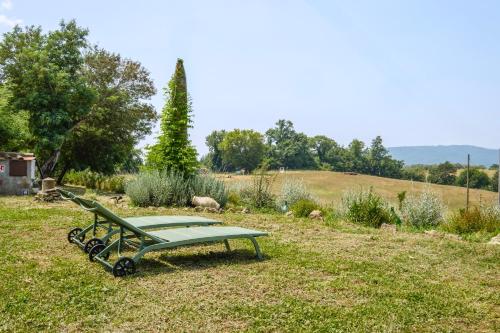
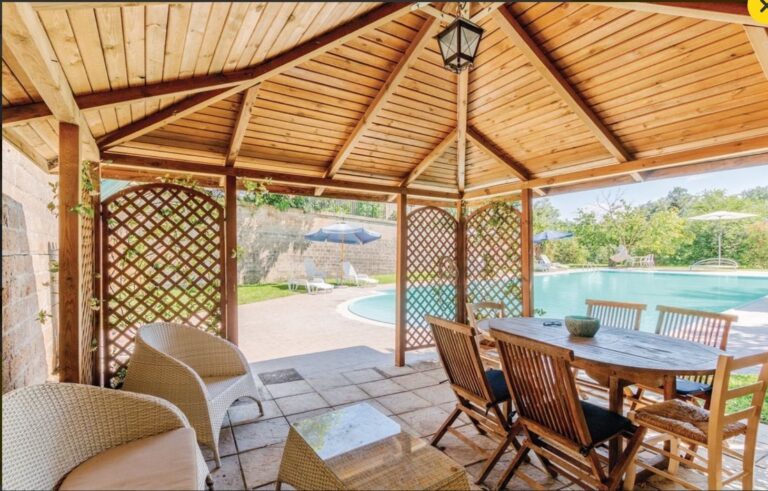
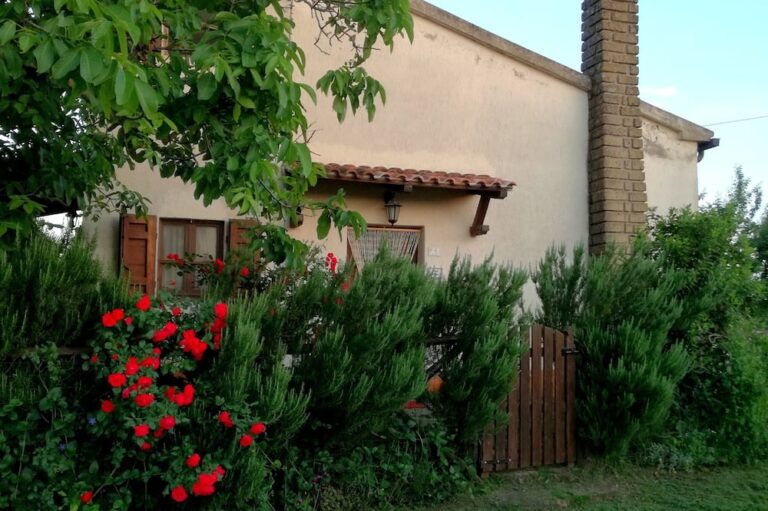
When choosing your accommodation, favor a property that respects the local stone architecture, for total immersion. Addresses such as the agriturismo San Giacomo in Sovana, appreciated for its proximity to the necropolis and its rustic atmosphere, or Terra Nera, offering panoramic views and an authentic atmosphere, are very good choices. If you are looking for a bit more comfort and activities, the agriturismo Pian dei Frati near Sorano often offers a pool and a family setting, ideal for relaxing after a day of discoveries. Do not hesitate to consult the registry of Hidden Tuscany to find other reliable and authentic addresses. Staying in these places will not only allow you to easily reach must-see sites like Pitigliano, but also to savor the local gastronomy, with its regional products such as Morellino di Scansano wine, Bianco di Pitigliano, and new olive oil, thus offering a complete sensory journey.
Around this article



Is the map not displaying? See accommodations on Stay22
Map and prices provided by Stay22: Toscane Cachée may receive a commission on bookings.
You will also like

Tomb of Ildebranda in Sovana: the most beautiful Etruscan burial you have ever seen
Explore the ildebranda sovana tomb, a unique Etruscan temple carved into the tuff. Discover…

The 5 must-see Etruscan archaeological sites of Maremma
Explore the Etruscan archaeological sites in Maremma. From Roselle to Sovana, discover ramparts...

Top 5 spectacular Etruscan sunken roads in Maremma
Explore the 5 most beautiful Etruscan sunken roads in Maremma. Discover these paths of...

Visiting Sovana: medieval gem and Etruscan mysteries
Go visit Sovana, a tuff jewel in Maremma. Discover its Etruscan necropolis, its cathedral…