Gastronomy

Sorano
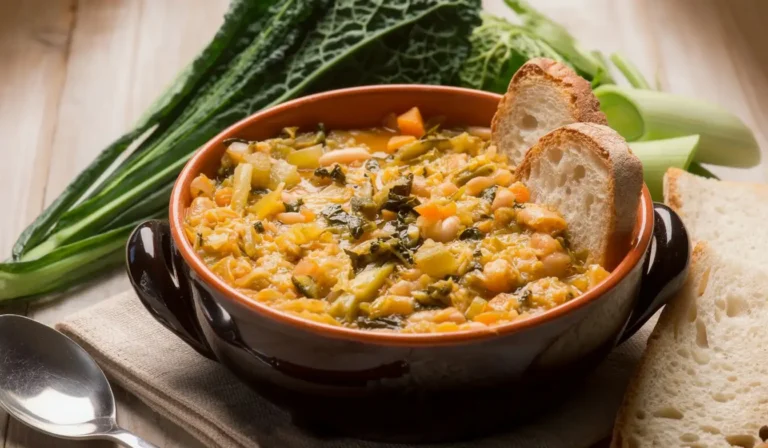
Acquacotta
- Gastronomy
- Off the map
In Sorano, acquacotta, a peasant soup from the Maremma, is the only concrete indication of this gastronomy address
All our places of type Gastronomy in hidden Tuscany, with detailed fact sheets, ratings and practical tips for your trip.
Hover over a card to locate it on the map.
In Sorano, acquacotta, a peasant soup from the Maremma, is the only concrete indication of this gastronomy address
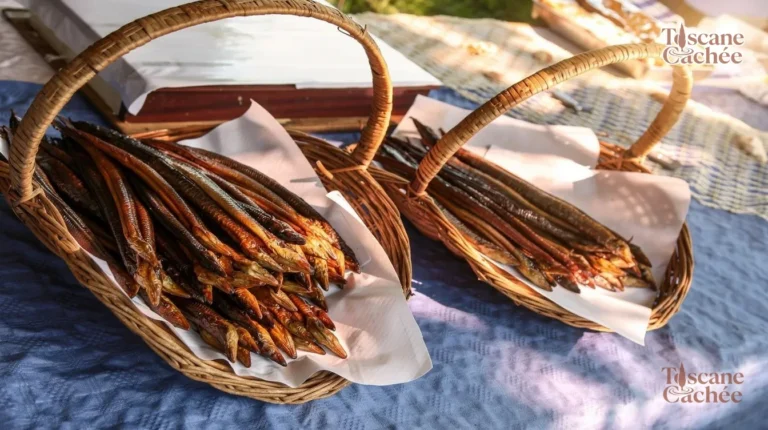
The eel of Orbetello, smoked «sfumata» or «scavecciata», relies on ancestral fishing techniques and a dedicated sagra
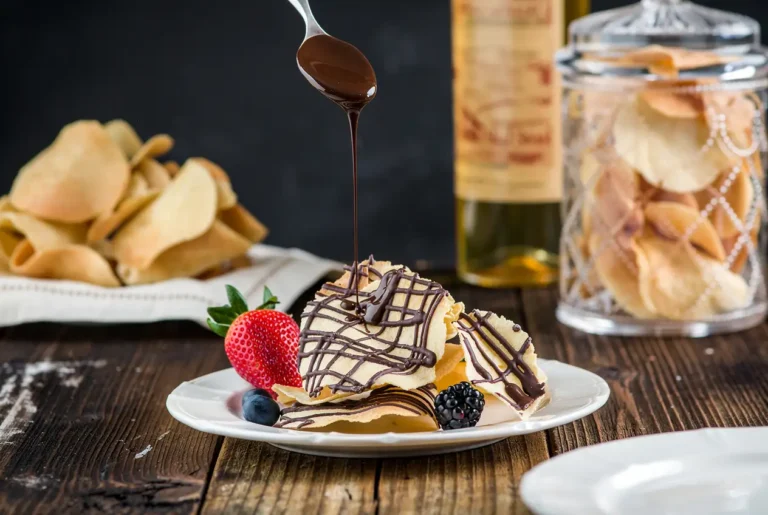
These thin crispy anise wafers are the typical sweet treat of the Montecatini region, to nibble while strolling through the alleys
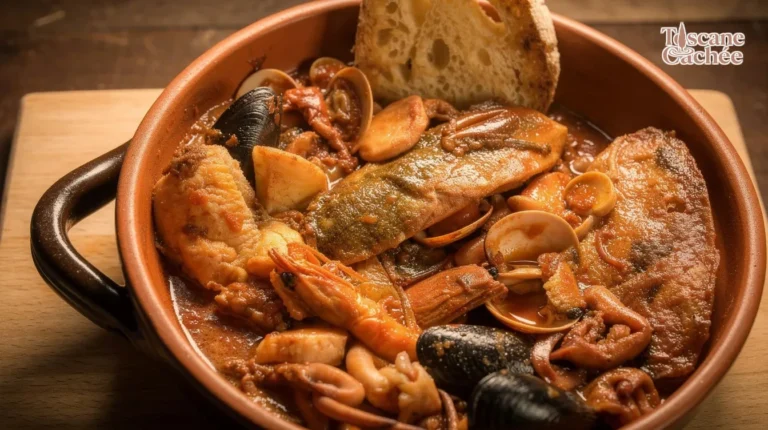
Cacciucco is a fish stew linked to the coasts of Livorno, to be enjoyed with red wine and bread rubbed with garlic
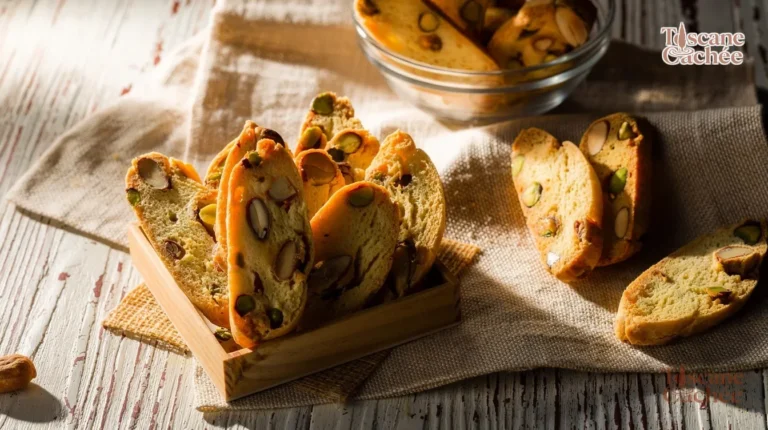
Cantucci, crunchy almond biscuits, are among the Tuscan sweet treats to be paired with a Vin Santo
Cheese cooperative of Manciano bringing together 170 producers and ageing its Toscano DOP pecorino in caves carved into the rock
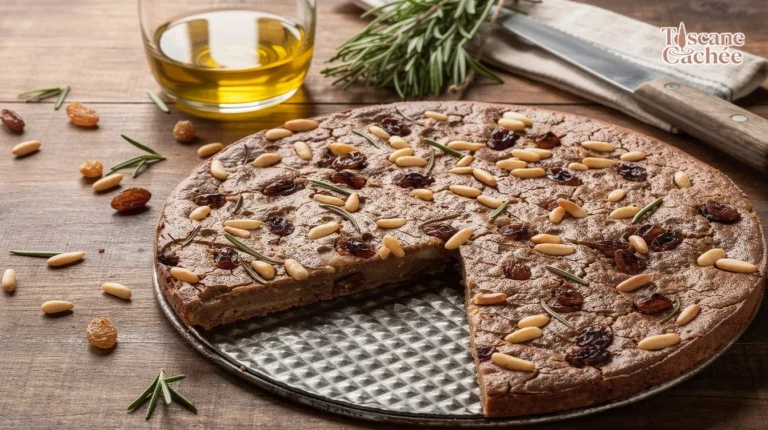
Castagnaccio, a rustic Maremma cake made with chestnut flour, olive oil and wild rosemary, is part of the local flavours
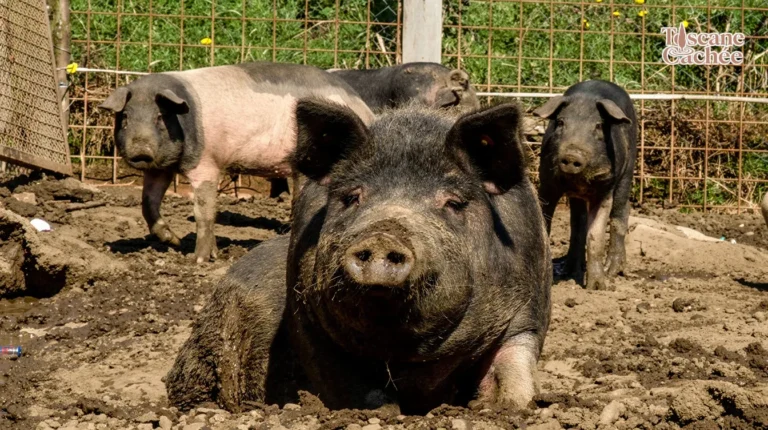
Cinta Senese charcuterie, a Tuscan pig breed cited without any producer, farm or identified point of sale
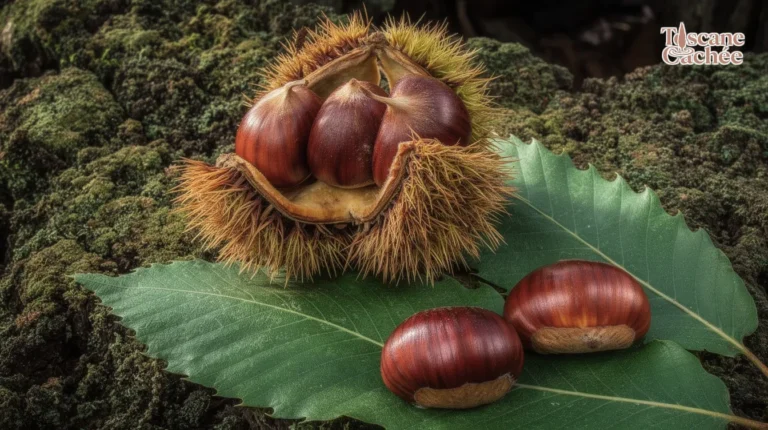
Flagship product of Mount Amiata, the IGP chestnut is harvested in autumn in chestnut groves on volcanic soil and is processed into flour
The Ciaffagnone is a peasant-style crêpe from Manciano, filled with melting local pecorino and enjoyed at the Festa delle Cantine at the end of September
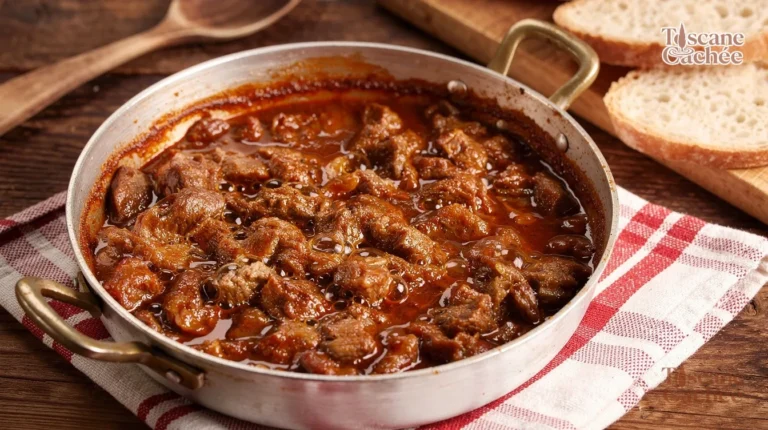
Cinghiale in umido is the traditional wild boar stew of the Maremma, said to be the ideal pairing for the red wines of the Area del Tufo
The Cinta Senese is a Tuscan pig breed with marbled meat, raised free-range, whose ham and salami are cited
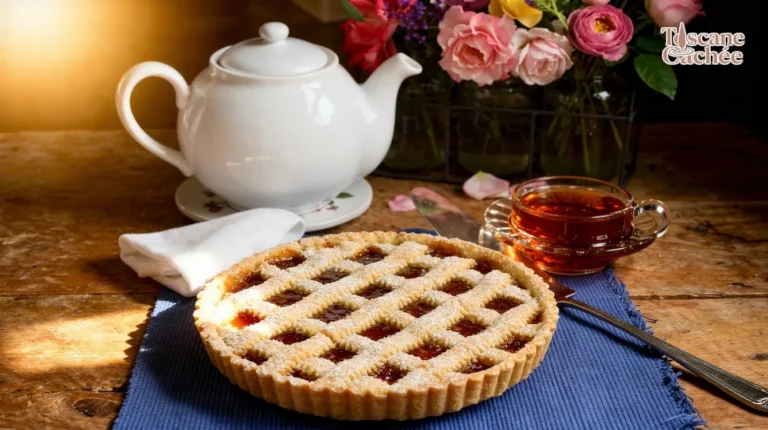
A rustic Tuscan tart to make yourself, with blackberry or apricot jam
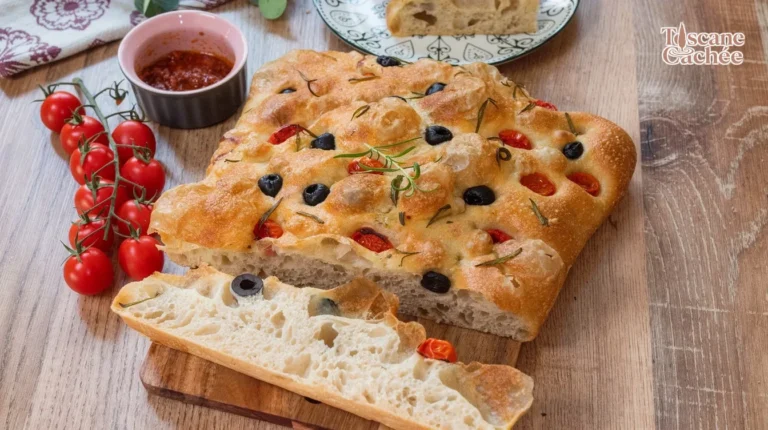
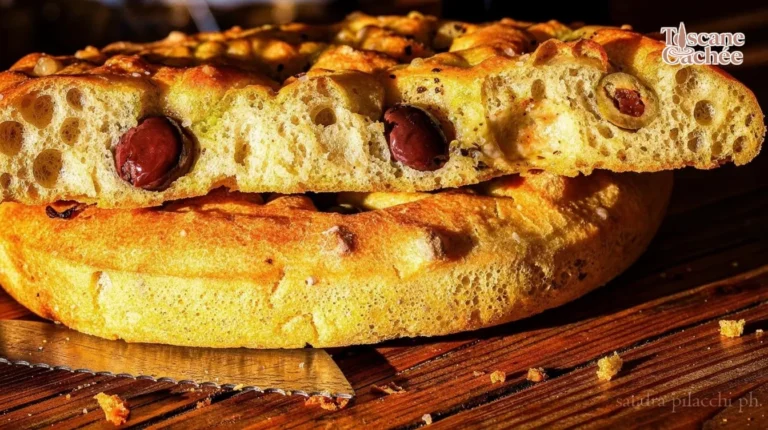
An address centred on focaccia in the Maremma, described as crispy on the outside and soft on the inside, with no producer or place named
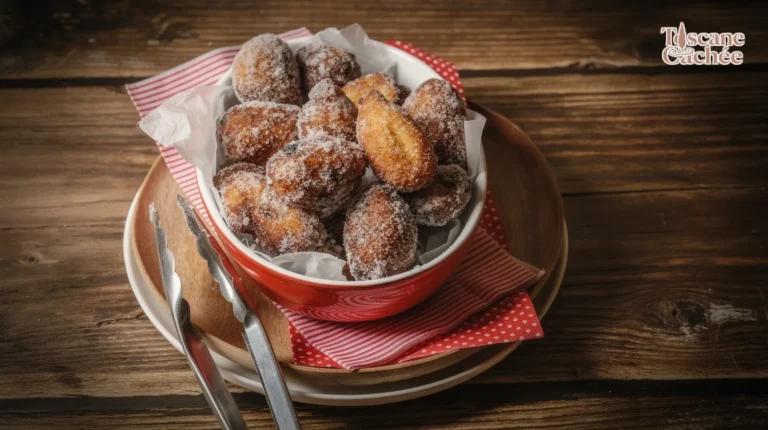
A peasant recipe for rice fritters tied to the feast of San Giuseppe, with no identified producer, place or price
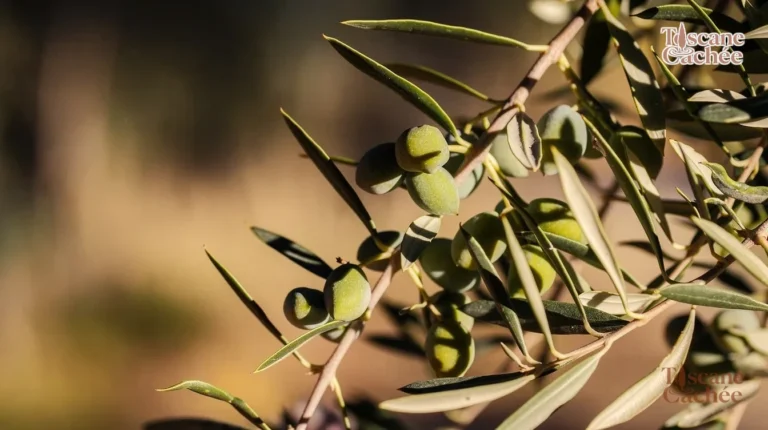
Extra virgin olive oil from the Maremma made from indigenous cultivars harvested by hand, including centuries-old olive trees
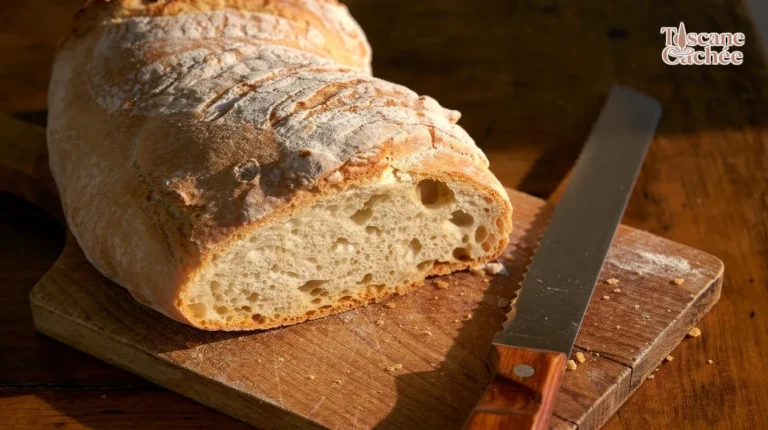
The saltless bread of Prato is a Tuscan specialty of ancestral tradition, known for balancing salty dishes
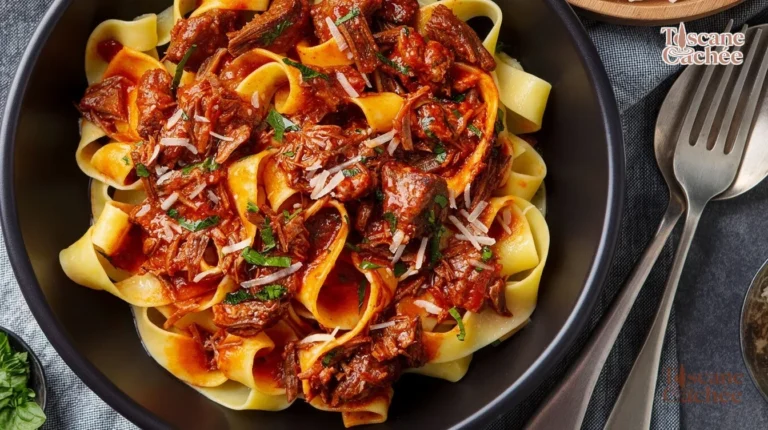
An emblematic dish of the Maremma, pappardelle with wild boar ragù is cited as a traditional local specialty
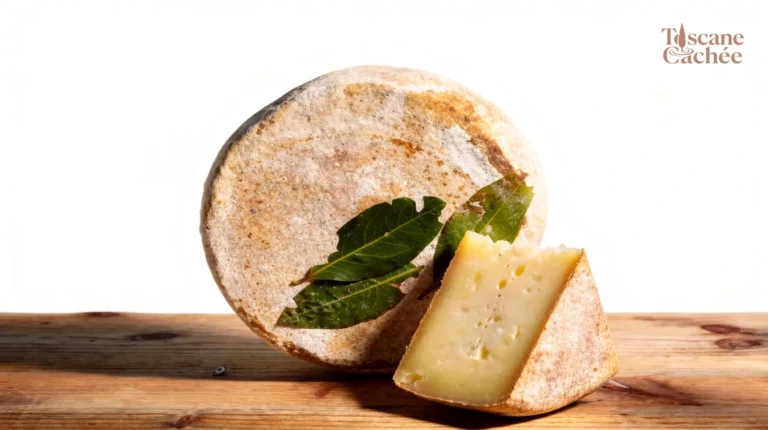
The pecorino of Manciano is a sheep's cheese from the Maremma terroir, enjoyed fresh and mild or aged and intense
Pecorino di Pienza, a sheep's cheese from the Val d'Orcia to be enjoyed from fresh to well-aged, rests on a terroir and wild herbs by name
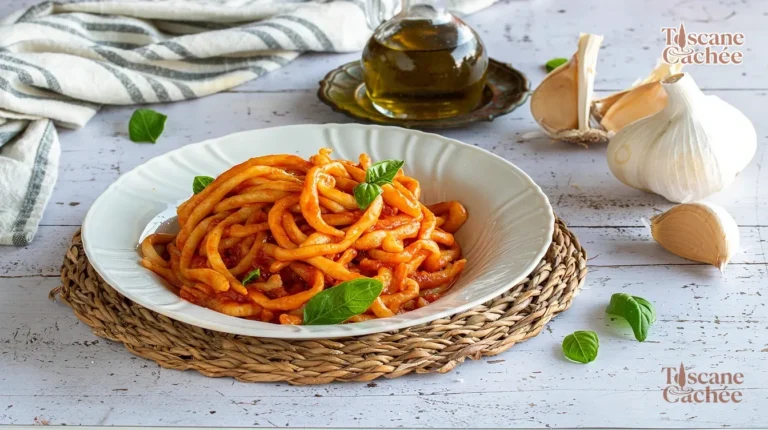
Pici with wild boar ragù embody Maremma cuisine: hand-rolled pasta and a rich sauce
A traditional Tuscan dish, pici all'aglione, named for its ingredients, sweet garlic and tomato, but with no address or identified producer
A winter dish of Tuscan peasant cuisine, polenta is served here with ragù and truffles
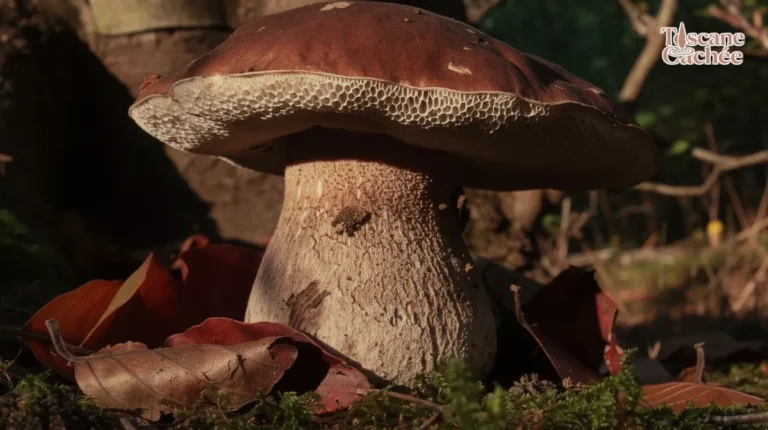
The Porcino dell'Amiata is a wild mushroom named after the Amiata forest massif, to be enjoyed pan-fried or in local dishes
Mullet bottarga from Orbetello is a flagship product of the lagoon, salted and dried roe to be tasted in slices or grated over pasta
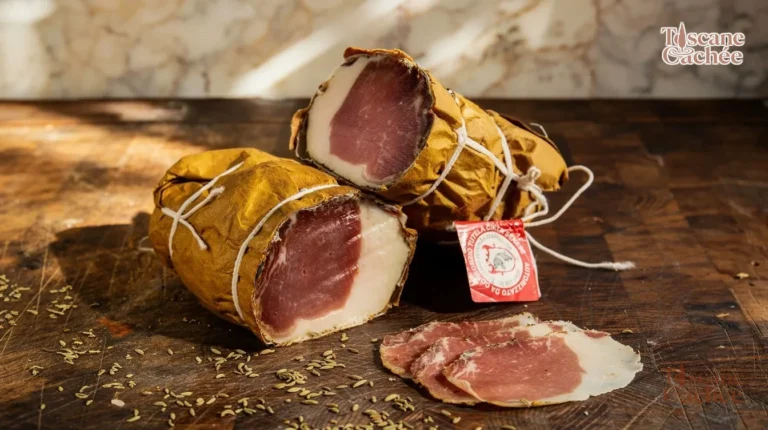
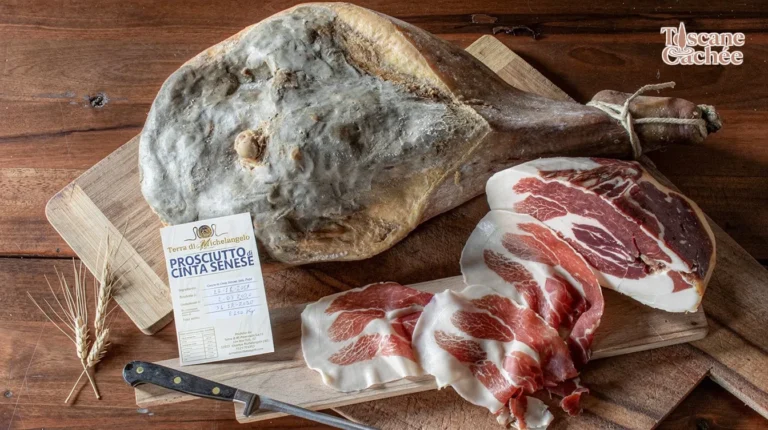
Prosciutto di Cinta Senese comes from a native Tuscan pig breed raised free-range, a typical local product
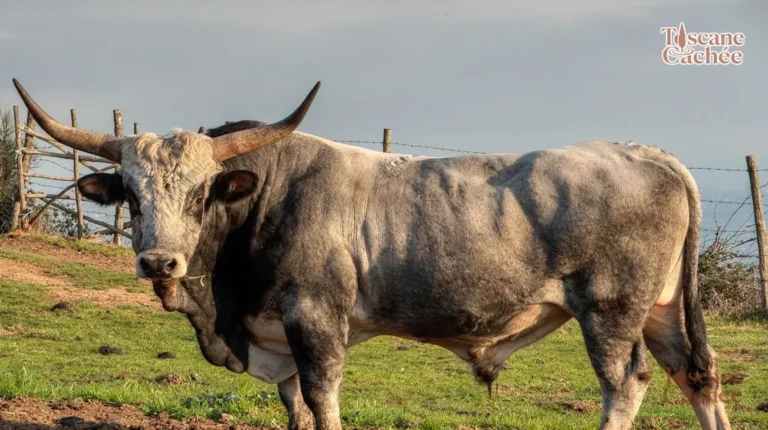
The vacca maremmana, a breed with lyre-shaped horns, embodies the extensive farming of the Maremma and a red meat with a distinctive character
Ribollita, a peasant soup of vegetables and stale bread, embodies traditional Tuscan cuisine and warms you up after a hike in the hills of the Valdinievole
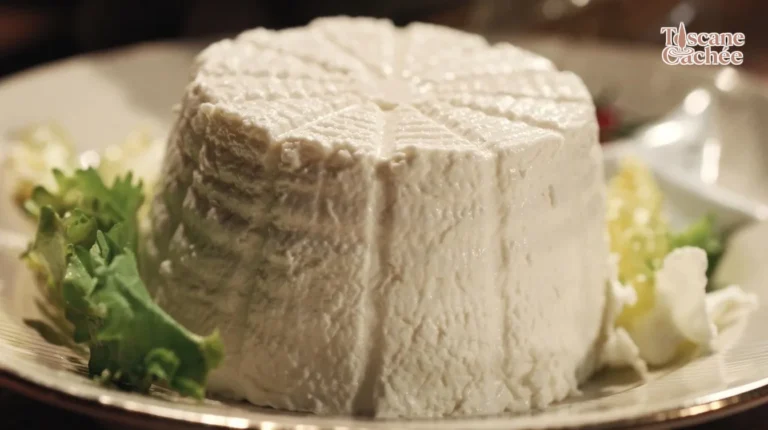
Sheep's ricotta from the Maremma is a typical dairy product of the area, described as creamy and light
An address dedicated to samphire, a plant of salty environments, on the Laguna di Ponente
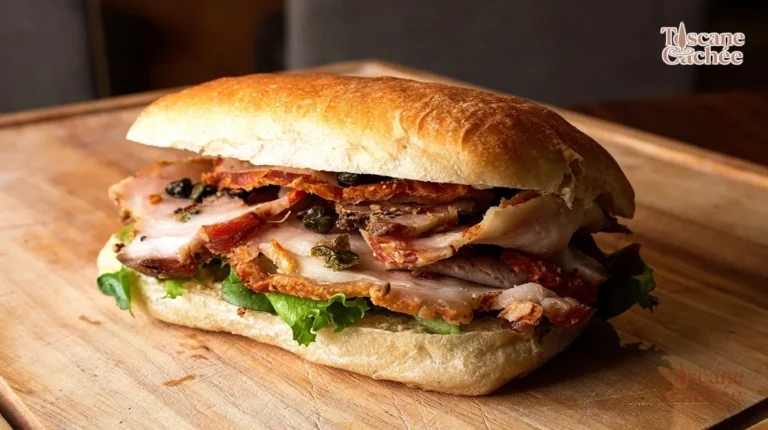
A porchetta cooked over a wood fire, crispy and tender, served in a sandwich and linked to Mont San Savino
Wild boar alla cacciatora, a slow-cooked dish from the Maremma, is presented with a Morellino di Scansano pairing
An address built around schiacciata, a Tuscan flatbread, where Agnieszka accompanies a gourmet immersion
An address for gastronomy and local products in Pescina, in the Maremma, whose exact nature remains to be confirmed
The Sfratto del Goym is a pastry from Pitigliano with honey, walnuts and citrus, tied to a strong local history
An emblematic dish of the Maremma, these giant ravioli tell of a local culinary tradition
Abbadia San Salvatore, a village on Mount Amiata, combines a thousand-year-old abbey, medieval lanes, a mining heritage and the Ricciolina
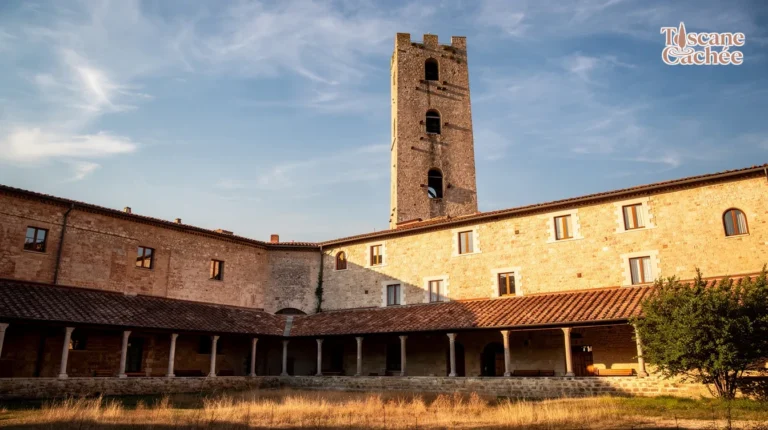
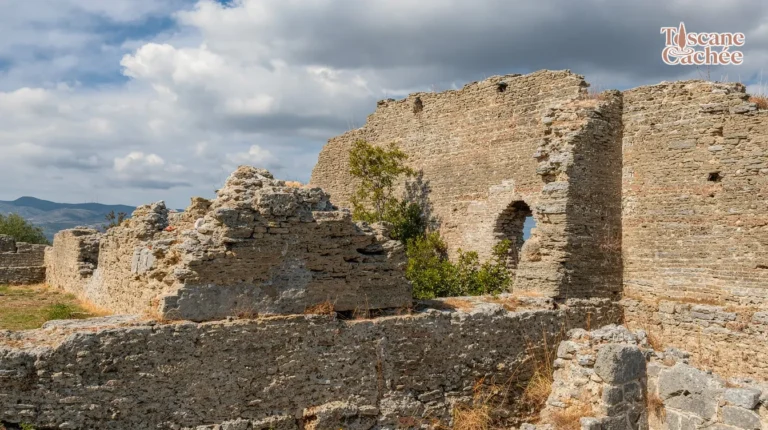
San Rabano is a ruined medieval Benedictine abbey, lost in the hills of the Uccellina, in the heart of the Maremma park
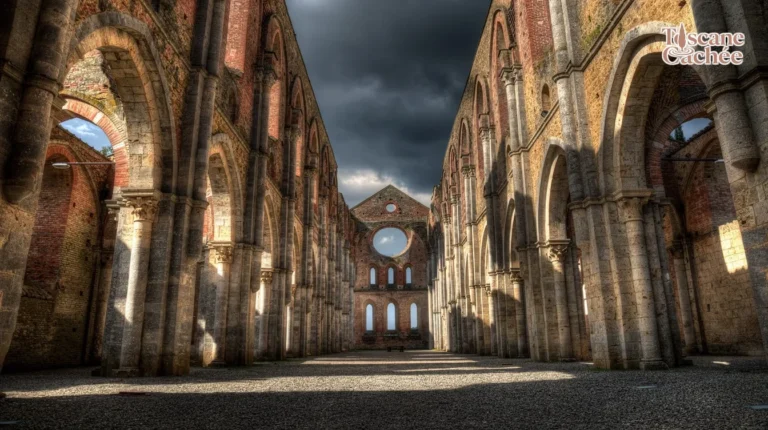
A Gothic abbey stripped of its roof, where one walks in the grass between the pillars, completed at Montesiepi by a sword planted in the rock
Alberese houses the visitor center of the Maremma park: 25 km of coastline, the pine forest of Marina di Alberese, the Uccellina mountains and their towers
A village of the Etruscan Coast in the coastal plain of Orbetello, on the coastal route: a convenient stopover
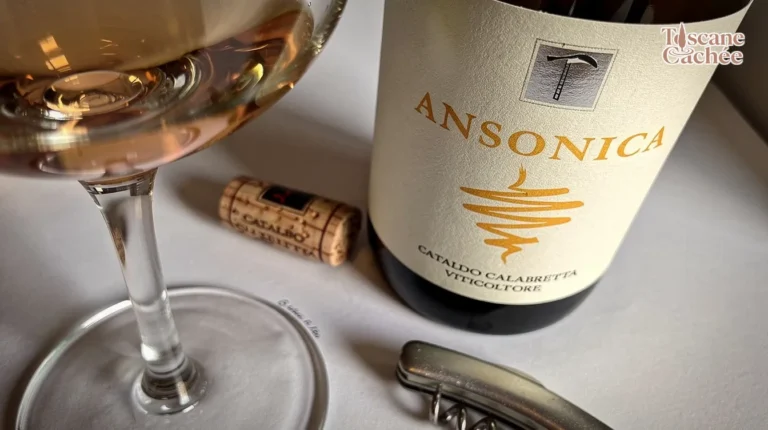
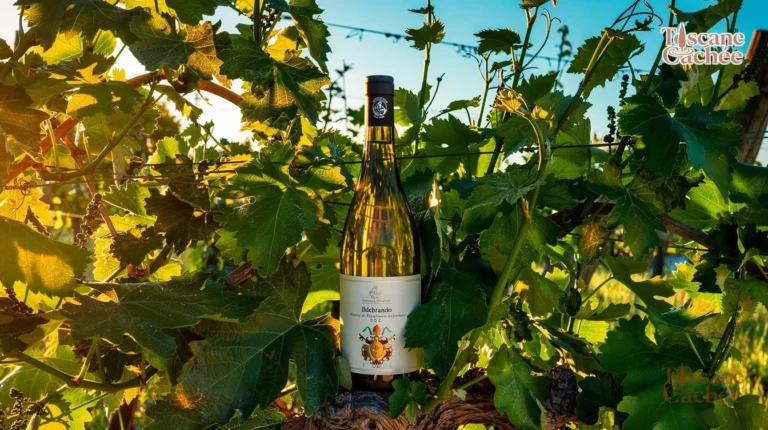
An Ansonica appellation, an iodized and mineral dry white born on the terraces of Monte Argentario and the island of Giglio
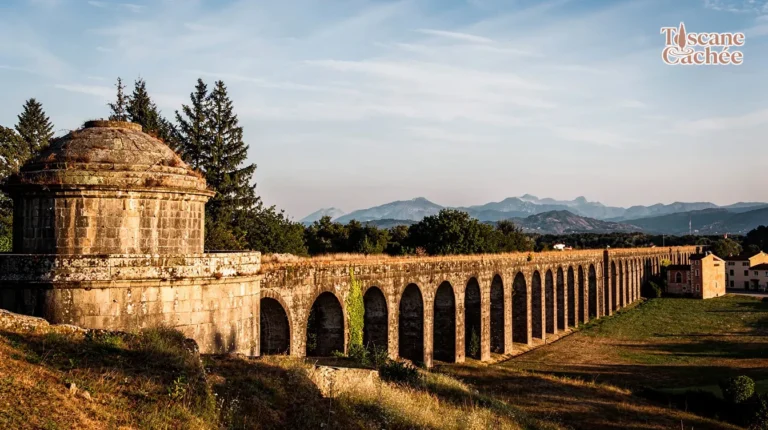
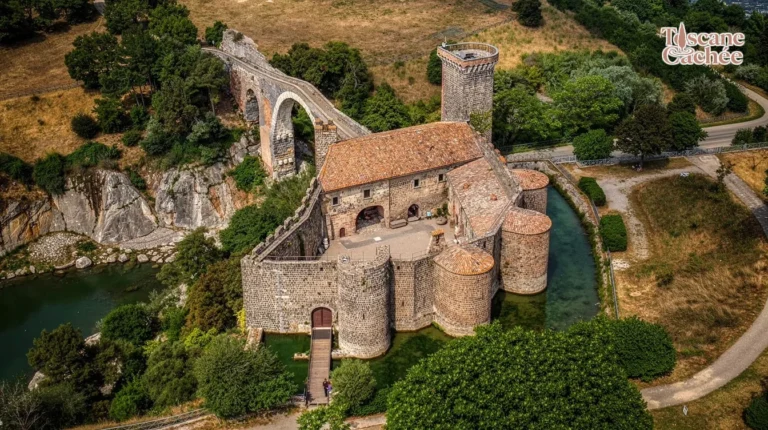
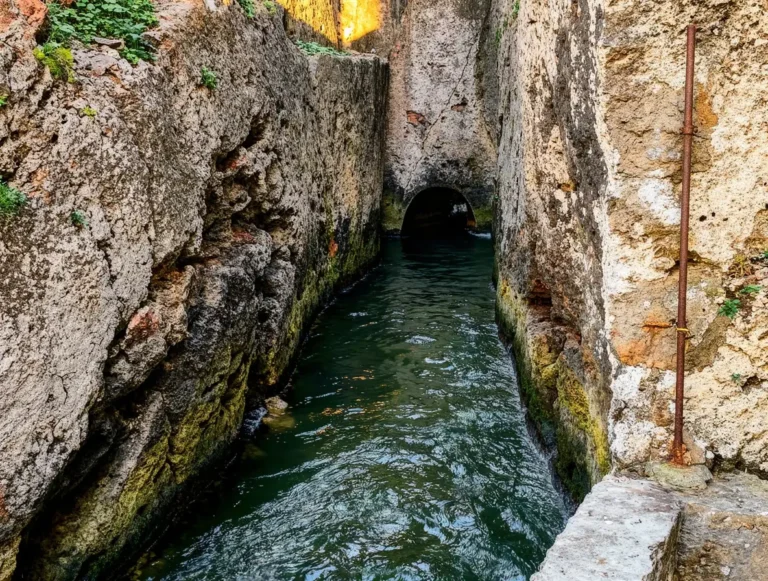
At the bottom of the Lente valley, a 19th-century aqueduct with neoclassical arches winds through a wooded ravine near Vitozza [pitigliano.org](https://pitigliano.org/en/vie-cave-etruscan-built-roads/)
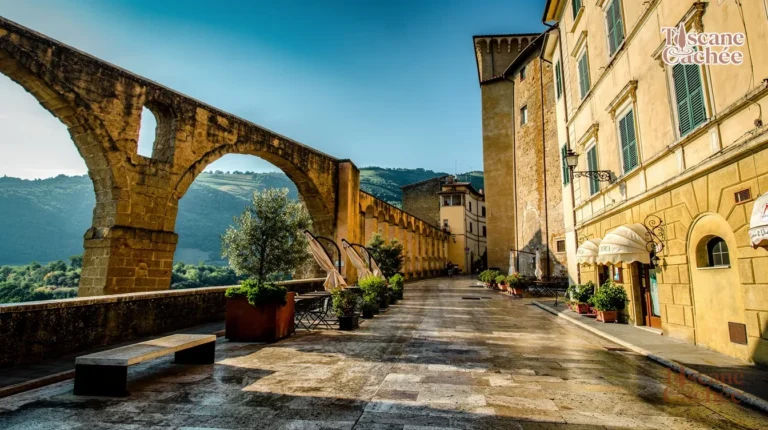
Its 16th-century tuff arches, leaning against the medieval walls, and the fountain of the Sette Cannelle with animal heads mark the entrance to the village
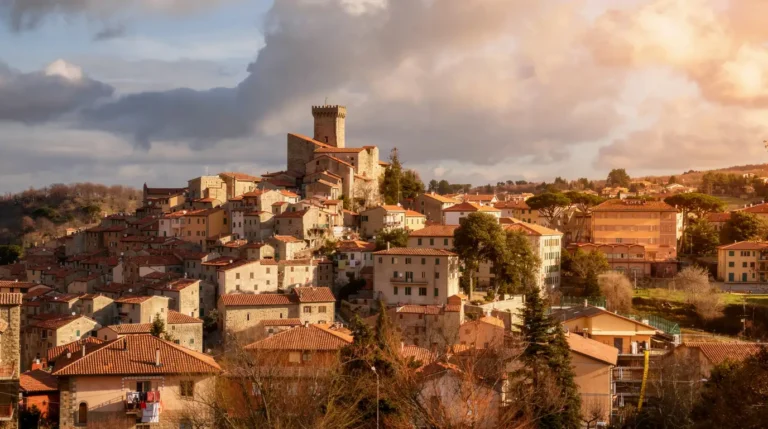
A medieval village on Mount Amiata, attested as early as 860, where you climb from lane to lane up to the Rocca overlooking the rooftops
A village of 91 inhabitants in Val d'Orcia where the 48 °C waters sculpt the Balena Bianca and free pools, swimmable even in winter
A nature reserve where the butteri still work with free-roaming Maremmano horses, rich in the Etruscan necropolis of Poggio Tondo and a dense network of trails
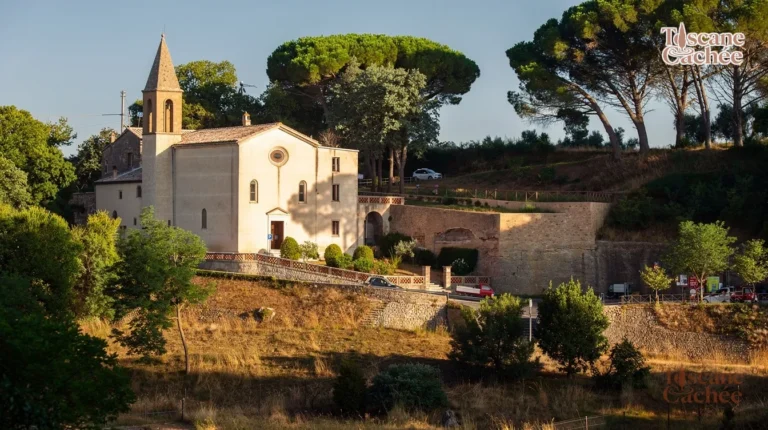
From the Madonna delle Grazie sanctuary, adjoining an Etruscan via cava, opens the most famous «postcard» view of Pitigliano perched on its tufa
Bianco di Pitigliano, among Italy's first DOCs, is born from the tufa lands of the old town, where the Cantina di Pitigliano brings together the grapes of the cru
A wild nature reserve with steep limestone cliffs overlooking the Albegna valley, with a panoramic view of the protected landscape from Rocchette di Fazio
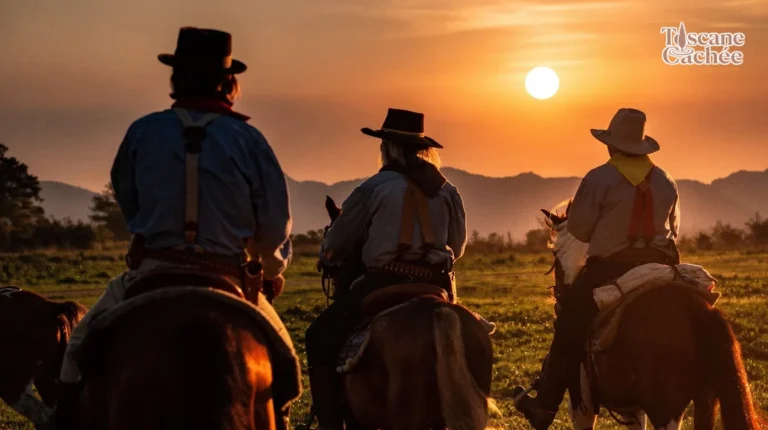
An experience revolving around the butteri, the Tuscan cowboys of the Maremma, paired with wild landscapes, beaches and an Etruscan past
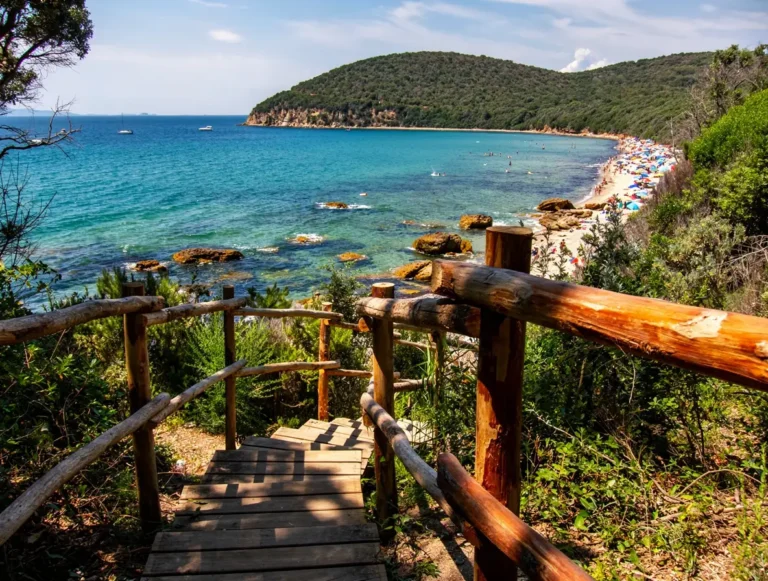
At Scarlino, Cala Civette is presented as a wild cove with soft sand and emerald water, amid the Mediterranean scrub
A wild cove of the Argentario with turquoise water, accessible only by a trail, ideal for snorkeling away from the crowds
A cove of Monte Argentario accessible only on foot, whose crystal-clear seabed is home to moray eels, octopuses, spiny lobsters and corals
A pebble and rock cove in a sheltered inlet, with clear water ideal for snorkeling, with the Argentarola islet and its underwater cave offshore
Cala di Forno, a cove framed by cliffs, is reached by a long hike through a strict nature reserve, rewarded by an unbuilt coastline and a often deserted beach
Cala Grande is a cove of Monte Argentario described as secret, with clear water, and a statue of Christ the Redeemer visible while fin-swimming
A wild cove of the Argentario whose rock barrier forms a natural pool that is always calm, facing the Isola Rossa, a red rock popular with snorkelers
Cala Martina is the free, no-reservation cove facing Cala Violina, reachable only on foot, by bike or by boat
Cala Piccola is a pebble cove dominated by a Spanish watchtower, with a protruding coral reef that attracts divers and freedivers
Quartz sand that sings underfoot, crystal-clear waters between two headlands: a singular cove of the Bandite di Scarlino reserve
A small pebble cove below the Torre del Saraceno, with Roman fish ponds and villa foundations a stone's throw from the port of Giglio
A natural thermal lake of more than 3,000 m² fed by a bubbling spring, on the Etruscan Coast, with a name that refers to the Etruscans
Campagnatico is a medieval village perched on hills of olive groves, with ramparts, ancient churches and a local restaurant known for wild boar alla maremmana
Itinerant festival of the singing of May, carried by the Auser of Scansano, with groups of maggerini who greet spring with songs and stornelli, each year in a different municipality of the Maremma
Capalbio is a medieval village whose walkway, running along the ramparts and towers, opens onto the sea, the Argentario and the lakes of Burano and San Floriano
Winter Carnival Massetano in the historic centre of Massa Marittima: masked parades, music and entertainment, with a prize-giving for the finest costumes on Shrove Tuesday
Old village festival (59th edition in 2026) where the districts of Follonica parade with papier-mâché floats along the Carducci seafront
The Carnevale di Manciano is a spread-out festival, led by the Pro Loco between the borgo, Marsiliana and Saturnia, with masked parades and the Veglione del Tritello
Travertine pools fed at 37.5 °C by the Gorello, freely accessible 24/7 near the old mill: a rare natural thermal bath in Tuscany
Series of autumn sagre revolving around chestnuts and mushrooms, spread across several villages of the Amiata over several weekends in October
At Vulci, on the Etruscan Coast, the Castello dell'Abbadia combines Etruscan remains and medieval collections within a single museum-monument
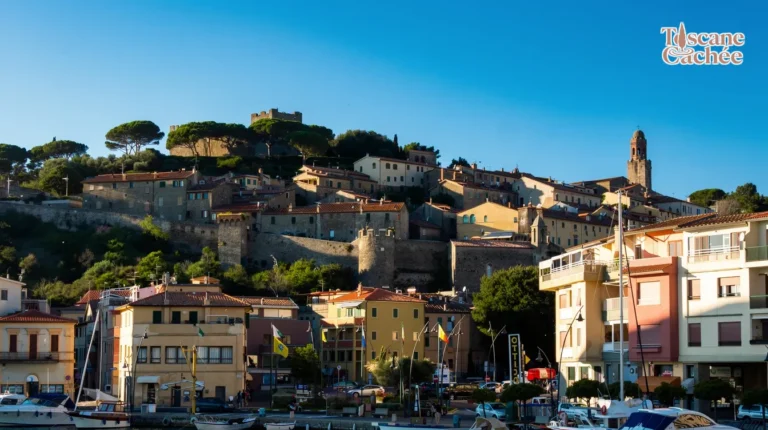
A medieval village perched on the heights, an active fishing port and a Blue Flag coastline lined with pine woods and campsites: the village blends heritage and seaside resort
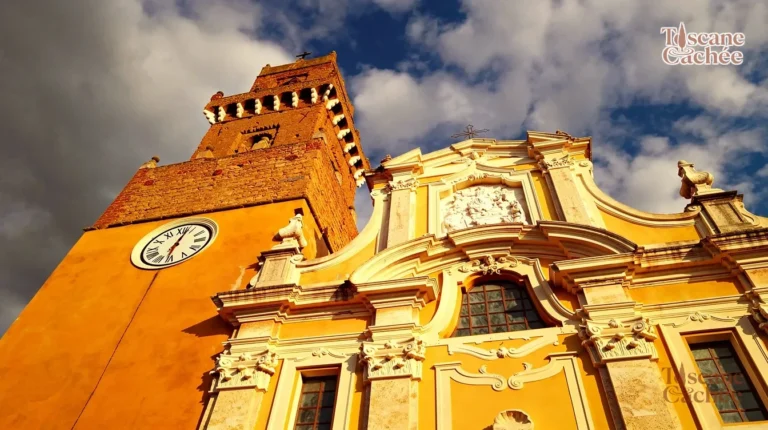
Cathedral of Saints Peter and Paul: Renaissance façade, sculpted angels and Romanesque bell tower in the heart of Pitigliano, a tufa borgo known as little Jerusalem
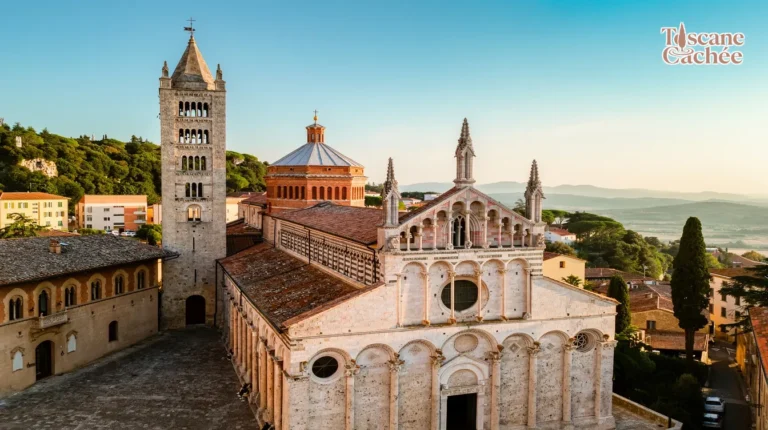
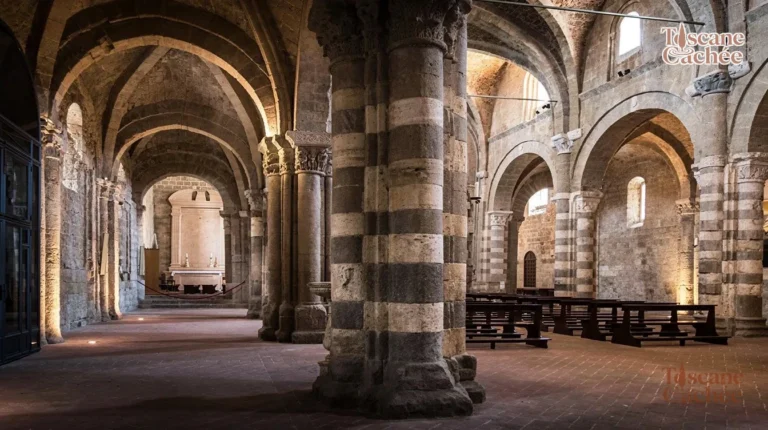
Romanesque cathedral of 1100-1287 set diagonally on Piazza Garibaldi, with a sculpted portal and Duccio's Maestà inside
Celle sul Rigo, a hilltop village with medieval lanes and caves carved into the tuff, opens onto the Val d'Orcia
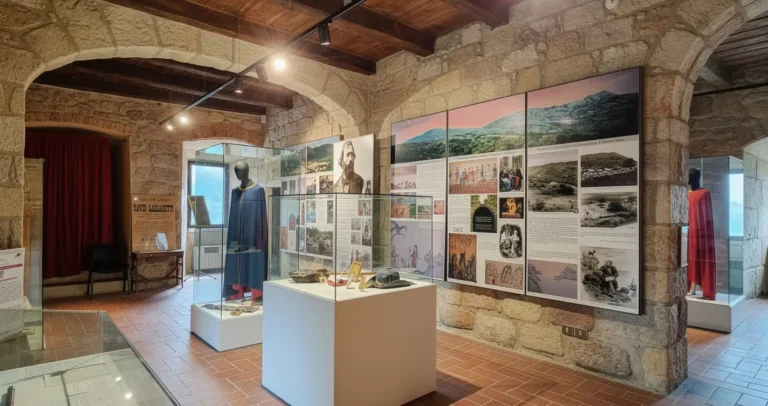
Space dedicated to the Giurisdavidic movement, with objects and documents, housed in the Rocca d'Arcidosso complex, of which it forms the third historical thread
The Maremmano horse, mount of the butteri, raised in semi-freedom at Alberese, is registered in a stud-book closed since 1980
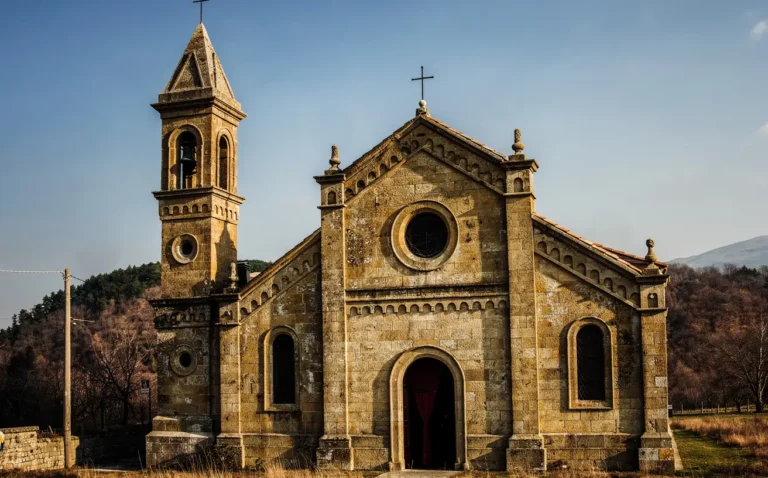
In Arcidosso, this medieval church in the old town is discovered in the narrow lanes that climb towards the Rocca, like a peaceful stop
The co-cathedral of Saints Peter and Paul, Gothic-Romanesque in style, stands on the tufa block overlooking the valley of Sovana's necropolis, a medieval borgo of just a few houses
The Colline Metallifere is a UNESCO Global Geopark where 3,000 years of mining activity coexist with holm oak woods and wild fauna
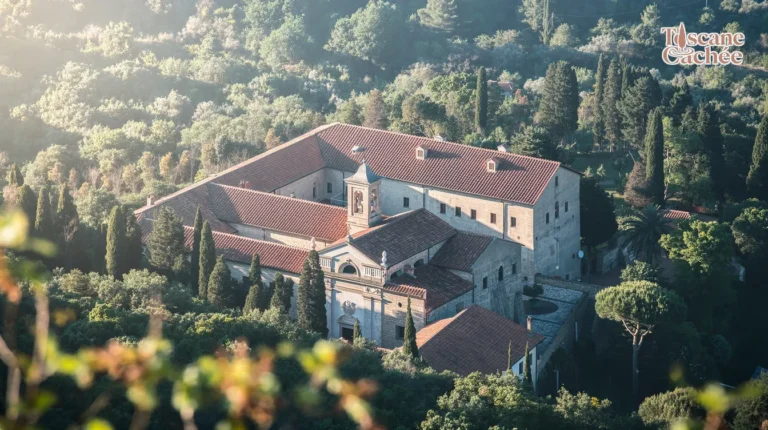
Founded at the end of the 18th century by Saint Paul of the Cross, this convent on Monte Argentario (273 m) preserves Baroque stuccoes, a neoclassical façade, relics and canvases by Sebastiano Conca, with views over the Orbetello lagoon
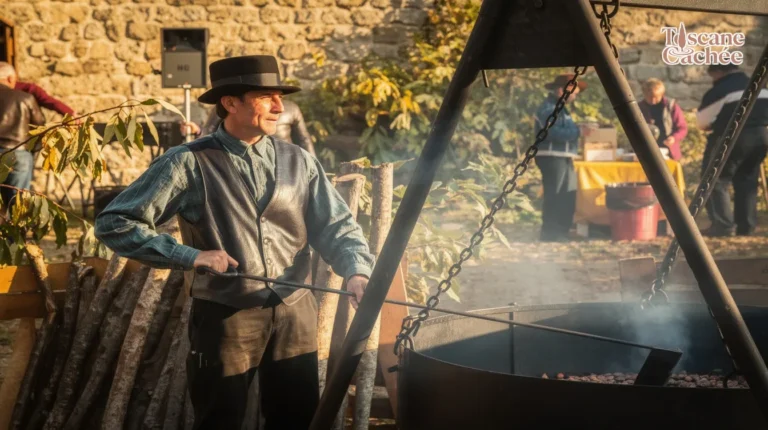
The Crastatone of Piancastagnaio is an ancestral village festival in the heart of Mount Amiata, centered on roasted chestnuts and new wine
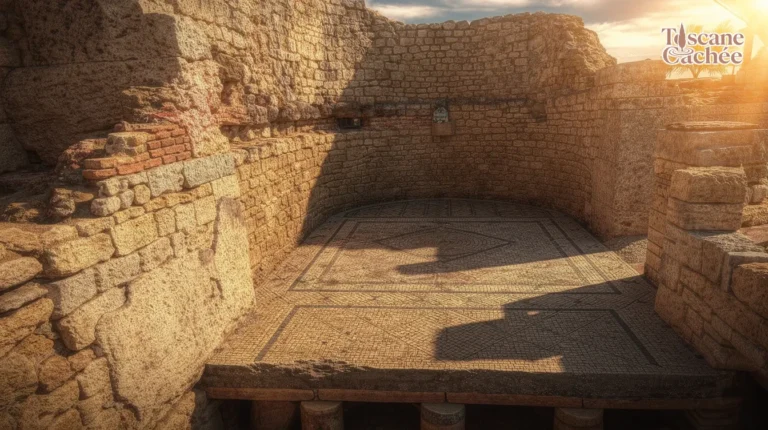
The Domus of the Cryptoporticus can be visited at Vulci, on an Etruscan and Roman archaeological site, in the form of an underground passageway
The church of San Pietro Apostolo, in the heart of the fortified village of Giglio Castello, houses an ivory crucifix sculpted by Giambologna, a rare and unexpected piece
Gothic church of the 14th-15th centuries with a white travertine façade and ogival portal, in the upper Città Nuova of Massa Marittima
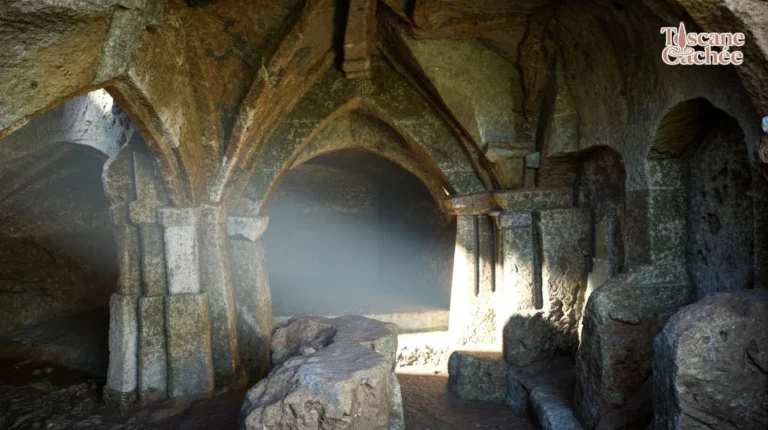
A medieval rock-cut hermitage carved into an isolated tuff cliff, decorated with floral motifs and barrel vaults, reachable only on foot along the Fiora river
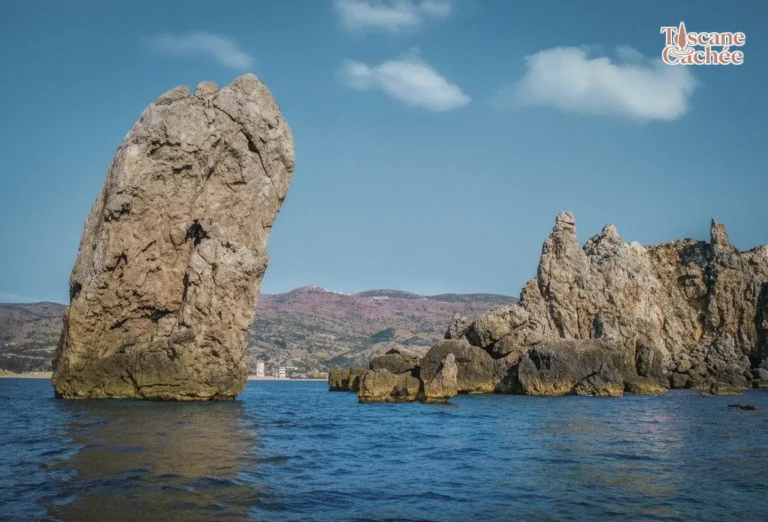
An iconic rock emerging in front of the beach of Campese, on the Isola del Giglio, to be photographed at sunset with the Medici Tower
Every July, Roccatederighi, a hamlet of Roccastrada, hosts the Festa dei Cacciatori: boar and game stalls, music, a festival run by the Pro Loco
Annual village festival in Civitella Marittima dedicated to new wine and new olive oil, with food stalls, a craft market, live music and a contest of local products
Annual festival of Civitella Marittima run for over fifty years by the Pro Loco, with historical reenactments, medieval games and the Palio dei Carretti
Festival of new olive oil in Marsiliana, in the Manciano area, with local producers, tastings and typical products of the terroir
The Festa dell'Unità dell'Amiata in the Grosseto area of Amiata brings together every year in Castel del Piano debates, music, dance evenings and local cuisine at the Dancing Kronos
Sagra of wines and local products that fills the streets of Cinigiano on the first weekend of October
Grape harvest festival of Scansano on the last two weekends of September, centered on Morellino: tastings, stalls, craft market and taverns
A village festival in the Montagnola senese dedicated to Cinta Senese DOP, with tastings, masterclasses, an international ham-cutting competition and hikes to the free-range farms
A route through the taverns of Manciano's historic center, on the second weekend of September, between local specialties and wines
Series of sports and gastronomic evenings in July and early August centered on tortello maremmano, with stalls and music
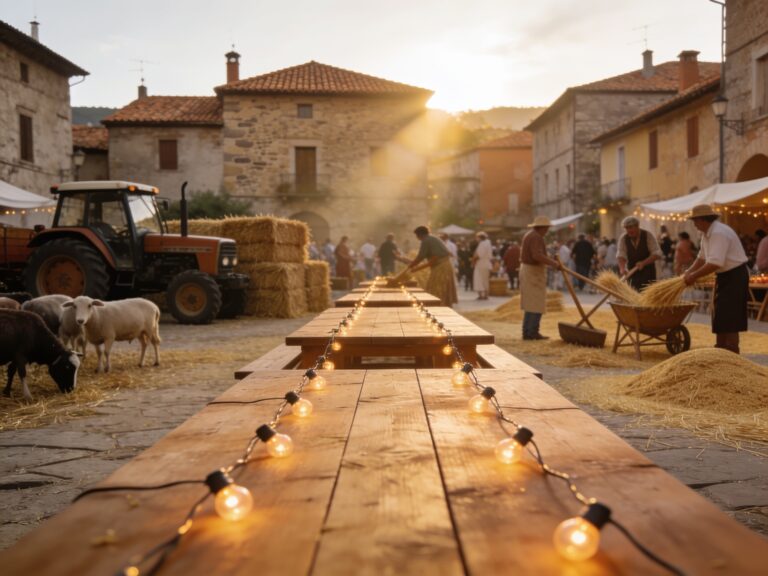
In Roccastrada, four days bring the wheat threshing back to life on the old sports ground of Via Carducci, with vintage tractors, animals and Maremma cuisine
Village sagra of Pari, in Civitella Paganico, organized since 1966 around the parigiana sausage, polenta boscaiola and wild boar tagliatelle
Patronal festival celebrated around January 17 in Castell'Azzara and its hamlets, with masses, processions and the blessing of the animals, rooted in the peasant world of Mount Amiata
Village festival of Montemerano for Saint George, with four days of festivities and the Joust of the Dragon where Borgo, Croce and Castello compete
Every May, Capalbio celebrates its patron saint San Bernardino da Siena over three days, with procession, traditional games, birds of prey flights, hikes and a traveling concert
Every spring, Montiano opens the Maremma sagre season with a village festival centered on fried chicken and fresh beans with cheese
Free spring festival in a rural hamlet of Castiglione della Pescaia, with stalls of seasonal specialties, live music, activities for children and a craft market
A medieval village festival in Giglio Castello where the historic cellars open for Ansonaco wine, local dishes and the Quadriglia gigliese
Annual May festival in Poggioferro, a hamlet of Scansano, centered on handmade tortello maremmano and Morellino di Scansano, with live music
A spring sagra in Sorano: five days of ricotta and spinach tortello, stalls and dance evenings on Piazza Busatti
Sagra of Arcille, in Campagnatico: handmade ricotta and spinach tortelli, grilled steaks, pici and wild boar, run by the village associations
A torchlight horseback procession, often led by butteri, which opens the Festa delle Cantine and immerses the village of Manciano in the rural culture of the Maremma
In Santa Caterina, the Focarazza lights a heather bonfire on November 24 around an oak stollo that the contrade compete for
Golden sand, clear water and a shaded pine grove facing the historic fort of the Rocchette, in Castiglione della Pescaia
Porto Ercole locks down its bay with four 16th-century fortifications, including the six-pointed star-shaped Fort Stella, at €4, and forts with free access
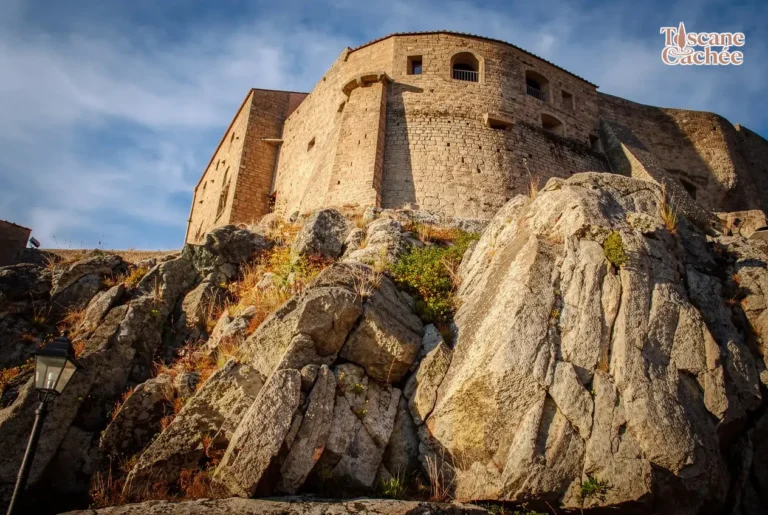
The Fortezza Orsini is a medieval fortress overlooking Sorano, a tuff village fortified by the Aldobrandeschi, with underground passages to explore
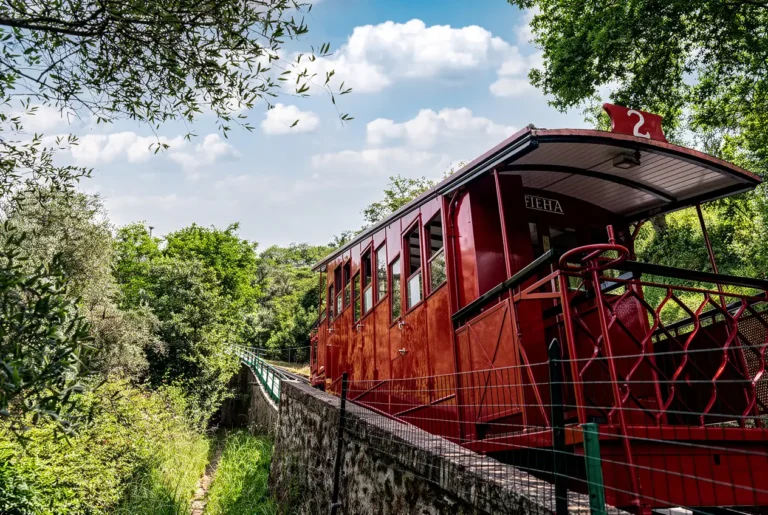
A historic funicular that climbs in a few minutes from the spa center of Montecatini Terme to the quiet alleys of Montecatini Alto
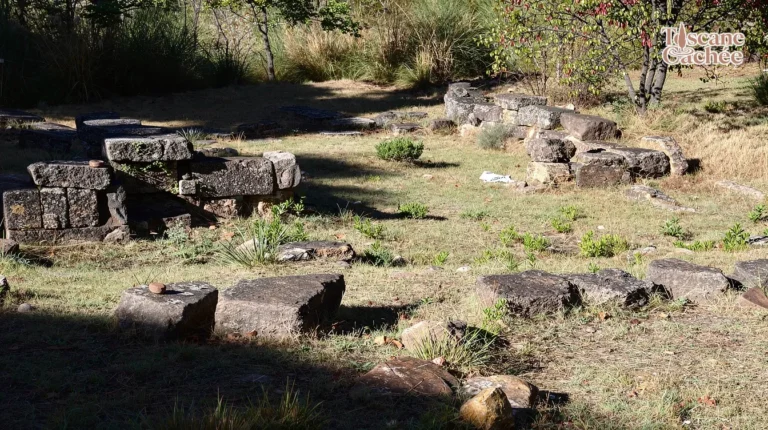
Ghiaccio Forte, in Scansano, is a complex of Etruscan and Roman ruins scattered in the middle of the forest, with no barrier, ticket office or opening hours
On the west coast of Giglio, Campese offers the island's largest beach, a tower from the time of Ferdinand I and sunsets over the bay
Giglio Castello is a hilltop village at 400 m with intact medieval ramparts and towers, in the Tuscan Archipelago National Park
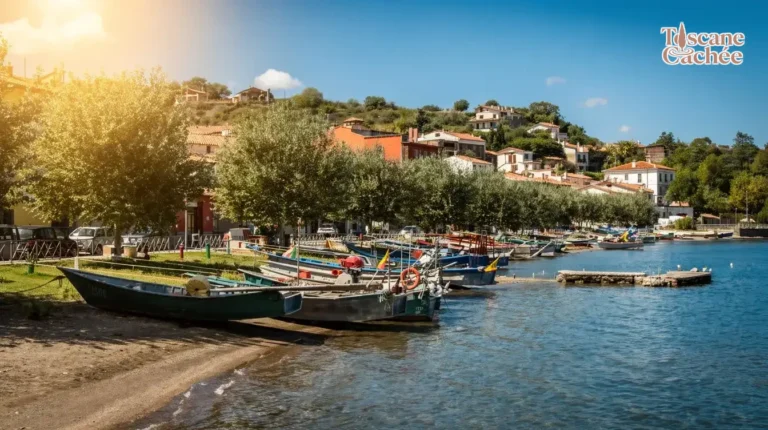
The island's arrival quay: colorful houses reflected in the water, banks, pharmacies, restaurants and bars lined up along the harbor
A Maremma natural site noted for its sculpted cliffs and lively waters, in the heart of a gorge environment
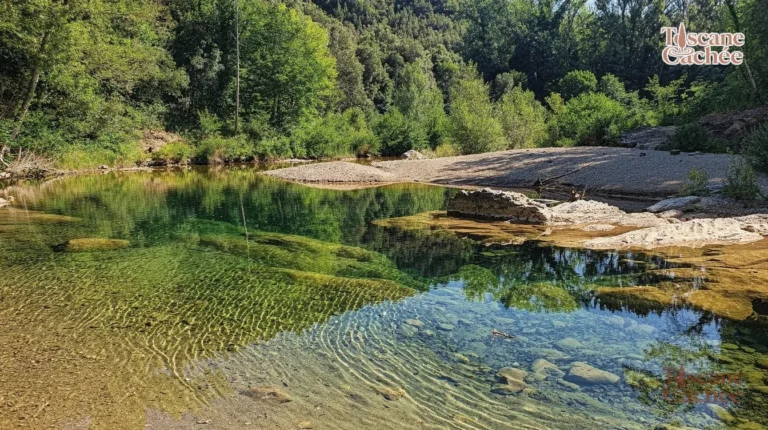
The gorges of the Farma, in Roccastrada, stand out for their wild setting and crystal-clear waters suitable for swimming
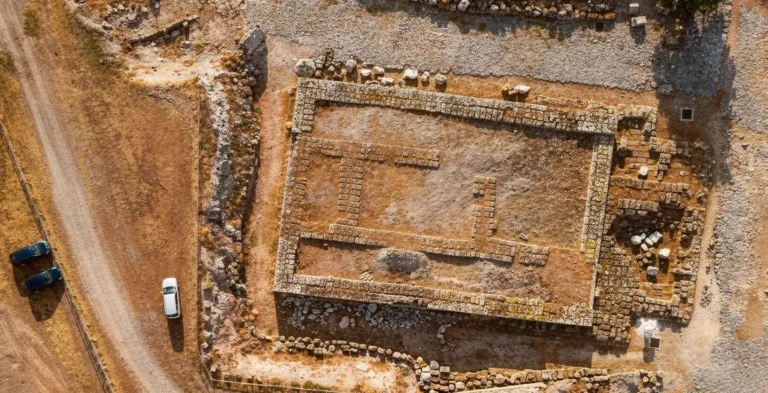
At Vulci, the Grand Temple can be explored without barriers amid 900 hectares of volcanic canyons, among Etruscan remains, a painted necropolis and a museum in a medieval castle
The provincial capital, Grosseto preserves a historic center encircled by walls and a cathedral
Orbetello's food fair on the All Saints' Day weekend: street food, wine fair, concerts, Corsa dei Barchini and pedestrianized historic center
A traveling festival of theater, music and literature run by the M.Arte association, between late May and mid-June, with a stop in Santa Fiora, at the Convento della Santissima Trinità alla Selva
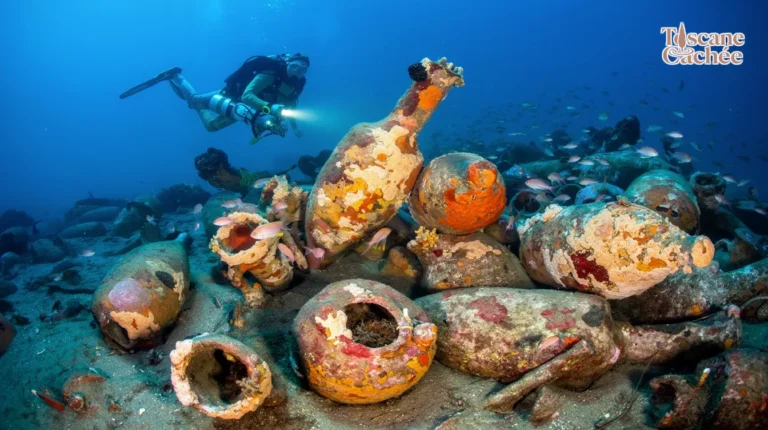
The southernmost island of the Tuscan archipelago, with no cars or hotels, very transparent water and Roman shipwrecks at 20 m
Isola del Giglio combines three villages, granite descents to the sea and wild coves in the Tuscan Archipelago National Park
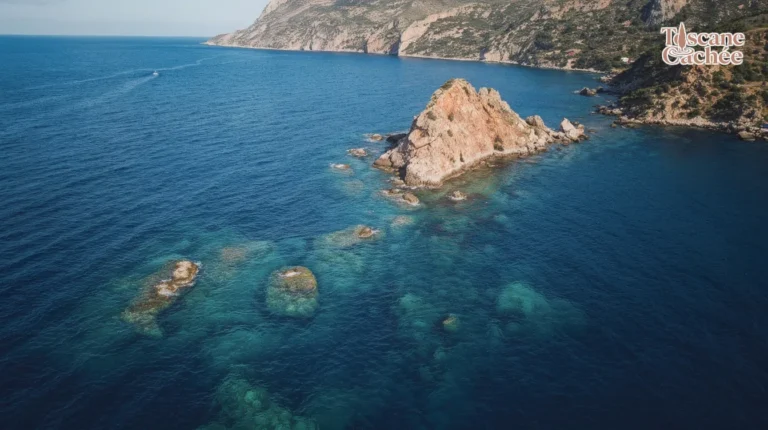
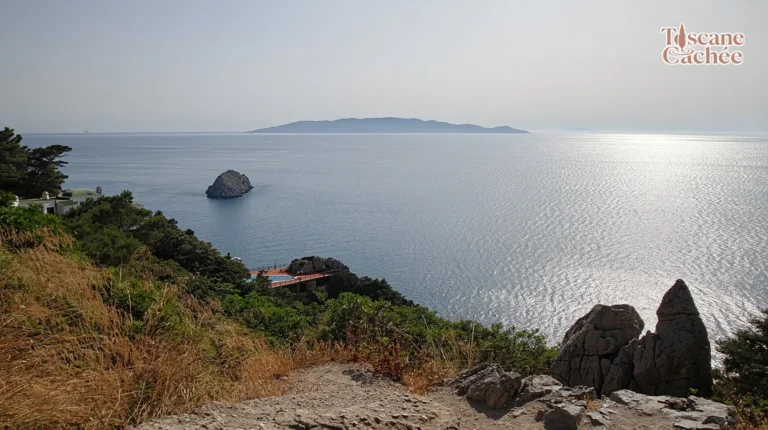
An islet with red rocks off the Argentario, with limpid waters, renowned for snorkeling, diving and its sea caves
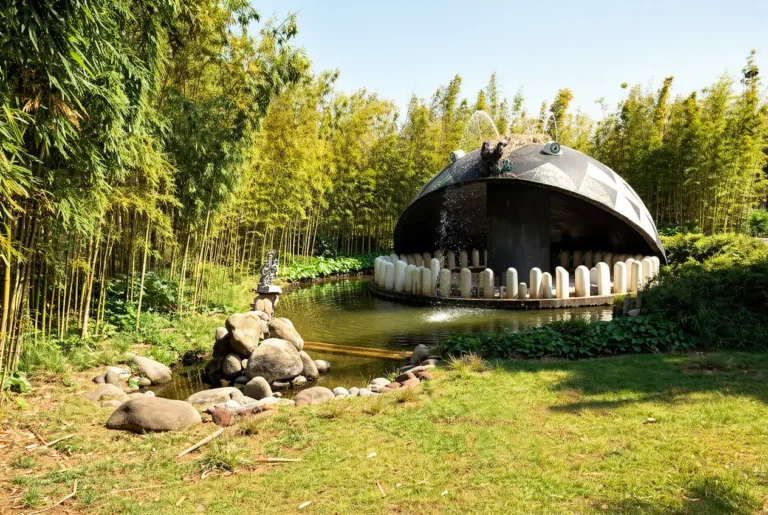
Garden of monumental sculptures by Niki de Saint Phalle in Capalbio, in southern Maremma ([visittuscany.com](https://www.visittuscany.com/fr/territoires/sud-de-la-maremme/))
 Viator
Tiny alcove beneath the Torre di Scaciadiavoli, in Monte Argentario, with a statue of the Christ of the Abyss at 15 meters and the Grotta del Turco: an intimate diving spot
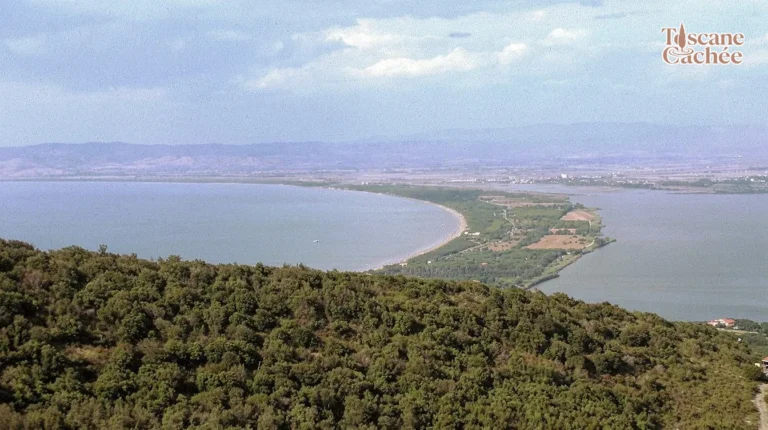
A sandy tombolo between the sea and the lagoon, crossed by a track closed to cars, with fallow deer roaming free and birdwatching hides
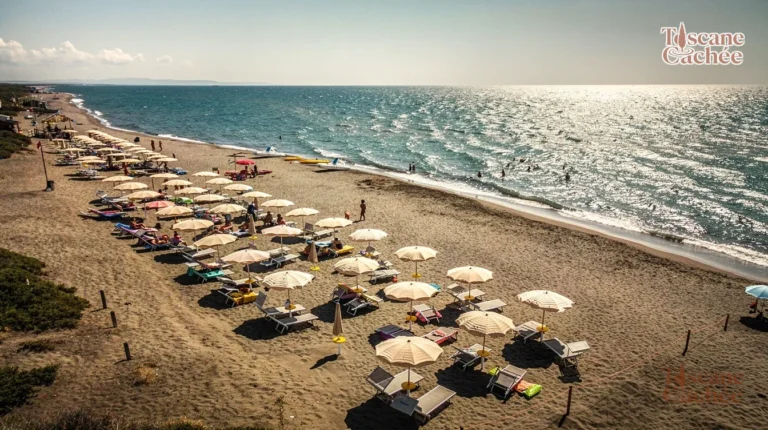
A long beach of fine sand between the sea and the Ponente lagoon, lined with dense maquis, with shallow water suitable for families
The Notte dei Pirati turns Porto Ercole into a pirate lair, with a parade, a scenic landing by guzzi and a nighttime treasure hunt
This December 30 festival revives in Sorano the peasant tradition of bonfires, with pira, zampognari and Maremma products
In Selvena, the Stortellata celebrates the potato tortello stuffed with Faggeto white potatoes, on Mount Amiata
At Sovana, the tomba Pola is an Etruscan temple tomb carved into the tuff: a single chamber of 18.50 m, a fluted column in place, a necropolis crossed by the vie cave
The largest volcanic lake in Europe, in the province of Viterbo, with crystal-clear waters and black sand beaches
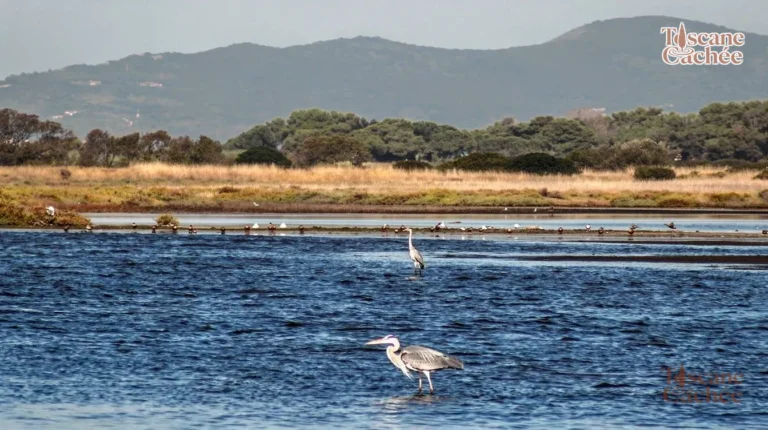
The first WWF oasis in Italy, Lake Burano is a 140-hectare brackish pond protected by 12 km of untouched dunes, where flamingos, herons and ospreys winter
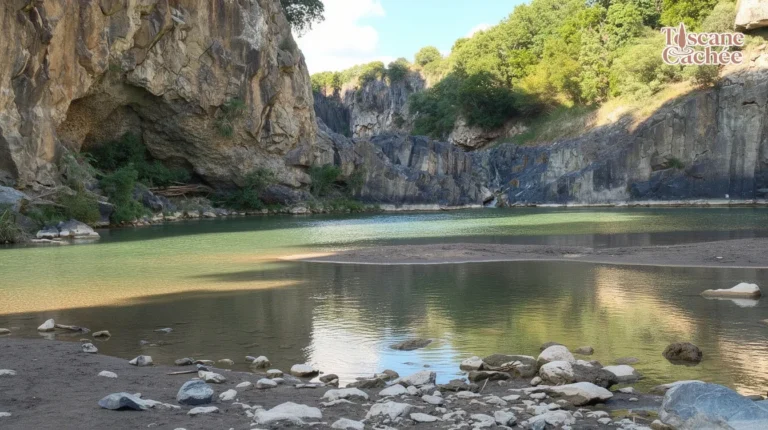
A canyon lake in Vulci, fed by a small waterfall of the Fiora, in a 900-hectare park with Etruscan necropolises [sitiarcheologiciditalia.it](https://www.sitiarcheologiciditalia.it/)
A former Etruscan mining center, Lake Accesa displays ancient foundations beneath a wild forest and pure water for swimming, to be complemented by the museum of Massa Marittima
The Ponente lagoon, classified as a SAC-SPA Orbetello Lagoon, is of interest mainly for its samphire and its birds
A 870-hectare WWF reserve, a RAMSAR site, with 272 bird species and three trails, including a 1.2 km birdwatching route with nine observation points
Housed in the former courthouse of Grosseto, the museum displays across forty rooms on three floors gold from Vetulonia, a bucchero bowl and statues from the forum of Roselle
Museum of oriental art and culture housed in the Palazzo della Cancelleria, within the Rocca complex, in Arcidosso
Magliano in Toscana is a village with medieval ramparts, lanes and olive trees, described as far from the crowds in the Grosseto countryside
A hilltop village in the Maremma, Manciano offers views from the Amiata to the Argentario and serves as a base for Montemerano and the free hot springs of Saturnia
The Saturday market of Orbetello brings together the lagoon fishermen and their products: mullet bottarga, smoked eels, fish from the cooperative
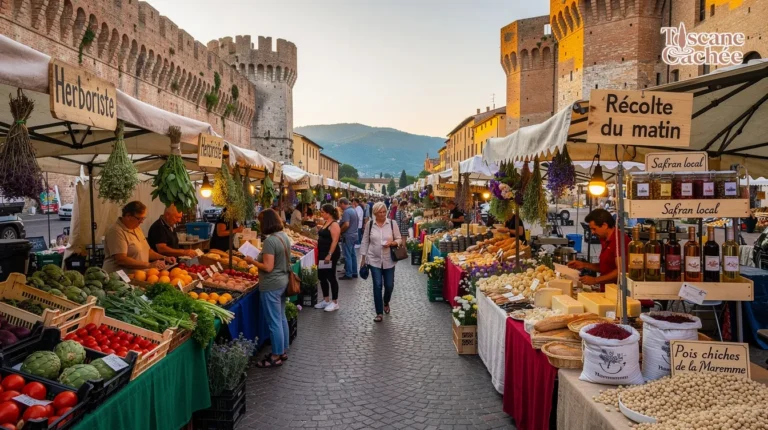
The Thursday market of Grosseto brings together beneath the city ramparts organic farms from the plain, herbalists, local saffron and Maremma chickpeas
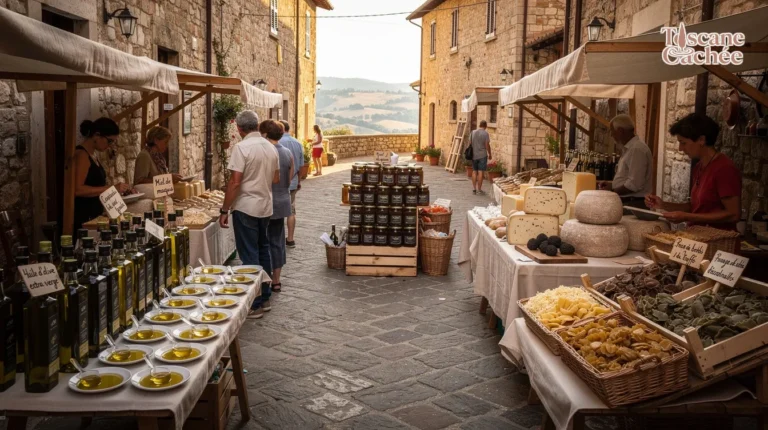
Saturday market on the Piazza Dante, in the heart of the medieval village of Manciano, with locally pressed oil, maquis honey, sheep's cheese with truffle and artisanal pasta
Weekly market on Wednesday morning in Pitigliano, where shepherds and confectioners sell pecorino aged in tuff cellars and local sfratto
Friday morning market on the central square of Scansano: winegrowers and breeders sell Morellino, wild boar salami, goat cheese and oil direct
Small Tuesday market in Sorano, beneath the Orsini fortress: heritage vegetables, local beans and charcuterie from free-range pigs raised in the oak groves
A visit to a wine estate in the Maremma followed by a tasting of three wines accompanied by Tuscan specialties
 GetYourGuide
A beach of sand stretching for several kilometers south of the Ombrone river mouth, served by a summer shuttle, a cycle path and an area adapted for people with reduced mobility
A medieval mining town still encircled by its walls, with Piazza Garibaldi, the fresco of the Tree of Fertility and an underground mine museum 700 meters long
Perched above Sorano, the Masso Leopoldino opens up a panorama over the Maremma and over a town carved into the tuff, an Etruscan and medieval legacy
An ancient Tuscan volcano covered by the largest beech forest in Europe, with thermal springs, forest bathing and hikes through the seasons
Montalto di Castro is a village on the Etruscan coast with good access from the via Aurelia, useful as a base with its trattorias before or after the Vulci park
A wild promontory with secret coves and crystal-clear water, paired with the fishing villages of Porto Santo Stefano and Porto Ercole
Monte Cetona is a mountain hiking trail described as wild nature and a raw immersion, rarely visited by guides
A medieval village perched above Montecatini Terme, with its Piazza Giusti, its tower, its ramparts and a full panorama over the valley
Montecatini Terme is a spa town with neoclassical pools, whose history charmed Verdi and Coco Chanel
Montemerano is a medieval village with paved lanes and flowered arches, counted among the most beautiful villages in Italy and close to the hot springs of Saturnia
Montiano is a hilltop village in the Albegna hills, encircled by medieval walls with an Aldobrandeschi and Sienese past
Morellino di Scansano is the Maremma's red DOCG, a Sangiovese grown over roughly 1500 hectares around Scansano, a village situated at 500 meters above sea level
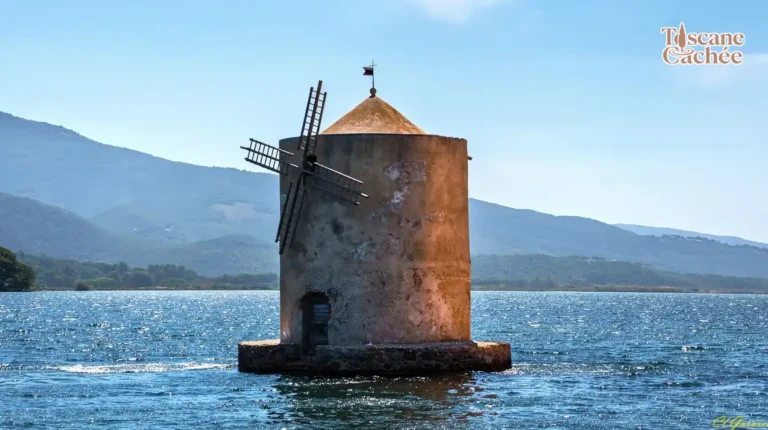
The Spanish Mill is the last of the nine mills of the Ponant lagoon, a 15th-century vestige with a silhouette resting on the water
At Vetulonia, the Mura dell'Arce are cyclopean walls of Etruscan construction that mark out the acropolis of the ancient city
The National Museum of Cosa displays the excavations of the Roman colony founded in 273 BC
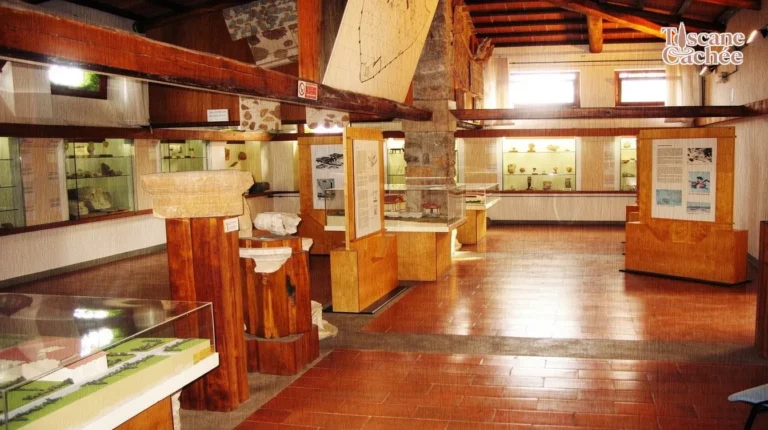
Palazzo Nardelli preserves the remains of the Fiora valley, from the Paleolithic to the Iron Age, with an augmented reality trail leading to the necropolises of Puntone and Poggio Murella
The San Mamiliano museum, in the church where 498 gold coins from the 5th century were found in 2004, also displays objects discovered at the entrance of the Cavone
At Vetulonia, the Isidoro Falchi Museum presents Etruscan artifacts of local origin, from Villanovan urns to orientalizing jewelry, spanning several millennia
Housed in the Palazzo Vitelleschi, the museum displays the furnishings of the Monterozzi tombs: winged horses in terracotta, sarcophagi, jewelry and Attic ceramics
A history museum installed in the medieval Rocca of Arcidosso, enriched by the archaeological finds of Castel Vaiolo to read the Amiata and the Maremma
700 meters of galleries carved into travertine, period tools and guides' stories: a dive at 12°C into the mining past of the Maremma
Here, a 1h15 guided tour covers 700 m of recreated galleries at 14°C, from Etruscan copper to 20th-century pyrite, with minerals and the social history of miners on the surface
Two hundred painted tombs out of 6,000 carved into the tuff, with frescoes from the 7th century BC
Sovana combines a 2,500-year-old Etruscan necropolis, Vie Cave carved into the tuff and a medieval hilltop borgo of 399 inhabitants
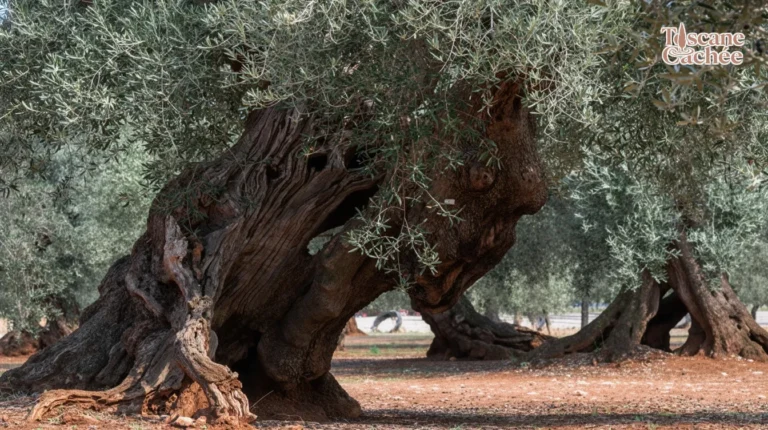
An age-old olive tree with twisted branches, in Magliano, a village listed among the stages of southern Maremma ([visittuscany.com](https://www.visittuscany.com/fr/territoires/sud-de-la-maremme/))
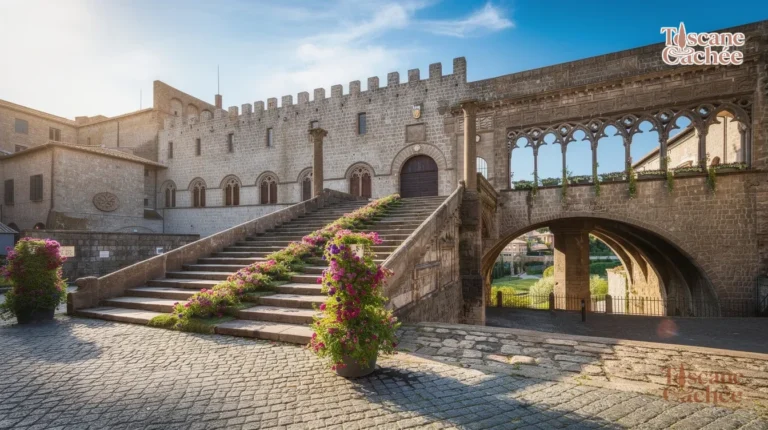
In Viterbo, the Papal Palace stands out with its Loggia of Blessings and its conclave hall, where the longest conclave in history took place
Palazzo Collacchioni is a museum-monument located in Capalbio, in Maremma, for which neither the visit content, nor the state of the building, nor the access conditions are documented
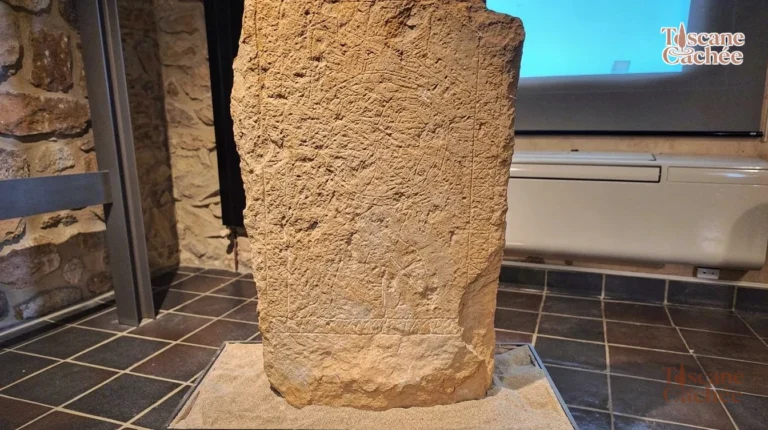
The Palazzo del Podestà, a 13th-century palazzo with a travertine façade, houses the Giovannangelo Camporeale archaeological museum: Etruscan collections from Vetulonia and the stele of Vado all'Arancio, in the heart of Massa Marittima
The Palazzo Orsini brings together two museums in an Aldobrandeschi palace of the 15th-16th centuries, with 21 frescoed rooms and an old oil mill
The palio of Castel del Piano is run bareback on horseback on September 8, with costumed processions, flag throwers and fireworks
A rowing boat regatta between the three districts of Giglio Porto, with crews of four rowers and a helmsman, on August 10 for the feast of San Lorenzo
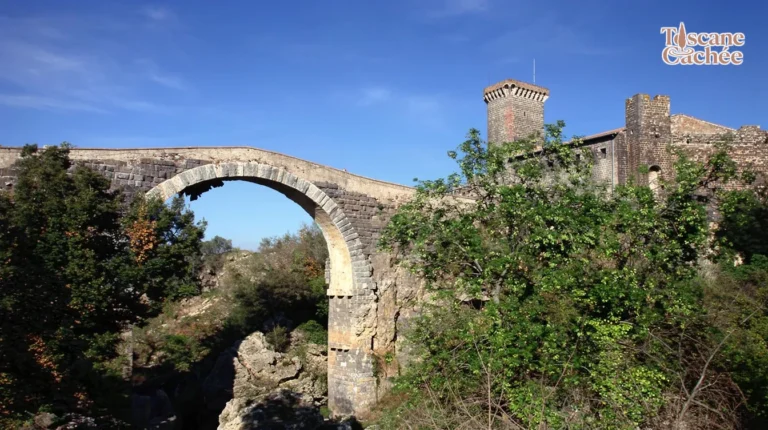
A major Etruscan site: 120 hectares of excavations, the Devil's Bridge 25 meters above the Fiora, a necropolis with frescoes and a castle-museum, for €5
Coastal park of 9,000 hectares between pines, scrubland and cliffs, with 25 km of coastline, the abbey of San Rabano and herds living in the wild
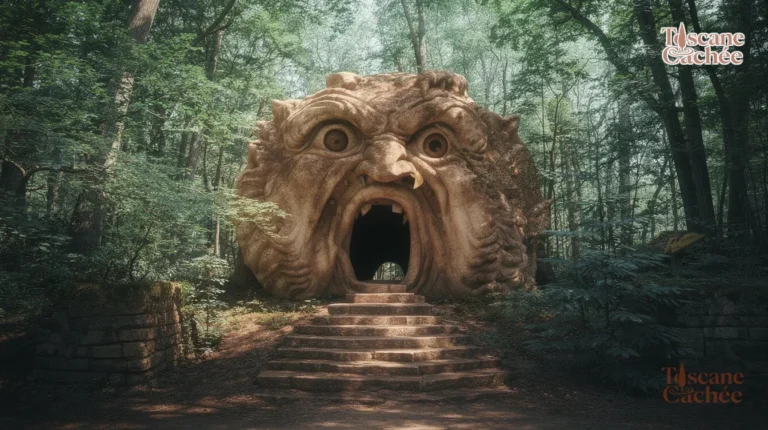
A 3-hectare wood populated with some thirty creatures sculpted in the 16th century in peperino: the Ogre, the leaning house, the dragon, among others
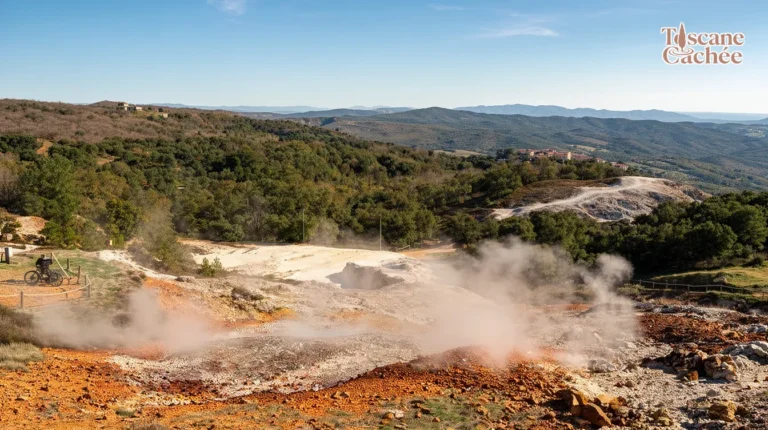
A free park, always open, where fumaroles, bubbling lake and white earth dotted with yellow sulfur crystals form a singular setting
In Collodi, near Montecatini, a family park that brings the famous Tuscan puppet to life through gardens and staged scenes
Pereta is a village in the Etruscan Coast with ancient walls and medieval alleys, marked by an Etruscan and Roman past
On the border of the Maremma, Pescia Romana is split between Borgo Vecchio and Borgo Nuovo, with quality agriculture and unspoiled beaches nearby
Central square of a still-inhabited tuff village, framed by tightly packed stone houses and the highest point of the tuff villages loop
Pitigliano, a village carved into the tuff nicknamed Little Jerusalem, combines a 15th-century Jewish ghetto, a synagogue, the Palazzo Orsini and gorges along the Vie Cave
Triangular square bringing together the Romanesque cathedral, the 13th-century Palazzo del Podestà and the Fonte Pubblica at the Albero della Fecondità, in an intact medieval center
Stone pine grove planted by the grand dukes in the 18th century, classified as SCI/SPA in the Parco della Maremma, leading to the wild beach of Marina di Alberese
Tuff village clinging to its cliff, with a Jewish quarter, a 1598 synagogue, the Palazzo Orsini and Vie Cave carved by the Etruscans
A village dinner centered on acquacotta, the peasant soup of the Maremma, served at the former Seminary of Pitigliano to benefit the inclusive Living Nativity
Largest beach on the island of Giglio, with reddish sand, and sunsets that light up the whole bay
On the island of Giglio, this discreet beach promises a swim more peaceful than Campese, far from the bustle of the port
Three kilometers of pristine sand dominated by a medieval tower, with no bar or parasol, one of the few long Italian beaches left intact
Poggio della Pagana is listed as a hiking trail in the Maremma & Nature universe
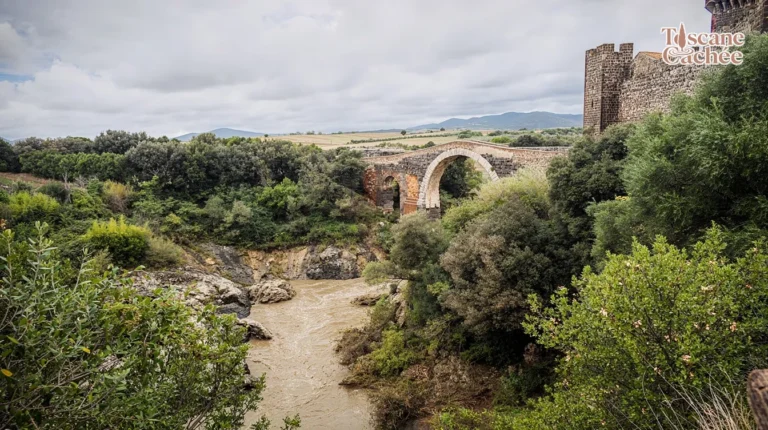
A medieval bridge crosses the gorges of the Fiora, in the heart of the Vulci park, between Etruscan and Roman remains and wild nature
The only Etruscan maritime city, Populonia features aedicule necropolises, rock-cut tombs and a Roman acropolis, with a view over the Tuscan islands
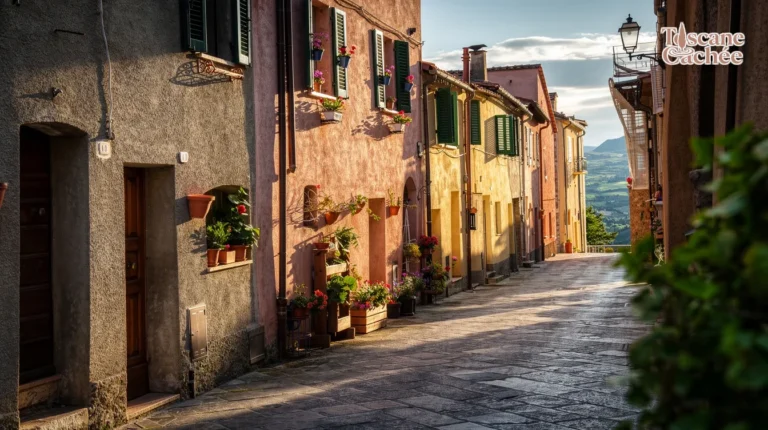
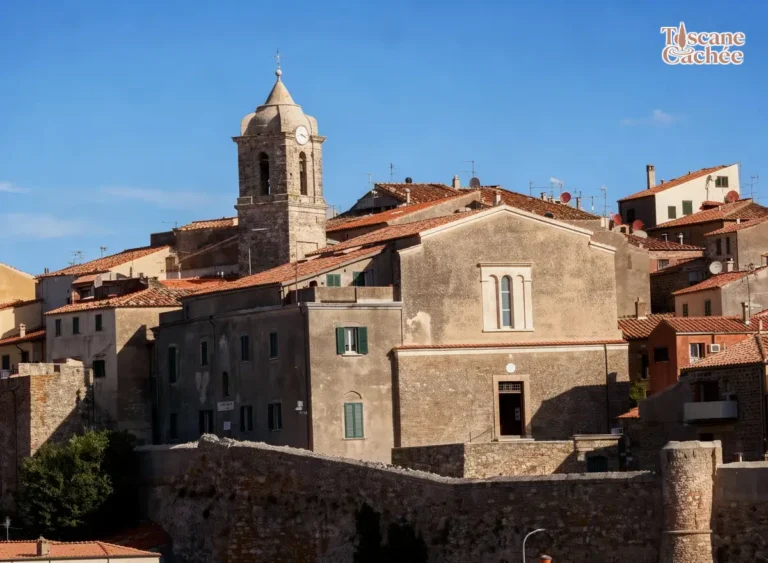
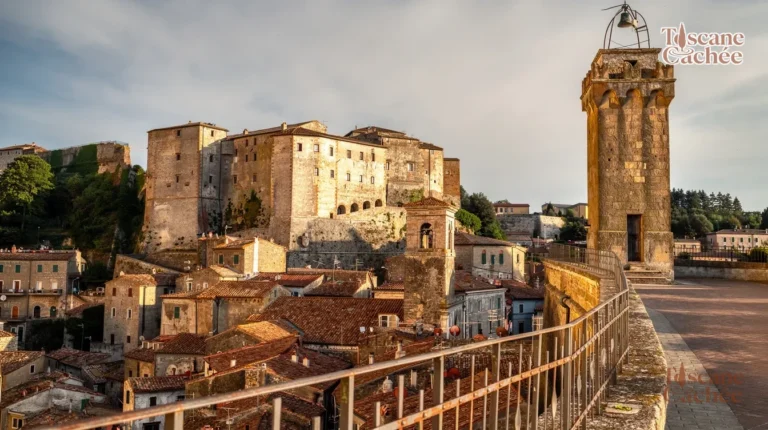
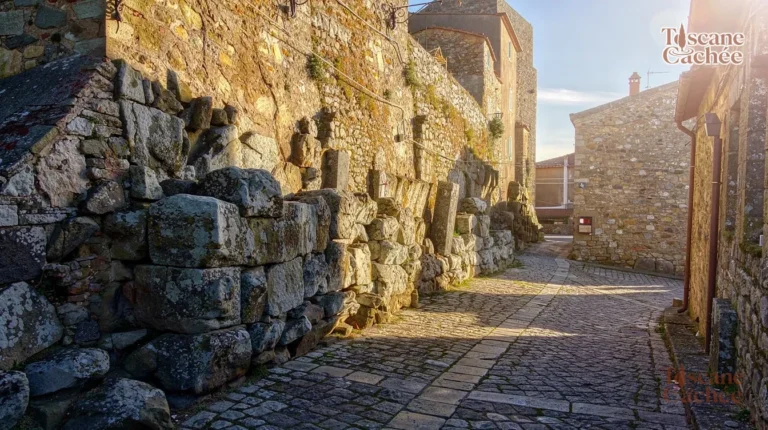
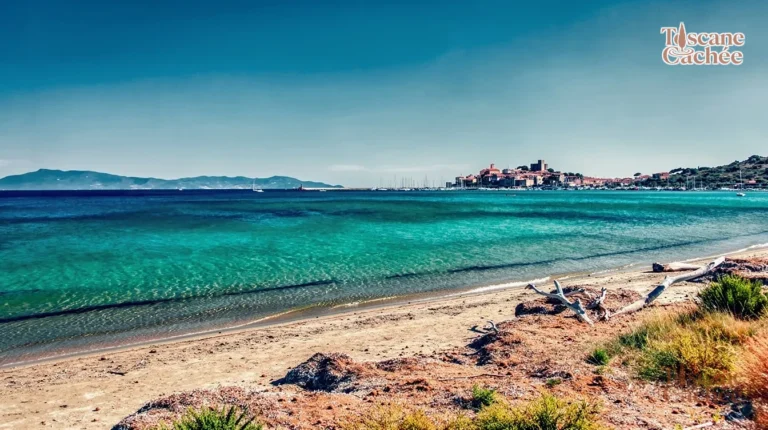
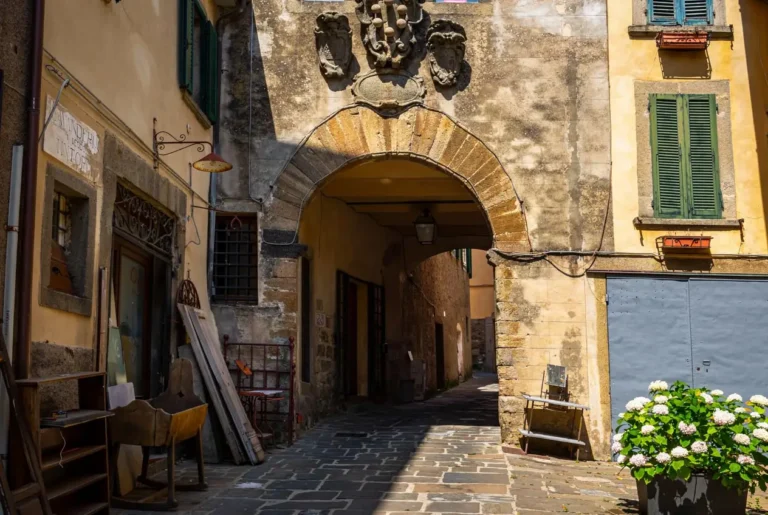
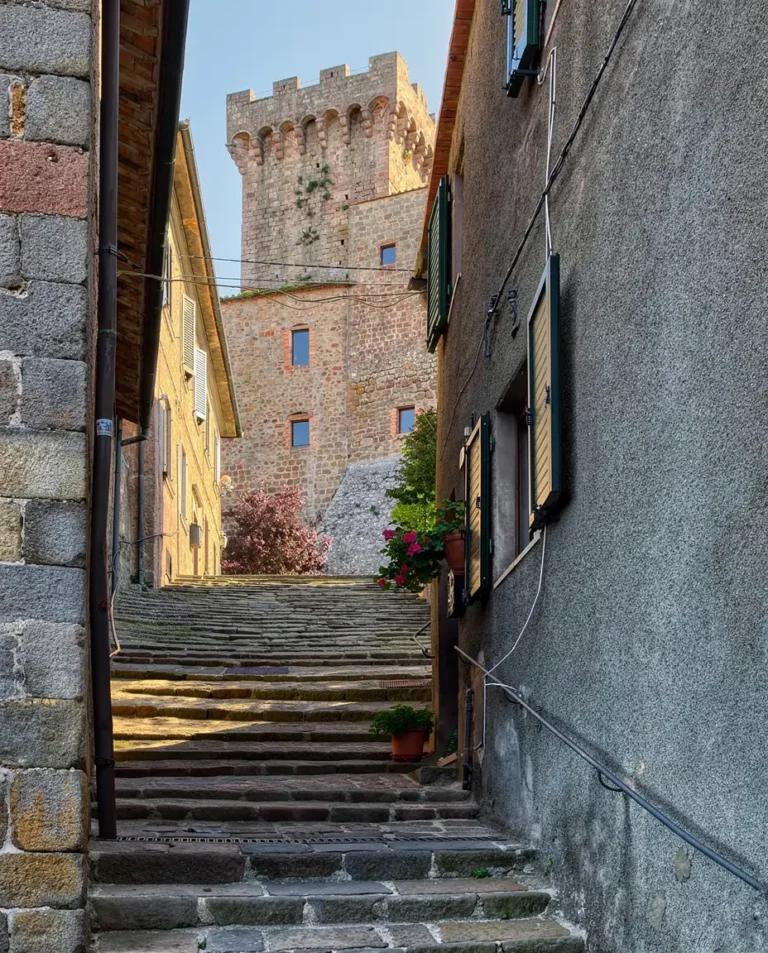
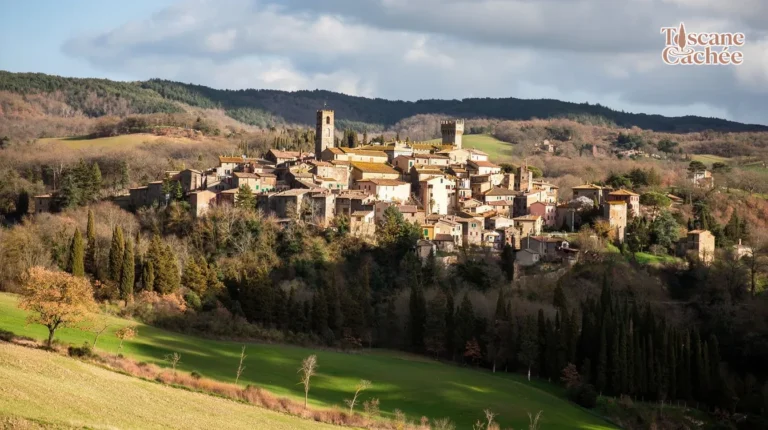
Sorano is a medieval tuff town built by the Aldobrandeschi, whose houses cling above the Lente valley
Ancient gate that bears the trace of Arcidosso's fortifications and marks the climb up to the Rocca Aldobrandesca
Village on the Argentario with a paved old town, flowered balconies and 16th-century Spanish fortresses overlooking the bay
Capital of Monte Argentario, Porto Santo Stefano is a lively fishing port and the departure point for Giglio and Giannutri
A sheltered natural cove on the northeastern side of the Argentario, with gray sand and dark pebbles, which keeps calm seas even in tramontana wind
Capalbio's annual art competition, held alongside the Sagra del Cinghiale, whose theme is the Maremma wild boar
For 11 years, Salaiola has turned its alleys into a nativity scene exhibition, each accompanied by a poem and made by the residents
The promontory of Ansedonia preserves the cyclopean walls and Roman ruins of Cosa, with a view over the Argentario from the Arce
A wild promontory of pebble coves and rocks, such as Cala del Gesso with its islet and underwater cave, or Cala Grande with its three beaches
Beneath the northwestern point of Giannutri lie a Roman hull from the 1st century and the wreck of the Nasim II, on an immaculate white seabed, to be seen only with guided diving
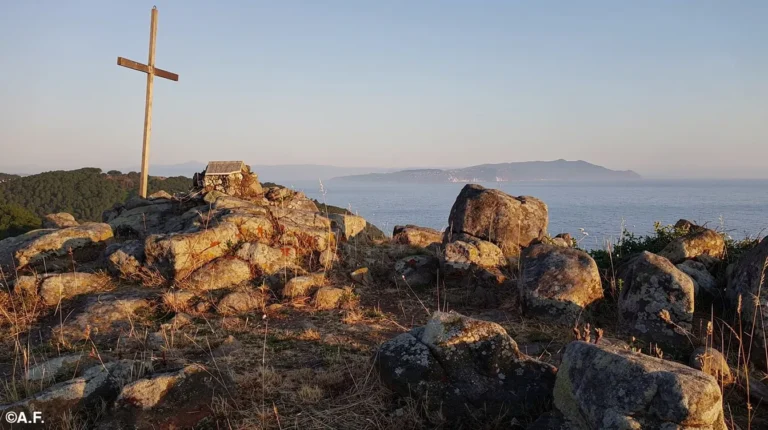
Highest point of Monte Argentario at 645 m, with a 360° panorama over Giglio, Giannutri and, in clear weather, Corsica
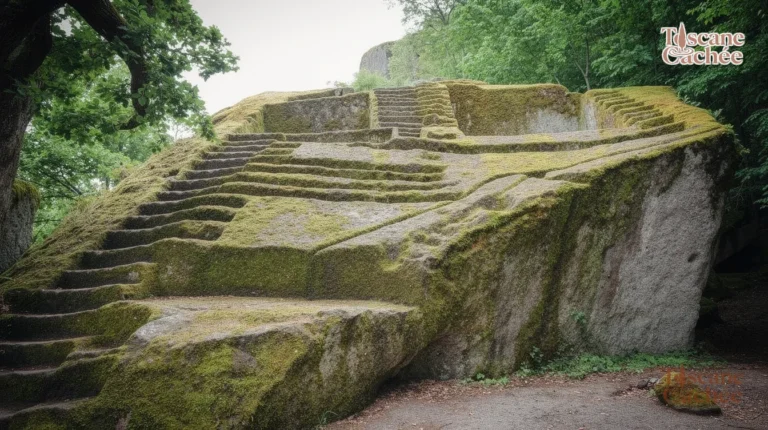
A monolith of volcanic rock carved with staircases, the «preacher's rock» hides in the woods of Bomarzo, near the waterfalls of Chia and the necropolis of Santa Cecilia
Ramsar wetland of 1,277 hectares between Grosseto and Castiglione della Pescaia, the last remnant of Lake Prile, rich in birds; its visitor center is the Casa Rossa Ximenes built in 1765 [regione.toscana.it](https://www.…
Wild and silent reserve near Manciano, with rich wildlife, presented as the alternative to the crowded Cascate del Mulino
A medieval fortress overlooking the rooftops of Arcidosso, taken by the Sienese in 1331 after a siege by Guidoriccio da Fogliano, it now houses three museums
A Pisan fortress whose towers overlook the fortified village of Giglio Castello, on the island of Giglio ([visittuscany.com](https://www.visittuscany.com/fr/territoires/sud-de-la-maremme/))
A 12th-century medieval fortress overlooking Manciano, it offers from its crenellated tower a panorama over the Maremma, the Tyrrhenian Sea and the islands
Rocchette di Fazio is a medieval hamlet with stone facades adorned with Templar crosses and engravings, watched over by its commandery above the Albegna valley
Cosa preserves the cyclopean walls, the forum and the baths of a Roman colony from 273 BC
The Gorello is the thermal stream that feeds the travertine pools of Saturnia, freely accessible day and night
An annual village festival where the cooks of Sticciano serve handmade strozzapreti, in a multipurpose hall surrounded by cork oaks, with music and a market
Annual festival of San Casciano dei Bagni centered on the ciaffagnone, a rustic crepe served savory with pecorino or truffle, or sweet, with handmade tagliatelle and grilled meat
The Sagra del Cinghiale animates Capalbio during the second week of September with over 60 editions, centered on wild boar, an emblematic Maremma dish
A village sagra in early-to-mid October dedicated to the Amiata mushroom, with specialized menus and nature walks in the Amiata woods, in Bagnolo, near Santa Fiora
Sagra del Marrone: chestnut festival in a medieval village, with local crafts and a festive village atmosphere
The Sagra del Picio in Seggiano celebrates handmade dough made from flour, water and olive oil, with DOP and IGP local products at the heart of Monte Amiata
Village festival held since 1975 by the local Pro Loco, dedicated to the porcino mushroom from the woods with traditional dishes such as fried mushrooms
The Sagra del Porcino in Arcille (Campagnatico) celebrates the porcino mushroom from August 17 to 31 and then from September 4 to 6, 2026
Montalcino festival born in 1958: more than 150 performers in 15th-century costumes, folk dances and an archery tournament between the four districts
A village festival in the Colline Metallifere where the Pro Loco has been preparing handmade maremmani tortelli for more than fifty years, with barbecues, live music and a funfair with free admission
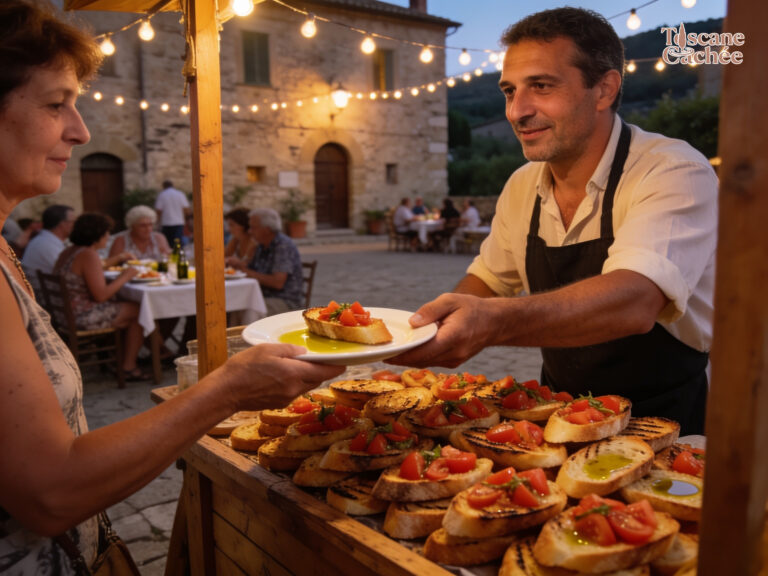
Sagra della Bruschetta brings the giardino of Capalbio to life in the first half of August, with music, bruschetta and local products
A village festival dedicated to the Selva onion, around August 15, with community meals, stalls and music
Sagra della Pecora e del Maiale, a festival in Monterotondo Marittimo dedicated to stews of mutton, wild boar, venison, arrosticini, suckling pig and polenta, with local wines and cheeses
Sagra in mid-July in Ribolla, near Gavorrano, centred on ribollita, the Tuscan peasant soup, served in country-style menus with lively evenings
Village sagra in early August in Pescina, a hamlet of Seggiano, centred on scottiglia and Monte Amiata wines, with concerts
Sagra in mid-July in Roccalbegna centred on gnocchi, fried food and a craft beer, with music and dances
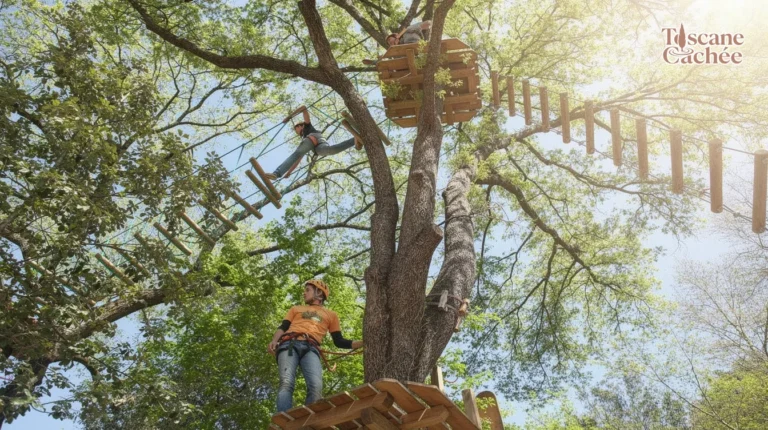
In Manciano, a treetop adventure park with zip lines and suspension bridges under large oaks, designed for a family outing in nature
Medieval village in the Sienese Valdichiana built around 42 hot springs at 40 degrees, used since Roman times
The Sangiovese di Montecucco is a DOCG appellation of the Maremma, a local grape variety growing on volcanic terroir
A festival of new wine and oil, on the first weekend of November, with tastings and entertainment in the tufa borgo of Pitigliano
A village sagra in Tatti, a hamlet of Massa Marittima, centred on new oil and wine, wild boar, mushrooms and chestnuts
Sassotondo has been growing Ciliegiolo organically since 1994 and biodynamically since 2007 on the tuff of Sorano, with cuvées aged in terracotta
 Winedering
A free thermal bath at 37.5 °C in travertine pools shaped by the Gorello stream, accessible 24/7 and free of charge all year round
20,000 m² thermal park fed by the Saturnia spring: 4 outdoor pools, hot tubs, vascular trails and a sauna
GetYourGuideScansano, a medieval village in the Maremma, is the heart of Morellino, among vineyards and olive groves
School is Over opens the Argentario season at Terra Rossa (Monte Argentario) from June 27 to 29, 2026, with street food, craft beers, artisans and producers from the Maremma
Semproniano is a medieval town perched on the slopes of Mount Amiata, with stone alleys, tuff buildings and inns from €30-50 a night
Ridge trail of the Uccellina, between the Tyrrhenian Sea and medieval towers, in the heart of a Maremma that has remained wild [visittuscany.com](https://www.visittuscany.com/)
The A7 trail joins the Ombrone river mouth on flat ground, a wild delta where flamingos and herons nest, one of the few park routes open without a guide in summer
Tuf trail linking Sorano to Vitozza: the via cava of San Rocco, the Lente valley and nearly 200 cave dwellings
Roselle combines an intact Roman amphitheatre in the closely mown grass and Etruscan cyclopean blocks from the 7th century BC
Sorano, the Matera of Tuscany, stacks its houses carved into the tuff above the valley, between the Fortezza Orsini, Etruscan vie cave and hot springs at 37.5 °C
Hiking trail on the slopes of Monte Amiata, a volcanic massif whose waters resurface as springs throughout the region [cascate-del-mulino.it](https://www.cascate-del-mulino.it/en/)
Sovana, a small medieval tuff town, is home to an Etruscan necropolis as well as the vie cave of Cavone and San Sebastiano, linked to the Città del Tufo park
Ancient fissure carved into the Ansedonia promontory, a stone's throw from the Tagliata Etrusca: a narrow and wild passage, described as far from any crowd
Fine sandy beach between gentle cliffs, facing Monte Argentario, reachable on foot, by car or by water taxi, with calm swimming and snorkeling without certification
Small cove of golden gritty sand on the east coast of Giglio, more intimate and wild than Cannelle, with turquoise water ideal for snorkeling away from the crowds
In Vetulonia, the Etruscan stele of the warrior Auvele Feluske shows a fighter with a Corinthian helmet and shield
The Strada Panoramica dell'Argentario crosses wild Mediterranean scrub and leads to coves described as secret, with varied sea panoramas
The synagogue is at the heart of the «Little Jerusalem», the Jewish ghetto of Pitigliano occupied since the 15th century, extended by a museum and spaces carved into the tuff
In Ansedonia, the Tagliata Etrusca is a canal carved into the rock, with the paraties that regulated the ancient port of Cosa
Fishing village on a rocky promontory, with 13th-century ramparts, the Rocca Aldobrandesca and southern access to the Maremma park trails
A 3,000-hectare State farm in the Maremma park, where the butteri work Maremmana cattle and horses every day during guided visits with working riding demonstrations
Sulfurous volcanic-origin spring at 37.5 °C feeding a 20,000 m² park: five pools, hydromassage, sauna and hot-cold baths
 Expedia
A 7-hectare thermal park around an ancient parish church, with a large pool at 37.4 °C and the Bagno dei Frati, a historic 15th-century pool
Terme di Vulci, in the Maremma, offers four natural pools with varied colors and temperatures, fed by hyperthermal waters
The Leopoldina, a water intended for digestion, is drunk as a cure at the oldest spring of Montecatini Terme, founded in 1775
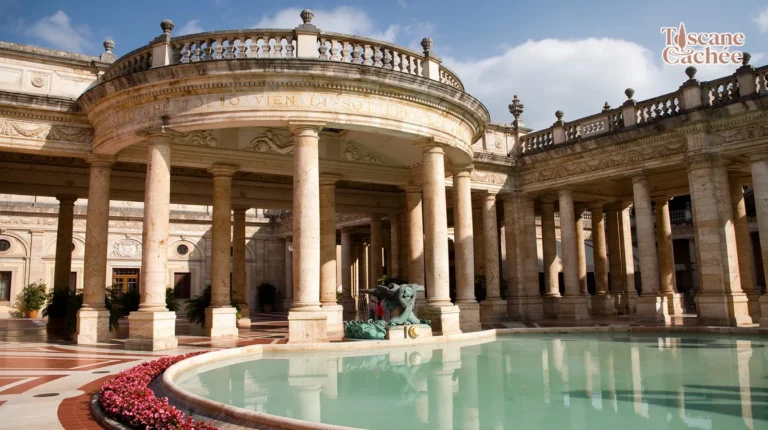
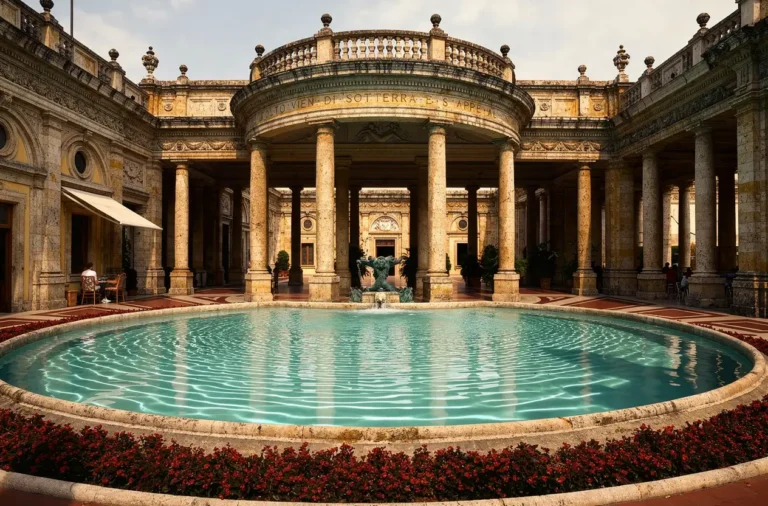
Belle Époque establishment of Montecatini Terme: frescoes, colonnades and parks can be visited even without taking the waters
Petriolo combines free natural sulfurous water pools and modern thermal facilities in the heart of wild nature
The Tomba della Sirena is an aedicula Etruscan tomb whose figured pediment is the only preserved one comparable to that of the Demoni alati, in the rock-cut necropolis of Sovana
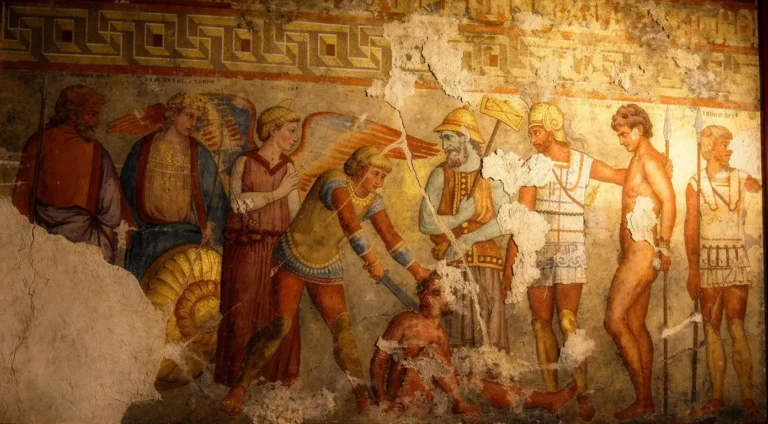
Etruscan tomb unearthed in 1857 in the necropolis of Vulci, known for its mythological frescoes, including the sacrifice of the Trojan prisoners
In Sovana, the Tomb of Ildebranda is a temple-tomb carved into the tuff, integrated into the rock-cut necropolis and the Vie Cave of the Città del Tufo park
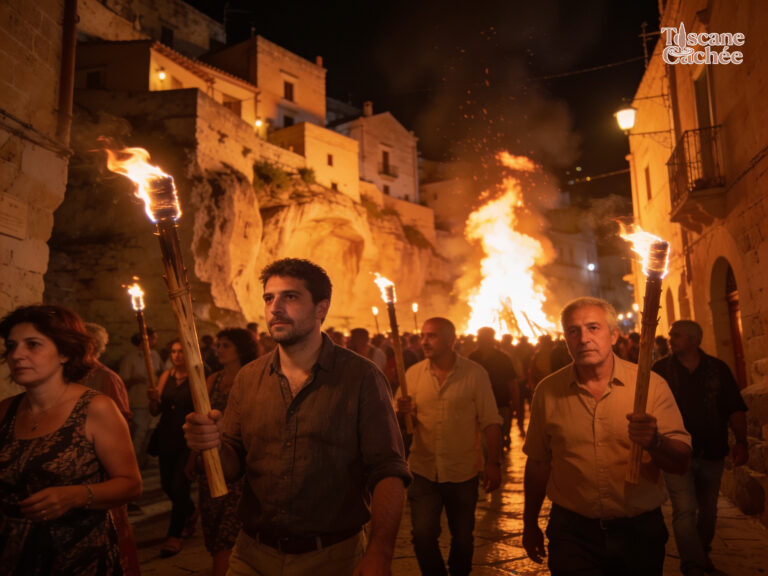
Night-time torchlight procession and Invernaccio bonfire, on March 19 in Pitigliano: a local festival presented as one of the most identity-defining in the Maremma, in a tufa village
The Torre Aldobrandesca is climbed on foot from the old centre of Arcidosso and offers, at 28 m, a 360° panorama over the Amiata
Tower of 1228 truncated by the Sienese in 1335 and connected to the Cassero by a 21 m arch, with views over the gulf of Follonica and the island of Elba from the top
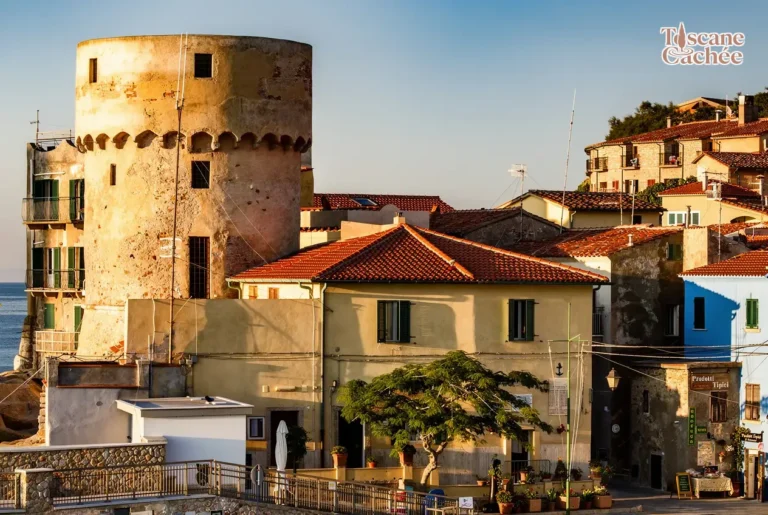
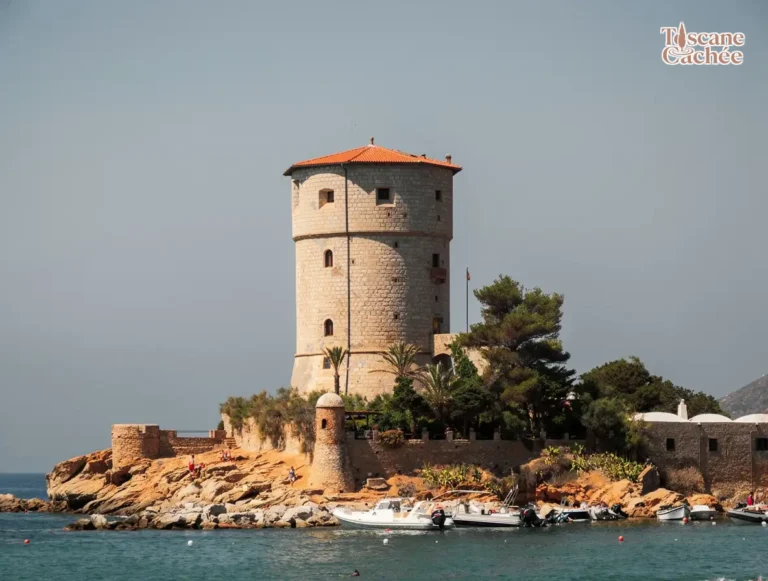
A defence tower from 1596 that dominates the port of Giglio, visible a few minutes from the quay, a witness to the island's strategic past
A 16th-century watchtower perched 350 m above the sea, reached by a steep trail through the scrub from the port
On the Campese beach, this 18th-century tower stands out against the sea, next to the nearby faraglione rock
The Tumulo della Pietrera, in Vetulonia, combines two superimposed tombs and a central omphalos pillar, in a Maremma free of crowds
The largest tumulus in Etruria, the Cuccumella is an earthen mound with underground galleries in the archaeological and naturalistic park of Vulci, open every day
Village in Etruscan Lazio whose acropolis combines two Romanesque basilicas, a crypt with 28 reused ancient columns and frescoes of the Last Judgment
Sandy beach with crystal-clear water, presented as away from the crowds in the Maremma of Capalbio
The Vermentino Maremma Toscana DOC is the white wine of the Maremman coast, saline, fresh and fruity, designed for seafood
Vetulonia, an Etruscan village in the Maremma, is part of the three archaeological parks along with Cosa and Roselle and hosts ongoing excavations at the Domus dei Dolia
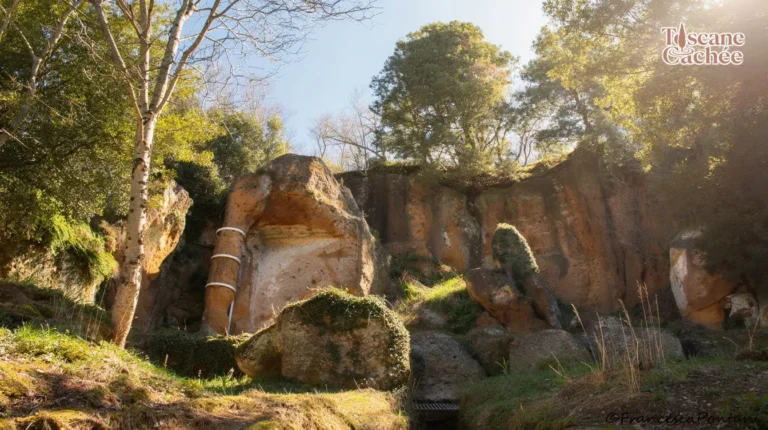
A cliff-cut way carved by the Etruscans in the tuff, described as the most monumental in the Maremma, with tombs and engraved symbols
Last stop of the vie cave circuit, the Via Cava di Poggio Cani plunges into corridors of tuff dug by the Etruscans, with caverns still used as wine cellars
An Etruscan canyon carved into the tuff, paired with a small necropolis of chamber tombs and an image of Saint Joseph painted on the rock
Etruscan pathway carved into the tuff 2 km from Sorano, linking the San Rocco necropolis to the Lente valley
An Etruscan path carved into the tuff at Sovana, with vertical walls and a cool, humid atmosphere, in the area of the vie cave of the Città del Tufo
In the hills of Montecarlo (LU), a landscape of family estates and vineyards presented as untouched by mass tourism, as an alternative to better-known Tuscan appellations
Near Giglio Porto, these remains of a Roman property house a cetaria, an ancient fish pond among the best preserved on the Tuscan coast
Vinellando is an annual festival in Magliano in Toscana centred on Morellino di Scansano, with tastings, music, entertainment for children and a vote for the favourite wine
Vino nel Borgo offers a night-time wine trail through the medieval borgo of Castiglione della Pescaia, on the first weekend of September, with tastings of wines from the province
Viterbo, a medieval city of alleys and palaces described as far from the crowds, is not located on the Etruscan coast
Abandoned rock-cut town and one of the largest in Italy: about 200 cavities carved into the tuff, ramparts, cisterns and churches, inhabited until the 17th century
 Tosco
The gastronomy of the Tuscan Maremma is a cuisine of poverty elevated by extraordinary ingredients. The'acquacotta, ancestral soup of shepherds and woodcutters, contains only water, wild vegetables and a poached egg — and yet it concentrates all the flavor of the Tuscan countryside. The scottiglia, stew of mixed meats in red wine, tells of the make-do economy of the Maremma farms of the past. It is these recipes, in these trattorias that have not changed their menu in twenty years, that Hidden Tuscany documents.
Our gastronomic selection is not a guide to starred restaurants: it is a directory of addresses where the cuisine de territoire is practiced with conviction. The emblematic products: the pecorino di Manciano PDO, the cured meats of cinghiale (sanglier sauvage), la finocchiona with wild fennel, the chestnut honey of Mount Amiata, and the local red wines. Our fact sheets include precise contact details, opening hours and an honest description of the value for money.
 Français Français
 Italiano
 English
 Polski
 Português do Brasil
 Nederlands
 Español
 Deutsch