Red
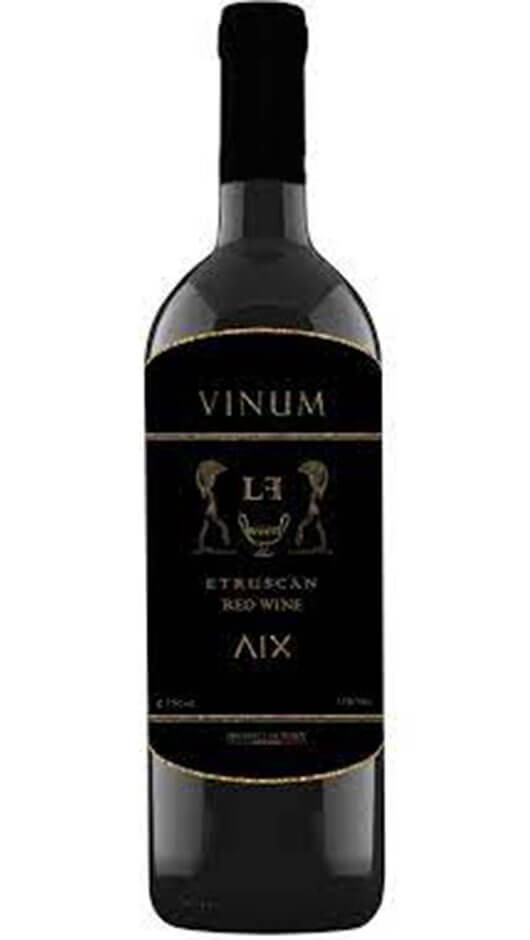
Bio Tarazona Miriam · Cortona, Valdichiana & Arezzo
PGI
- PGI
- Sangiovese - Canaiolo - Ciliegiolo 85%…
- 2014 · 75 cl
Vin IGP d'Arezzo assemblant Sangiovese, Canaiolo et Ciliegiolo, élevé au moins 12 mois en botti et certifié bio
6,0
1,202 vins notés
Morellino, Brunello, Bolgheri, Vermentino : appellation, cépage, prix relevé et notre note, pour choisir avant de commander.
🍷 This site features wines
This content concerns alcoholic beverages. Please confirm that you are of legal drinking age in your country of residence.
Alcohol abuse is dangerous for your health. Consume in moderation.
Vin IGP d'Arezzo assemblant Sangiovese, Canaiolo et Ciliegiolo, élevé au moins 12 mois en botti et certifié bio
Classement par note Toscane Cachée (fiche technique, avis de la presse et rapport qualité-prix). Prix relevé chez le vendeur, à vérifier au moment de la commande ; les liens sont affiliés.
L'abus d'alcool est dangereux pour la santé, à consommer avec modération. Vente interdite aux mineurs.
Compléter ton séjour
Questions fréquentes
Pour une bouteille de Morellino di Scansano de 75 cl, compte environ 8 à 17 € en magasin ou chez un producteur ; une Riserva coûte souvent davantage, autour de 12 à 25 €,…
Lire la réponse complète →Les vins les plus typiques de la Maremme toscane sont le Morellino di Scansano, rouge à base de sangiovese, et les blancs de Vermentino et d’Ansonica. Le Morellino est une DOCG élaborée avec au…
Lire la réponse complète →Le marché hebdomadaire de San Vincenzo a lieu le samedi matin, généralement de 8 h à 13 h, sur la piazza Giovanni XXIII. Arrive plutôt avant la fin de matinée : les étals commencent…
Lire la réponse complète →Le Vermentino est un cépage blanc méditerranéen, et le nom du vin élaboré à partir de ce raisin. On le trouve notamment en Maremme, dans le sud de la Toscane, ainsi qu’en Sardaigne et…
Lire la réponse complète →Pour goûter les vins les plus typiques de la Maremme, commence par le Morellino di Scansano DOCG, puis compare-le à un Montecucco Sangiovese DOCG et à un Vermentino de la Maremma Toscana DOC. Il…
Lire la réponse complète →Winedering est une plateforme de réservation : tu compares des dégustations proposées par des domaines en Toscane, puis tu choisis une expérience, une date et le nombre de participants. Les offres peuvent inclure seulement…
Lire la réponse complète →Explorer
Envies, types et zones : chaque lien mène à une page avec sa liste, sa carte et ses conseils.
Le guide
Tuscany produces more than 2.6 million hectoliters of wine every year, but the majority of the bottles you find in supermarkets are just soulless industrial labels. It's infuriating to see enthusiasts pay top dollar for a generic Chianti when the schist and clay terroirs hide characterful gems.
You often end up choosing your bottle at random based on the label without understanding what the Sangiovese is really telling you. This Tuscan wine guide is here to teach you how to decode the appellations and track down authentic bottles, from structured reds to forgotten whites, so that you finally stop drinking hot air.

Sangiovese dominates Tuscany with its tannic structure and acidity, ranging from the minerality of Maremma's schists to the power of the clays, thus defining the Brunello and Chianti Classico appellations. It all starts with the rock and soil that forge its character.
Clay terroirs retain water and force slow maturation. This gives the Sangiovese massive tannic power and density on the palate that you won't find anywhere else.
Schist brings a unique mineral tension. Discover the Montecucco Sangiovese DOCG: The secret wine of Tuscany to taste this saline uprightness.
Clay offers body and power, limestone brings elegance and roundness, while schist guarantees a sharp minerality. Regional typicity depends on this geological puzzle.
Limestone relies on elegance and finesse of aromas. Conversely, clay builds fleshy wines. Your selection should respecter cette typicité régionale to avoid standardized juices.
The Mediterranean breeze regulates summer temperatures along the coast. This breeze brings a subtle salinity to the grapes and naturally protects the clusters from devastating fungal diseases.
The mountains impose radical thermal contrasts. These cool nights are vital for preserving the natural acidity of the Sangiovese grape variety, garantissant ainsi son équilibre et sa longévité.
L’altitude devient le rempart ultime contre le réchauffement climatique. It is the secret of the most authentic estates that still manage to produce digestible and balanced wines today.

Après avoir compris la terre, tu dois maintenant learn to decipher what is written on the bottle so you don't go wrong.
Le Brunello impose un vieillissement en fût de 24 mois. Le Rosso sort en un an seulement. Cette attente forge la structure.
The price of Brunello funds its complexity and aging potential. C’est un vin de patience. Découvre the Orcia Valley and the cellars of Montalcino pour le comprendre.
Préfère le Rosso pour un immediate pleasure. It's the ideal option for drinking local without needlessly breaking the bank.
% 1001 Sangiovese, long aging, exceptional cellaring potential, high price.
Short aging, accessible fruit, immediate pleasure, affordable price.
Look for the Gallo Nero to identify the historic zones. This symbol guarantees a controlled origin and strict production.
The Annata, Riserva and Gran Selezione hierarchy defines quality. Each level gains in aromatic finesse and woody structure.
Avoid the industrial versions with no character. Always check these elements :
The black rooster distinguishes historic Chianti Classico from mass productions. It is your only true quality benchmark.
Our addresses · Montalcino
Our favorite addresses around Montalcino
Alcohol abuse is dangerous for health, consume in moderation.
If the classic appellations seem too rigid to you, know that there exists a fascinating world off the beaten path.
In the 70s, rebellious winemakers shook everything up. They planted Cabernet Sauvignon against the obtuse rules. These pioneers thus broke the codes of the traditional DOC.
IGT Bolgheri wines now dominate the global prestige market. These are exceptional bottles, often sold at a premium. Look closely which Maremma wine to buy? so you don't go wrong.
Careful, these powerful reds require serious decanting. Aeration is vital for them to finally open up.
Vernaccia from San Gimignano is a historic white with a strong temperament. Its final bitterness is its signature. It is the first Italian wine to earn the DOC.
Aleatico Passito from Elba is a rare and captivating red nectar. Its notes of rose and candied red fruits are unique. The grapes dry in the sun on traditional racks.
The coastal grape varieties deserve your full attention to break out of all-red.
| Grape variety | Style | Region | Perfect pairing |
|---|---|---|---|
| Vernaccia | Dry, fresh, almond | San Gimignano | Grilled fish |
| Vermentino | Fresh and saline | Tuscan coast | Marine aperitif |
| Ansonica | Structured and dry | Maremma / Giglio | Local antipasti |
| Aleatico | Sweet, red fruits | Elba Island | Dark chocolate |

Having a good bottle is one thing, knowing how to serve and pair it is another to truly enjoy it.
Set your temperature limits carefully. A red served too hot quickly becomes boozy. It then loses all its initial aromatic freshness.
Opening your bottle in advance isn't enough. The air exchange remains almost nil in the neck. Your Tuscan bottle needs more.
Favor decanting for your closed vintages. Use this technique sparingly. You release the complex aromas without tiring your wine.
Avoid high temperatures so as not to burn the aromas. Simply uncorking is useless for oxygenation; ; opt for a decanter for closed wines.
Pair your game with a Morellino di Scansano. Its robust structure absorbs the shock. It stands up to the power of the local wild boar ragù.
Pair your aged pecorinos with evolved reds. The richness of the cheese is demanding. It requires mellowed tannins for balance on the palate.
To enhance the truffle, forget wines that are too oaky. Here are the best options for your guide Maremma gastronomy :
Mastering this Tuscan wine guide means understanding that Sangiovese dictates its law between schist and clay. Don't be fooled by marketing anymore: choose the power of a Brunello for your cellar or the freshness of a Rosso for your next ragù. Grab your bottles now before the Maremma gems become inaccessible. Become the sole master of your glass.
From Grosseto, Montepescali is reached by heading up towards the heights that overlook the plain. The village lies about 12 to 15 km away depending on estimates, and the drive takes around 15 minutes. Take these indications as an order of magnitude rather than a guaranteed duration: the actual time depends on your starting point and the route chosen. Montepescali is a frazione of the municipality of Grosseto, but its historic centre perches above the plain, behind a stone enclosure.
The trap to avoid concerns the train: the station called Montepescali is not in the village. It is located in Braccagni, below, in the plain. Getting off there therefore does not mean you have arrived at the historic centre, and you need to plan how to reach the village from the station before setting off. Once up there, the visit is done on foot, following the walls and the narrow streets. If you are organising a getaway from Grosseto, check the last stretch of transport carefully and do not rely on the station name alone: it is the practical detail that prevents your stroll from starting with an unpleasant surprise.
To walk around the village and reach the main viewpoints, allow about one hour as a benchmark. It is not a schedule to be kept to the minute: Montepescali is best discovered by walking along its enclosure, and stops to look at the plain can easily lengthen the visit. The route follows the Mura di Montepescali, a medieval enclosure with an elliptical shape. It is not signposted, but keeping the walls within sight helps you find your way between the gates, towers and narrow streets of the centre.
You can start near the gates, spot the Porta Nuova, then continue towards the Torre del Belvedere et la Torre del Guascone. Save the Baluardo a tre punte for the end: this bastion added in the 16th century now serves as a panoramic terrace, and its view is the highlight of the walk. If you like to take your time or photograph the landscapes, allow yourself more than an hour, especially in fine weather. The point is not to tick off each landmark quickly, but to walk along the walls without rushing and let the light change over the Grosseto plain before heading back.
The viewpoint to aim for is the Baluardo a tre punte, at the end of the route along the walls. From this panoramic terrace, the gaze stretches over the Grosseto plain to the sea, and the horizon may reveal the Arcipelago Toscano as well as Corse. Visibility, however, depends on the conditions of the day: it is better to consider these islands as a possibility tied to the clarity of the horizon, not as a view guaranteed on every visit.
The other parts of the village also allow you to look at the plain and the distant coastline, but the broadest panorama is found at the bastion. That is why it is better not to stop at the first openings between the houses: follow the enclosure and save the Baluardo for the end. The nickname Balcone della Maremma then takes on its full meaning, with the countryside spreading out below and the sea closing the view. To enjoy the view, choose a moment when you can linger rather than scheduling an express stop. Even if the islands cannot be clearly made out, the walk remains interesting for the contrast between the perched stone village, the great plain and the line of the coastline.
A tour of the walls gives a good overview of the fortified history of Montepescali, without needing to enter any specific monument. The enclosure, the gates, the towers and the bastion form the main landmarks of the walk. The Porta Vecchia collapsed in the 19th century: so do not expect to find it intact. The Porta Nuova, built between the 16th and 17th centuries, is another point to spot as you walk along the walls.
Continuing on foot, you can look for the Torre del Belvedere, then the Torre del Guascone, before arriving at the Baluardo a tre punte. Added in the 16th century, it now mainly serves as a panoramic terrace. The elliptical enclosure helps you understand the shape of the village, whose houses are packed behind the walls on the ridge. Since the route is not signposted, move along at a relaxed pace and use the walls as a guiding thread rather than expecting detailed signage. Montepescali particularly suits travellers who enjoy observing the visible traces in the fabric of the village and imagining its defensive role, more than those looking for a guided tour or a succession of monumental spaces inside.
After the panorama of the Baluardo a tre punte, take the time to head back towards the historic centre and spot a few places connected with the religious and civic memory of the village. The church of San Niccolò deserves particular attention for its cycle of frescoes by the Sienese school, some of which date back to the late 14th century. The exact date of the building itself is harder to establish. You can also walk past the church of Saints Stephen and Lawrence, another religious landmark of the centre.
To complete the walk, look for the Cassero Senese and its clock tower, then the Palazzo dei Priori, the former municipal seat. The Museo di storia locale Ildebrando Imberciadori is devoted mainly to rural life and offers another perspective on the territory. These stops give substance to the visit, but the village remains quiet and does not necessarily lend itself to a very packed programme. The origins of Montepescali go back to the early Middle Ages, without any founding date being universally agreed upon. Its history passes notably through the Aldobrandeschi, Siena, the Grand Duchy of Tuscany, Roccastrada and then Grosseto. It is better to explore these places without trying to do everything at a brisk pace, leaving time for the narrow streets and the views between two stops.
Yes, if you appreciate stone villages, quiet strolls and panoramas rather than a list of activities to tick off. Montepescali is above all a village perched above the Grosseto plain: its main appeal is walking along the walls and reaching the Baluardo a tre punte. The view stretches over the countryside to the sea, sometimes with a perspective extending towards the Tuscan archipelago and Corsica depending on visibility. The centre also preserves a few historical landmarks, such as the churches, the Cassero Senese and the former Palazzo dei Priori.
A walking visit lasts about one hour if you move along without long breaks, but half a day leaves you free to take photos, stop at the various viewpoints and visit the museum devoted to rural life if it matches your interests. On the other hand, do not come expecting lots of shops, a dense cultural programme or a succession of monuments open to visitors: the charm of the place lies in its calm and its commanding position. If you are travelling in the Maremma and want to take a break between Grosseto and other discoveries of the region, it is a detour suited to a slow outing. Just plan the journey up to the village, because Montepescali station is actually located in Braccagni, in the plain.
Explore the Tuscan Maremma wine route in 2 days. Taste the Morellino and…
Discover which Maremma wine to buy: Morellino di Scansano for its power…
Découvre Sassotondo à Sorano : goûte au Ciliegiolo bio sur tuf volcanique et explore…
Découvre mon avis winedering maremme toscane : réserve tes dégustations bio chez Mambrini ou…
Trier par
Color
Zone viticole
Prix de la bouteille
Grape variety
Origin
Style
Vintage
Estate
Bouteille ou coffret
Réserver sur
Note Toscane Cachée
Notre note sur 10 est volontairement exigeante : les coups de cœur sont les 10 % les mieux notés du hub.
 Français Français
 Italiano
 English
 Polski
 Português do Brasil
 Nederlands
 Español
 Deutsch
 Bottle of Italy
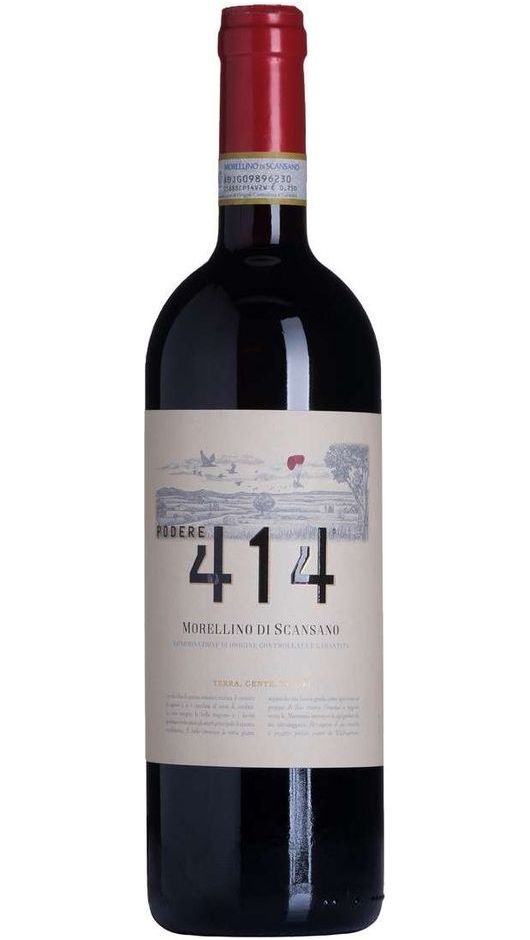
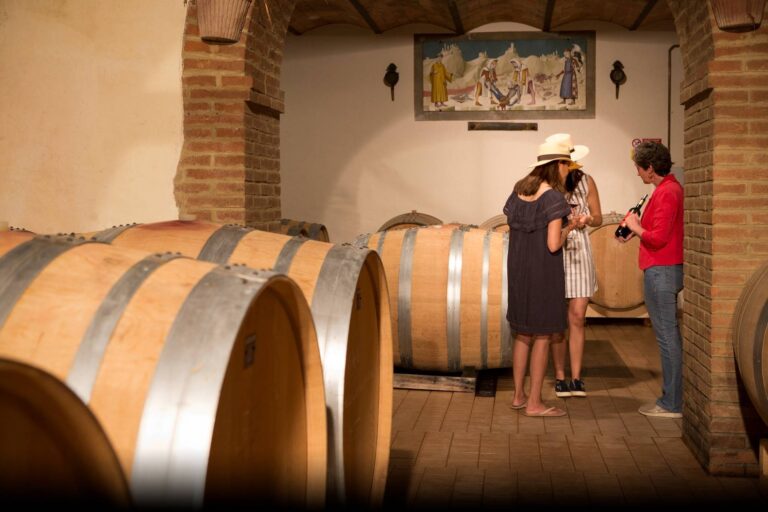 Wine tastingsDégustations autour de Murlo
 Places to visitÀ voir autour de Murlo
 AgriturismosAgriturismos autour de Murlo
 AccommodationsOù dormir autour de Murlo