Home › FAQ › Gastronomy & wine › History
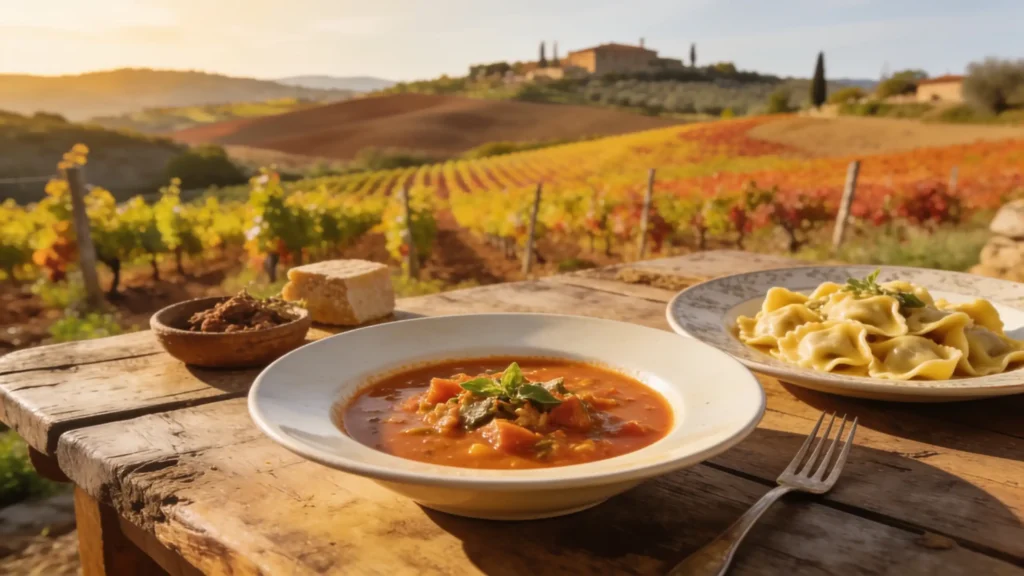
Acquacotta was born in the Maremma, in southern Tuscany, as a peasant soup made with whatever was on hand. Its name literally means "cooked water", but its precise origin is not documented: it is therefore impossible to attribute with certainty a single date or invention to it.
It was associated with countryside workers — notably the bergers, aux butteri, horseback herd keepers, and the charbonniers — who cooked outdoors with simple provisions. In the pot, water cooked onions and vegetables available depending on the season; stale bread, olive oil and sometimes an egg made the meal more nourishing. Each family and each village could adapt the soup to their supplies: there is no single, fixed ancient recipe.
One sometimes encounters the idea that acquacotta dates back to the Etruscans, but this lineage belongs more to traditional storytelling than to an established origin. What can be said more reliably is that it expresses a cuisine of necessity from the Maremma : use few ingredients, avoid waste and turn a broth into a complete meal.
 Article
 Article
 Article
 Place sheet
 Français Français
 Italiano
 English
 Polski
 Português do Brasil
 Nederlands
 Español
 Deutsch