








Between Pisa and Livorno, you can sit on a train and wake up in Liguria, in front of painted houses tumbling down to the sea. Or drive an hour and a half south and find yourself in a pine forest that smells of hot resin, with no one around. The Cinque Terre vs Maremma debate almost always comes from a misunderstanding: people compare two regions as if they belonged to the same scenery. They don't look alike, and neither does your stay. I'll tell you where each one wins, and how not to choose if you have a few extra days.
Cinque Terre vs Maremma: Liguria is not Tuscany
Let's clear that up right away: the Cinque Terre are located in Liguria, on the Riviera di Levante, not in Tuscany. Many lump them together because you arrive through Pisa or Livorno, on the Tuscan side. Yet you change region, with a different cuisine and a different pace.
Cinque Terre means "five lands," and they are five villages: Monterosso al Mare, Vernazza, Corniglia, Manarola and Riomaggiore.
Maremma, on the other hand, is truly Tuscan. It is the southwestern part of the region, around Grosseto, and has nothing to do with the postcard views of Florence or Siena. Here, you'll find drained marshes, low hills, buttafuoco and beaches that seem to go on forever.
Fifteen kilometers versus one hundred: two ways of traveling
The Cinque Terre coastline measures about 15 km. It is short, dense and vertical: everything fits into a single glance from a trail. You move from one village to the next in a few minutes, and the sound of suitcases on the quays of Vernazza sets the rhythm of the day.
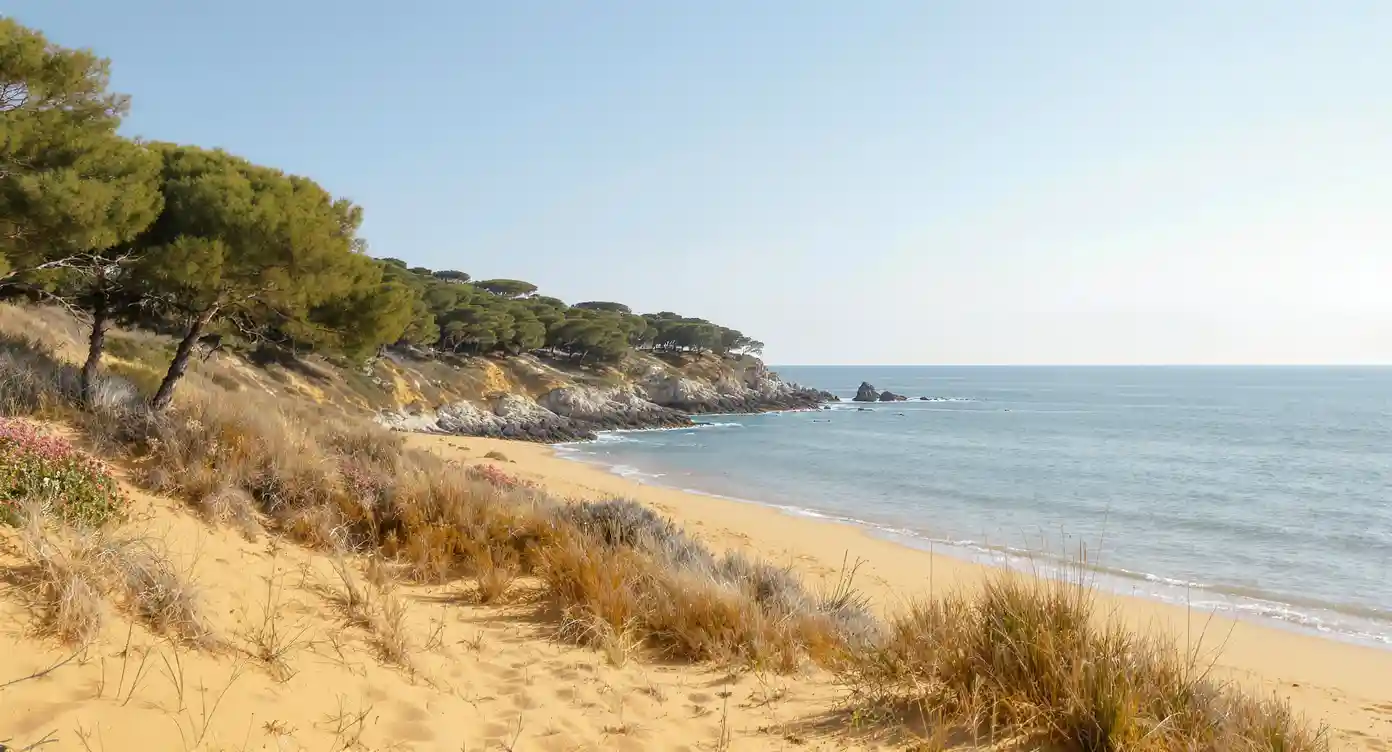
The coastline maremman stretches for about 100 km, from the Gulf of Follonica to Argentario. There, nothing can be taken in at once. You change landscape every twenty minutes: dunes, cliffs, lagoon, small harbor. The silence between two beaches is part of the journey.
So the real question isn't "which region is the most beautiful." It's: do you want a compact, highly organized visit, or a territory to explore at your own pace?
The head-to-head comparison criterion by criterion: access, sea, crowds
Getting around
In the Cinque Terre, you leave the car behind. You get around on foot and along the trails, and that is precisely what gives them their charm. To get there, go through Pisa or Livorno, then take the railway line that follows the Ligurian coast.
In Maremma, it's the opposite: a car is essential in most cases. The beaches are at the end of pine-lined roads, the villages twenty minutes apart. Grosseto and Follonica allow you to manage partly without one, as long as you stay within their area. For the rest, rent a vehicle and accept the dust on the bodywork. white roads on the bodywork.
The sea and the crowds
In Liguria, swimming is often done from rocks or small pebble coves. Monterosso al Mare offers more space at the water's edge than the other villages: it is the only one where you can lay down a towel without feeling cramped.
Maremma wins on sand. The Maremma Park, the Parco dell'Uccellina, has about 25 km of coastline between dunes and pine forest, and you can walk for a long time before meeting anyone. Cala Violina, in Scarlino, is described as the most spectacular beach on the coast, with sand that squeaks underfoot. For lovers of rocks, Monte Argentario, toward Porto Ercole and Porto San Stefano, answers the Ligurian coves, just as Talamone.
The Cinque Terre are superb, but in summer their narrow trails fill up quickly.
What Maremma offers beyond swimming
After three days at the beach, Liguria remains a single scene, very beautiful but unique. Maremma, on the other hand, changes its tone as soon as you turn your back on the sea. The Maremma Park is a nature reserve, and the Diaccia Botrona, a large wetland, hosts migratory birds: you hear the rustling of reeds before seeing anything at all.
Pitigliano, Sovana and Sorano rise in the hinterland, carved into honey-colored volcanic rock. Where Vernazza plays with pastel colors, these villages play with dark stone, hollowed-out alleys and cliffs. The hot springs of Saturnia are also an advantage with no equivalent in Liguria: the hot water smells faintly of sulfur, and it is best not to bring a swimsuit or a bathrobe you want to keep.
Duration, budget and season: the table to help you decide
Two days are enough for the villages of the Cinque Terre. Beyond that, you go in circles on the same trails. Maremma requires 4 to 7 days to be covered, because driving distances eat up time. So plan a budget for fuel and parking for Maremma, and a budget for train tickets and accommodation in the villages for Liguria.
The recommended season for both regions is April to June and September to October. July-August remains workable for the Maremma beaches, where space is not lacking; in the Cinque Terre, it is the period when the trail turns into a queue.
| Criterion | Cinque Terre | Maremma |
|---|---|---|
| Coastline length | about 15 km | about 100 km |
| Moving | on foot, train, trails | car essential |
| Ideal duration | 2 days | 4 to 7 days |
| Beach | coves, Monterosso | sand, pine forest, dunes |
| High season | very crowded | beach workable |
Plan your stay in half-days rather than stages: a morning at the beach, an afternoon on the road, and the day flies by.
Verdict by profile: choose your side
Family with kids: Maremma, without hesitation. Sand, space, beaches where you can park right next to your towel and the little ones can run around without risk. Cinque Terre demands stairs, quays and constant vigilance.
Couple looking for calm: Maremma again. The nights are dark, the evenings unhurried, and a sunset over Argentario isn't shared with anyone. If your dream is a romantic stroll from village to village, Liguria wins.
Hikers without a car: Cinque Terre, without hesitation.
The combination: two days in Liguria, then on to Maremma
If you can't decide, don't decide. Start with Cinque Terre, car-free, walking from Monterosso to Vernazza. Then head back south, pick up a vehicle, and continue on to Maremma for the sand, the pine forest and the thermal baths.
You get the best of both: the postcard effect first, the silence afterward. Save the Ligurian villages for the beginning, while you still have the legs for the stairs, and Maremma for the end, when you just want to stretch out.
So, do you prefer the colorful houses at the end of the quay or the white road that leads you to a deserted beach? Set your first stop in Monterosso, and the rest will fall into place on its own.
Yes, provided you don’t want to see everything in one week. The combination works well if you start with two days in Cinque Terre, without a car, walking from Monterosso al Mare to Vernazza along the coastal path, then head south to pick up a vehicle and continue on to Maremma. The regional train that runs along the Ligurian coast leaves from Pisa or Livorno and drops you off in the villages within minutes, from one platform to the next, which makes the first stage very smooth.
For the second part, allow about an hour and a half to two hours of driving between La Spezia and southern Grosseto, depending on traffic and motorway tolls. The trap is trying to link the two regions in three days: you spend more time in the car than on the beach. Plan at least four to five days in total, with a transition night somewhere along the way, for example in Massa Marittima or on an agritourism farm in the hills, so that the change of scenery is a breather and not a race.
In July, the most useful rule is to avoid the best-known access points and aim for those that require a little effort. The Parco dell'Uccellina is ideal: about 25 km of coastline between dunes and pine forest, and much of it is only reachable on foot or by bike from the car parks at Marina di Alberese. Walk twenty to thirty minutes and you will find space to set down your towel far from the noise. Bring water, a hat and shoes you don’t mind getting dirty, because the sand quickly mixes with the roots of the pine forest.
Cala Violina, in Scarlino, is busier but remains magnificent, with fine sand that squeaks underfoot. Arrive before 10 a.m. in the morning or after 5 p.m. in the afternoon to avoid the peak crowds, and check parking before you leave: spaces are limited and fines are handed out quickly in high season. For a little more privacy, the coastline around Talamone offers smaller coves, reachable by short paths.
Yes, and it is probably the most different experience on your whole itinerary. The natural thermal baths of Saturnia gush out at a temperature of about 37 °C, the water is rich in sulphur and smells faintly of eggs, and you bathe in the open air, in natural travertine pools, without any grand facilities. Nothing like the hotel pools of the Ligurian coast. The site is public and free in its best-known part, the Cascate del Mulino, but be aware: the surroundings are often crowded at weekends and in the height of summer, and the car parks fill up by the morning.
For a more comfortable experience, there are paid thermal facilities nearby, with changing cabins, locker rooms and loungers, and these often require an online reservation, especially in July and August. Check the opening hours before you go and bring a swimsuit you don’t mind losing: sulphur can discolour some fabrics. The best time is still early in the morning, when steam is still rising from the pools and the air is cool.
It depends on what you want to do with your evenings. Grosseto is a practical town, with train stations, restaurants, a modest but pleasant historic centre and quick access to the sea via Marina di Grosseto or Principina a Mare. If you don’t plan to stay on site, it is a convenient base for getting around, but the town centre is quiet in the evening outside the season, and you will feel more like you are in a town passed through than in a place to really live.
For a more authentic immersion, the agritourism farms in the hills, around Massa Marittima, Scansano or Magliano in Toscana, offer rooms in working farms, often with breakfast made from homemade products: olive oil, pecorino cheese and jams. You gain silence and stars in the evening, but you accept driving more to reach the beaches and the thermal baths. Always ask whether the property has a private car park, and check the actual driving time to the sea before booking, because a hill road can quickly turn into twenty minutes of bends.
For both regions, the ideal window lies between late April and June, then from mid-September to early October. In Cinque Terre, the path between Monterosso and Vernazza remains passable, the villages have regained their rhythm and the regional trains are not overloaded, provided you book your Cinque Terre Card in advance if you plan to use the rail network several times. In July and August, the narrow paths become queues, and you sometimes have to wait a long time at the entrance to certain sections.
Maremma also benefits from these shoulder seasons: the beaches are more than adequate, the pine forest roads can be driven without traffic jams, and the September light over the dunes is exceptional. Be careful, however, of the heat in July and August, which can exceed 35 °C inland, and plan any walking in the morning before 11 a.m. The Diaccia Botrona nature reserve, for example, is more pleasant to visit in spring, when migratory birds are most numerous and the reeds have not yet been scorched by the sun.
For a complete visit to Maremma, a car is still very strongly recommended. The most interesting beaches are at the end of little-served pine forest roads, the inland villages such as Pitigliano, Sovana or Sorano are twenty minutes apart without regular public transport, and the Saturnia thermal baths are hard to reach without a vehicle. Regional buses do exist and connect Grosseto, Follonica and a few seaside resorts reasonably well, but their frequency drops sharply outside June to September and on Sundays, and timetables should be checked locally the day before.
If you still want to limit car use, focus on one area: a base in Grosseto or Marina di Grosseto with excursions by bus to the nearest beaches, and one day’s rental for the inland areas. In any case, book your vehicle in advance during high season, choose a small car to manage the narrow roads and beach car parks more easily, and keep in mind that the dust from white gravel tracks will dirty the bodywork. A small bag with water, a hat and a foot pump will come in handy if a country road has a surprise in store for you.
Around this article
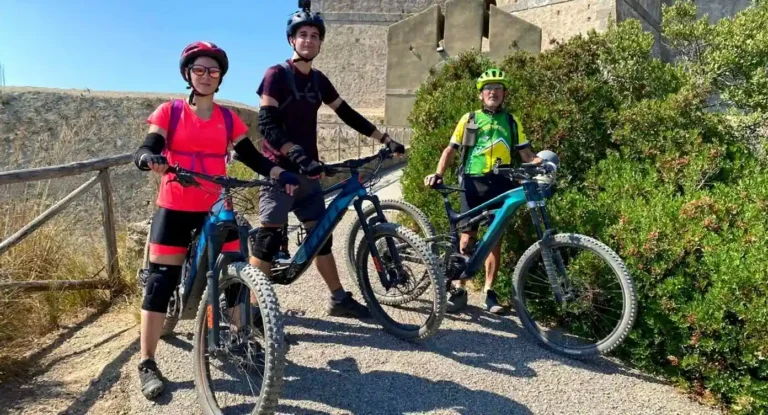
E-bike adventure on Monte Argentario and Porto Ercole
Live map & prices
Where to stay around Livorno?
Our recommended addresses nearby, then today's prices for your dates.
Cars · live prices
Your rental car from Pisa airport
The nearest rental companies are at Pisa airport. Here are the best current deals, compared and rated.
Searching for available cars…
See all cars and choose my dates
Booking and payment through Discovercars: the link earns us a commission, without changing your price.
Around Livorno