










The sea air of the Maremma still carries the breath of Vatluna when you push open the door of this ancient building of the Piazza Vetluna. Here, the silence of the display cases tells a city that once dominated the entire region with its maritime power and its copper mines.
Yet without the tenacity of a country doctor, these treasures would have remained buried under the brush. Discover how the Vetulonia Etruscan museum brings this glorious past back to life through jewelry of incredible fineness and warriors carved in sandstone.
Why the Etruscan museum of Vetulonia is your starting point
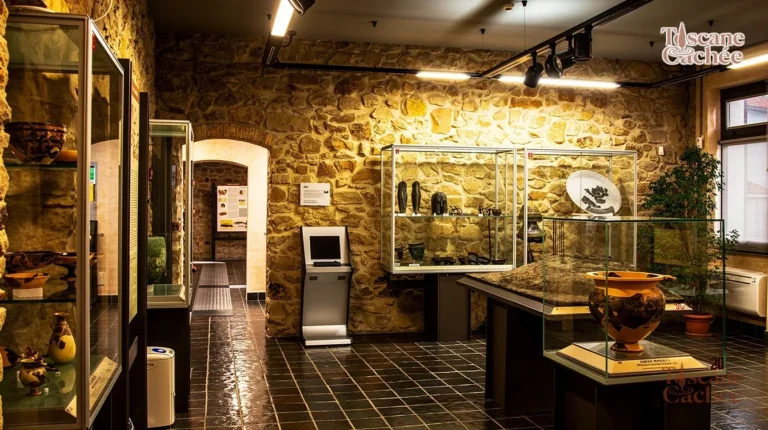
Isidoro Falchi Museum
At Vetulonia, the Isidoro Falchi Museum presents Etruscan artifacts of local origin, from Villanovan urns to orientalizing jewelry, spanning several millennia

Tosco A tip: after exploring the treasures of Falchi, walk on over to the tumulus of nearby Montecalvario to see where these mysterious Etruscans truly rested!
The Museo Isidoro Falchi of Vetulonia gathers unique treasures such as the stele of Auvele Feluske and granulation jewelry. Located in Piazza Vetluna, this site links archaeological collections and monumental necropolises accessible on foot.
To understand the origin of these wonders, you must look at the man who braved disbelief to bring this city back to life.
Isidoro Falchi, the doctor who unearthed a forgotten city
At the end of the 19th century, Isidoro Falchi divided his time between his patients and the land. This country doctor devoted a consuming passion to local archaeology.
His excavations made it possible to identify the ancient Vatluna despite the skepticism of scholars. His perseverance triumphed over the doubts of the era. He thus offered a major contribution to history.
His work only received official recognition belatedly.
The strategic importance of the city in the Dodecapolis

Vetulonia
Vetulonia, an Etruscan village in the Maremma, is one of the three archaeological parks along with Cosa and Roselle and houses ongoing excavations at the Domus dei Dolia
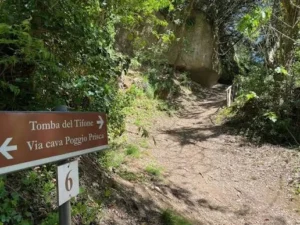
Tosco Don't limit yourself to the village museum: take the path below to explore the Tomba della Pietrera amid the olive trees, the atmosphere there is magical and much wilder than in Populonia!
Vetulonia occupied a central place in the league of twelve Etruscan cities. Its territorial power and political influence radiated over the entire region.
Its fortune rested on the exploitation of the metal-bearing hills. The copper mines generated a unprecedented economic wealth.
The symbols of power such as the fasces were born here. Rome would later adopt them as emblems of authority.
- Mining wealth
- Maritime domination
- Alliance with the Dodecapolis
- Cultural influence
- 12 cities made up the Dodecapolis.
- 19th century: the era of rediscovery.
- Copper and bronze : resources of the metal-bearing hills.
The 2 iconic pieces that truly justify the detour
Having understood the historical importance of the city, we must turn to the concrete objects that make the MuVet world-famous.
The stele of the warrior Auvele Feluske and its inscriptions
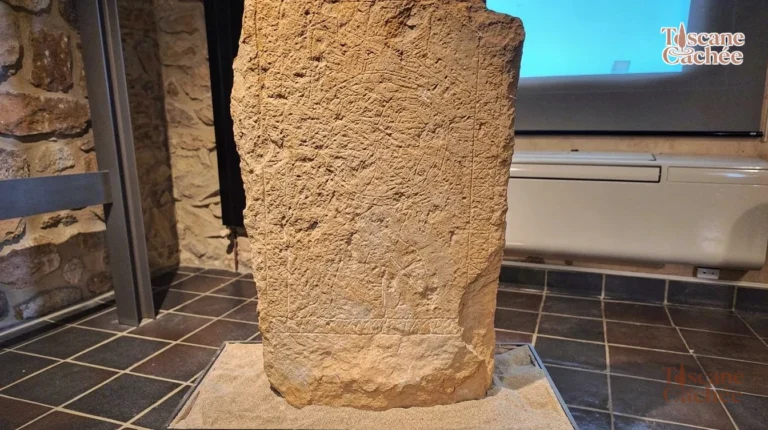
Stele of the warrior Auvele Feluske
In Vetulonia, the Etruscan stele of the warrior Auvele Feluske shows a fighter with a Corinthian helmet and shield

Tosco Keep an eye on the inscription that runs alongside the warrior: it is his mother's name engraved there, fascinating proof of the unique place granted to women among the Etruscans!
The relief strikes with its archaism. It shows a chief brandishing a double-edged axe. His crested helmet and round shield mark out a prestigious military equipment.
The inscription surrounding the figure is a treasure. It uses a very ancient Etruscan alphabet. This short text tells us directly about the social hierarchy of the first cities of Maremma.
To understand the mastery of the potters of Etruria and the sculptors, observe the precision of the line. Auvele Feluske remains one of the most famous faces of the local aristocracy.
Fine goldsmithing and the secrets of granulation
The gold and silver jewels come from the princely tombs of the 7th century. They display the insolent luxury of the elite of Vetulonia. Each ornament served to mark a high social rank.
The technique of granulation is a real technical challenge. The artisans soldered micro-beads of gold invisible to the naked eye. Achieving this fusion without liquefying everything borders on a miracle.
Filigree completes this work. The fineness of the gold threads testifies to unmatched manual craftsmanship.
| Technique | Description | Material | Period |
|---|---|---|---|
| Granulation | Micro-bead soldering | Gold and Silver | 7th century BC. |
| Filigree | Interlacing of fine wires | Gold | 7th century BC. |
| Stamping | Relief work | Gold and Silver | 7th century BC. |
How do you find your way through the thematic route of the rooms?
These treasures are not isolated, they are part of a chronological progression spread across the seven rooms of the building.
From the Villanovan period to the Orientalizing splendors
On the first floor, you observe the fascinating evolution of the biconical urns. These receptacles mark the gradual transition from cremation to inhumation. The local rites then change radically in appearance.
The furnishings of the shaft tombs of Poggio alla Guardia reveal an initial austerity. Then, the style becomes refined with the opening to Greek influences. It is the beginning of the Orientalizing period, more luxurious and complex.
The transition from the Villanovan hut urn to the tumulus tombs illustrates a growing social hierarchy, driven by the metallurgical wealth of Vetulonia.
You can explore the Tuscan via cava to compare these monumental funerary structures. The deposits found here testify to unprecedented opulence for the period.
Everyday objects and trade in the ancient city
The painted pottery and banquet utensils tell of an intense social life. Maritime exchanges are everywhere, visible through precious objects imported from all over the Mediterranean.
The tools on display recall the importance of local metallurgical activity. Vetulonia then stood out as a major production center, turning bronze into a true engine of the regional economy.
- Skyphos of Scala Santa
- Kantharos of Val di Campo
- Oinochoe of Costa Murata
According to the analyses of Cairn.info, the diversity of ceramics confirms the existence of highly specialized workshops. . This artisanal mastery dictated the rhythm of daily life in ancient times.
Itinerary to link the collection to the archaeological sites
Once you have toured the display cases, the best way to feel the history is to go directly to the site, where it all began.
From the display cases to the tumuli of the Pietrera and the Diavolino II
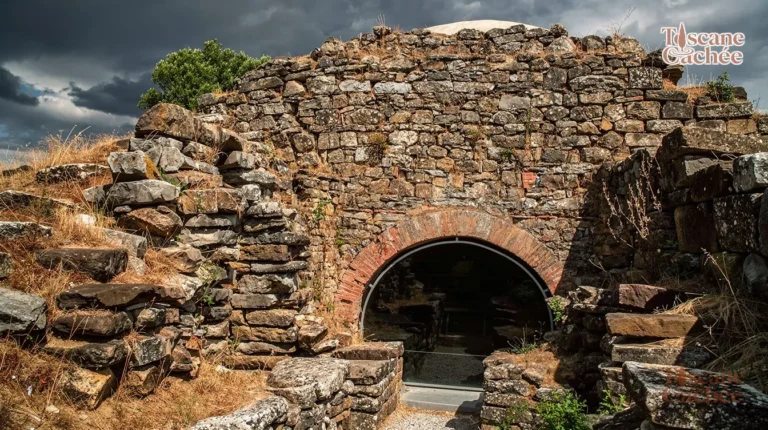
Tumulo della Pietrera
The Tumulo della Pietrera, in Vetulonia, combines two superimposed tombs and a central omphalos pillar, in a Maremma free of crowds
Tosco If you've already wandered through the mysterious Vie Cave, this giant dome will blow you away: it's one of the few sites in Maremma where the Etruscans outright stacked one monumental tomb on top of another!
I advise you to head down to the area of monumental tombs located below the village. This is where the objects admired in the museum regain their original architectural context and their meaning.
Note that access to these burial sites is free, with no guide required. Above all, don't miss the Pietrera, one of the largest tumuli in Tuscany. Immersion in this single-chamber structure is truly striking.
The’mystical atmosphere that reigns among these thousand-year-old stones is indescribable. Spokój, this deep calm, will envelop you immediately.
Access to the tombs of the Pietrera and Diavolino II is free and easily reachable on foot from the village. For the best panoramic views, climb up to the Mura dell'Arce.
Hike to the cyclopean walls of the Arce

Then head to the acropolis to discover the Mura dell'Arce. These massive stone blocks bear witness to the power of ancient Etruscan engineering. This is solid, raw stuff.
From these ramparts, you overlook the entire Maremma plain. This elevated position once provided an unbeatable defensive advantage on the coast.
The silence here is total. Take advantage of it for a meditative pause facing the horizon.
What I noticed here is that the site remains very wild. Here are the points of interest not to miss:
- Mura dell'Arce
- View of the coastline
- Remains of the dwellings
- Marked trails
Our addresses · Vetulonia
Our favorite addresses around Vetulonia
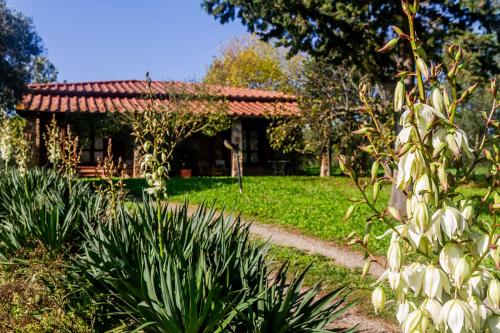
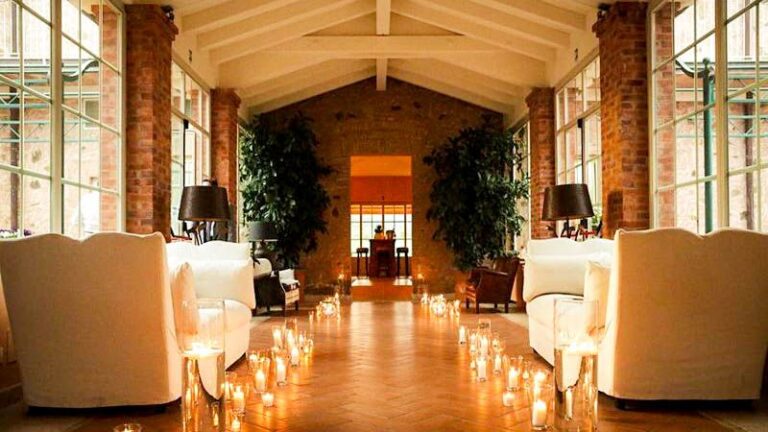
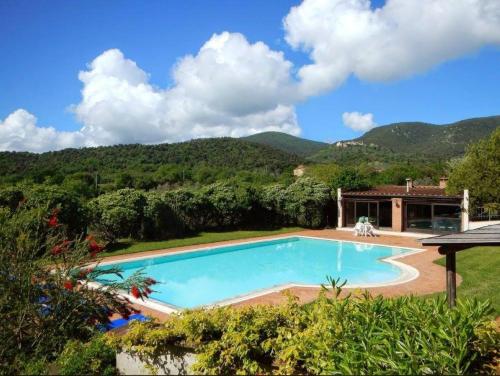
What you need to know to organize your visit to Vetulonia
So that this immersion in the Etruscan world is a success, here are some essential practical details before leaving.
- Location Piazza Vatluna, Vetulonia.
- Accessibility : Fully accessible for PRM and the visually impaired.
- Best season : April and May (spring).
- Duration : 3 to 4 hours (museum + necropolises).
Accessibility, parking and seasonal tips
You will find parking lots at the entrance to the medieval village. The center is narrow and spaces are scarce. I advise you to arrive early in the morning to park easily.
The Museo Isidoro Falchi is fully accessible to people with reduced mobility. To enjoy the light, choose a visit in spring. The weather is then ideal.
Also explore the hiking trails. They are perfect in April or May.
Visit duration and activities for families
Expect around three to four hours to peacefully discover the museum and the necropolises. It is the time needed for a complete exploration without rushing.
The museum offers educational workshops and events such as «Kid Pass Days». It is an excellent option for getting children interested in archaeology in a fun way.
Finish at Piazza Vatluna. It is the’perfect place for one last coffee.
The Etruscan museum of Vetulonia offers you a rare immersion between fine goldsmithing and monumental remains to grasp the full power of this ancient city. It is the essential stop before treading the silence of the surrounding necropolises. Will you prefer the finesse of granulation or the brute force of the walls of the Arce?
During your visit to the Isidoro Falchi Museum in Vetulonia, two emblematic pieces will captivate your attention and offer you a deep dive into the Etruscan civilization of the Maremma. The first is the famous stele of the warrior Auvele Feluske. This archaic relief depicts an Etruscan chief brandishing a double-bladed axe, wearing a crested helmet and protecting his body with a round shield. What makes this stele so unique is the inscription surrounding it, written in a very ancient Etruscan alphabet. It provides valuable information on the social hierarchy and military practices of the first cities of the Maremma, attesting to the mastery of the artisans of the time. It is a true testament to the local aristocracy and a fascinating starting point for understanding the power and social organization of Vetulonia.
The second category of treasures that alone justifies the trip is the fine goldsmithing, notably the jewelry made with the granulation technique. These pieces, from the princely tombs of the 7th century BC, illustrate the luxury and refinement of the elite of Vetulonia. Granulation is a technique of rare complexity, where micro-spheres of gold are soldered onto a metal surface, creating patterns of incredible delicacy without the soldering being visible to the naked eye. Filigree, , another technique of interweaving very fine gold threads, completes this unrivaled know-how. These jewels are not mere ornaments; they are powerful social markers and testify to the ingenuity and cultural wealth of Vatluna, a city that was a major mining center and an influential player in the Etruscan Dodecapolis. They reveal the opulence of this Orientalizing period, when Mediterranean influences enriched local craftsmanship.
To best organize your visit to the Museo Civico Archeologico Isidoro Falchi in Vetulonia, here is the essential practical information regarding opening hours and fees. The hours vary according to the season: from November 1 to March 31, the museum is open from 10:00 a.m. to 4:00 p.m., Tuesday to Sunday. From April 1 to June 15, it opens from 10:00 a.m. to 6:00 p.m., Tuesday to Sunday. The summer period, from June 16 to September 15, offers split hours: from 10:00 a.m. to 2:00 p.m. and from 3:00 p.m. to 7:00 p.m., Tuesday to Sunday. Finally, from September 16 to October 31, , the doors are open from 10:00 a.m. to 6:00 p.m., Tuesday to Sunday. . The museum is generally closed on Mondays that are not public holidays, as well as on December 25 and 26 and January 1. 1. . On public holidays falling on a Monday, it remains open. For any confirmation, you can contact the museum at +39 0564 948058 or +39 0564 927245, 2. , or by email at museo.vetulonia@comune.castiglionedellapescaia.gr.it.
3. Regarding fees, the full-price ticket is €5.00 4. for the museum visit alone. Reduced rates of €2.50 5. are available for groups of more than 15 people (or 20 depending on the source), those under 18 and over 65, university students up to 25 years old, residents of the municipality of Castiglione della Pescaia, and holders of a ticket from the National Etruscan Museum of Villa Giulia. Admission is free for children under 6, group escorts, teachers with school groups, people with disabilities and their companions, as well as journalists and tourist guides from the European Union. The museum is fully accessible to people with reduced mobility, the visually impaired and the hearing impaired, with ramps, tactile paving paths, tactile maps and audio guides. For families, the museum offers 6. educational workshops 7. and participates in events such as the ‘Kid Pass Days’, offering fun activities for children. Allow approximately 8. 3 to 4 hours 9. for a complete visit of the museum and the surrounding necropolises. For parking, it is advisable to arrive early as spaces are limited in the medieval village of Vetulonia.
11. After discovering the treasures of the Isidoro Falchi Museum, 12. , exploring the outdoor archaeological sites of Vetulonia is an essential step for a complete immersion in Etruscan history. The museum is designed to link its collections to the nearby monumental necropolises, which are easily accessible on foot from the village. I recommend descending towards the area of monumental tombs located below. It is there that the objects you admired in the museum regain their original architectural context and their full meaning. Access to these burial sites is 13. free of charge, 14. , with no mandatory guide, allowing for exploration at your own pace.
15. Do not miss the 16. Pietrera, 17. , one of the largest tumuli in Tuscany. The immersion in this single-chamber structure is particularly striking, offering a unique atmosphere of contemplation. The 18. Diavolino II 19. is another impressive tumulus to visit. To extend the adventure and feel the deep calm of the Maremma, you can explore the hiking trails around these sites. Then, head to the acropolis to discover the Mura dell'Arce, 20. , the remains of the cyclopean walls. These massive stone blocks testify to the power of Etruscan engineering and offer a breathtaking view of the entire Maremma plain and the coastline. The silence that reigns there is conducive to a meditative break. These sites remain very wild, which adds to their authentic charm. For the best panoramic views, do not hesitate to climb up to the walls. The best season for these explorations is spring, especially in April and May, , when the weather is ideal and nature is lush. Bring comfortable shoes and water, as the trails can be uneven. The entire visit, museum and outdoor sites, will take about 8. 3 to 4 hours for a serene discovery. .
Vetulonia, or ancient Vatluna, , built its power and central role within the Etruscan Dodecapolis thanks to a strategic combination of natural resources and a privileged geographical position. Its fortune rested mainly on the exploitation of the surrounding metalliferous hills, , rich in copper and bronze. This mining wealth made Vetulonia a major production center, fueling flourishing trade and conferring considerable economic and political influence upon it. The bronze and copper objects displayed in the Isidoro Falchi Museum, , notably the tools and goldsmith pieces, are direct witnesses to this intense activity and the metallurgical know-how that propelled the city. .
Beyond its mining wealth, Vetulonia exercised significant maritime dominance, facilitating trade with other Mediterranean civilizations. This openness to the world is illustrated by the diversity of ceramics and imported precious objects found in the museum's collections. Its alliance with the other cities of the Dodecapolis reinforced its cultural influence and its ability to shape the region. The symbols of power, , such as the fasces, which were later adopted by Rome as emblems of authority, were born here, attesting to the political importance of Vatluna. Today, the remains of this power are visible not only in the museum, but also in the field. The monumental necropolises, such as the 16. Pietrera et la 18. Diavolino II, , with their princely tombs and their rich funerary assemblages, testify to the opulence of the local aristocracy. The imposing Mura dell'Arce, , the cyclopean ramparts, recall the strength of its defensive engineering and its strategic position overlooking the Maremma plain. These structures, though millennia old, continue to tell the story of a city that was a pillar of the Etruscan civilization. .
For an optimal experience of Vetulonia, combining a visit to the Isidoro Falchi Museum and the exploration of the outdoor archaeological sites, the best season is spring, , more precisely the months of April and May. . During this period, the weather in the Maremma is particularly mild, with gentle temperatures and pleasant sunshine, ideal for strolling through the medieval village and walking the trails leading to the necropolises and the walls. Spring also offers lush nature, with green and flowery landscapes that add to the beauty of the ancient sites. The air is fresh and invigorating, making the walks to the tumuli of the 16. Pietrera et la 18. Diavolino II, , as well as the ascent to the Mura dell'Arce, , much more comfortable and enjoyable.
In addition, spring allows you to fully enjoy the natural light, essential for appreciating the details of the exhibitions inside the museum and for capturing magnificent photos of the surrounding landscapes. Avoiding the peak summer season (July-August) is recommended, as the heat can be intense in Tuscany, making outdoor explorations more tiring. Autumn, in September and October, can also be a good alternative, with pleasant temperatures and fewer tourists. However, spring remains the preferred choice for the mildness of its climate and the splendor of its landscapes. Arriving early in the morning is always a good strategy, especially if you are traveling by car, in order to find a parking spot more easily at the entrance of the medieval village, whose narrow streets can be difficult to access. Allowing about 8. 3 to 4 hours for the entire visit is a good estimate so as not to miss anything and to fully enjoy this immersion in Etruscan history.
Absolutely! The Isidoro Falchi Museum in Vetulonia is designed to be accessible and interesting for all ages, including children, and it implements initiatives to make Etruscan history more lively and educational for young visitors. The museum regularly offers 6. educational workshops specially designed for primary and secondary schools. These workshops allow children to learn interactively about the daily life of the Etruscans, their craft techniques, and the importance of Vatluna in the Dodecapolis. These sessions are an excellent opportunity to awaken their curiosity about archaeology and ancient history.
In addition to the workshops, the museum participates in national events such as the ‘Kid Pass Days’, which offer fun activities and themed tours adapted to families. These initiatives transform the visit into a true adventure, where children can discover the treasures of the museum, such as the stele of the warrior Auvele Feluske or the granulation jewelry, through games, riddles or hands-on activities. The museum is also equipped for universal accessibility, which includes facilities for people with motor, visual or hearing difficulties, as well as a ‘baby friendly‘ approach with a fasciatoio (changing table) available. The entire museum tour, combined with the exploration of the outdoor necropolises and walls, offers a rich and varied experience that can captivate children's imaginations and connect them concretely to the millennia-old history of this region of Tuscany. A combined visit of the museum and the outdoor archaeological sites, such as the 16. Pietrera, allows young people to better visualize the context of the discoveries and to understand the scale of the Etruscan civilization.
Around this article


Is the map not displaying? See accommodations on Stay22
Map and prices provided by Stay22: Toscane Cachée may receive a commission on bookings.
You will also like

Tuscan Etruria: the complete guide to Etruscan heritage in Maremma 2026
Explore the Etruscan heritage in Maremma: from Roselle to Sovana, discover the cities…

The 5 must-see Etruscan archaeological sites of Maremma
Explore the Etruscan archaeological sites in Maremma. From Roselle to Sovana, discover ramparts...

Top 5 spectacular Etruscan sunken roads in Maremma
Explore the 5 most beautiful Etruscan sunken roads in Maremma. Discover these paths of...
Via Cava, Walking the Etruscan paths of Tuscany
Explore the Tuscan via cava: travel these Etruscan roads 25m high.…
