Gastronomy
The place
La plus ancienne source de Montecatini Terme, fondée en 1775 : fais halte pour boire la Leopoldina en cure, sans être client des thermes voisins.
👥 Who it's for: Architecture and thermal history enthusiasts visiting Montecatini Terme.
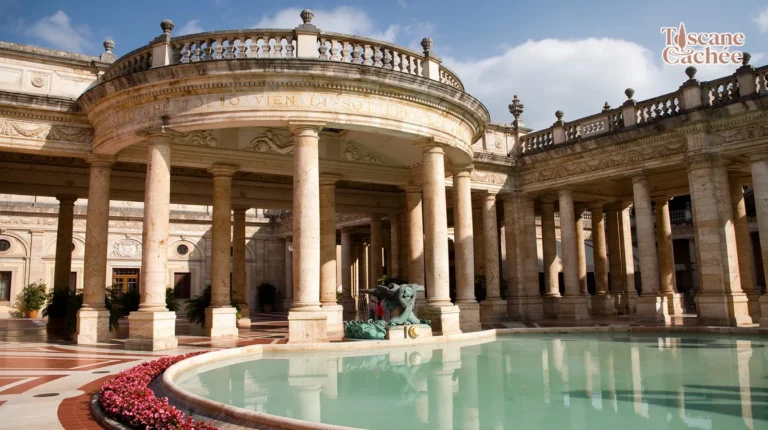
On Viale Verdi, a few steps from the great spa establishments, the Terme Leopoldine tell a story older than their facade suggests. Opened in 1775, they are part of the vast project of Grand Duke of Tuscany Pietro Leopoldo, who had the springs developed and transformed this long marshy plain into a spa town. The building was designed by architect Gaspare Maria Paoletti, while the spring is said to have been known well before that date. During work around its basin, small votive statuettes were found. They are interpreted as ancient offerings deposited in thanks for a healing.
Today the place is discovered mainly from the outside. The available tourist information indicates that the establishment is not open to visitors: it is therefore better to come for its architecture and history rather than in the hope of an interior visit or a day of treatments. That does not prevent you from taking the time to observe the details of this ancient gateway into the thermal world of Montecatini.
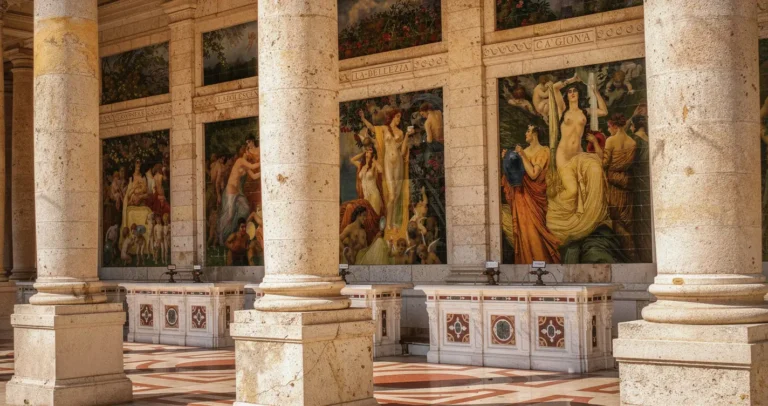
The name of the spa pays tribute to Pietro Leopoldo, but the establishment was first called «Bagno Caldo», in reference to the hottest water in the area. Its facade faces Viale Verdi. There you can notice Doric-inspired columns, a sculpted pediment, a bas-relief fountain and a dedication to Asclepius, god of medicine. Even without being able to cross the threshold, these elements tell the function of the building: welcoming spa guests and organizing their circulation around the spring.
Originally, the bath areas were separated between men and women. At the ends of the wings, large octagonal basins were intended for poor people. This detail recalls that the waters were not only associated with worldly luxury: they were also considered as a collective treatment. In the courtyard was a vast circular travertine basin, more than 23 meters in diameter, built around the spring.
The building then underwent several transformations. Between 1919 and 1926, engineer Ugo Giovannozzi reworked the project while preserving the emblematic facade. He notably added spaces and monumental staircases. The Leopoldine thus bear several layers of the history of Montecatini: the first development of the springs, the organization of the cures and the rearrangements of the early 20the century.
Accounts devoted to Montecatini often mention the Leopoldina water as a water that could be drunk without being a client of a nearby treatment establishment. However, this historical reputation must be distinguished from the current situation: the Terme Leopoldine are not open to visitors according to the official tourist information available. The opening hours and conditions for access to the interior are not published. I would therefore not advise you to count on a tasting on site.
The municipality classifies the Leopoldina among the so-called «strong» waters, with a fixed residue of 21 g/l at 180 °C. It is also mentioned among the waters historically used for drinking and certain thermal treatments. Its particular composition does not make it a curiosity to taste like water from an ordinary fountain: a thermal cure requires an appropriate setting and suitable advice.
The establishment also used this water for baths, showers and irrigations. It was used to extract a «mother water» intended for inhalations. These uses give an idea of the place the spring occupied in the organization of care, even if one can no longer observe its operation today by visiting the rooms.
At the turn of the 20the century, Montecatini was frequented by artists and prominent figures, including Giuseppe Verdi, Pietro Mascagni and Luigi Pirandello. The history of the town's thermal baths also intersects with that of scientific research. In 1918, Professor Sante Pisani accompanied Marie Curie to the Tettuccio, where she took part in radioactivity measurements of the water.
This episode concerns the Tettuccio and not the Leopoldine themselves, but it testifies to the medical and scientific interest aroused by the springs of Montecatini. Later, in the 1930s, Pisani also helped develop the use of mud macerated in Leopoldina water. The memory of the place therefore goes beyond its architecture: it is part of a broader history of treatments and research carried out around the thermal waters.
The address given is Viale Verdi, 67, Montecatini Terme. From the centre, follow Viale Verdi towards the thermal establishments: the Leopoldine are located before the Tettuccio square. The town is served by the Florence–Lucca and Florence–Viareggio railway lines, with the stations of Montecatini Centro and Montecatini Terme–Monsummano.
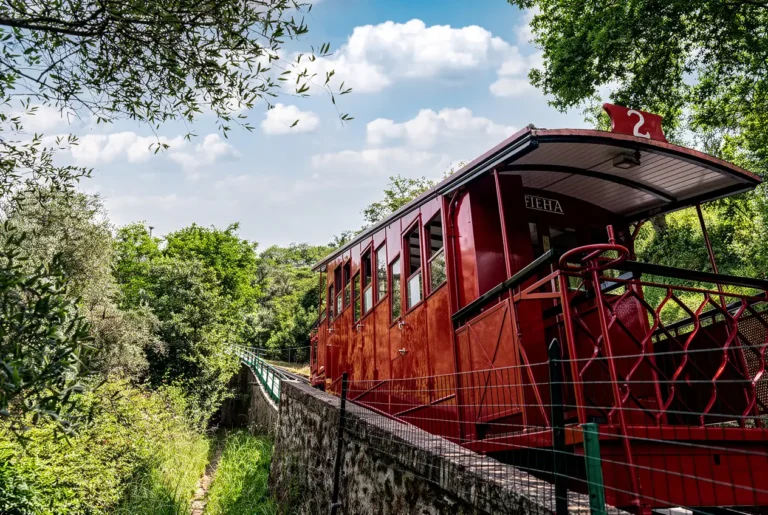
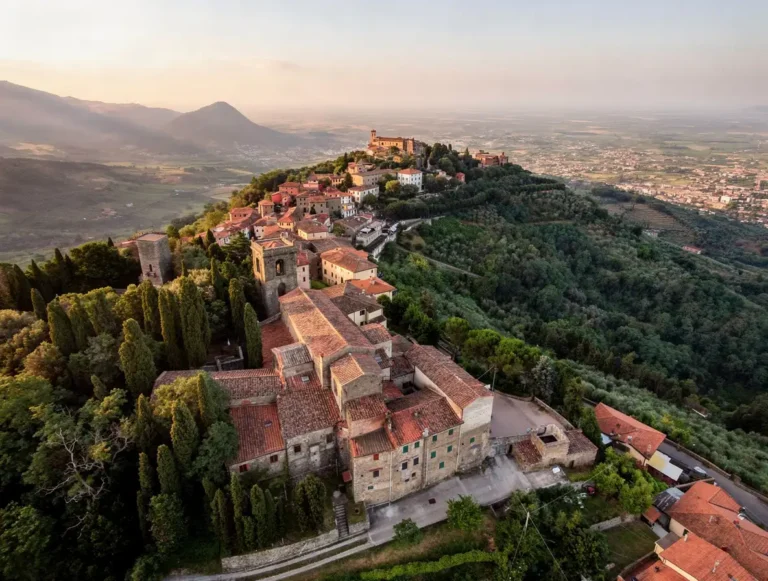
As no visiting hours or ticket office are published for the Leopoldine, plan for an exterior discovery and check local information before your trip, especially if you hope to enter a thermal establishment. To extend your stay, you can also take the time to discover Montecatini Alto and its atmosphere of a hilltop village, or take the historic funicular of Montecatini. These stops pleasantly complement a stroll through the town.
I would gladly include them in an architectural walk rather than a spa day: observe the façade, imagine the large pool in the courtyard, then continue along Viale Verdi towards the other thermal buildings. It is this contrast that makes the place interesting: a spring that took part in the birth of Montecatini as a spa town, behind a door that, today, does not promise an interior visit. To organise a broader getaway, also find our ideas for weekends and stays in Tuscany.
Mes notes : authenticité 8,5/10 · accessibilité 8/10 · rapport qualité-prix 8,5/10 · photogénie 7/10 · expérience 7,5/10. L’accès extérieur est facile, mais l’absence de visite intérieure limite l’expérience. Mieux vaut venir pour le récit du lieu et l’ensemble thermal de Montecatini, pas pour une cure aux Leopoldine.
Evaluation criteria
Is the map not displaying? See accommodations on Stay22
Map and prices provided by Stay22: Toscane Cachée may receive a commission on bookings.
 Français Français
 Italiano
 English
 Polski
 Português do Brasil
 Nederlands
 Español
 Deutsch