









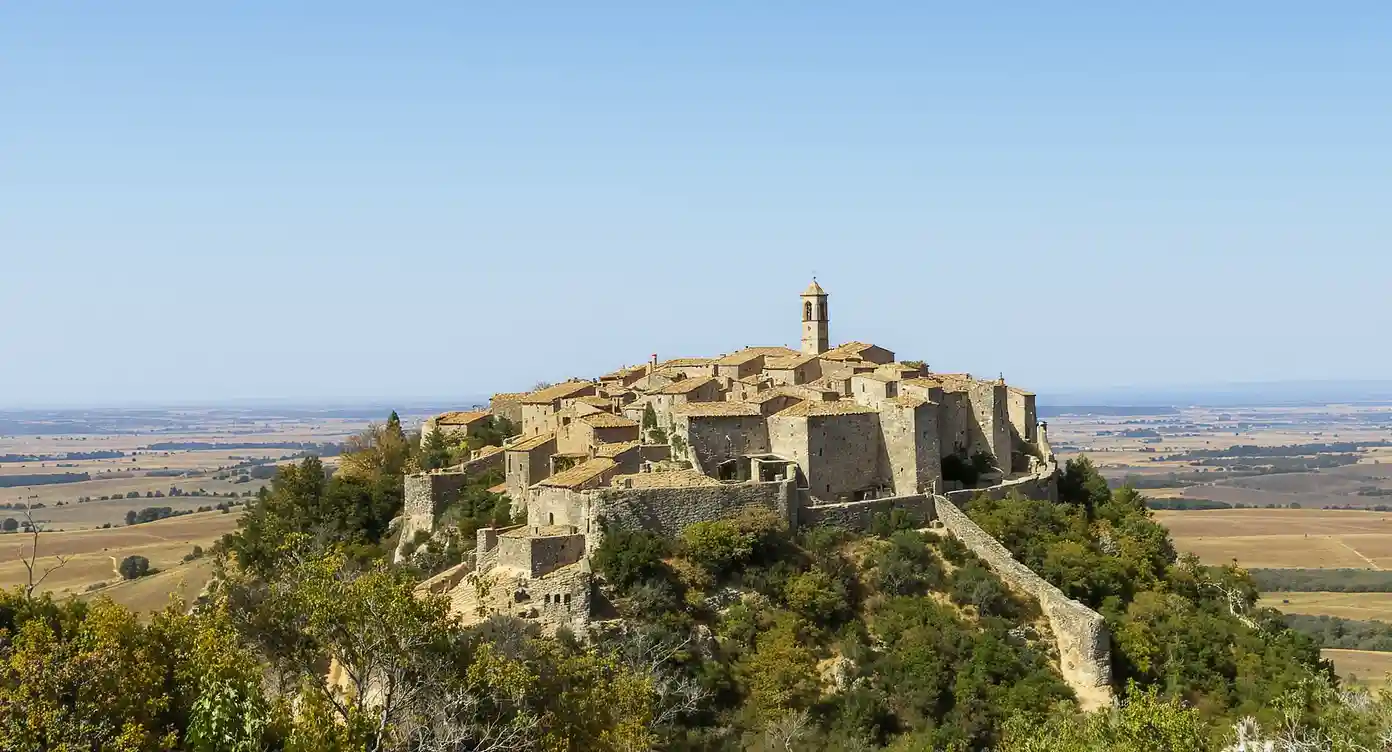
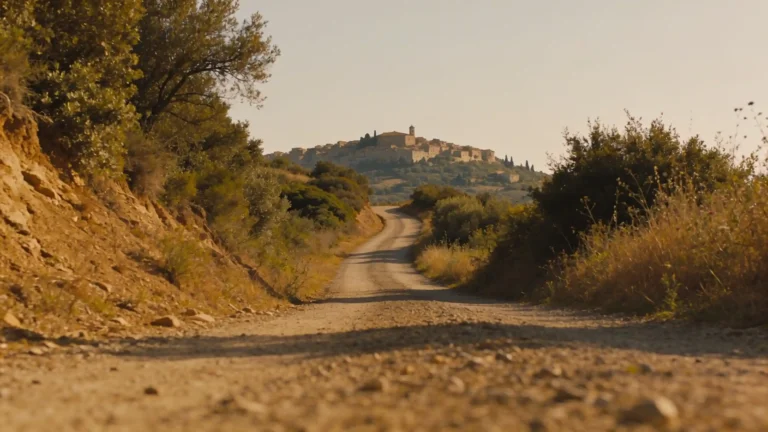
Tu crois qu’un village perché se visite en cochant des monuments ? À Montepescali, il y a presque rien à cocher. La vue se gagne en marchant le long de l’enceinte, pas en entrant quelque part.
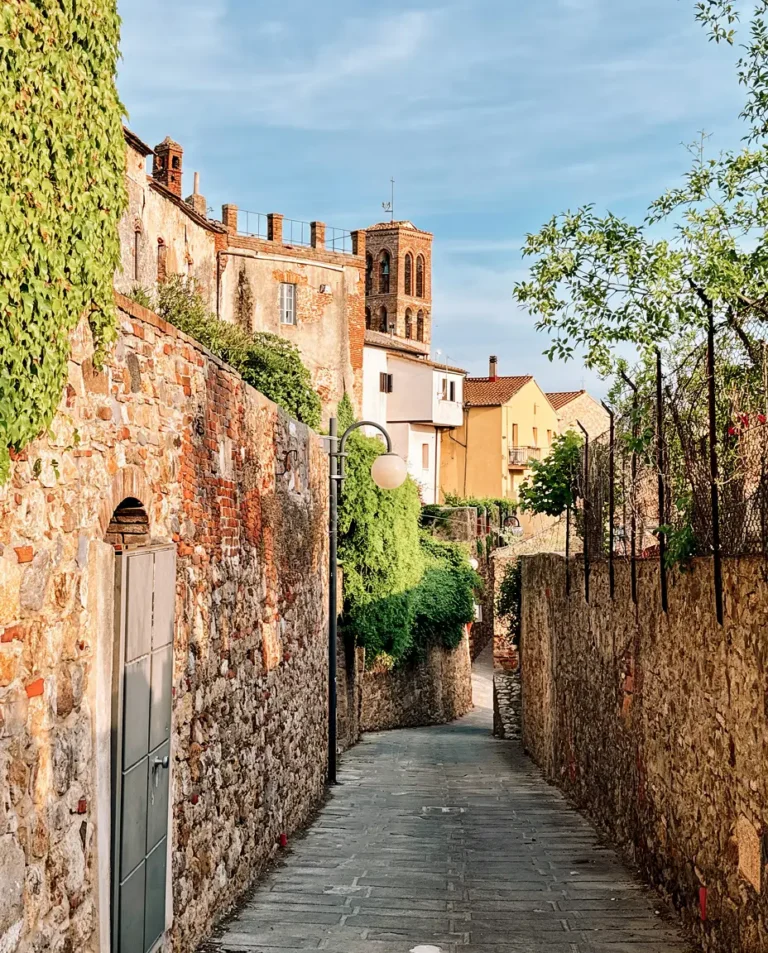
Montepescali

Tosco À Montepescali, longe les remparts avant de faire une pause au Baluardo a tre punte : la plaine s’ouvre comme une carte, et son surnom de balcon de la Maremma prend tout son sens.
Le village se tient au-dessus de la plaine de Grosseto, d’où son surnom de « Balcone della Maremma ». Depuis les remparts, le regard court sur la plaine jusqu’à la mer. Le Baluardo a tre punte promet davantage : de là, la vue s’étendrait jusqu’à l’Tuscan archipelago et à la Corsica. L’horizon dira le reste le jour où tu y monteras.
Ses origines remontent au début du Moyen Âge. De Grosseto, on monte vers les hauteurs. La gare Montepescali is located at Braccagni, au pied du village, pas dans le village lui-même. Après, tout se fait à pied, des remparts jusqu’au centre historique.
Une ligne de pierre au-dessus de la plaine
Vu d’en bas, Montepescali n’est qu’une ligne de pierre posée sur une crête. C’est une frazione de la commune de Grosseto, perchée sur les hauteurs au nord de la plaine de Grosseto. Les maisons se serrent derrière les remparts. Tout autour, le terrain s’étale à plat, sans un relief pour couper la vue.
Le panorama prend toute la place
Depuis le village, le regard tombe sur la plaine de Grosseto et file jusqu’à la sea. D’où le surnom de « Balcone della Maremma » : tu as l’impression de t’accouder à une rambarde.
Le point de vue le plus précis se trouve au Baluardo a tre punte. C’est de là que tu aperçois l’Arcipelago Toscano and the Corse. Le reste du village n’offre pas cette vue. Garde-le pour la fin de ta balade.
Suivre les murs jusqu’au point de vue
The Mura di Montepescali forment une enceinte médiévale elliptique. Garde-les à portée de vue et tu ne te perds pas. Rien n’est balisé : il suffit de suivre le mur à pied, depuis les portes jusqu’au bout du village.
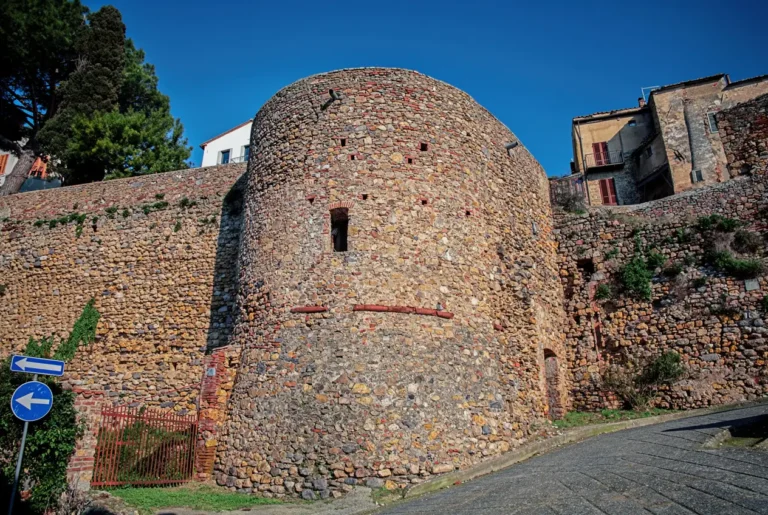
Mura di Montepescali
Tosco Garde le Baluardo a tre punte pour la fin : c’est là que les remparts s’ouvrent sur la Maremme. Prévois environ une heure pour faire le tour du village à pied.
Portes, tours et bastion
Commence par les portes. Porta Vecchia s’est effondrée au 19th century : inutile de t’attendre à la trouver intacte. Porta Nuova a été construite entre le XVIe et le XVIIe siècle.
Repère ensuite la Torre del Belvedere, puis la Torre del Guascone. Le parcours se termine au Baluardo a tre punte : ajouté au 16th century, il sert aujourd’hui de terrasse panoramique.
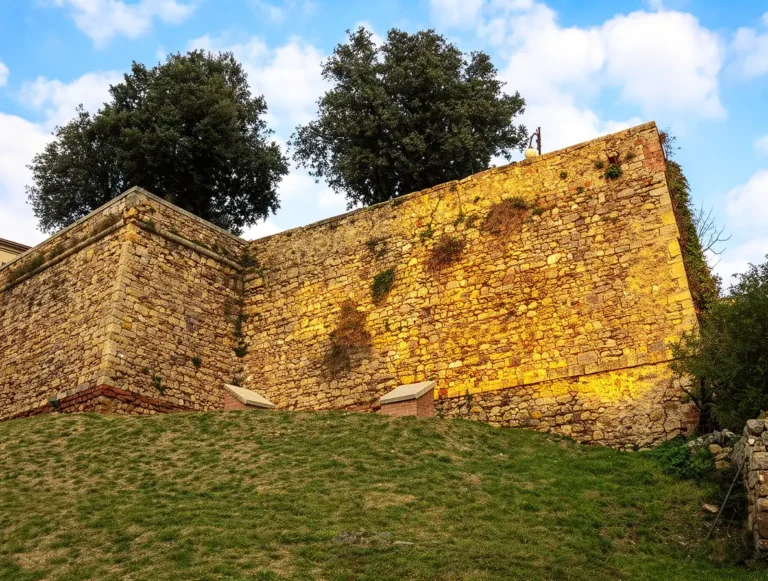
Baluardo a tre punte
Tosco Pour distinguer les trois pointes du Baluardo a tre punte, regarde-le depuis la route en contrebas avant de monter sur la terrasse. Et garde la Corse en bonus : il faut une journée vraiment dégagée pour l’apercevoir !
Dans le centre, les traces d’un passé disputé
Montepescali a d’abord été un fief des Aldobrandeschi, avant de devenir un lieu lié à Siena. Ses origines remontent au haut Moyen Âge, mais on ne s’accorde pas vraiment sur la date. Le village a changé plusieurs fois de mains : il a rejoint le Grand-Duché de Toscane, puis Roccastrada, et enfin Grosseto.
Églises, forteresse et mémoire locale
Commence par l’église San Niccolò. Elle abrite un cycle de fresques de l’école siennoise, dont certaines datent de la fin du XIVe siècle. Le bâtiment lui-même est plus difficile à dater. Ajoute aussi l’église des saints Étienne et Laurent.
Du côté des bâtiments civiques et fortifiés, repère le Cassero Senese et sa tour de l’horloge. Puis arrête-toi au Palazzo dei Priori, ancien siège communal. Termine avec le Museo di storia locale Ildebrando Imberciadori, qui se consacre surtout à la vie rurale.
Nos adresses · Braccagni
Nos adresses préférées autour de Braccagni
Préparer le détour sans se tromper de gare
Montepescali se mérite. Deux détails pratiques, connus à l’avance, t’évitent une mauvaise surprise dès l’arrivée.
Accès et temps à prévoir
Depuis Grosseto, les sources ne s’accordent pas : 12 km selon certaines, environ 13 km selon d’autres, 15 km selon d’autres encore. En voiture, on compte à peu près 15 minutes. Considère ces chiffres comme un ordre de grandeur, pas comme une promesse.
La gare qui porte le nom de Montepescali se trouve en fait à Braccagni, dans la plaine, au pied du village. Le village, lui, est perché plus haut. Ne descends pas du train en pensant y être déjà.
Là-haut, le tour du village à pied est annoncé pour about an hour. C’est une indication, pas une règle : si tu t’arrêtes à chaque vue sur la plaine, ça s’allonge vite.
Montepescali : un village pour le panorama, pas pour le programme
Montepescali vaut le détour si tu aimes marcher lentement et regarder loin. Ce qui compte ici, c’est un tour des remparts and the Baluardo a tre punte, d’où la plaine s’étale. Quelques repères du centre se croisent sans te presser. Si tu cherches des musées, des boutiques ou une liste de choses à cocher, tu risques de trouver le village trop calme.
Administrativement, il relève de la commune de Grosseto : c’est une frazione perchée au-dessus de la plaine. La gare, en revanche, est à Braccagni, en bas. Il faut donc monter pour y arriver. On le visite bien à pied, sans courir, en laissant la lumière sur la plaine décider du moment où tu repars.
From Grosseto, Montepescali is reached by heading up towards the heights that overlook the plain. The village lies about 12 to 15 km away depending on estimates, and the drive takes around 15 minutes. Take these indications as an order of magnitude rather than a guaranteed duration: the actual time depends on your starting point and the route chosen. Montepescali is a frazione of the municipality of Grosseto, but its historic centre perches above the plain, behind a stone enclosure.
The trap to avoid concerns the train: the station called Montepescali is not in the village. It is located in Braccagni, below, in the plain. Getting off there therefore does not mean you have arrived at the historic centre, and you need to plan how to reach the village from the station before setting off. Once up there, the visit is done on foot, following the walls and the narrow streets. If you are organising a getaway from Grosseto, check the last stretch of transport carefully and do not rely on the station name alone: it is the practical detail that prevents your stroll from starting with an unpleasant surprise.
To walk around the village and reach the main viewpoints, allow about one hour as a benchmark. It is not a schedule to be kept to the minute: Montepescali is best discovered by walking along its enclosure, and stops to look at the plain can easily lengthen the visit. The route follows the Mura di Montepescali, a medieval enclosure with an elliptical shape. It is not signposted, but keeping the walls within sight helps you find your way between the gates, towers and narrow streets of the centre.
You can start near the gates, spot the Porta Nuova, then continue towards the Torre del Belvedere et la Torre del Guascone. Save the Baluardo a tre punte for the end: this bastion added in the 16th century now serves as a panoramic terrace, and its view is the highlight of the walk. If you like to take your time or photograph the landscapes, allow yourself more than an hour, especially in fine weather. The point is not to tick off each landmark quickly, but to walk along the walls without rushing and let the light change over the Grosseto plain before heading back.
The viewpoint to aim for is the Baluardo a tre punte, at the end of the route along the walls. From this panoramic terrace, the gaze stretches over the Grosseto plain to the sea, and the horizon may reveal the Arcipelago Toscano as well as Corse. Visibility, however, depends on the conditions of the day: it is better to consider these islands as a possibility tied to the clarity of the horizon, not as a view guaranteed on every visit.
The other parts of the village also allow you to look at the plain and the distant coastline, but the broadest panorama is found at the bastion. That is why it is better not to stop at the first openings between the houses: follow the enclosure and save the Baluardo for the end. The nickname Balcone della Maremma then takes on its full meaning, with the countryside spreading out below and the sea closing the view. To enjoy the view, choose a moment when you can linger rather than scheduling an express stop. Even if the islands cannot be clearly made out, the walk remains interesting for the contrast between the perched stone village, the great plain and the line of the coastline.
A tour of the walls gives a good overview of the fortified history of Montepescali, without needing to enter any specific monument. The enclosure, the gates, the towers and the bastion form the main landmarks of the walk. The Porta Vecchia collapsed in the 19th century: so do not expect to find it intact. The Porta Nuova, built between the 16th and 17th centuries, is another point to spot as you walk along the walls.
Continuing on foot, you can look for the Torre del Belvedere, then the Torre del Guascone, before arriving at the Baluardo a tre punte. Added in the 16th century, it now mainly serves as a panoramic terrace. The elliptical enclosure helps you understand the shape of the village, whose houses are packed behind the walls on the ridge. Since the route is not signposted, move along at a relaxed pace and use the walls as a guiding thread rather than expecting detailed signage. Montepescali particularly suits travellers who enjoy observing the visible traces in the fabric of the village and imagining its defensive role, more than those looking for a guided tour or a succession of monumental spaces inside.
After the panorama of the Baluardo a tre punte, take the time to head back towards the historic centre and spot a few places connected with the religious and civic memory of the village. The church of San Niccolò deserves particular attention for its cycle of frescoes by the Sienese school, some of which date back to the late 14th century. The exact date of the building itself is harder to establish. You can also walk past the church of Saints Stephen and Lawrence, another religious landmark of the centre.
To complete the walk, look for the Cassero Senese and its clock tower, then the Palazzo dei Priori, the former municipal seat. The Museo di storia locale Ildebrando Imberciadori is devoted mainly to rural life and offers another perspective on the territory. These stops give substance to the visit, but the village remains quiet and does not necessarily lend itself to a very packed programme. The origins of Montepescali go back to the early Middle Ages, without any founding date being universally agreed upon. Its history passes notably through the Aldobrandeschi, Siena, the Grand Duchy of Tuscany, Roccastrada and then Grosseto. It is better to explore these places without trying to do everything at a brisk pace, leaving time for the narrow streets and the views between two stops.
Yes, if you appreciate stone villages, quiet strolls and panoramas rather than a list of activities to tick off. Montepescali is above all a village perched above the Grosseto plain: its main appeal is walking along the walls and reaching the Baluardo a tre punte. The view stretches over the countryside to the sea, sometimes with a perspective extending towards the Tuscan archipelago and Corsica depending on visibility. The centre also preserves a few historical landmarks, such as the churches, the Cassero Senese and the former Palazzo dei Priori.
A walking visit lasts about one hour if you move along without long breaks, but half a day leaves you free to take photos, stop at the various viewpoints and visit the museum devoted to rural life if it matches your interests. On the other hand, do not come expecting lots of shops, a dense cultural programme or a succession of monuments open to visitors: the charm of the place lies in its calm and its commanding position. If you are travelling in the Maremma and want to take a break between Grosseto and other discoveries of the region, it is a detour suited to a slow outing. Just plan the journey up to the village, because Montepescali station is actually located in Braccagni, in the plain.
Around this article
Mura di Montepescali
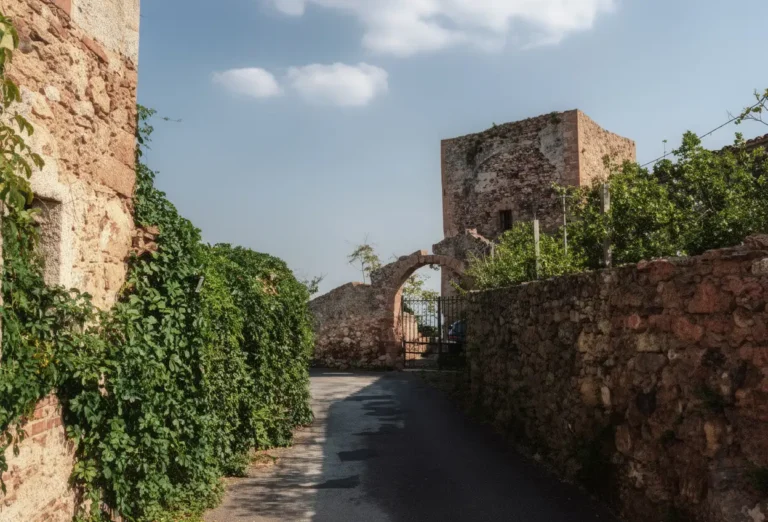
Torre del Guascone
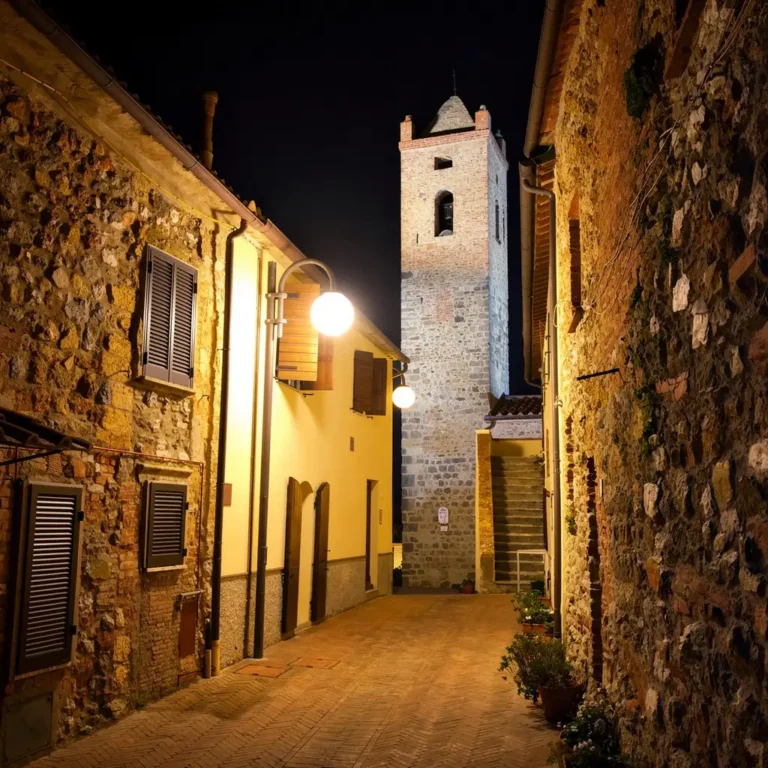
Chiesa di San Niccolò (Montepescali)



Is the map not displaying? See accommodations on Stay22
Map and prices provided by Stay22: Toscane Cachée may receive a commission on bookings.
You will also like
The 5 medieval villages of Maremma you must see at least once
La Maremme abrite 5 villages médiévaux authentiques bâtis sur des éperons de tuf volcanique,…
Visiting the MAAM Grosseto before exploring the Maremma
Découvre le maam grosseto : explore les trésors de Roselle, la célèbre coupe en…
From Grosseto to Castiglione della Pescaia: a 2-day seaside and nature itinerary
Prépare ton itinéraire grosseto castiglione pescaia : 2 jours entre remparts médiévaux et plages…

Do you really need a car to visit Maremma? (The honest answer)
Discover how to visit Maremma without a car. Use the Pisa-Rome train and the buses…
