










Do you really believe that Tuscany boils down to the cypresses of the Val d’Orcia and the crowded museums of Florence? Twenty minutes’ drive from Pitigliano, paths carved into volcanic rock descend to a depth of twenty meters, and you won’t meet a soul there. The Vie Cave — that’s their name — date back to the Etruscans, but no signposting indicates their entrance.
I found myself there one October morning, almost by chance, while looking for a shortcut to Sovana. The air suddenly became cold and damp. The tufa walls, covered in thick moss, absorbed the sound. My fingers slid over the rock as I searched for a foothold. Below, only a thin strip of sky recalled the outside world.
These vertical corridors appear in no mainstream guide. Their function remains a mystery: trade routes, defensive passages, sacred paths? Archaeologists are still debating. On site, you will find neither safety barrier, nor entrance ticket, nor museum-style explanation. Just the raw sensation of walking in the footsteps of a civilization that vanished two millennia before the Renaissance was even an idea.
Paths carved by the Etruscans between the 6th and 3rd centuries BC into the volcanic tufa of the Tuscan Maremma. Some reach 20 m in depth for only 3 m in width. Their exact function — defensive, religious or drainage-related — remains enigmatic.
The magic works precisely because nothing has been arranged for you. The roots of the oaks cross the wall like veins. The perpetual dampness makes the stone slippery — plan on shoes with good grip, especially if you come in November, when the rains make the experience even more immersive and mineral.
This archaeological silence contrasts violently with the hyper-media coverage of the usual Tuscan sites. Here, no queue, no selfie stick, no 3D reconstruction. Nothing but the rock, time, and that lingering question: why have these giants of tufa fallen into oblivion when they literally defy the landscape?
2500 years under your feet, and almost nobody knows it
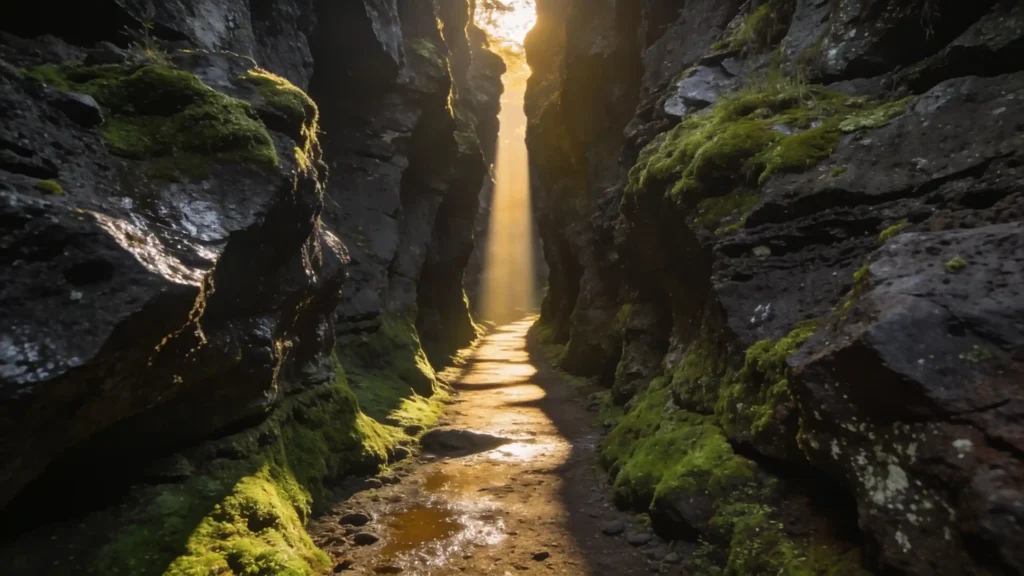
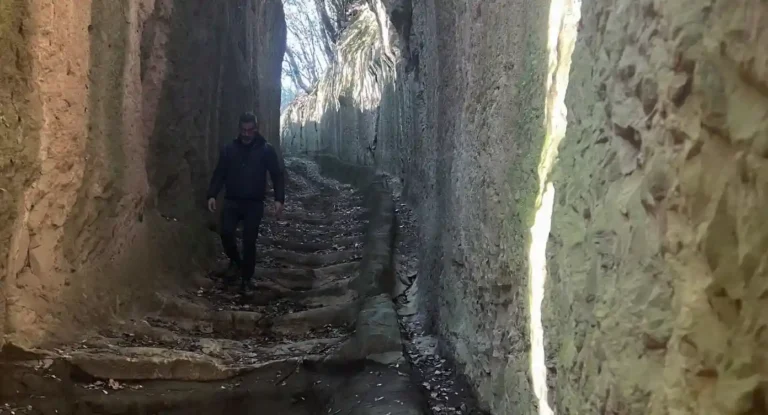
You place your hand on the wall. It is cold, damp, covered in thick moss that absorbs sound. Twenty meters of volcanic rock separate you from the surface. Daylight reaches you only as a narrow blade, cutting deep shadows into this miniature canyon. The silence is broken only by the sound of your footsteps on the wet tufa.
That’s what walking in a Vie Cave is like. It is not a hike like any other. It is a literal descent into the bowels of history, into a network of paths that the Etruscans patiently carved more than two millennia ago. And the most striking thing is that you can find yourself there alone, far from the tumult of overcrowded archaeological sites.
The « Vie Cave » (literally « hollow paths ») are ancient Etruscan communication routes, entirely carved into the volcanic tufa. They form a network of artificial canyons, sometimes more than 20 meters deep, notably linking the towns to the necropolises.
A network of paths carved into volcanic rock
The experience often begins in an unremarkable way, with a discreet opening at the edge of a wood or at the foot of a cliff. Then the ground gradually sinks. The walls draw closer, rise up, and suddenly, the modern world disappears.
You move through a corridor whose width varies, often narrow enough that you can touch both walls by stretching out your arms. The rock beneath your feet is not smooth; it bears the marks of the tools that shaped it. The air becomes cooler, filled with the characteristic smell of damp earth and of the vegetation colonizing the cracks.
Light plays an essential role. In the middle of the day, it can illuminate the bottom of the path. But early in the morning or in the late afternoon, the darkness is almost total in the deepest sections, creating an atmosphere that is both mysterious and contemplative. The moss, of an intense green, seems to absorb the few sounds, making the environment strangely muffled.
Hypotheses that remain open
Why did the Etruscans make such a colossal effort to dig these paths? The answer is not unique, and that is precisely what makes the place so fascinating. Archaeologists put forward several theories, but none has reached a consensus.
Were they simply communication routes, allowing the settlements to be safely and discreetly connected to the necropolises, such as that of Monterozzi? Were they used to drain rainwater in this region with its porous subsoil? Or did they have a defensive function, these deep gorges forming ideal traps against potential invaders?

Monterozzi Necropolis
Two hundred painted tombs out of 6,000 carved into the tuff, with frescoes from the 7th century BC

Tosco If you explore Monterozzi, don't make the mistake of skipping the museum at the Palazzo Vitelleschi in town: it's the perfect complement for admiring the original detached frescoes and the famous winged horses!
The most captivating hypothesis is undoubtedly that of the sacred paths. Their route often leading to monumental tombs suggests that they may have been used for funerary processions, rituals linked to the cult of the dead. This absence of certainty is a gift for today's visitor. Instead of following a fixed narrative, you are free to imagine, to feel, and to forge your own interpretation as you walk.
Plan for footwear that is both sturdy and with good grip. Tufa can be slippery, especially after rain. A headlamp or torch is also recommended for the darkest sections, even during the day.
This archaeological network, concentrated around the 'tufa cities' such as Pitigliano, Sorano and Sovana, remains a well-kept secret of the Maremma. It does not appear at the top of classic guidebooks. Exploring it means accepting to leave the beaten track for those that are, literally, carved into the rock.
If you want to extend this Etruscan immersion, I recommend you consult my complete guide to Etruscan sites in Tuscany to plan your itinerary.
The sensation of descending: guaranteed immersion
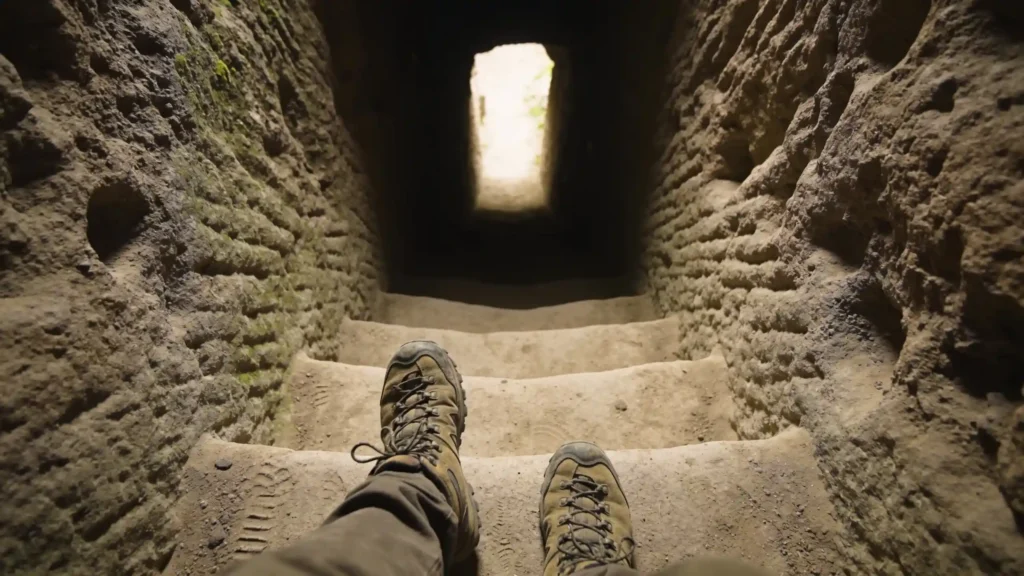
The magic is not found on a map. It begins the moment your shoes leave the packed earth to set off on the worn stone slope. Ahead of you, the path deepens, the tufa walls rise up, and the sky is nothing more than a blue strip growing ever more distant above your head.
In a few steps, the outside world fades away. The sound of cars, the wind in the trees, everything dissolves. You walk in a furrow of silence 2500 years old, and it is a physical experience before being a history lesson.
Why these paths create instant magic
The effect is psychological as much as sensory. It is not a ruin you observe from afar, it is a space you cross from the inside. The walls, which can rise up to twenty metres high, gradually close in, creating a natural tunnel that envelops you completely.
The atmosphere is that of a living underground, not a museum. Volcanic tufa is not dead stone. It breathes. Moisture seeps out, the velvety moss covers the flanks in a brilliant green, and the air cools noticeably. Time itself seems to flow differently here, to the slow rhythm of lichen growth and rock erosion.
You are no longer a visitor, you are an intruder in a corridor of time, alone in the face of twenty-five centuries of silence.
This archaeological intimacy is rare. There are no barriers, no garish explanatory signs, no queues. Only you, the sound of your footsteps on the gravel, and the muffled echo of your own breathing. It is this raw, unmediated connection that transforms a simple walk into a deeply transformative experience.
Equipment and practical preparation
So that the immersion remains a pleasure and does not turn into an ordeal, minimal preparation is non-negotiable. The main enemy here is slipperiness. Tufa, especially in the shade and in constant humidity, becomes covered with a thin slippery film.
- Shoes with gripping soles : forget sandals or sneakers with smooth soles. Hiking or trail shoes with good tread are mandatory, even for a short visit.
- A light source : a headlamp or a powerful torch is necessary. The further down you go, the more the natural light fades, and some sections are frankly dark.
- Layered clothing : the temperature can drop by several degrees in the depths. A light windbreaker or a fleece is useful, and plan for clothing that dries quickly – the moisture from the walls can soak you if you lean against them.
The other preparation is mental. You must accept disconnecting. Mobile signal often disappears at the bottom of these gorges. This is precisely the opportunity to put your phone away, except for the occasional photo, and to let your senses take over: the smell of damp earth, the coolness of the air, the rough texture of the tuff under your fingers.
If you drive to reach these isolated sites, remember that parking is often done on dirt shoulders. A piece of advice on driving and parking rules in Italy can save you from unpleasant surprises. And if you visit in autumn, know that it is the perfect season for this exploration, before enjoying other local rituals such as the thermal baths and the new oil festivals.
Restaurants · Pitigliano
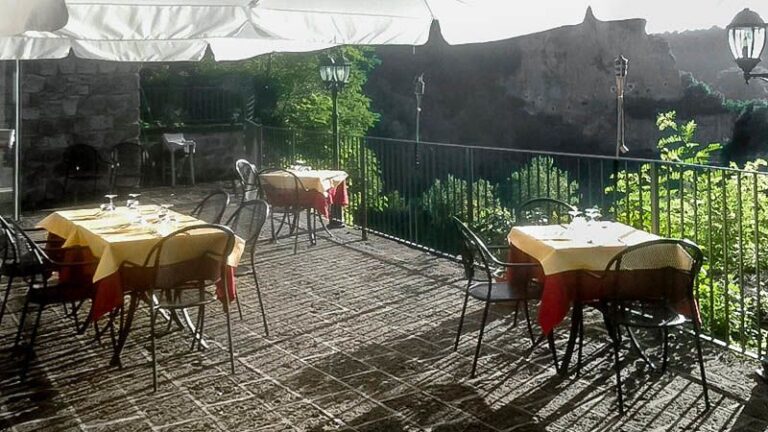
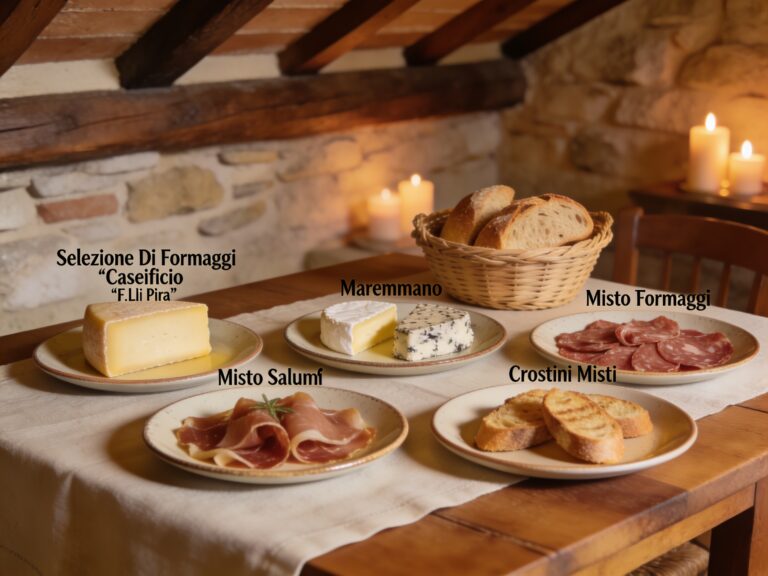
Our favorite tables around Pitigliano
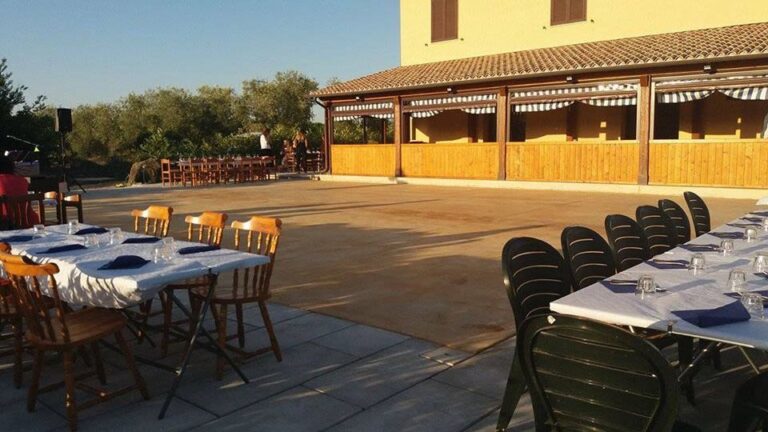
The entry points: tuff villages and Etruscan hikes
Les Via Cava ne sont pas des chemins de randonnée isolés dans la campagne. Ce sont des artères historiques qui relient, depuis toujours, des lieux de vie. Pour les explorer dans leur contexte, il faut s’ancrer dans l’un des trois tuff villages qui les dominent : Pitigliano, Sorano et Sovana. Chacun est un portail vers un univers spécifique, bien plus qu’une simple base logistique.
Here, hiking becomes a pretext for total immersion. You walk in the Etruscan footsteps in the morning, you taste their wine heritage in the afternoon, and you discover the local Jewish history in the evening. The local economy rests on the vine, not on tourism. This is what gives the experience its authentic density, far from any folklore.
Pitigliano, Sorano, Sovana: three bases for exploring

Pitigliano
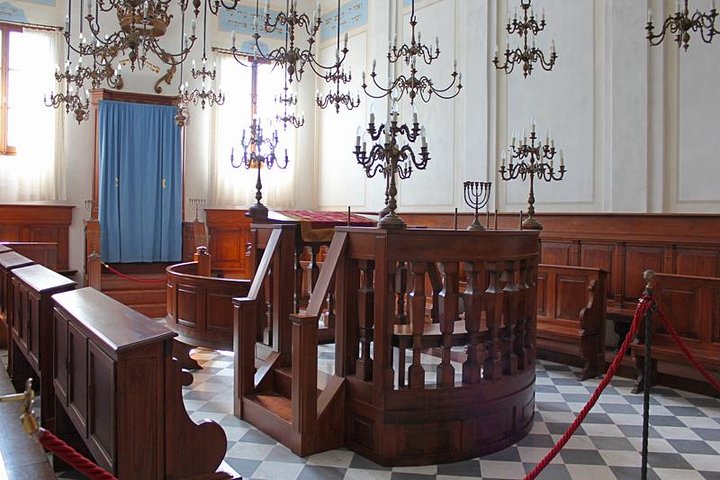
Tuff village perched on its cliff, with Jewish quarter, synagogue from 1598, Palazzo Orsini and Vie Cave carved by the Etruscans

Tosco Make sure to stop at the viewpoint on the road when arriving from Manciano at sunset: seeing this village carved into the tuff suddenly blaze with color is one of the craziest panoramas in all of Tuscany!
Ne cherche pas le « meilleur » village. Cherche celui qui correspond à ton humeur du moment. Pitigliano est le plus spectaculaire à l’arrivée, une forteresse de tuf surgissant de la roche. Mais son vrai charme est culturel : surnommée la « Little Jerusalem », son ancien ghetto juif abrite des salles entières creusées dans la pierre – le four à pain, le mikvé (bain rituel). C’est un lieu où l’histoire étrusque et l’histoire juive se superposent dans la même matière.
Sorano, more intimate, is the geological viewpoint par excellence. Its Masso Leopoldino, a fortified terrace carved directly into the tuff, offers dizzying views over the valleys carved by the Via Cava. The hikes that start from there are said to be "historic" because they mix natural paths and medieval remains, a palpable layering of eras with every step.

Sovana, finally, is the most discreet and often the most preserved starting point. This small village with silent streets is historically associated with the great Etruscan necropolises. The Via Cava radiating from it, such as the San Rocco or those referenced in our sheets #1472 to #1475, are generally less frequented. You encounter more mushrooms than hikers there.

- Pitigliano for culture (Jewish Ghetto, tasting of Bianco di Pitigliano) and a central access point.
- Sorano for breathtaking panoramas and hikes mixing nature and fortresses.
- Sovana for the most peaceful immersion and direct access to the most secret Via Cava.
Beyond the paths: complementary activities
After a morning in the mineral silence of a Via Cava, the experience continues. It does not stop at the trail. In Pitigliano, you extend your discovery of the tuff by visiting the cellars of the ghetto, then by tasting the wine that grows on these same volcanic rocks. A tasting at a producer such as the Santi Vinai is not a tourist activity: it is understanding the visceral link between the soil, the rock and the glass you are holding.

Santi Vinai
A festival of new wine and oil, on the first weekend of November, with tastings and entertainment in the tufa borgo of Pitigliano
Tosco A little tip from the wild boar piglet: don't just settle for the new wine, go and taste the freshly pressed oil on grilled Tuscan bread, its peppery kick in the depths of the tuff cellars is incomparable!
This local ecosystem extends to other sensory pleasures. The natural hot springs of Saturnia, with their cascading pools of sulfurous water at 37.5°C, are a half-hour drive away. They offer the perfect relaxation for muscles tired from walking. Further south, the Maremma Nature Park and the banks of the Ombrone offer wild swimming or canoe trips, a radical change of scenery.
Each season brings its own ritual, integrated into the life of the territory. In autumn, after your hike, you might come across a festival dedicated to mushrooms on the slopes of the nearby Mount Amiata, or the celebration of new wine in Scansano. These events are not staged for you; you are simply invited.
Plan your hikes in the morning, when the light pierces the sunken lanes. Reserve your afternoons for complementary activities: wine tasting in a cellar, a bath at Saturnia, or exploring the historical heritage of the village.
The key is not to compartmentalize. The Via Cava, the glass of white wine, the hot baths and the Jewish history are all part of the same story. That of a territory that has always known how to make the most of the rock, to move around, to live, to produce and to feed itself. Your stay takes on its full meaning when these threads weave together, naturally.
Before you go: what you really need to understand
You should approach it as you would enter a church, not as you would walk through the gateway of an amusement park. The silence here is not an emptiness, but a presence. The humidity that clings to your skin, the moss that covers the warm rock, the echo of your footsteps on the tuff: all of this is part of the experience, far more than a mere backdrop.
You will not find any safety barriers, flashy explanatory signs or marked trails. You are literally in the bowels of history, on a living archaeological site that erodes and breathes. Your responsibility is direct, immediate. Every gesture counts.
Why this site remains ignored by mainstream travel guides
The Via Cava do not sell themselves. They match none of the criteria of mass tourism: no spectacular and immediate viewpoint, no iconic photo easy to capture, no reception infrastructure. They require time, curiosity and a certain acceptance of uncertainty.
No international tourism brand promotes them. They do not have the UNESCO label of the neighboring historic centers and remain rooted in a hyper-local culture, that of amateur archaeologists, hikers in search of meaning and inhabitants who still sometimes use them.
Paths carved by the Etruscans into the volcanic tuff, reaching up to 20 meters deep. They connected the necropolises to the villages and also served as defense and drainage routes.
Unlike a site like the Torciata di San Giuseppe in Pitigliano, a highly publicized and eagerly awaited event, the Via Cava exist in near-absolute silence. Their value is anything but spectacular: it is immersive, tactile, almost introspective.
Your role as a visitor: respect and discovery
Tuff is a soft, crumbly rock. Every step, every hand placed on the wall accelerates its natural erosion. You are literally walking on 2,500 years of history. There is neither guardian nor barrier to remind you of this fragility; this awareness must come from you.
Exploration is an act of commitment. Without official signage, you will often have to rely on your sense of direction or on detailed guides like those of the Via Cava San Rocco to avoid getting lost and to respect access rules.

Via Cava di San Rocco
Etruscan pathway carved into the tuff 2 km from Sorano, linking the San Rocco necropolis to the Lente valley

Tosco Wear proper non-slip soles: with the humid microclimate and the moss on the tuff, this magical gorge quickly turns into a real ice rink!
The tuff walls, already slippery because of the moss, become truly dangerous slides after a downpour. Favor dry periods, such as those of the grape harvest in September, for a safe exploration.
Your role is not to "consume" a landscape, but to cross it with humility. Take the time to notice the grooves left by chariots on the walls, the coolness rising from the depths, the way the light plays with the rock at noon. That's what discovery is all about.
Also look up the driving and parking rules before you come. The last thing you want is a fine for accidentally entering a ZTL while looking for the trailhead.
Our addresses · Sorano
Our favorite addresses around Sorano
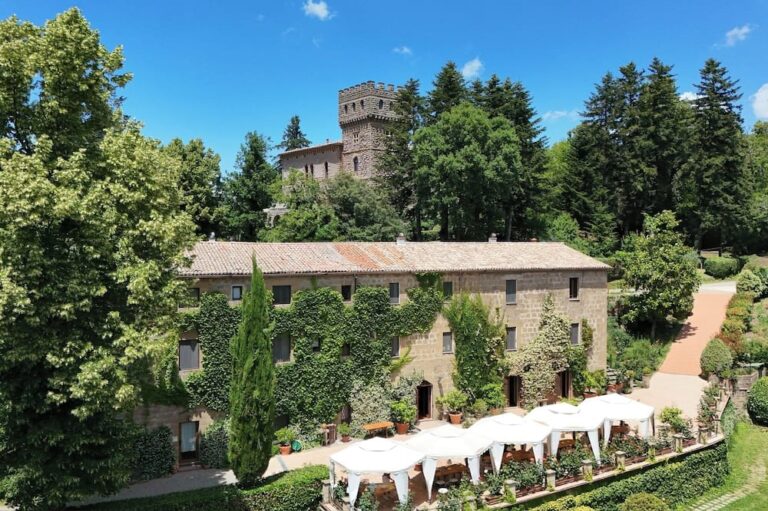
These paths are the real Tuscany — the one that reveals itself only to those who know how to slow down
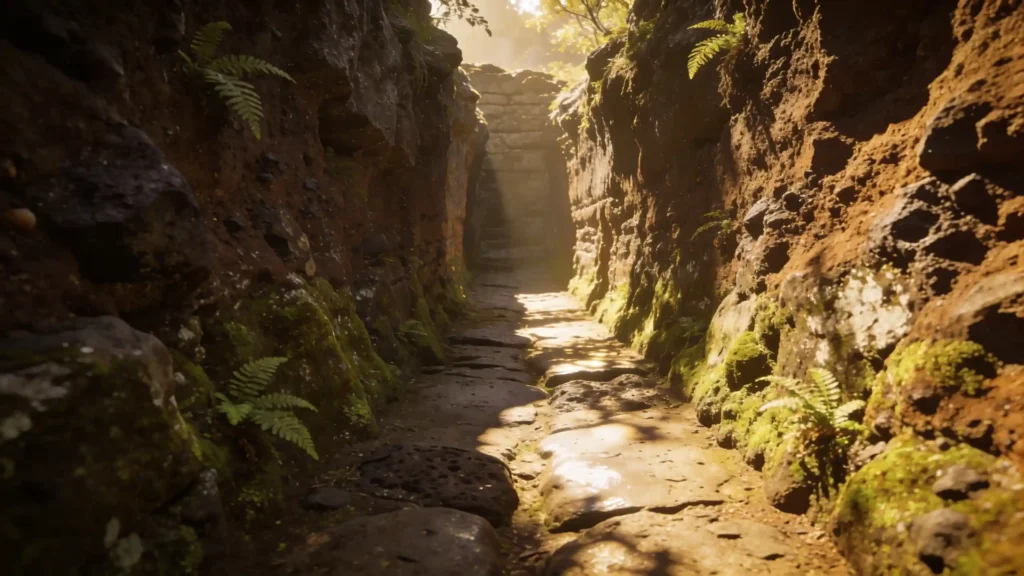
Walking in a Via Cava is much more than a hike. It means accepting to leave behind the rhythm of the modern world to find again that of the earth, the wind, and a civilization that still knew how to listen to silence.
Here, there are no queues for a selfie, no flashy souvenir shop. Just the friction of your soles on the worn stone, the cool shade that takes hold of your shoulders. You will have this lingering feeling of being the first to discover these places — as if the Etruscans had only just left them.
The real Tuscany is not in the crowded museums. It is here, in these hand-carved paths, where every step is a conversation with 2500 years of history.
If you come in autumn, you will have the privilege of walking on a carpet of chestnut leaves. The air then fills with the scent of the neighboring vineyards in full harvest. It is the ideal moment: the light is soft, the crowds are gone, and the region pulses to the rhythm of the village festivals and sagre that celebrate the products of the land.
So yes, you will have to drive on narrow roads. Park your car carefully to avoid the poorly signposted ZTLs, and perhaps give up the comfort of perfect signage. But that is the price to pay for an authenticity that, elsewhere, has been sold off to mass tourism.
These paths will not offer you the flashy spectacle of the Chianti hills. They will give you something far better: the rare and precious feeling of having discovered something that had remained secret, intact, and that had been waiting for you, right there, for 2500 years.
The Vie Cave, these ancestral paths carved by the Etruscans, are located in southern Tuscany, in the heart of the Maremma, a region still relatively untouched by mass tourism. They are concentrated around three iconic villages, often nicknamed the « tuff cities »: Pitigliano, Sovana and Sorano. It is in this area that you will find the densest network and the most spectacular passages. For an immersive and authentic experience, the ideal is to choose one of these villages as a starting point or exploration base.
To access them, note that most of the trails start directly from the immediate surroundings of these villages. In Pitigliano, for example, several paths are accessible on foot from the town center or via surrounding roads with parking areas. The Via Cava of San Giuseppe is an excellent introduction, starting from the foot of the village. For the most impressive ones, notably those with walls reaching 25 meters high, such as the Via Cava of San Sebastiano, you will need to head towards Sovana. A large part of these wonders is integrated into the «Città del Tufo» Archaeological Park. The main access to the park for the Sovana area is via the provincial road connecting Sovana to San Martino sul Fiora, where parking is available near the ticket office. To avoid the crowd and fully enjoy the silence and mysterious atmosphere, I advise you to come early in the morning or after four o'clock. It is at these moments that the light plays best with the tuff walls and that you will feel as if you were alone in the world in these stone corridors. Keep in mind that these paths are not always indicated by flashy signs, which contributes to their secret charm. For more details on the Etruscan sites of the region, you can consult this guide on toscane-cachee.com.
To explore the fascinating Vie Cave in the best conditions, spring and autumn are unquestionably the seasons to favor. During these periods, temperatures are mild and ideal for walking. The changing natural light sublimates the colors of the rock, the mosses and the lush vegetation that covers the walls. Summer, although possible, can prove stifling in the less enclosed parts of the paths. In contrast, winter makes the trails particularly slippery and muddy due to the rains, which can make progress more difficult and less pleasant. Humidity is a constant in these tuff corridors, whatever the season, but it is accentuated by winter rainfall, turning the experience into a challenge rather than a serene immersion.
Regarding equipment, the absolute priority is safety and comfort. Volcanic tuff, especially when damp, can be extremely slippery and unstable. Hiking shoes with good grip and sturdy lugs are absolutely essential to maintain secure footing and protect your ankles. Forget sneakers with smooth soles or sandals. A headlamp or a powerful torch is also strongly recommended, as some sections of the Vie Cave are very deep and daylight penetrates them with difficulty, even at midday. Bring enough water, some snacks, and a hat if you start or finish your hike in the sun. Layered clothing is wise, as the temperature can drop by several degrees inside the cavities. Finally, don’t forget your camera to capture these unique landscapes, but be ready to put it away to fully immerse yourself in the silence and mysterious atmosphere of these places. A light backpack will allow you to carry all this comfortably.
The history of the Vie Cave dates back to the era of the Etruscans, between the 6th and 3rd centuries BC. These monumental paths were carved directly into the volcanic tuff of the Maremma, some reaching vertiginous depths of 20 to 25 meters for a width sometimes limited to 3 or 4 meters. The engineering feat is all the more remarkable as they were carved by hand, moving thousands of tons of volcanic rock. Their exact function remains a subject of passionate debate and an enigma for archaeologists, which adds to their mystery and appeal. It is highly likely that they fulfilled several roles simultaneously, evolving over the centuries.
Several theories coexist to explain the reason for these corridors. Some researchers believe they served as strategic communication routes, connecting dwellings to agricultural lands and above all to the necropolises, making it possible to smooth out the steep gradients between the plateaus and the valleys. Others favor a sacred and ritual dimension, suggesting that these paths could have been used for funerary processions or rites linked to the deities of the earth and the afterlife, the presence of votive niches and sacrificial wells corroborating this hypothesis. The function of a defensive system is also put forward, these enclosed and winding passages constituting strategic points for setting ambushes or slowing the advance of invaders. Finally, some see them as ancient channels designed to drain and channel rainwater, an essential hydrological role in this region. It is likely that the Vie Cave accumulated these different functions, adapting to the needs of the Etruscans who knew how to shape a network that was both utilitarian and spiritual. Walking in these corridors means confronting this absence of certainty, and allowing yourself the freedom to imagine and feel history beneath your feet.
Absolutely! The Maremma is a region rich in hidden treasures, and exploring the Vie Cave can be magnificently complemented by the discovery of wild hot springs and other Etruscan archaeological sites, offering a total immersion in the heritage of this civilization. The Etruscans, known for their hedonism and their special relationship with water, left many traces of their thermal culture. Tuscany abounds in hot springs, some of which were already frequented in their time.
The most famous and most accessible site for a wild thermal experience is without any doubt the Cascate del Mulino of Saturnia. These natural limestone pools, formed by the sulfurous waters that gush from the ground, are accessible free of charge and 24/7. They offer a unique and relaxing setting, perfect for unwinding after a hike in the Vie Cave. Saturnia is not very far from the tuff cities like Pitigliano, which makes it an ideal excursion. Moreover, the Saturnia area is also home to Etruscan necropolises, whose remains are preserved in the archaeological museum in the center of Saturnia, allowing you to combine relaxation and history. Beyond the hot springs, the «Città del Tufo» Archaeological Park, which encompasses a large part of the Vie Cave around Sovana and Sorano, , also houses monumental necropolises such as the famous Tomba Ildebranda. These sites allow you to understand the deep connection between the Vie Cave and the Etruscan burial places. It is a complete way to experience the secret Maremma, combining walking, archaeological discovery and thermal relaxation, away from the usual crowds. For more ideas for stays combining hot springs and Etruscan villages, you can consult this guide on .
The three tuff villages, , Pitigliano, Sovana and Sorano, serve as the main gateways to the Vie Cave network, each offering distinct routes and unique atmospheres. Choosing one of them as a base will allow you to explore the paths directly linked to it.
In Pitigliano, you will find several accessible starting points. The Via Cava of San Giuseppe is undoubtedly one of the most accessible and constitutes an excellent first approach. It connects the banks of the Lente river to the surrounding heights and is dotted with ancient necropolises. The Via Cava di Fratenuti is also notable for the chromatic contrast between the bright green of the mosses and the pinkish tuff, and houses an ancient sanctuary. Finally, the Via Cava di Poggio Cani starts directly from the historic center, near the Porta di Sovana, and offers a perfect introduction without straying too far from the village. Around Sovana, in the heart of the «Città del Tufo» Archaeological Park, are the most monumental specimens. The Cavone is considered the Via Cava par excellence, a majestic canyon 4 meters wide where you can discover ancient tombs and an Etruscan inscription. The Via Cava of San Sebastiano is the most spectacular, with its vertiginous walls 25 meters high, sinking into the woods for an intense atmosphere. The Via Cava di Poggio Prisca connects the village of Sovana to the archaeological area, passing near the famous Tomba Ildebranda. Finally, , Sorano, with its more intimate character, offers hikes that mix natural trails and medieval remains, offering a palpable superposition of eras. Most departures are from the immediate surroundings of the villages, often via marked trails, but it is always advisable to check with the local tourist offices for the most recent maps and the condition of the paths.
The accessibility of the Vie Cave to families with children or to people with a moderate level of fitness depends a lot on the chosen path and the weather conditions. While the experience is unique and fascinating for all ages, it is crucial not to underestimate the nature of these trails. The Vie Cave are not landscaped walks like parks, but ancient paths carved into the rock, which retain their wild and authentic character.
The tuff walls, especially after rain, can be glissant et boueux. Some passages are narrow, others steeper, and the light can be low there. For this reason, hiking shoes with good grip are absolutely essential for all participants, including children. Strollers are to be avoided. For young children, a back carrier can be a solution for the littlest ones, but you must be aware of the physical effort this represents for the parents. Vie Cave such as the Via Cava of San Giuseppe in Pitigliano or the Via Cava di Poggio Cani are generally more accessible and can constitute a good first approach for families. In contrast, routes like the Via Cava of San Sebastiano near Sovana, with its 25-meter walls and winding course, can be more demanding and less suitable for very young children or people with mobility difficulties. The important thing is to prepare well, to choose a route suited to everyone’s physical condition, and to always prioritize safety. A small flashlight for the children can turn the exploration of the dark areas into a fun and exciting adventure.
For a total immersion in the local culture and Etruscan history of the Maremma, I highly recommend favoring the agriturismi or the small boutique hotels nestled in the tuff villages or the surrounding countryside. These accommodations offer an authentic experience, far from impersonal hotel chains, and allow you to taste the Tuscan way of life. Staying directly in Pitigliano, Sorano or Sovana is an excellent choice, as you will be just steps away from the entrances to the Vie Cave and the medieval atmosphere of these hilltop towns. You will be able to stroll through the alleys in the evening, discover the local restaurants and soak up the unique atmosphere of these places.
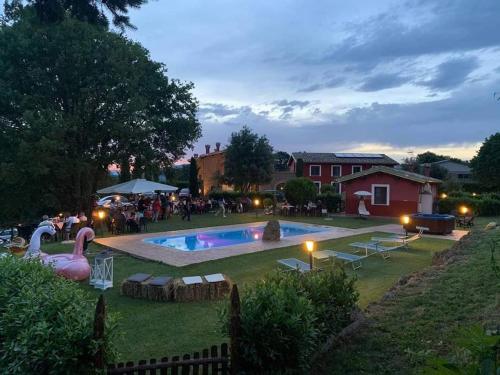
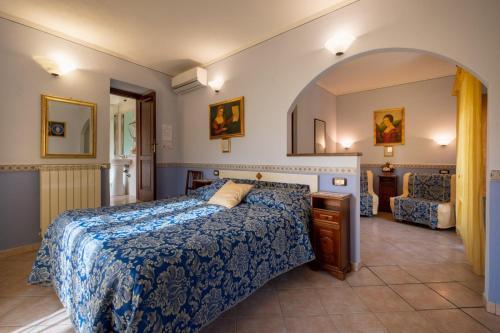
In Pitigliano, you will find charming guesthouses in the heart of the village, sometimes even carved into the tuff, offering continuity with Etruscan history. Look for establishments like the Agriturismo Biologico Aia della Colonna or the Agriturismo Valle del Fiora nearby for a more rural experience, often with local products to taste. In Sorano, more intimate, accommodations like the Hotel della Fortezza, located in the Orsini fortress, offer an exceptional historic setting. For Sovana, more discreet, the options are often agriturismi or guesthouses that highlight the calm and the surrounding nature, such as the Agriturismo Pian dei Gelsi. The advantage of these accommodations is that they are often run by passionate locals who can give you valuable advice on the best trails, typical restaurants or current cultural events. It is an opportunity to experience the Maremma not as a simple tourist, but as a traveler in search of authenticity and deep discoveries.
Around this article
Is the map not displaying? See accommodations on Stay22
Map and prices provided by Stay22: Toscane Cachée may receive a commission on bookings.
You will also like

Etruscan sites in Tuscany: the complete tour of the necropolises and tuff villages
Explore the Etruscan sites of Tuscany in 2026. Discover the Vie Cave of Sovana...

Tuscan Etruria Itinerary: 7 days of tuff and necropolises
Discover this 7-day itinerary in the Etruscan Tuscany circuit. Explore Pitigliano, the Via…

Tuff villages tour 2026: 3 days in Tuscan Maremma
Discover this tuff villages tour in Maremma. Explore Pitigliano, Sorano and Sovana in 3…

Top 5 spectacular Etruscan sunken roads in Maremma
Explore the 5 most beautiful Etruscan sunken roads in Maremma. Discover these paths of...