Museum
The place
The perfect starting point to climb back up through Arcidosso's old town, alley after alley, without a fixed itinerary.
👥 Who it's for: For travelers who love old alleys, local history and walks on foot.
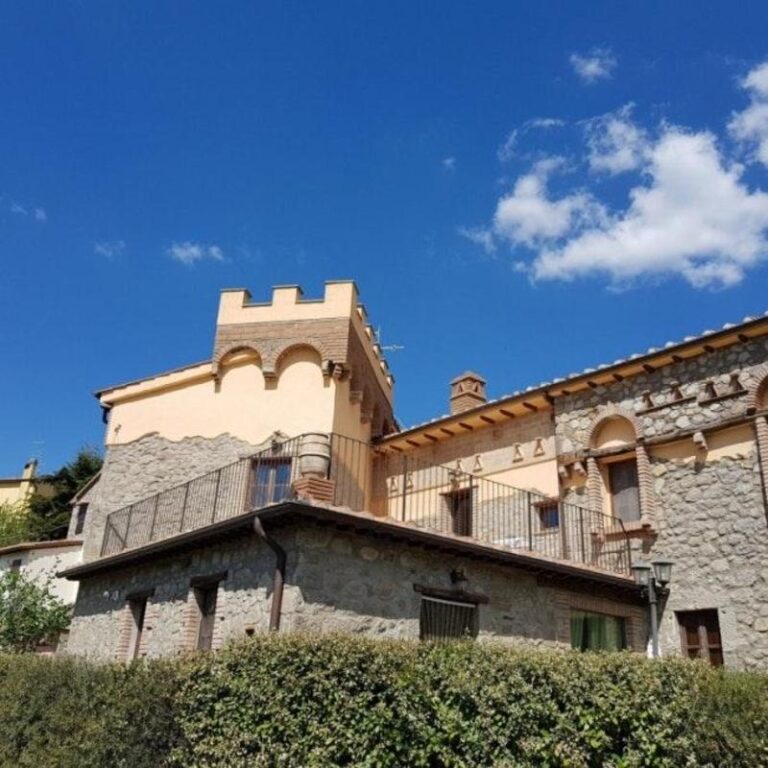
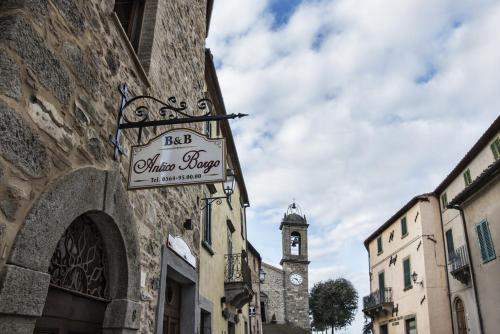
In Arcidosso, leave the surroundings of the Rocca Aldobrandesca and walk calmly downhill: you enter the Terziere del Codaccio, one of the three historic districts of the town, along with Castello and Sant'Andrea. It is not a separate village, but an old quarter to be discovered on foot, without a complicated itinerary. One alley leads to another, a staircase leads to a stone doorway, and the walk naturally follows the terrain.
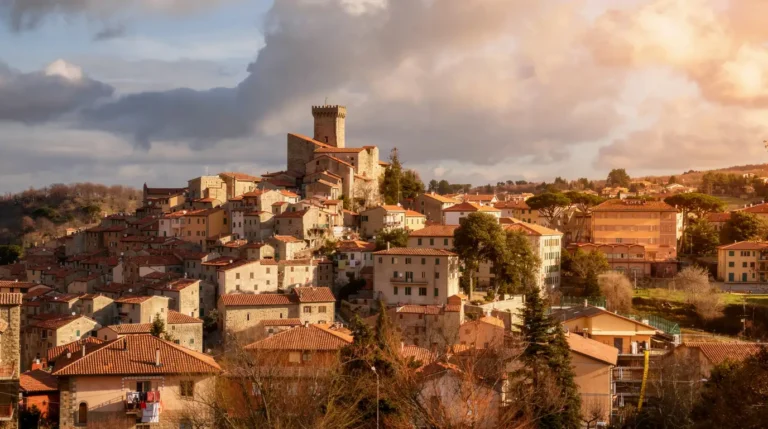
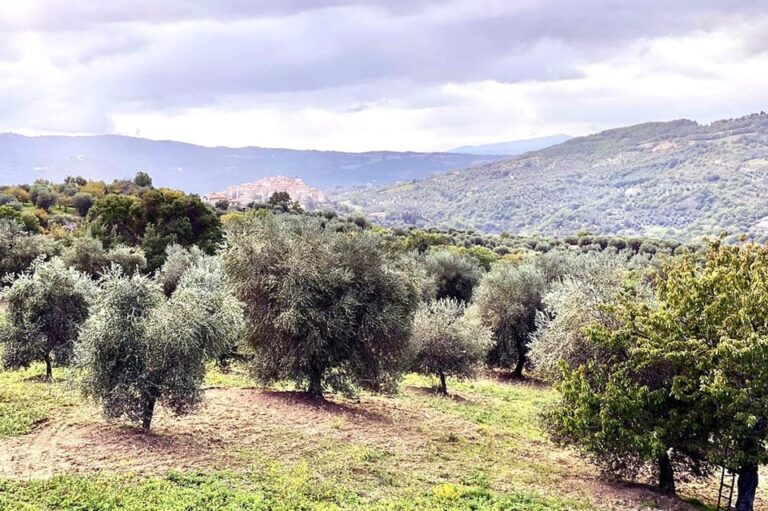
Arcidosso is located on Monte Amiata, in the province of Grosseto, far from the Etruscan coast. It is a stop in inland Tuscany, more mountainous than maritime. The old town developed around the Aldobrandeschi fortress, whose earliest constructions date back to around the year one thousand. The name of Arcidosso appears in a document as early as 860. In the Middle Ages, the Aldobrandeschi made it a stronghold, before the town came under Sienese control in the XIVe century. To place the district in its setting, the page devoted to Arcidosso and Monte Amiata allows you to extend your discovery.
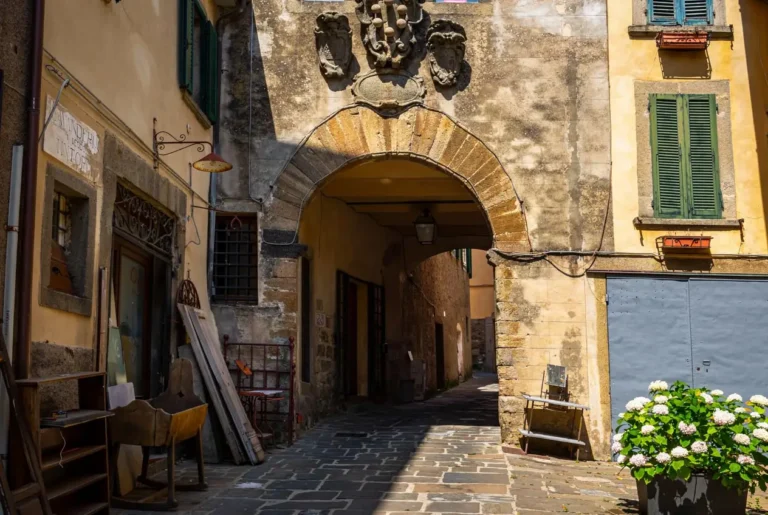
To reach the Codaccio, look for the Porta dell'Orologio, on Via Talassese. It marks the passage between the town and its old alleys. The current gate is linked to the transformation of the former Porta di Mezzo: in 1851, it was raised and the clock tower was built. Before passing underneath, take the time to observe the whole structure. Its entrance is modest, but it gives the walk a clearly recognizable threshold.
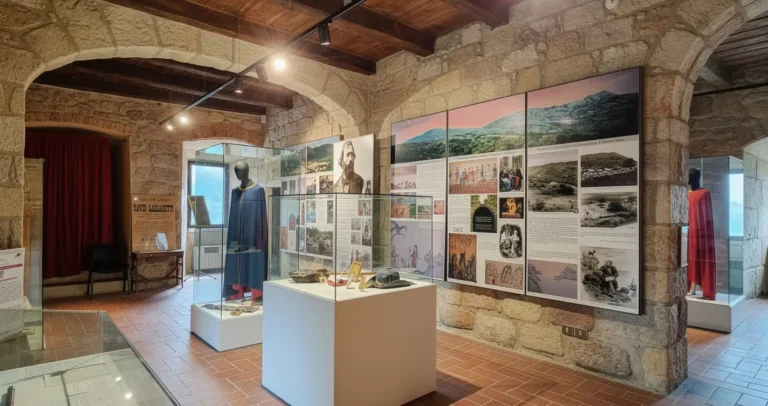
Via Talassese also offers a detour to the birthplace of David Lazzaretti, born in Arcidosso in 1834. A barber turned preacher and popular prophet, he deeply marked the history of Monte Amiata in the XIXe century. His presence is a reminder that these streets are not merely an old backdrop: they are linked to the inhabitants and the ideas that shaped local memory. To better understand his life, you can also visit the Centro Studi David Lazzaretti.
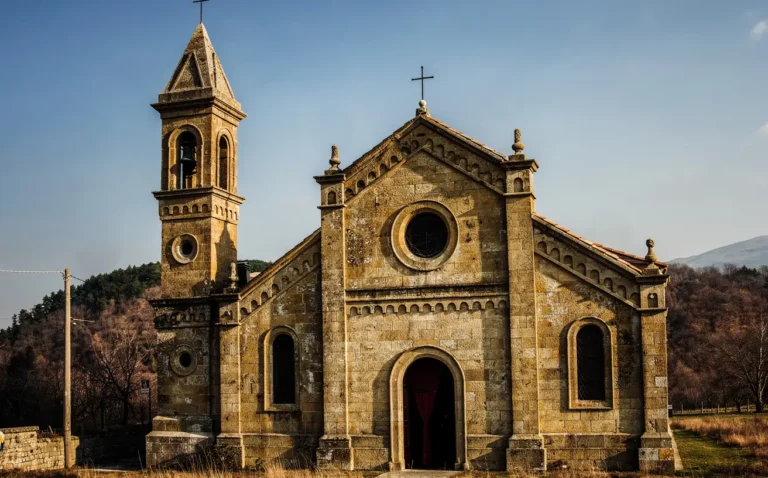
Going downhill, you will arrive at the church of San Leonardo, one of the main landmarks of the district. It is attested as early as 1188 and was remodeled in the XVIe century. Its history also bears the traces of more recent events: the interior was damaged during the Second World War. Among the works preserved is the Beheading of Saint John the Baptist, painted by Francesco Vanni in 1588-1589.
If the door is open, step inside for a few minutes. After the narrow passages and the changes in slope, the silence of the church offers a welcome pause. However, do not build your entire visit around a specific time: the district is a public thoroughfare freely accessible, but the regular opening hours of San Leonardo are not always easy to spot. Access to the interior may depend on services, the season, or occasional openings. The Rocca Aldobrandesca and the museums of the village have their own hours, to be checked separately before departure; the Rocca Aldobrandesca of Arcidosso is a natural continuation of the walk.
The best way to appreciate the Codaccio is not to try to check everything off. From the center of Arcidosso, reach the Porta dell'Orologio, then walk down quietly towards San Leonardo. Let yourself be guided by the forks and passages, keeping in mind that some streets are sloped or have steps. You can then head back up to the top of the old center or join Corso Toscana to find the shops and cafés.
The walk is short on the scale of a day, but the terrain makes itself felt. Stable shoes will make the cobblestones and stairs more pleasant to walk on. The alleys do not form a perfectly flat route and may require extra effort from people with reduced mobility. If you wish to explore other historical passages of the village, the Porta Talassese offers another glimpse of these ancient thresholds.
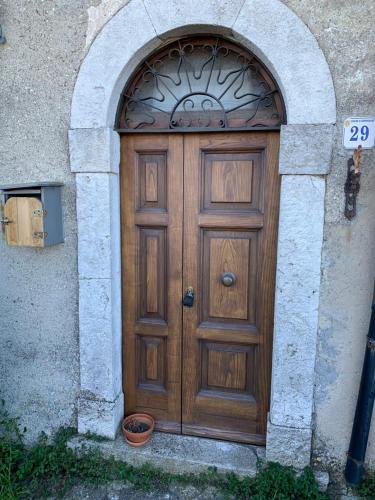
The Codaccio does not promise a great panorama at every street corner nor a spectacular monument in itself. Its charm is more discreet: an ancient door, an irregular facade, a perspective that narrows and then opens. Look up, but also observe the details at step level. In autumn, a gourmet stop nicely completes the visit: the region is known for its PGI chestnut, found notably in castagnaccio or in polenta made with chestnut flour.
The Terziere del Codaccio will appeal to travelers who like inhabited old centers, spontaneous detours, and places where history is read in the streets rather than on signs. Allow about 30 to 60 minutes for a first leisurely stroll, more if San Leonardo is open or if you take the time to explore the entire historic center. No ticket is needed to walk through the alleys.
The Codaccio deserves a stop for its authenticity and its place in the history of Arcidosso, more than for a single attraction. It reveals itself by walking, along the stones and the changes in slope. A simple break, away from the most frequented Tuscan itineraries, and a fine opportunity to discover the Amiata beyond its forest landscapes.
Evaluation criteria
Is the map not displaying? See accommodations on Stay22
Map and prices provided by Stay22: Toscane Cachée may receive a commission on bookings.
 Français Français
 Italiano
 English
 Polski
 Português do Brasil
 Nederlands
 Español
 Deutsch