










The walls cyclopean walls of Roselle and the princely tumuli of Vetulonia prove that Maremma was the beating heart of the Etruscan confederation long before the rise of Rome. One often gets lost in guides that are too vague, whereas the véritable patrimoine étrusque maremme is hidden in the volcanic tuff of Pitigliano or the forest trails of Sovana.
This article dissects the major sites and the new 2026 excavations to help you plan a precise archaeological itinerary, far from mass tourism. Together, we take stock of the secrets of this civilization and the field advice for a successful exploration.
Etruscan heritage in Maremma: the basics for your exploration
The Maremma is home to the city-states of Roselle and Vetulonia, famous for their cyclopean ramparts and princely tumuli. This wild territory stands out for its vie cave, sacred roads carved into volcanic tuff. Here is how these ancient lucumonies.
To truly grasp the soul of this corner of Tuscany, you must understand that history here is not read in books, but beneath your feet, in the dark stone and forgotten paths.
The city-states of southern Tuscany
The province of Grosseto is home to Roselle and Vetulonia. These cities formed independent lucumonies. They belonged to a powerful decentralized confederation. The Tyrrhenian coast favored their trade.
Term designating one of the twelve sovereign city-states forming the Etruscan confederation, each governed by a lucumo.
Their ports played a crucial strategic role. The Etruscans perfectly mastered the sea routes. They represented the dominant economic power before Rome. Trade with Greece was flourishing.
The geography of the south is unique. Maremma was the Etruscan nerve center. This civilization durably shaped the local landscape.
The geological uniqueness of the volcanic tuff
In Pitigliano, the landscape rests on tuff. This soft rock comes from ancient volcanic eruptions. It shapes the visual identity of the whole area.

Pitigliano
Tuff village clinging to its cliff, with a Jewish quarter, a 1598 synagogue, the Palazzo Orsini and Vie Cave carved by the Etruscans

Tosco Make sure to stop at the viewpoint on the road when arriving from Manciano at sunset: seeing this village carved into the tuff suddenly glow is one of the most breathtaking panoramas in all of Tuscany!
The Etruscans appreciated this malleable stone. Digging necropolises then became a a piece of cake. It was perfect for building durable tombs. Tuff also guarantees constant coolness.
The troglodyte dwellings cleverly exploited the terrain. The steep cliffs served as natural ramparts. The defense blended perfectly into the wild nature. No need for artificial walls here.
The brown rock has incredible charm. It turns orange depending on the sun's position. The spectacle is total at dusk.
Why 2026 is the year to go
New marked hiking trails are appearing. The network now extends to the most remote areas. It is ideal for hikers in search of the unusual.
The recent excavations at Roselle are fascinating. Unprecedented structures emerge from the ground regularly. The archaeological site gains depth every year.
The absence of crowds is your greatest luxury. Here, you escape stifling mass tourism. The experience remains intimate, quiet and sincere. It is the Tuscany of wide open spaces.
Local development relies on this cultural heritage as an engine of development sustainable. The European project supports this enhancement.
Differences from Renaissance Tuscany
Forget the white marble of Florentine palaces. Here, the’aesthetic is raw and unadorned. The volcanic stone imposes a wild atmosphere.
The Maremma forest envelops the ancient ruins. Mediterranean vegetation is reclaiming its rights everywhere. You'd think you were in a jungle steeped in history.
Slow tourism takes on its full meaning here. You stop to observe every detail of the stones. It's an immersion far from the selfie trails. You can finally breathe.
The authenticity of the south has remained intact. The region preserves its Etruscan roots with pride. It's a journey out of time.
Maremma does not reveal itself to the first newcomer seeking the glitter of the Renaissance. Here, the Maremma Etruscan heritage imposes a different pace, rougher, more silent. Forget the endless queues of the Florentine museums. In southern Tuscany, history is read right on the tufa rock and under the holm oaks.
This guide takes you to Roselle, a city-state where the Romans had to reckon with the genius of their predecessors. You will discover how a city was built layer upon layer, far from standardized tourist circuits, where the land still holds the memory of the Lucumones.
Roselle and the remains of a major city-state
Having laid the geological foundations, let us head to Roselle, one of the most complete sites to grasp the evolution of the region.

Archaeological site of Roselle
Roselle réunit un amphithéâtre romain intact dans l'herbe rase et des blocs cyclopéens étrusques du VIIe siècle av
Tosco Much wilder and more intimate than Populonia, Roselle lets you explore an ancient amphitheater and Roman baths among the olive trees without meeting a soul. Climb all the way up in the late afternoon: the golden light on the Grosseto plain is simply magical!
The forum and the Roman mosaics on an Etruscan foundation
The Roman forum of Roselle does not come out of nowhere. It rests directly on massive Etruscan foundations. You can clearly see the architectural evolution beneath your feet. It's an open-air history book.
Look closely at the patterns of the mosaics of the Domus. The colors are still surprising despite the passing centuries. They decorate the former aristocratic dwellings of the archaeological site.
The Roman engineers were pragmatic during the conquest. They preserved the initial Etruscan urban layout. They simply reused the foundations to build their new city.
In this central part of the site, you will be able to observe them :
- The forum paved with travertine.
- The civil basilica.
- The old shops lined up.
- The drainage systems still visible.
The natural amphitheater and the cyclopean ramparts
The 7th-century ramparts still proudly surround the hill. The blocks are massive and impressive to observe up close. They are called cyclopean walls for their extraordinary size.
The amphitheater of Roselle is a small marvel of engineering. Its elliptical shape perfectly follows the curves of the hill. It's a rare example of adaptation to the terrain. The tiers offer a incredible natural acoustics.
Pay attention to the dimensions of the stones of the enclosure. Some weigh several tons without any mortar to bind them. The stonework is remarkable for the era.
These fortifications ensured the defensive power of the city in the past. Roselle dominated the entire surrounding plain and watched over the accesses to the sea.
Access and visiting tips to avoid the heat
I highly recommend morning visits. The low-angle light enhances the stones and the reliefs of the walls. It also lets you avoid the blazing sun that beats down hard on the ruins.
Look for the shaded path that leads up to the top of the site. It crosses a fragrant maquis typical of the Maremma. The climb is gradual and pleasant under the trees.
The parking lot is easy to access at the bottom of the hill. The rates remain very affordable for everyone, about 4 € for entry. Plan to bring enough water as there is no water point up there.
Come right at opening time to enjoy the best light on the cyclopean walls and avoid the midday furnace. Wear good shoes, the ground is limestone and sometimes slippery.
Don't miss the panoramic view of Grosseto from the summit. It's the ideal moment for photos of the countryside. You then understand the strategic position of Rusellae.
The Grosseto archaeological museum as a complement
The funerary steles displayed in the museum are magnificent. They tell with precision the life of the ancient inhabitants of the region. They perfectly complement what you saw on site.
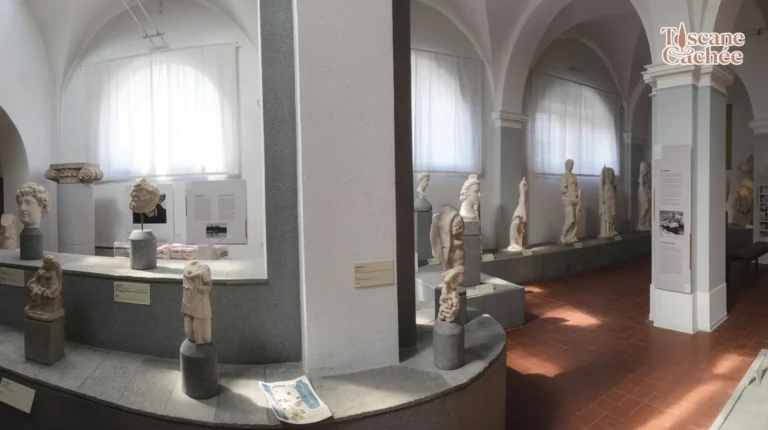
MAAM — Archaeological and Art Museum of the Maremma
Installé dans l'ancien tribunal de Grosseto, le musée aligne en quarante salles sur trois étages or de Vetulonia, bol au bucchero et statues du forum de Roselle

Tosco First go see the treasures of the MAAM and its incredible Roman shipwreck before climbing up to the ancient site of Roselle: your eyes will read the ruins quite differently!
The interest also lies in the everyday objects found during the excavations. You can see fine jewelry and domestic pottery. This makes Etruscan history much more human and concrete.
The museum is located right in the town center of Grosseto. It's a welcome, cool stop after walking around the site in full sun. It's the ideal place to deepen your knowledge of the imperial period.
Nos adresses · Roselle
Nos adresses préférées autour de Roselle
Vetulonia and the secrets of the princely tumuli
Let's leave Roselle for Vetulonia, another major city that hides its most beautiful treasures beneath immense mounds of earth.

Vetulonia
Vetulonia, an Etruscan village in the Maremma, is part of the three archaeological parks along with Cosa and Roselle and hosts ongoing excavations at the Domus dei Dolia
Tosco Don't limit yourself to the village museum: take the path below to explore the Tomba della Pietrera among the olive trees, the atmosphere there is magical and much wilder than at Populonia!
The monumental tumuli of the Via of Tombs
The circular tombs dominate the landscape of Vetulonia. These massive stone domes use precise architecture. They still mark the silhouette of the surrounding hills today.
The local aristocratic families commissioned these monuments. They wanted to display their immense wealth for all to see. Prestige then went through funerary splendor.
Long corridors, called dromos, lead to the sacred chamber. The darkness there is total and mysterious. This narrow passage symbolizes the journey into the Etruscan afterlife.
The Tomb of the Pietrera remains the most famous structure. It is the largest funerary monument in the area.

The tomb of the chariots and the fine goldsmithery
Excavations have revealed an impressive warrior past. Remains of chariots have been found in the burials. The Etruscans were respected fighters in the Mediterranean.
The artisans mastered the granulation technique. It is a tiny and complex goldsmith's work. Thousands of gold beads are soldered with precision. A know-how unique in the ancient world.
The decorative motifs show exchanges with the East. These inspirations prove that the city was a commercial crossroads. Imported objects abounded in the tombs.
The granulation technique served to distinguish the local aristocracy by jewelry of incredible fineness.
The Isidoro Falchi museum: treasures of daily life
The gold fibulas on display are incredibly precise. You can also admire superb engraved mirrors. These objects tell the private life of the ancient inhabitants.

Isidoro Falchi rediscovered this forgotten city. This passionate doctor led the first excavations. He saved this heritage from total oblivion.
The museum's explanations are clear and modern. It is an essential place to understand the site. You can truly see the soul of Vetulonia there. It's a perfect stop when exploring the Wild Maremma, Authentic Tuscany, Parks and Secret Beaches to combine culture and nature.
The museum is accessible to everyone. It offers a complete immersion in Antiquity.
Panorama over the Grosseto plain from the village
From the summit, you can see as far as the sea. The ancient lagoon once occupied the entire current plain. The landscape has changed radically since the Etruscan era.
The upper town occupied a strategic defensive position. It watched over the marshes and trade routes. It was a perfect observation post for defense.
Take the time to take a break in the village. The alleys are calm and often flowery. You'll find good, welcoming little cafés there. Enjoy the’authentic Tuscan atmosphere far from the crowds.
The view over the Tuscan archipelago is breathtaking. Vetulonia remains a well-kept secret.
Our addresses · Vetulonia
Our favorite addresses around Vetulonia
Sovana and the monumental tombs of the archaeological park
Leaving the hills of Vetulonia, we enter the tufa triangle, where Sovana offers unique rock-cut architecture.
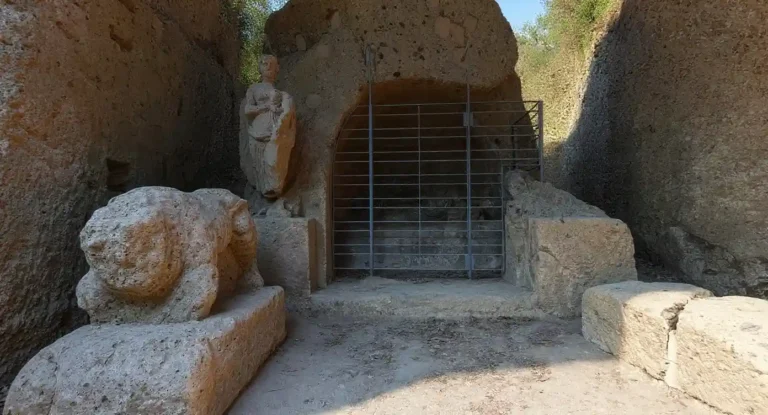
The Tomb of Ildebrando, a masterpiece of architecture
The sculpted façade is immediately striking. It perfectly imitates a classical Greek temple. It is the landmark monument of Sovana.

Tombs of Ildebranda
À Sovana, la Tombe d'Ildebranda est une tombe-temple taillée dans le tuf, intégrée à la nécropole rupestre et aux Vie Cave du parc Città del Tufo
Tosco Don't just admire this fake Greek temple carved into the rock: head straight on to the nearby *Via Cava di San Sebastiano*, it's the perfect combo to feel all the magic of the tuff!
The state of preservation is remarkable. The tuff has withstood time well despite its porosity. The columns are still visible today. It is a incredible ancient technical feat.
The interior dimensions surprise with their spaciousness. The burial chamber is vast. It is accessed via a dromos, the corridor typical of noble tombs.
Don't miss the Tomb of Ildebrando with its temple façade, the Tomb of the Siren and its sculptures, or even the Tomb of Pola.
The Tomba della Sirena and the bas-reliefs
The analysis of the siren's symbolism reveals deep beliefs. It decorates the pediment of the tomb. It is a protective figure of the dead.
The edicule tombs have a precise function. They resemble little houses for the afterlife. The religious landscape is very marked here.
The erosion of the tuff nevertheless poses a problem. The stone is fragile in the face of frequent rains. Protection efforts are underway. We must preserve these fragile masterpieces.
This rock-cut architecture uses bas-relief to depict the deceased during a banquet. It is an direct testimony of their vision of death.
The forest trails between the tombs
The wild atmosphere of the park is striking. The forest envelops the ancient tombs in an organic way. It is an adventure film set.
Allow two hours to see everything without rushing. The paths wind between the cliffs of volcanic rock. It is a easy but immersive stroll.
The paths can be very wet, especially in autumn. Good shoes are really necessary to avoid slipping. Avoid smooth-soled sneakers.
The silence of the forest is restful. You can only hear the birds between the stone walls. It is the luxury of the off-the-beaten-path.
Sovana, a village preserved in its medieval state

Sovana
Sovana, a small medieval tuff town, is home to an Etruscan necropolis as well as the vie cave of Cavone and San Sebastiano, linked to the Città del Tufo park
Tosco Many head straight to Pitigliano, but Sovana hides the most spectacular and peaceful *Vie Cave* in the whole region: walking at the bottom of these millennia-old tufa rifts is a true mystical slap in the face!
The Piazza del Pretorio is the heart of the village. It is one of the most beautiful in Italy for its simplicity. The Santa Maria church is a gem.
The link with the Etruscans is structural. The village rests on massive ancient blocks. History is everywhere beneath your feet.
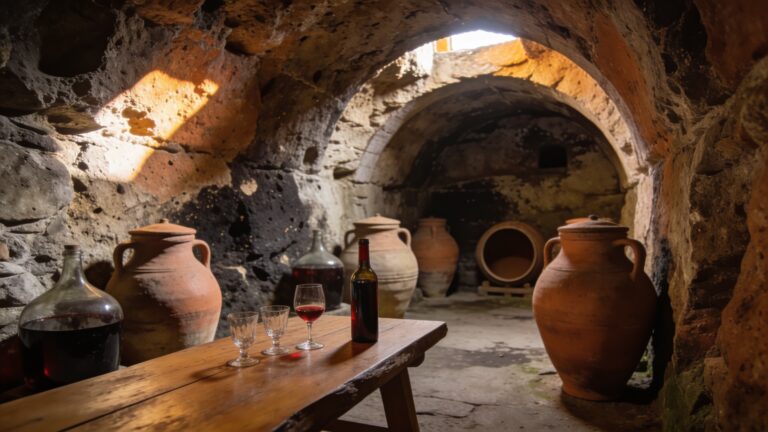
Taste the red wine of Sovana in one of the small cellars. The local products are excellent here. A well-deserved gourmet break after exploring.
During your visit, take the time to see :
- The cathedral (Duomo) isolated at the end of the village
- The bishop's palace on the main square
- The local craft shops specializing in leather or ceramics
| Site | 5. Main point of interest |
|---|---|
| Tomb of Ildebrando | Architecture of the Greek temple type |
| Tomb of the Siren | Mythological bas-relief of Scylla |
| Vie Cave | Paths carved up to 20m high |
Dégustations de vin · Sovana
Nos dégustations préférées autour de Sovana
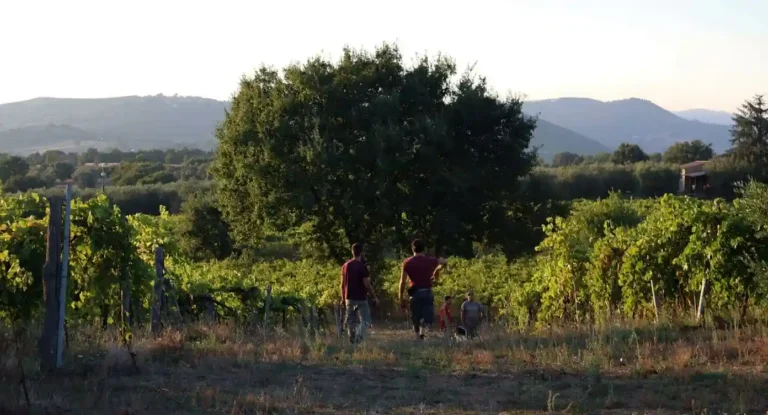
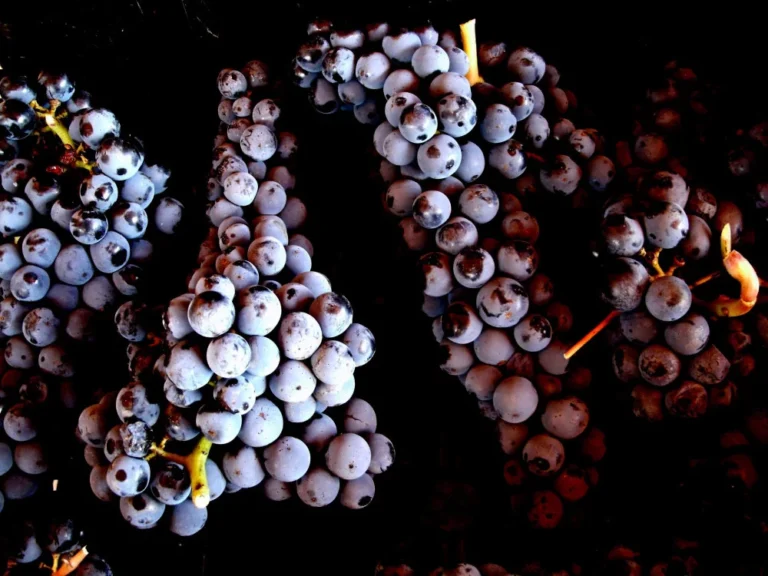
L'abus d'alcool est dangereux pour la santé, à consommer avec modération.
The Vie Cave or the art of carving tuff
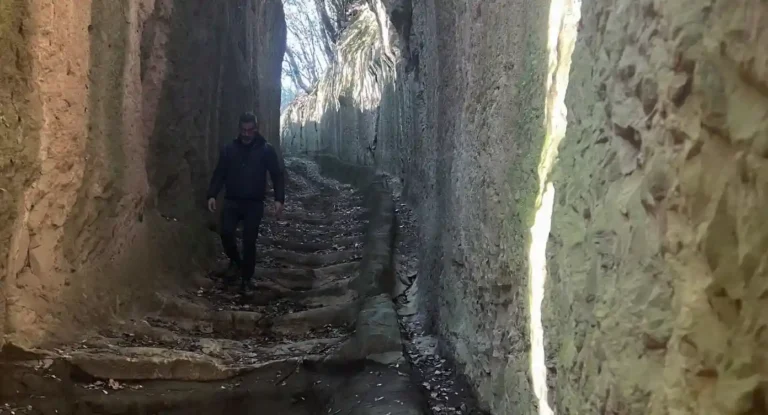
Sovana is not only famous for its tombs, but also for its "vie cave", these dizzying corridors carved directly into the rock.
Tuff engineering: how and why dig?
Theories differ on the use of these corridors. Were they sacred or military paths? The mystery remains complete today.
The drainage system is impressive. Small channels are carved into the walls. They prevented the flooding of the narrow paths. It is a very efficient hydraulic engineering.
The tools used were rudimentary but precise. The Etruscans carved with picks. You can still see tool marks on the rock.
The Via Cava di San Giuseppe in Pitigliano
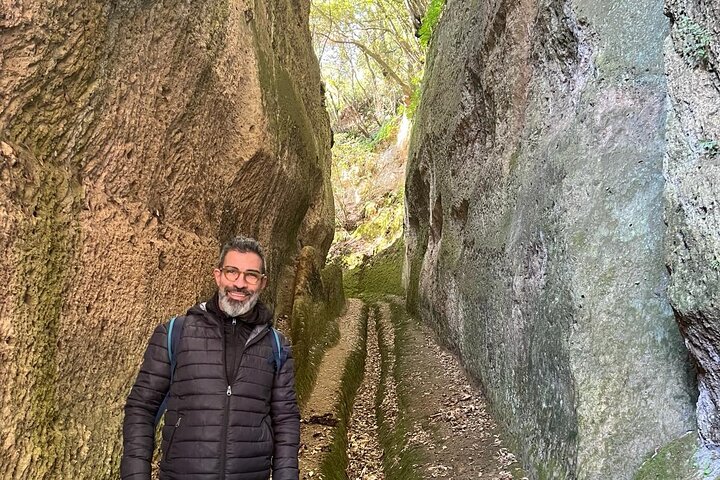
The narrowness of the walls is striking. They rise up to twenty meters. You feel tiny at the bottom of this crevice.

Via Cava of San Giuseppe
Un canyon étrusque creusé dans le tuf, doublé d'une petite nécropole à tombes à chambre et d'une image de saint Joseph peinte sur la roche
Tosco Put away your city sneakers and wear real cleated soles: with the humidity trapped between these 25-meter walls, the moss-covered tufa quickly becomes a bar of soap!
Look closely at the sacred niches. They are called scacciapensieri. They protected travelers from demons during their passage.
The starting point is easy to find. It is located near Pitigliano. The trail is now well marked. It is a absolutely unique visual experience.
The Cavone of Sovana, a cathedral of rock
The Cavone is a major stop. It is a widest way. It resembles a giant nave carved into the earth.

You'll find there authentic Etruscan inscriptions. Ancient names can be read engraved there. Vegetation covers the top of the walls, creating a muted green light.
The sound atmosphere there is particular. The wind whistles between the walls. It is a place charged with ancient energy that you must respect.
The Cavone was not just a road. It was also a tuff extraction zone to build the neighboring towns of the province of Grosseto.
Equipment and safety for hiking through these corridors
Watch out for slippery areas. The humidity makes the rock treacherous. Be careful after rain, the tuff does not drain water instantly.
I recommend lug-soled shoes. The ground can be loose in places. Good ankle support is essential here to avoid sprains.
Bring a headlamp. Some caves line the paths. This is useful for exploring dark nooks. Never leave without a charged battery.
The tuff rock becomes extremely slippery when wet. Avoid the Vie Cave during or immediately after rain, and always wear shoes with good grip.
Remember to keep quiet. The resonance is very strong here. Noise spoils the immersion in this fragile heritage.
| Site | Difficulty | Maximum height |
|---|---|---|
| Via Cava of San Giuseppe | Moderate | 20 meters |
| The Cavone | Easy | 15 meters |
| San Sebastiano | Moderate | 25 meters |
Pitigliano and Sorano, villages inheriting ancient urban planning
These carved roads naturally lead to the suspended towns, where the Etruscan heritage blends into medieval architecture.
Pitigliano, the town that seems to be born from the cliff
The village emerges from the tuff block in a spectacular way. The house facades vertically extend the rock face. It is a striking postcard view.
The current urban layout perfectly follows the contours of the volcanic spur. The city limits have not moved for centuries. You feel here all the weight of history.
To admire this unique panorama, go to the Madonna delle Grazie church. It is located on the road opposite the village. It is the best viewpoint.
Pitigliano's integration into its cliff is a masterpiece of geological adaptation. You will find nowhere else a such symbiosis between rock and dwelling.
The Etruscan cellars beneath the medieval houses
Beneath the inhabitants' feet, an underground world is at work. The ancient tombs have been transformed into household cellars. Local wine is still stored there.
Inside these cavities, the temperature remains constant. It is cool all year round, no matter the heatwave. It is perfect for preserving products.
Don't hesitate to ask for a private visit. Some locals open their underground spaces to the curious. There you can see the manual work of the ancestors. It is a immersion into hidden Pitigliano.
It is the ideal place for taste the local white wine. It is fresh and mineral thanks to the volcanic soil. A delight to enjoy away from the sun.
Sorano and its protective Orsini fortress
The defensive system of this neighbouring village is impressive. The fortress dominates the whole village with arrogance. It seems impregnable and massive when seen from below.

Fortezza Orsini
The Fortezza Orsini is a medieval fortress overlooking Sorano, a tuff village fortified by the Aldobrandeschi, with underground passages to explore
Tosco Above all, don't make the mistake of skipping the guided tour: it's the only way to access the labyrinth of underground tunnels carved into the tuff, by far the most impressive part of the site!
The military galleries often reuse ancient Etruscan tunnels. The past resurfaces in every stone of the castle. It is a fascinating labyrinth to explore carefully.
Sorano's appearance is much rougher. It is clearly less touristy than its neighbor Pitigliano. The atmosphere there is wilder and more authentic.
A visit to Sorano and its Orsini fortress is a must. There you will understand the strategic importance of this border area.
Local crafts: the working of bronze and clay
In the narrow streets, look for the pottery workshops. They still make some black bucchero. It is the typical Etruscan pottery, unmistakable at a glance.
The working of bronze also occupies a central place. Artisans use ancient techniques to melt the metal. The replicas produced are high quality.
For your purchases, look for local authenticity labels. Avoid the generic souvenir shops in the center. Always favor the direct contact with the artisan in their workshop.
- Bucchero ceramics
- Bronze jewelry
- Tuscan leather
Vulci and the border with Etruscan Latium
Moving southward, we reach Vulci, a frontier city where funerary art reaches its peak.
The Abbey Bridge and the Vulci Castle
The bridge arch is impressive. It dominates the Fiora river with strength. It is a breathtaking visual spectacle.
The castle has a dense history. It now houses a national archaeological museum. On y trouve des vases grecs superbes. La collection est d’une richesse rare.
The location is very precise. We are at the border of northern Latium. The landscape gradually changes here.
The site of Vulci is marked by the presence of the Fiora. The waters flow beneath the ancient stones.
Les tombes peintes de la nécropole d’Osteria
The Tomb of the François is a major monument. Its frescoes are famous worldwideThey illustrate ancient myths with precision.
On y voit des banquets joyeux. La vie quotidienne transparaît partout sur les parois. Les couleurs témoignent d’un masterful art.
La visite est souvent réglementée pour la conservation. Il faut protéger ces peintures fragiles de l’humidité. Pensez à book your time slot.
Le patrimoine étrusque maremme a fait l’objet d’un conference dedicated to the Etruscans lors de l’EXPO 2015. Ces échanges soulignent l’importance des découvertes locales.
The nature park between archaeology and pastures
Le cadre sauvage est magnifique. Les vaches maremmanes paissent ici en liberté. C’est une peaceful and beautiful coexistence.

The silence of the site is striking. Roman remains stand alongside raw nature. You feel far from the modern world.
Lake Pellicone is superb. C’est un havre de fraîcheur bienvenue après la marche. Les eaux sont d’un calme absolu.
The park is a important refuge. Les oiseaux migrateurs s’y arrêtent régulièrement.
Transition to the sites of northern Latium
La proximité de Tarquinia est un atout. C’est l’étape suivante logique de ton périple. The artistic styles are very close.
Vulci influençait ses voisines directes par son commerce. Les échanges culturels étaient constants entre ces cités. C’est un coherent ensemble to visit.
A car is necessary to cover the distances. The back roads are the most beautiful to travel. They wind between the fields.
You can consult this Tuff villages tour 2026: 3 days in Tuscan Maremma pour organiser ton séjour. C’est une base solide pour explorer.
La cuisine de Maremme n’est pas celle des cartes postales toscanes. Pas de bistecca fiorentina, pas de ribollita. Ici, c’est le cinghiale, le pecorino di Manciano, l’anguille du lac d’Orbetello.
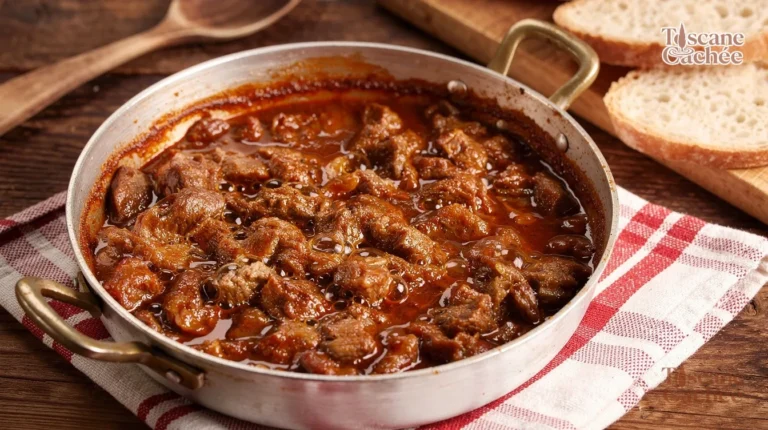
Cinghiale in umido
Le Cinghiale in umido est le civet de sanglier traditionnel de la Maremme, donné comme l'accord idéal des rouges de l'Area del Tufo
Tosco It's a bit delicate for a wild boar piglet like me to talk about it, but if you stop near Scansano, be sure to order it with steaming polenta so as not to leave a single drop of that Morellino sauce!
Des plats qui viennent de la chasse, de l’élevage, de l’eau douce, pas du tourisme. Ce guide te donne les clés pour comprendre comment ce territoire sauvage a été façonné par une civilisation bien plus ancienne que la Renaissance.
Si tu cherches l’âme de la province de Grosseto, tu dois regarder sous la terre. Le patrimoine étrusque maremme ne se limite pas à des pierres empilées ; c’est une leçon d’ingénierie et de survie qui dicte encore aujourd’hui la forme de nos villages de tuf et la fertilité de nos plaines. Tu vas découvrir comment des mineurs experts et des maîtres de l’eau ont transformé une terre hostile en une puissance économique majeure, bien avant que Rome ne dicte sa loi.
Engineering and funerary rites to understand this people
Pour saisir l’essence de ces lieux, il faut plonger dans les techniques and beliefs that forged the Etruscan civilization.
L’exploitation minière des Colline Metallifere
Iron changed everything here. This mineral wealth financed powerful cities like Populonia. The Etruscans were expert miners from the very beginning.
Ils extrayaient aussi le cuivre et l’argent. Le travail souterrain utilisait déjà des galeries complexes. Cela a permis un economic development.
Their role as metallurgists was recognized everywhere. They exported their metals throughout the Mediterranean. L’Italie leur doit ses premiers lingots de métal.
Intensive metallurgy left its mark on the Colline Metallifere. You can still see ancient slag on the beaches of the coast.
Symbolism of banquets and funerary frescoes
La femme étrusque occupait une place unique. Elle participait aux banquets publics avec les hommes. C’était une total exception in the ancient world.
The tombs were carefully decorated. They resembled real stone houses. Le mort devait se sentir chez lui pour l’éternité. Joyful scenes were painted there.
Music accompanied every important moment. La flûte double était l’instrument le plus populaire. Le sport et les jeux occupaient aussi une place centrale.
The banquets depicted on the frescoes show a vie d’opulence. C’est le témoignage d’une société qui aimait les plaisirs de la table.
Systèmes de drainage et gestion de l’eau
Les Étrusques ont créé des cuniculi souterrains. Ces galeries creusées servaient à l’irrigation des champs. Ils maîtrisaient parfaitement la circulation de l’eau douce.
L’assèchement des marais était leur grand défi. La Maremme était autrefois une zone insalubre. Les Étrusques ont rendu la terre enfin fertile. C’est un major agricultural heritage.
Public health depended on this mastery. Clean, well-drained cities limited disease. Their urban planning was far ahead of its time.
L’usage des cuniculi pour le drainage a transformé le paysage. Sans eux, la plaine de Grosseto would still be an impassable swamp.
Coexistence and transition with Roman power
La romanisation s’est faite de manière progressive. Il n’y a pas eu de rupture brutale entre les peuples. Les deux cultures ont longtemps coexisté en Maremme.
De nombreux éléments étrusques ont survécu à Rome. Les Romains ont adopté leurs rites religieux précis. L’art de lire l’avenir vient directement d’eux. Les Étrusques ont façonné l’identité romaine naissante.
Les cités indépendantes ont fini par s’effacer. L’administration romaine a pris le dessus partout. Mais leur âme reste gravée dans le tuf des cités comme Sovana.
Tu peux d’ailleurs séjourner près de ces sites historiques au Poggio Foco: The Authentic Organic Agriturismo of Maremma. C’est le point de chute idéal pour explorer ce passé encore vibrant.
Practical guide for a successful archaeological itinerary
Maintenant que tu connais l’histoire, voici how to concretely organize your trip in this secret Tuscany.
Best season: why avoid July and August
La chaleur est accablante en été. Les sites archéologiques manquent souvent d’ombre. Juillet peut devenir vraiment épuisant sous le soleil.
Je te recommande plutôt le printemps fleuri. Le maquis est alors en pleine explosion de couleurs. C’est la most beautiful period for walking.
L’automne offre aussi des major advantages. La lumière devient douce pour tes photos. C’est la saison des vendanges et on profite mieux du calme.
Privilégie donc le printemps et l’automne for your explorations. You will avoid the dry dust and the fatigue of intense heat.
Logical 5-day itinerary from Rome or Pisa
I suggest an efficient south-north itinerary. Start with Vulci upon your arrival from the south. Then head up towards Roselle taking your time.
The distances are short but the roads are winding. Allow a good hour between each medieval village. A car is absolutely essential here.
Loue un véhicule dès l’aéroport pour être tranquille. Les transports en commun sont trop rares pour ce type d’aventure. C’est la liberté totale.
- Day 1: Vulci, its bridge and its castle
- Day 2: Pitigliano and the Vie Cave
- Day 3: Sovana and its monumental tombs
- Day 4: Vetulonia, the tumuli and the museum
- Day 5: Roselle, l’amphithéâtre et les mosaïques
The thermal springs of Saturnia: the bath of the ancestors
Les Étrusques adoraient déjà ces sources naturelles. Ils utilisaient ces eaux pour leurs vertus curatives. L’eau sulfureuse still heals tired bodies.
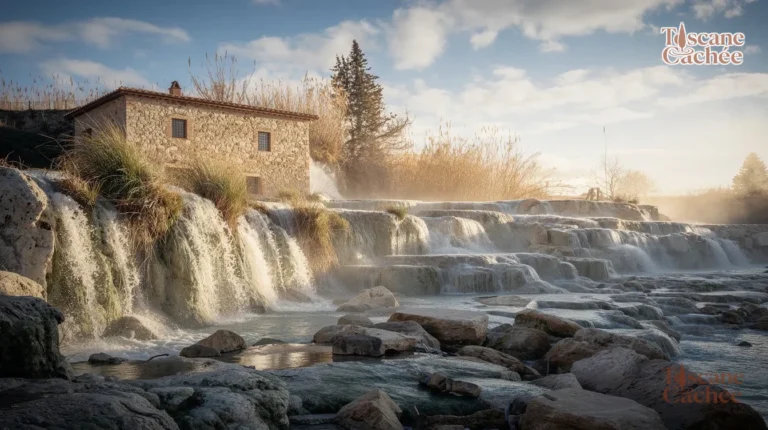
Cascate del Mulino
Travertine pools fed at 37.5 °C by the Gorello, freely accessible 24/7 near the old mill: a rare natural thermal bath in Tuscany
Tosco Come at dawn or in the middle of the night to have the pools all to yourself, but bring an old swimsuit: the sulfur smell doesn't forgive!
Les Cascate del Mulino sont accessibles gratuitement. C’est un site naturel exceptionnel en plein air. L’eau reste à 37 degrés toute l’année.
Va y faire un tour à l’aube pour éviter la foule. La vapeur matinale crée une ambiance magique. C’est le ideal time to relax.
Si tu veux prolonger l’expérience dans la région, check out our tips here : Week-ends & Séjours – La Toscane Cachée.
Respect for sites and eco-friendly behaviour
Never pick up ancient fragments at the sites. Do not touch the stones of the necropolises. Every relic must imperatively remain on site.
Always stay on marked trails during your hikes. The necropolises are extremely fragile areas. Foot traffic damages the underground structures.
Je t’encourage à solliciter des guides locaux certifiés. Ils partagent des anecdotes passionnantes sur les fouilles. C’est la meilleure façon d’apprendre réellement.
Think about the preservation of this heritage for the future. Ces trésors appartiennent à tous les passionnés d’histoire.
Explore les cités-états de Roselle et Vetulonia avant de t’enfoncer dans les vertigineuses vie cave de Pitigliano. Ce patrimoine étrusque en Maremme t’attend pour une raw immersion away from the crowds. Enfile tes chaussures de marche et réserve ton créneau pour Sovana dès maintenant : l’histoire t’appartient. La Toscane antique ne se raconte pas, elle se vit.
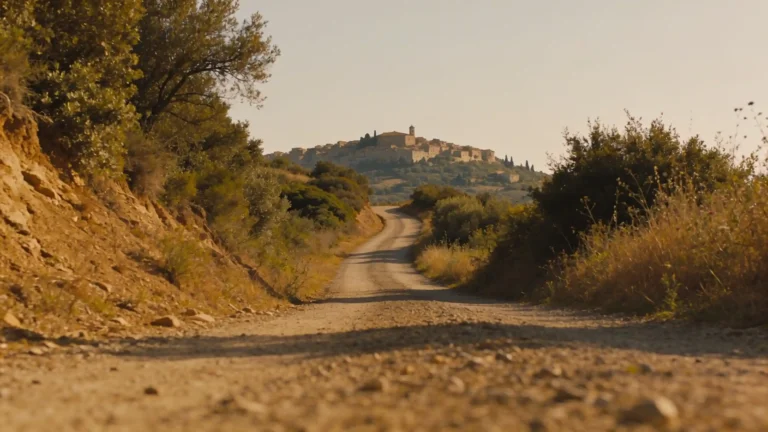
For a complete immersion in the Etruscan history of the Maremma in 2026, I recommend focusing on two major city-states: Roselle and Vetulonia. These sites, less well known than others in Tuscany, offer an authentic experience often free of crowds. At Roselle, you will discover the remains of a city that was first Etruscan, then Roman, with impressive cyclopean walls dating from the 7th century BC, a Roman forum built on Etruscan foundations, and a natural amphitheater hugging the hillside. A morning visit is crucial to enjoy the best light on the stones and avoid the heat. The site generally opens early, around 9:00 am, and the entrance fee is approximately 4 €. Plan to wear good walking shoes as the terrain is limestone and sometimes slippery. After your exploration, the Archaeological Museum of Grosseto (located a few kilometers away) will perfectly complement your visit by displaying funerary steles and everyday objects found on site, offering a more intimate glimpse of Etruscan life.
As for Vetulonia, you will marvel at its monumental tumuli, those circular tombs proving the wealth of Etruscan aristocratic families. The Tomb of the Pietrera is a spectacular example. The Isidoro Falchi museum, located in the heart of the village, is essential for understanding the history of the city thanks to its collections of fine goldwork (gold fibulas, engraved mirrors) and the accounts of the first excavations. From the hilltop village, you will enjoy a splendid panorama over the Grosseto plain, stretching all the way to the sea. For both sites, favor visits in the early morning or late afternoon to escape the intense summer heat and enjoy a more peaceful atmosphere. Don’t forget to bring enough water, as water points are rare on the sites. For more detailed planning, I suggest consulting the resources of Hidden Tuscany, which offers off-the-beaten-path itineraries in the Maremma.
The « vie cave » are one of the most enigmatic and fascinating wonders of Etruscan Maremma. They are millennia-old routes carved deep into the volcanic tuff by the Etruscans, forming narrow canyons with walls reaching up to 25 meters in height. They once connected the cities and necropolises, serving both as communication routes, sacred paths and natural defenses. The experience of walking through a via cava is unique: the silence is almost absolute, the atmosphere is cool and humid, and the walls are sometimes adorned with votive niches or Etruscan symbols. The most famous areas for these routes are around the villages of Pitigliano, Sovana and Sorano, often grouped under the name Città del Tufo Archaeological Park. The main access points generally start from the immediate surroundings of these villages.
Regarding accessibility, the vie cave are generally accessible to a wide audience, but they can present challenges. The ground, often damp and clayey, can be glissant, especially after rain. Sturdy, waterproof hiking shoes are therefore strongly recommended. Some sections can be steep or have roots. It is advisable to check weather conditions before setting out and to avoid days of heavy rain. The Via Cava of San Sebastiano near Sovana, or the Cavone, are among the most impressive. For safe exploration, set out with water, a trail map (available at local tourist offices) and, if possible, a charged phone. Although some are relatively flat, others can be more demanding. It is an immersive experience that requires a minimum of physical effort, but the reward is an unparalleled dive into Etruscan history. For more in-depth advice on the Maremma and its hidden treasures, feel free to consult Hidden Tuscany.
Absolutely! Authentic accommodation is one of the great riches of the Maremma, and it pairs perfectly with exploring the Etruscan sites. Forget chain hotels or large tourist residences; here, the emphasis is on agritourismos, restored farmhouses (casali) and small charming B&Bs, often run by local families. These options offer total immersion in the Tuscan way of life, far from the mass tourism found in the Chianti or around Florence. Many of these establishments are located in the open countryside, amid olive groves, vineyards or forests, offering tranquility and breathtaking views of the rolling landscapes of the Maremma. They are often just a few minutes’ drive from Etruscan sites such as Roselle, Vetulonia, Pitigliano or Sovana.
Unlike more conventional accommodations in Tuscany, agritourismos in the Maremma are generally more spacious and emphasize the farm experience. You can often taste local products from the establishment’s own production (wine, olive oil, cheeses, charcuterie), and sometimes even take part in activities such as the olive harvest or cooking classes. The setting is often more rustic, but with all modern comforts, and the welcome is warm and personalized. Prices are also often more affordable, expect 20 to 30% less than in the Chianti for equivalent quality of service and setting, or even superior in terms of authenticity. It is ideal for families, couples or solo travelers seeking calm and connection with nature and local culture. A good agriturismo will offer you not only a comfortable bed but also valuable advice on the best ways to explore the region, including the wild hot springs and the secret beaches of the Etruscan Coast.
Absolutely! The Maremma is a region blessed by the gods, where Etruscan history blends wonderfully with the benefits of natural thermal waters. It is the ideal place to combine cultural exploration and deep relaxation. The hot springs of Saturnia are without question the most famous and most spectacular in the region. Located at a reasonable distance from Etruscan cities like Pitigliano, Sovana or Sorano, the Cascate del Mulino (the mill waterfalls) offer free access to natural travertine pools, where the sulfurous water gushes out at 37°C. The setting is idyllic, with a view over the Tuscan countryside, and the experience is unforgettable, especially at sunrise or late in the evening to avoid the crowd and enjoy a magical atmosphere.
Besides Saturnia, the Maremma is home to other lesser-known but equally charming wild thermal springs. The Terme di Petriolo, for example, offer natural pools along the Farma river, with very hot water and a wilder, less developed environment. It is a more rustic experience, but oh so authentic. Closer to the tuff cities, the Terme di Sorano also offer thermal pools, although these are generally integrated into a hotel structure (with paid access for outside visitors). To get there, a car is essential, as these places are often isolated. The roads are well signposted, but using a GPS is recommended. Remember to bring water shoes for the slippery rocks and a towel. It is the perfect conclusion to a day spent exploring the vie cave and the Etruscan necropolises, offering a moment of pure well-being and connection with Tuscan nature. You will find more detailed information about the wild hot springs of the region on Hidden Tuscany.
Yes, absolutely! The Maremma is a true archaeological laboratory, and the year 2026 promises to be particularly promising for enthusiasts of Etruscan history thanks to new discoveries and enhancement projects. Recent excavations at Roselle have notably revealed unprecedented structures that continue to enrich our understanding of this major city-state. Every year, the archaeological site gains in depth, offering new perspectives on the architectural and urban evolution of the city, from its Etruscan foundations to its Roman development. These discoveries are regularly presented to the public, sometimes during temporary exhibitions at the Archaeological Museum of Grosseto, which is the ideal complement to the site visit.
In addition, a large-scale project, the « Via delle Città Etrusche« , inaugurated in 2024, aims to promote and enhance a cultural route of 174 km through the Colline Metallifere in the Maremma. This route connects key sites such as Vetulonia, Roselle, the Etruscan settlement of Accesa, Populonia and Volterra. In 2026, this project should be at full maturity, with strengthened collaboration between the municipalities and the Archaeological Parks of the Maremma (notably those of Roselle, Vetulonia and Cosa). This means better signage, more complete on-site information and potentially special events. Local development relies on this heritage as an engine of sustainable development, which guarantees continuous enhancement of the sites. These initiatives make the Maremma an exceptional playground for anyone wishing to explore Etruscan archaeology with a fresh eye, far from overcrowded circuits and with the promise of ever-renewed discoveries.
You have perfectly grasped the Maremma! It is indeed a Tuscany radically different from the clichéd image of the Florentine Renaissance or the bucolic landscapes of the Chianti and the Siena region. Here, the atmosphere is more wild, raw and authentic. Forget the elegant marble palaces and Italian-style gardens; the Maremma is characterized by its preserved Mediterranean landscapes, where nature reclaims its rights. The hills are covered with fragrant maquis, dense forests of cork oaks and maritime pines, and the coast offers deserted beaches and secret coves, far from the summer crowds of other Italian regions.
In terms of landscapes, you will not find the perfect alignments of cypresses and golden wheat fields of the Val d’Orcia. The Maremma is more rugged, with volcanic tuff cliffs where medieval villages like Pitigliano or Sovana cling. Tourism there is firmly geared towards slow travel: you take the time to hike through the vie cave, to get lost in the alleys of the villages, to discover the Etruscan sites in complete tranquility, and to recharge in the wild hot springs. It is a destination for those seeking authenticity, calm and a deep connection with history and nature, without the artifices of mass tourism. The gastronomy reflects this authenticity, with more rustic and generous dishes, showcasing game, sheep’s cheeses and local wines such as Morellino di Scansano. It is a Tuscany for explorers, nature lovers and those who want to escape the crowds while having access to a cultural and historical heritage of incredible richness. A car is essential for exploring this region, but that is also what preserves its wild and uncrowded charm.
Yes, visiting the Etruscan sites of the Maremma can absolutely be an enriching and captivating experience for families with children, provided it is approached with a playful and interactive perspective. The sites of Roselle and Vetulonia, by their very nature, offer vast open spaces where children can run and explore, which is already an advantage compared to conventional museums. At Roselle, the cyclopean walls are particularly impressive for young minds: the size of the stones and the idea that they were placed thousands of years ago without mortar can spark their imagination. The natural amphitheater is also an excellent place for them to imagine the spectacles of the era, or simply to run on the tiers. The massive walls and scattered ruins lend themselves well to discovery games or improvised treasure hunts.
At Vetulonia, the monumental tumuli, those large earthen mounds covering tombs, can look like mysterious hillocks or even hobbit houses, which can greatly amuse children. The vie cave, those routes carved into the rock, are true natural labyrinths that can turn the hike into an exciting adventure, provided the children are well equipped with shoes suited to the potentially slippery terrain. The Isidoro Falchi Museum in Vetulonia, although more conventional, displays jewelry and everyday objects that can interest older children, and the story of the doctor who rediscovered the city can be a lovely anecdote. Don’t forget the practical aspects: bring water, hats, sunscreen, and snacks. Morning visits are preferable to avoid the heat and fatigue. Turn the visit into a great archaeological adventure, and your children will keep a memorable memory of it. The vast spaces and the surrounding nature of the Maremma also make it possible to combine these cultural visits with more physical and fun activities, such as discovering the beaches or walks in the great outdoors.
Around this article
Is the map not displaying? See accommodations on Stay22
Map and prices provided by Stay22: Toscane Cachée may receive a commission on bookings.
You will also like

The silence of Roselle: the Etruscan ruins no one visits in Maremma
Explore the Etruscan ruins of Roselle in Maremma. Admire the cyclopean walls and the amphitheater…

Visiting Sovana: medieval gem and Etruscan mysteries
Go visit Sovana, a tuff jewel in Maremma. Discover its Etruscan necropolis, its cathedral…

Visiting Pitigliano in 2026: guide to the tuff city
Discover how to visit Pitigliano in 2026. Explore Little Jerusalem, its Etruscan Vie Cave…

Top 5 spectacular Etruscan sunken roads in Maremma
Explore the 5 most beautiful Etruscan sunken roads in Maremma. Discover these paths of...